Philippines Sardine Market Size Growth Rate
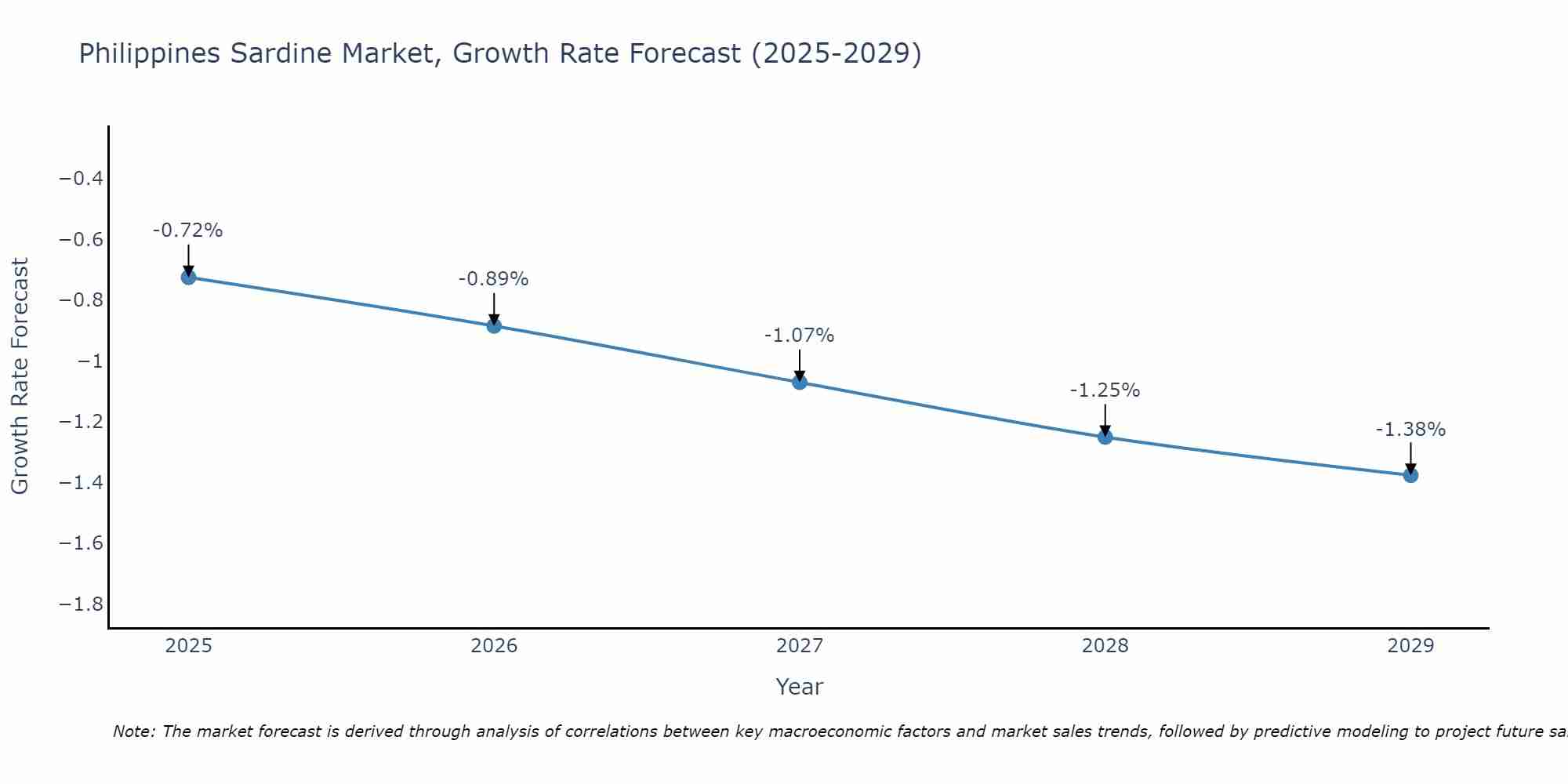
The Philippines Sardine Market could see a tapering of growth rates over 2025 to 2029. Starting high at -0.72% in 2025, the market steadily declines to -1.38% by 2029.
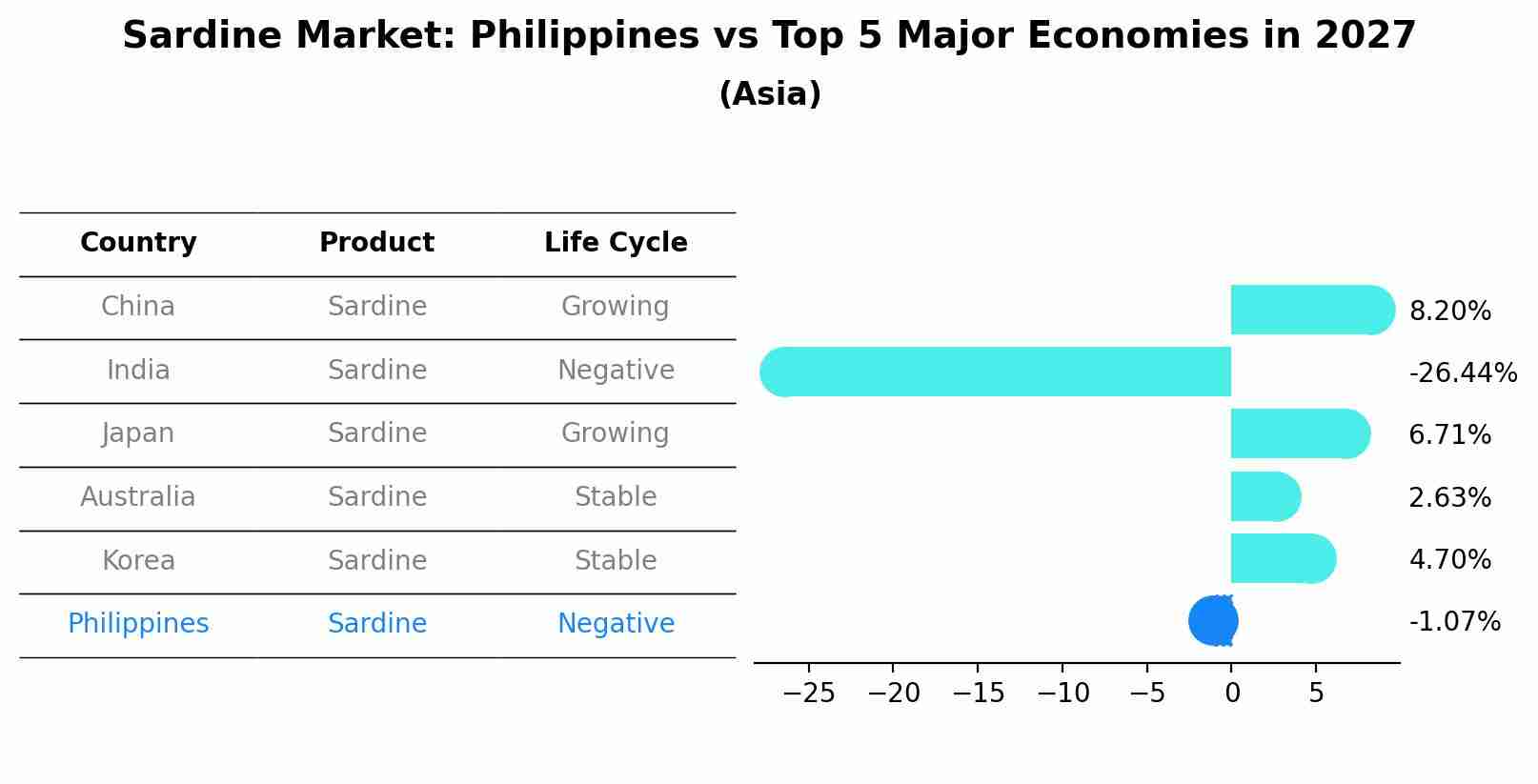
Sardine Market: Philippines vs Top 5 Major Economies in 2027 (Asia)
By 2027, the Sardine market in Philippines is anticipated to reach a growth rate of -1.07%, as part of an increasingly competitive Asia region, where China remains at the forefront, supported by India, Japan, Australia and South Korea, driving innovations and market adoption across sectors.
Philippines Sardine Market Growth Rate
According to 6Wresearch internal database and industry insights, the Philippines Sardine Market is growing at a compound annual growth rate (CAGR) of 7.23% during the forecast period (2026-2032).
Topics Covered in the Philippines Sardine Market Report
The Philippines Sardine Market report thoroughly covers the market by types, species, end-use, and distribution channels. The market report provides an unbiased and detailed analysis of ongoing market trends, opportunities, high-growth areas, and market drivers, which would help stakeholders devise and align their market strategies according to the current and future market dynamics.
Philippines Sardine Market Highlights
| Report Name | Philippines Sardine Market |
| Forecast Period | 2026–2032 |
| CAGR | 7.23% |
| Growing Sector | Food Processing |
Philippines Sardine Market Synopsis
The Philippines Sardine Market is about to experience major expansion. The market expands as people now want sardines which they buy from local stores and overseas markets and export businesses. Government policies and initiatives designed to boost the local sardine fishing industry, along with increasing health awareness among consumers, are contributing to the market’s growth. Health-conscious consumers prefer sardines as the fish contains omega-3 fatty acids which provide health benefits.
Evaluation of Growth Drivers in the Philippines Sardine Market
Below mentioned are some growth drivers and their impact on market dynamics:
| Drivers | Primary Segments Affected | Why It Matters |
| Government Support & Export Growth | Sardine Exports | Promotes local sardine processing and access to global markets, particularly Asia and the Middle East. |
| Increasing Consumption of Sardines | Sardine Types (Canned Sardines, Fresh Sardines) | Boost in health-conscious consumption and its affordability in various forms like fresh and canned sardines. |
| Sustainable Fishing Practices | Sardine Species (Sardinops Caeruleus, Sardinella Longiceps, Others) | Ensures long-term growth and improves the sustainability of the sardine fishing industry. |
| Rising Health Conscious Trends | Sardine Types (Canned Sardines, Sardine Meals) | Drives demand for nutritious, affordable food like sardines, which are rich in proteins and omega-3s. |
| Expansion of Processing Facilities | Sardine End-Uses (Food Processing, Animal Feed) | Enhances sardine processing capabilities, expanding both local availability and exports. |
The Philippines Sardine Market is projected to grow significantly, at a CAGR of 7.23% during the forecast period of 2026-2032. The primary factors that drive the Philippines Sardine Market show a relationship between increased domestic consumption and the health advantages of sardines which contain omega-3 fatty acids. The National Fisheries Industry Development Plan governmental program provides support which helps increase domestic production while promoting environmentally sustainable practices. The market experiences growth as of expanding export possibilities which target both Middle Eastern and Southeast Asian regions. The market growth receives strong support from rising canned sardine demand which consumers choose as it offers convenience and budget-friendly prices and increasing health-aware consumer behavior. Fishing practices that focus on sustainability will create permanent advantages for future business growth.
Evaluation of Restraints in the Philippines Sardine Market
Below mentioned are some major restraints and their influence on market dynamics:
| Restraints | Primary Segments Affected | What This Means |
| Environmental Impact & Overfishing | Sardine Species | Risk of depletion of local sardine populations and restricted supply. |
| Price Volatility | All Sardine Segments | Instability in raw sardine prices can affect processing costs and profitability. |
| Limited Cold Storage & Logistics | Distribution Channels | The less availability of cold chain storage infrastructure hampers the growth of the market. |
| Competition from Other Fish Species | Sardine Species | There is a high competition from fish like mackerel or tuna which are lowering demand for sardine. |
| Regulatory Challenges | Sardine Exports, Fishing Practices | Stringent regulations on fishing and processing could increase operational costs. |
Philippines Sardine Market Challenges
The Philippines Sardine Market faces several challenges in its path of growth. These stem mainly from environmental issues which include overfishing that reduces sardine populations. Market stability experiences disruption as sardine prices show high price volatility. The distribution process faces efficiency problems as some areas lack adequate cold-storage facilities and proper logistics infrastructure. The market encounters difficulties as competition from other protein sources like tuna and mackerel continues to rise. The need for sustainable fishing practices will create additional costs which companies must handle through their operational processes.
Philippines Sardine Market Trends
Some major trends contributing to the Philippines Sardine Market Growth are:
- Health-Conscious Consumption: The consumers are increasingly preferring for omega-3 fatty acids, vitamins, and minerals due to increasing health awareness trends.
- Expansion of Export Markets: The expansion of Filipino sardines in Middle Eastern and Southeast Asian market is expected to drive the industry growth.
- Increase in Processed Sardine Products: The consumers are increasingly preferring for ready-to-eat meals and value-added products due to changes in lifestyle.
Philippines Sardine Market Investment Opportunities
Here are some investment opportunities in the Philippines Sardine Industry:
- Sustainable Sardine Fishing: The investors can invest more in the eco-friendly, sustainable fishing practices and fisheries management which will make sure long-term growth of the industry.
- E-commerce Platforms: Increased partnerships with online retail platforms will encourage the market expansion as it provide ease of availability to large consumer base.
- Processed Sardine Products Innovation: Making of sardine-based snacks, meals, and supplements will be really beneficial for the market growth as consumer prefer processed sardine products.
Top 5 Leading Players in the Philippines Sardine Market
Here are some top companies contributing to the Philippines Sardine Market Share:
1. Century Pacific Food, Inc.
| Company Name | Century Pacific Food, Inc. |
|---|---|
| Established Year | 1978 |
| Headquarters | Manila, Philippines |
| Official Website | Click Here |
Century Pacific Food, Inc. is one of the leading companies in the Philippine canned seafood market, particularly known for its strong presence in the sardine segment. The company produces a wide range of canned sardine products distributed across the Philippines and international markets. Its brands are recognized for consistent quality and strong consumer trust, making it one of the most influential players in the country’s processed seafood industry.
2. Universal Robina Corporation
| Company Name | Universal Robina Corporation (URC) |
|---|---|
| Established Year | 1954 |
| Headquarters | Quezon City, Philippines |
| Official Website | Click Here |
Universal Robina Corporation (URC) is one of the largest branded food companies in the Philippines. In addition to its well-known snack and beverage products, URC also participates in the canned seafood category, including sardines. The company has established a strong domestic and export presence through its commitment to product quality, innovation, and wide distribution networks.
3. RFM Corporation
| Company Name | RFM Corporation |
|---|---|
| Established Year | 1958 |
| Headquarters | Mandaluyong, Philippines |
| Official Website | Click Here |
RFM Corporation is a major food manufacturer in the Philippines, primarily known for its flour, pasta, and dairy products. While it is a significant player in the broader food sector, the company does not currently market a major sardine brand. Instead, its core businesses include pasta brands such as Royal and Fiesta and dairy products under the Selecta line.
4. Del Monte Philippines, Inc.
| Company Name | Del Monte Philippines, Inc. |
|---|---|
| Established Year | 1954 |
| Headquarters | Parañaque, Philippines |
| Official Website | Click Here |
Del Monte Philippines, Inc. is a well-known food processing company recognized for its pineapple products, fruit juices, and tomato-based goods. Although the company has a strong presence in the canned food sector, it is not a major producer in the sardine category. Its reputation is primarily built on fruit processing and packaged food products.
5. Bureau of Fisheries and Aquatic Resources
| Organization | Bureau of Fisheries and Aquatic Resources (BFAR) |
|---|---|
| Headquarters | Quezon City, Philippines |
| Official Website | Click Here |
The Bureau of Fisheries and Aquatic Resources (BFAR), under the Philippine Department of Agriculture, is the government body responsible for regulating, managing, and promoting the fisheries sector in the Philippines. BFAR plays an important role in supporting the sardine industry through fisheries management policies, sustainability programs, and initiatives aimed at improving seafood production and export competitiveness.
Government Regulations Introduced in the Philippines Sardine Market
According to Filipino government data, the Sardine Market in the Philippines faces major effects from government environmental protection regulations and sustainable fishing regulations which operate as its primary governing framework. Also, Bureau of Fisheries and Aquatic Resources (BFAR) sets up guidelines for sardine fishing in order to ensure overfishing and ensure sustainable supply. Other than that, the "National Fisheries Industry Development Plan" together with other regulations establishes support for developing sardine processing facilities and export operations, which enables the industry to fulfil its international market requirements.
Future Insights of the Philippines Sardine Market
The future of the Philippines Sardine Market looks optimistic as domestic consumption will increase and export opportunities will expand. The market will experience substantial growth through sustainability efforts and sardine product innovations and government backing. The market will expand as people are choosing to eat more omega-3 sardines and local sardine fishing activities are growing and e-commerce platforms are developing. Overall, the market is expected to have continued expansion due to governments sustainability initiatives and growing health trends.
Market Segmentation Analysis
The report offers a comprehensive study of the subsequent market segments and their leading categories.
Canned Sardines to Dominate the Market – By Type
According to Guneet Kaur, Senior Research Analyst, 6Wresearch, canned sardines dominate the market due to their long shelf life, convenience, and increasing demand in both domestic and international markets. Canned sardines offer affordability and nutrition, making them best option for consumers.
Sardinops Caeruleus to Dominate the Market – By Species
The Sardinops Caeruleus species is the most commonly used sardine species in the Philippines, primarily as of its abundance in local waters and its high demand in the processing industry for canned products. This species is favored for its size, texture, and suitability for export markets.
Food Processing to Dominate the Market - By End‑Use
The Food Processing segment is leading the market by end‑use. This is due to strong demand from local and export food manufacturers who utilize sardines in canned, ready‑to‑eat, and value‑added products, driven by its nutritional value, affordability, and widespread consumption.
Indirect Sales to Dominate the Market - By Distribution Channel
Indirect Sales is leading the market. This includes traditional retail stores, supermarkets, and wholesale distributors that account for the majority of sardine product sales across urban and rural regions, supported by extensive distribution networks and high consumer accessibility.
Key attractiveness of the report
- 10 Years Market Numbers.
- Historical Data Starting from 2022 to 2025.
- Base Year: 2025
- Forecast Data until 2032.
- Key Performance Indicators Impacting the Market.
- Major Upcoming Developments and Projects.
Key Highlights of the Report:
- Philippines Sardine Market Outlook
- Market Size of Philippines Sardine Market, 2025
- Forecast of Philippines Sardine Market, 2032
- Historical Data and Forecast of Philippines Sardine Revenues & Volume for the Period 2022-2032
- Philippines Sardine Market Trend Evolution
- Philippines Sardine Market Drivers and Challenges
- Philippines Sardine Price Trends
- Philippines Sardine Porter's Five Forces
- Philippines Sardine Industry Life Cycle
- Historical Data and Forecast of Philippines Sardine Market Revenues & Volume By Type for the Period 2022-2032
- Historical Data and Forecast of Philippines Sardine Market Revenues & Volume By Fresh Sardine for the Period 2022-2032
- Historical Data and Forecast of Philippines Sardine Market Revenues & Volume By Frozen Sardine for the Period 2022-2032
- Historical Data and Forecast of Philippines Sardine Market Revenues & Volume By Canned Sardine for the Period 2022-2032
- Historical Data and Forecast of Philippines Sardine Market Revenues & Volume By Sardine Meals for the Period 2022-2032
- Historical Data and Forecast of Philippines Sardine Market Revenues & Volume By Species for the Period 2022-2032
- Historical Data and Forecast of Philippines Sardine Market Revenues & Volume By Sardinops Caeruleus for the Period 2022-2032
- Historical Data and Forecast of Philippines Sardine Market Revenues & Volume By Sardinella Longiceps for the Period 2022-2032
- Historical Data and Forecast of Philippines Sardine Market Revenues & Volume By Sardinella Gibbosa for the Period 2022-2032
- Historical Data and Forecast of Philippines Sardine Market Revenues & Volume By Sardinella Aurita for the Period 2022-2032
- Historical Data and Forecast of Philippines Sardine Market Revenues & Volume By Sardina Pilchardus for the Period 2022-2032
- Historical Data and Forecast of Philippines Sardine Market Revenues & Volume By Others for the Period 2022-2032
- Historical Data and Forecast of Philippines Sardine Market Revenues & Volume By End-Use for the Period 2022-2032
- Historical Data and Forecast of Philippines Sardine Market Revenues & Volume By Food Processing for the Period 2022-2032
- Historical Data and Forecast of Philippines Sardine Market Revenues & Volume By Animal Feed for the Period 2022-2032
- Historical Data and Forecast of Philippines Sardine Market Revenues & Volume By Dietary Supplements for the Period 2022-2032
- Historical Data and Forecast of Philippines Sardine Market Revenues & Volume By Others for the Period 2022-2032
- Historical Data and Forecast of Philippines Sardine Market Revenues & Volume By Distribution Channel for the Period 2022-2032
- Historical Data and Forecast of Philippines Sardine Market Revenues & Volume By Direct Sales for the Period 2022-2032
- Historical Data and Forecast of Philippines Sardine Market Revenues & Volume By Indirect Sales for the Period 2022-2032
- Philippines Sardine Import Export Trade Statistics
- Market Opportunity Assessment By Type
- Market Opportunity Assessment By Species
- Market Opportunity Assessment By End-Use
- Market Opportunity Assessment By Distribution Channel
- Philippines Sardine Top Companies Market Share
- Philippines Sardine Competitive Benchmarking By Technical and Operational Parameters
- Philippines Sardine Company Profiles
- Philippines Sardine Key Strategic Recommendations
Market covered
The report subsequently covers the market by following segments and subsegments:
By Type:
- Fresh Sardine
- Frozen Sardine
- Canned Sardine
- Sardine Meals
By Species:
- Sardinops Caeruleus
- Sardinella Longiceps
- Sardinella Gibbosa
- Sardinella Aurita
- Sardina Pilchardus
- Others
By End-Use:
- Food Processing
- Animal Feed
- Dietary Supplements
- Others
By Distribution Channel:
- Direct Sales
- Indirect Sales






































