Philippines Small Mammal And Reptile Food Market Top 5 Importing Countries and Market Competition (HHI) Analysis
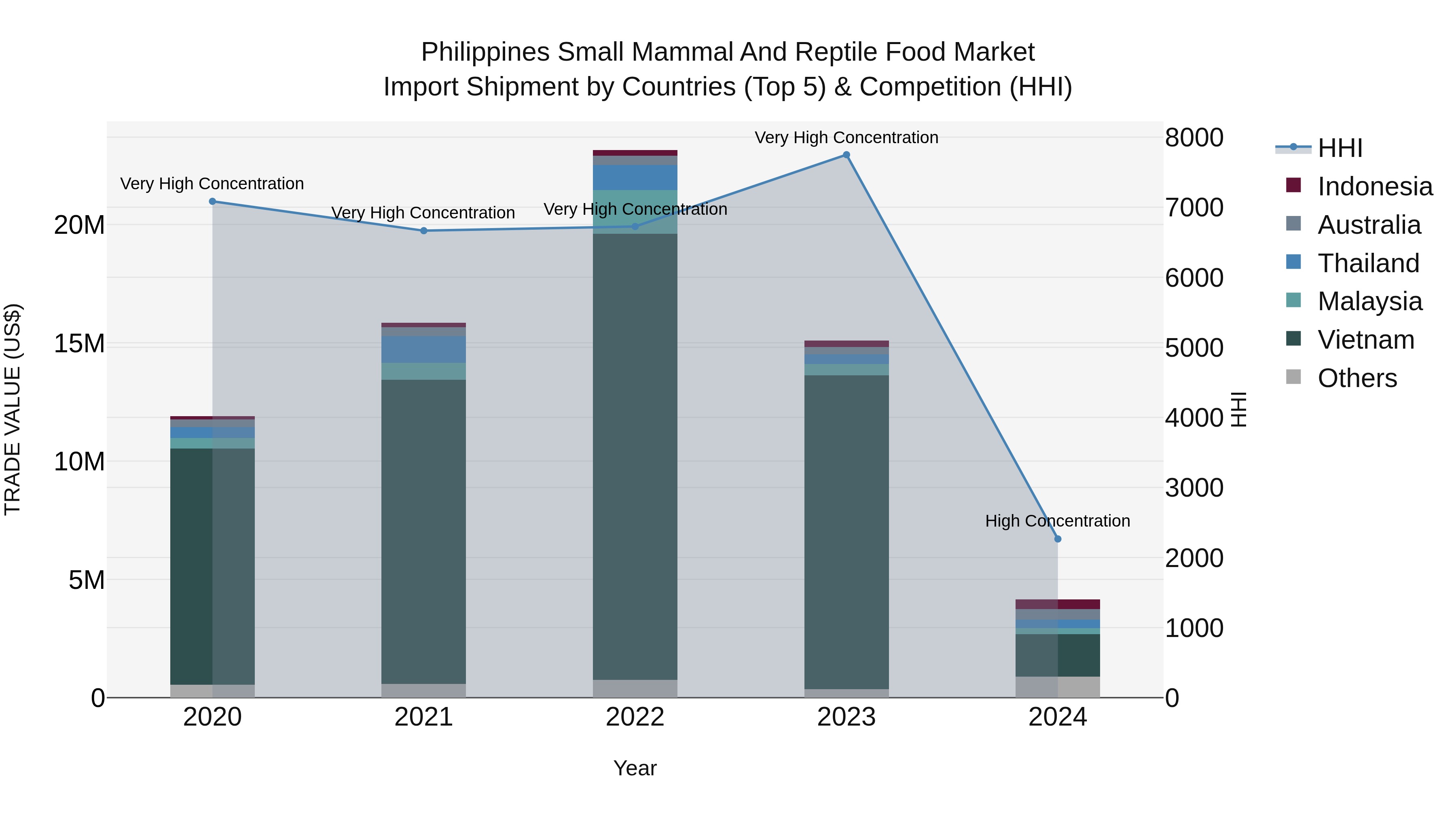
The Philippines saw a significant decline in small mammal and reptile food import shipments in 2024, with top exporters being Vietnam, Australia, Indonesia, Thailand, and the USA. The high concentration of Herfindahl-Hirschman Index (HHI) in 2023 remained at elevated levels in 2024, indicating a concentrated market. The compound annual growth rate (CAGR) from 2020 to 2024 was notably negative at -23.1%, with a sharp decline in growth rate from 2023 to 2024 at -72.44%. This trend suggests challenges and changes in the market dynamics for small mammal and reptile food imports in the Philippines.
philippines small mammal and reptile food market Synopsis
The Philippines` small mammal and reptile food market caters to a niche but growing segment of pet owners. As the popularity of small mammals and reptiles as pets increases, so does the demand for specialized food products tailored to their dietary needs. This market encompasses a range of food options, including pellets, live insects, and dried fruits, designed to promote the health and well-being of these pets.
Drivers of the Market
In the Philippines small mammal and reptile food market, the rising popularity of exotic pets has created a niche market for specialized pet food. Owners of small mammals and reptiles are seeking well-formulated diets to ensure the health and longevity of their pets.
Challenges of the Market
The Philippines small mammal and reptile food market encounters challenges linked to product diversity, nutritional requirements, and consumer education. Providing a variety of nutritionally balanced food options for small mammals and reptiles is essential for their health. Educating pet owners about proper diets and nutritional needs is also crucial, as improper feeding practices can lead to health issues in these animals.
COVID-19 Impact on the Market
The Philippines small mammal and reptile food market faced challenges during the COVID-19 pandemic as pet ownership trends shifted due to lockdowns and movement restrictions. Changes in routines and economic uncertainties influenced consumer spending on non-essential items, including pet supplies. The market for small mammal and reptile food experienced fluctuations in demand, with pet owners reassessing their priorities. The recovery of this market was influenced by the relaxation of restrictions and the gradual return to normalcy in pet ownership patterns.
Key Players in the Market
For the small mammal and reptile food market, companies like Exo Terra, Hikari, and Repashy are notable brands. They offer a range of specialized food products tailored to the dietary needs of various small mammals and reptiles commonly kept as pets.
Key Highlights of the Report:
- Philippines Small Mammal and Reptile Food Market Outlook
- Market Size of Philippines Small Mammal and Reptile Food Market, 2024
- Forecast of Philippines Small Mammal and Reptile Food Market, 2031
- Historical Data and Forecast of Philippines Small Mammal and Reptile Food Revenues & Volume for the Period 2021-2031
- Philippines Small Mammal and Reptile Food Market Trend Evolution
- Philippines Small Mammal and Reptile Food Market Drivers and Challenges
- Philippines Small Mammal and Reptile Food Price Trends
- Philippines Small Mammal and Reptile Food Porter's Five Forces
- Philippines Small Mammal and Reptile Food Industry Life Cycle
- Historical Data and Forecast of Philippines Small Mammal and Reptile Food Market Revenues & Volume By Type for the Period 2021-2031
- Historical Data and Forecast of Philippines Small Mammal and Reptile Food Market Revenues & Volume By Rabbits Food for the Period 2021-2031
- Historical Data and Forecast of Philippines Small Mammal and Reptile Food Market Revenues & Volume By Rodents Food for the Period 2021-2031
- Historical Data and Forecast of Philippines Small Mammal and Reptile Food Market Revenues & Volume By Small Reptiles Food for the Period 2021-2031
- Historical Data and Forecast of Philippines Small Mammal and Reptile Food Market Revenues & Volume By Other for the Period 2021-2031
- Historical Data and Forecast of Philippines Small Mammal and Reptile Food Market Revenues & Volume By Application for the Period 2021-2031
- Historical Data and Forecast of Philippines Small Mammal and Reptile Food Market Revenues & Volume By Pet-Speciality Stores for the Period 2021-2031
- Historical Data and Forecast of Philippines Small Mammal and Reptile Food Market Revenues & Volume By Supermarkets and Hypermarkets for the Period 2021-2031
- Historical Data and Forecast of Philippines Small Mammal and Reptile Food Market Revenues & Volume By Convenience Stores for the Period 2021-2031
- Historical Data and Forecast of Philippines Small Mammal and Reptile Food Market Revenues & Volume By Other for the Period 2021-2031
- Philippines Small Mammal and Reptile Food Import Export Trade Statistics
- Market Opportunity Assessment By Type
- Market Opportunity Assessment By Application
- Philippines Small Mammal and Reptile Food Top Companies Market Share
- Philippines Small Mammal and Reptile Food Competitive Benchmarking By Technical and Operational Parameters
- Philippines Small Mammal and Reptile Food Company Profiles
- Philippines Small Mammal and Reptile Food Key Strategic Recommendations






































