Philippines Sustainable Footwear Market Top 5 Importing Countries and Market Competition (HHI) Analysis
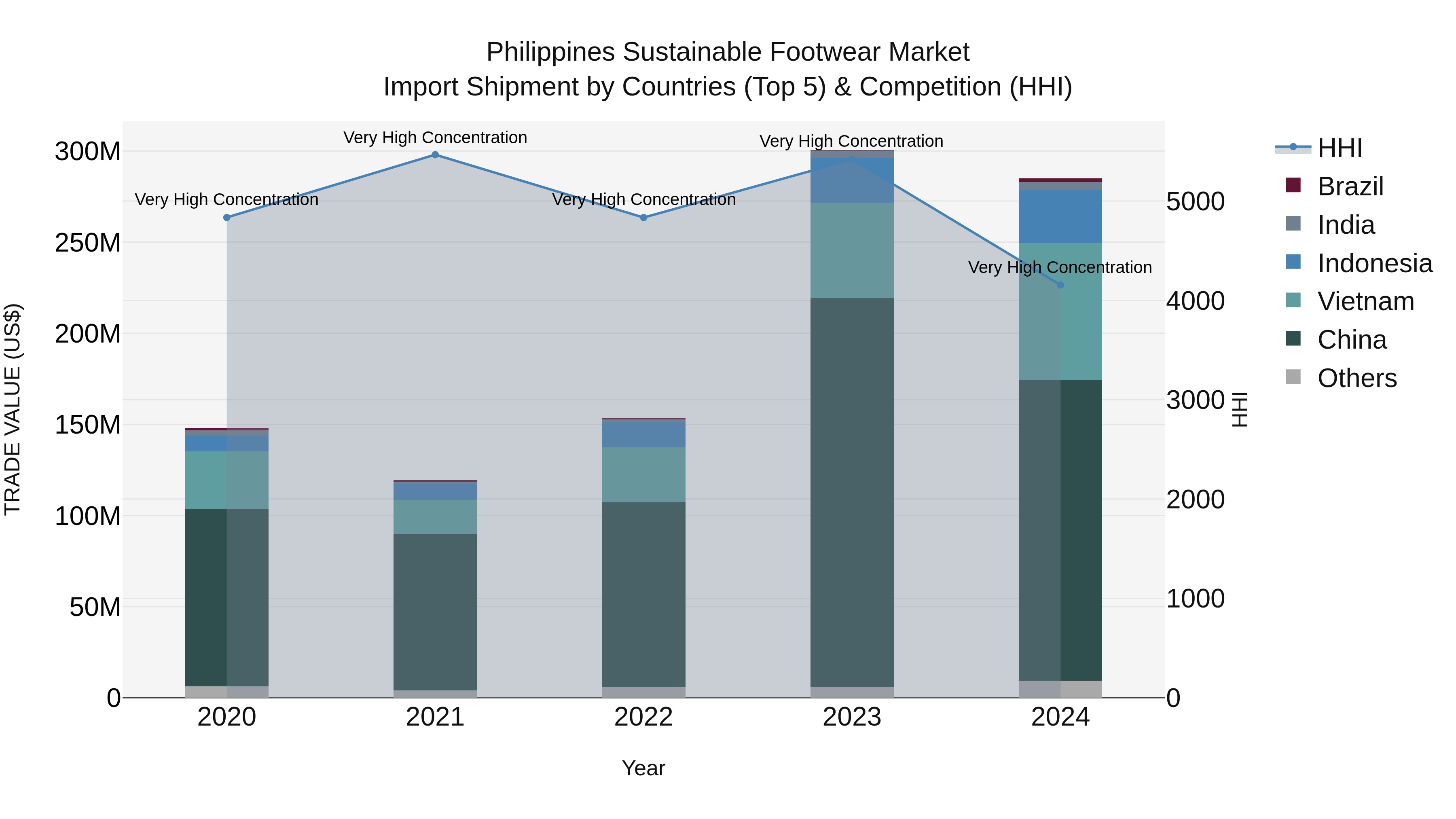
In 2024, the Philippines continued to see a significant influx of sustainable footwear imports, with top exporting countries including China, Vietnam, Indonesia, India, and Italy. Despite a high concentration with Herfindahl-Hirschman Index (HHI), the industry maintained a strong compound annual growth rate (CAGR) of 17.78% from 2020 to 2024. However, a slight decline was observed in the growth rate from 2023 to 2024 at -5.14%, indicating a potential shift in market dynamics. Overall, the sustainable footwear sector in the Philippines remains vibrant and evolving, driven by diverse international sources.
Philippines Sustainable Footwear Market Overview
The sustainable footwear market is emerging, with brands offering products made from recycled plastics, organic cotton, and plant-based leathers. Filipino consumers are becoming more conscious of environmental impact, particularly in urban areas where lifestyle and ethical consumption intersect.
Trends of the market
Sustainable footwear is gaining ground among Filipino consumers who value style with responsibility. Brands are using recycled plastics, natural rubber, and vegan leather to tap into the demand for ethical and eco-friendly shoes.
Challenges of the market
Challenges in the sustainable footwear market include limited access to eco-friendly materials like recycled rubber and plant-based fabrics. High production costs and lack of awareness among consumers about sustainable fashion limit market growth. Domestic players also face stiff competition from global brands with established supply chains and sustainability credentials.
Investment opportunities in the Market
The sustainable footwear market in the Philippines is expanding as more consumers embrace eco-conscious fashion choices. The growing demand for shoes made from recycled materials, biodegradable substances, and ethically sourced components creates numerous opportunities for investment. Footwear manufacturers that prioritize sustainability in their design and production processes can tap into this trend and appeal to the environmentally aware consumer base in the country.
Government Policy of the market
The government of the Philippines has initiated policies to promote the production of sustainable footwear, focusing on materials such as recycled plastics, organic textiles, and biodegradable substances. Incentives and support are provided for manufacturers developing eco-friendly footwear products that reduce environmental impact. There is also emphasis on implementing waste management practices in the footwear production process, such as recycling old footwear and using sustainable packaging. Additionally, the government is encouraging brands to embrace circular economy principles, where footwear can be reused, refurbished, or recycled.
Key Highlights of the Report:
- Philippines Sustainable Footwear Market Outlook
- Market Size of Philippines Sustainable Footwear Market, 2024
- Forecast of Philippines Sustainable Footwear Market, 2031
- Historical Data and Forecast of Philippines Sustainable Footwear Revenues & Volume for the Period 2021- 2031
- Philippines Sustainable Footwear Market Trend Evolution
- Philippines Sustainable Footwear Market Drivers and Challenges
- Philippines Sustainable Footwear Price Trends
- Philippines Sustainable Footwear Porter's Five Forces
- Philippines Sustainable Footwear Industry Life Cycle
- Historical Data and Forecast of Philippines Sustainable Footwear Market Revenues & Volume By Type for the Period 2021- 2031
- Historical Data and Forecast of Philippines Sustainable Footwear Market Revenues & Volume By Casual footwear for the Period 2021- 2031
- Historical Data and Forecast of Philippines Sustainable Footwear Market Revenues & Volume By Athletic footwear for the Period 2021- 2031
- Historical Data and Forecast of Philippines Sustainable Footwear Market Revenues & Volume By Dress footwear for the Period 2021- 2031
- Historical Data and Forecast of Philippines Sustainable Footwear Market Revenues & Volume By Work footwear for the Period 2021- 2031
- Historical Data and Forecast of Philippines Sustainable Footwear Market Revenues & Volume By End-Use for the Period 2021- 2031
- Historical Data and Forecast of Philippines Sustainable Footwear Market Revenues & Volume By Women for the Period 2021- 2031
- Historical Data and Forecast of Philippines Sustainable Footwear Market Revenues & Volume By Men for the Period 2021- 2031
- Historical Data and Forecast of Philippines Sustainable Footwear Market Revenues & Volume By Children for the Period 2021- 2031
- Philippines Sustainable Footwear Import Export Trade Statistics
- Market Opportunity Assessment By Type
- Market Opportunity Assessment By End-Use
- Philippines Sustainable Footwear Top Companies Market Share
- Philippines Sustainable Footwear Competitive Benchmarking By Technical and Operational Parameters
- Philippines Sustainable Footwear Company Profiles
- Philippines Sustainable Footwear Key Strategic Recommendations






































