Philippines Threat Intelligence Market Size & Growth Rate (2026-2032)
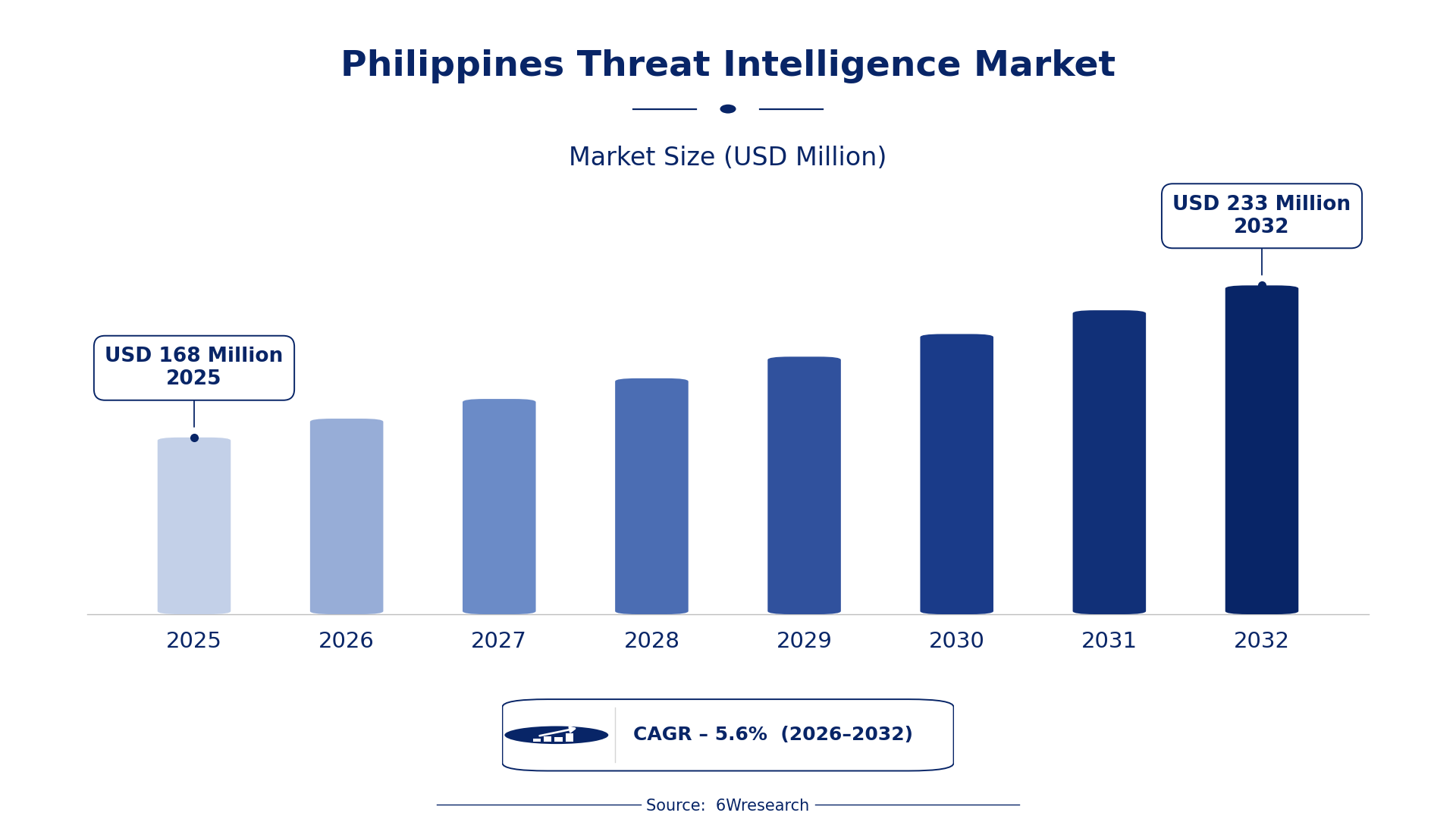
The Philippines Threat Intelligence Market was estimated at USD 168 Million in 2025 and is projected to reach USD 233 Million by 2032, growing at a CAGR of 5.6% from 2026 to 2032.
Philippines Threat Intelligence Market Synopsis
The demand for threat intelligence solutions in the Philippines is escalating, driven by the increasing sophistication of cyber threats facing organizations across various sectors. As more businesses transition to digital operations, the need for advanced security measures has never been more critical.
Organizations are investing heavily in threat intelligence to gain insights into vulnerabilities, allowing for proactive defense strategies. The growing awareness of cybersecurity risks among local enterprises has contributed to the acceleration of market growth.
Philippines Threat Intelligence Market Year-wise Growth Rate and Key Drivers
This graph illustrates the annual growth rates of the Philippines Threat Intelligence Market from 2021 to 2032, highlighting a steady upward trajectory and projected expansion over the forecast period.
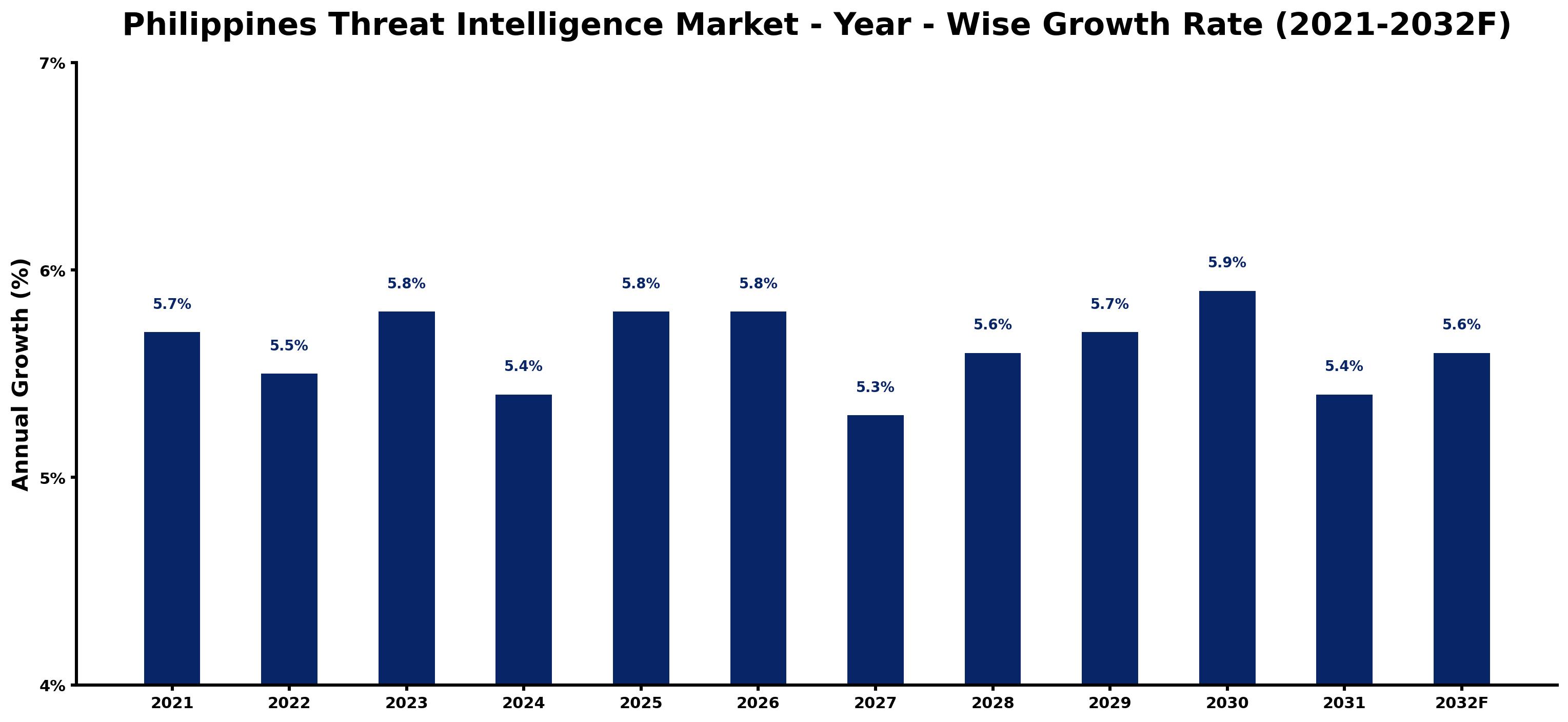
The table below presents the year‑wise growth rates along with the key drivers influencing the market
| Year | Growth Rate | Major Drivers |
| 2021 | 5.7% | Philippine Cybercrime Investigation and Coordination Center initiatives. |
| 2022 | 5.5% | Growing remote workforce highlights need for threat intelligence. |
| 2023 | 5.8% | Increased regulatory focus on data privacy protection laws. |
| 2024 | 5.4% | Rising sophistication of local phishing and malware attacks. |
| 2025 | 5.8% | Digital transformation in sectors raises cybersecurity stakes. |
| 2026 | 5.8% | Increased awareness due to high-profile data breaches. |
| 2027 | 5.3% | Government partnership with tech firms for enhanced security. |
| 2028 | 5.6% | Investment in smart city infrastructures necessitates threat mitigation. |
| 2029 | 5.7% | Educational programs promote cybersecurity awareness across industries. |
| 2030 | 5.9% | Strengthening of cybersecurity frameworks by DICT and NEDA. |
| 2031 | 5.4% | International collaborations enhance local threat intelligence capabilities. |
| 2032 | 5.6% | Growing e-commerce sector demands robust cybersecurity measures. |
Note: Market size estimations and growth projections presented in this report are based on 6Wresearch's proprietary forecasting methodology, utilizing the latest available industry data, government publications, and primary research inputs.
Philippines Threat Intelligence Market Key Takeaways
Below are some of the specific key takeaways from the market, including:
- The Philippines faces a rising tide of cyber threats, driving organizations to seek advanced threat intelligence solutions.
- Government initiatives aimed at bolstering cybersecurity are enhancing market growth and awareness.
- Investment in data-sharing platforms among businesses is becoming more prevalent to counter emerging threats.
- The COVID-19 pandemic has accelerated the adoption of cybersecurity measures, highlighting the need for real-time threat intelligence.
- Technological innovations are leading to more effective threat detection and response capabilities in the market.
Evaluation of Restraints in Philippines Threat Intelligence Market
Despite the promising growth trajectory, the Philippines Threat Intelligence Market grapples with challenges that hinder its potential. A primary concern is the rapid evolution of cyber threats, which often outpaces the development of effective intelligence systems. Organizations find themselves in a race to stay informed about new vulnerabilities and attack patterns.
Furthermore, there is a need for greater collaboration and data sharing among different sectors. Many organizations operate in silos, limiting the effectiveness of threat intelligence efforts. Without strong partnerships and open communication channels, the ability to respond to threats diminishes.
Philippines Threat Intelligence Market Trends
Several trends are shaping the Philippines Threat Intelligence Market. One is the increasing reliance on artificial intelligence and machine learning to enhance threat detection capabilities. These technologies allow organizations to analyze large datasets swiftly and identify anomalies that indicate potential threats.
Additionally, the rise of remote work has led to a surge in targeted attacks on home networks. Consequently, organizations are adapting their threat intelligence strategies to focus on endpoint security, ensuring that employees working remotely are adequately protected against cyber risks.
Philippines Threat Intelligence Market Opportunities
Opportunities abound for investment in the Philippines Threat Intelligence Market. The growing emphasis on digital transformation within the public and private sectors creates a strong demand for sophisticated cybersecurity solutions. Startups focusing on niche threat intelligence services may find attractive avenues for growth.
Furthermore, with the government's push for enhanced cybersecurity frameworks, partnerships between tech firms and governmental bodies can lead to innovative solutions tailored to local needs. Investment in training and upskilling of cybersecurity professionals also represents a valuable opportunity for market players.
Government Initiatives in the Philippines Threat Intelligence Market
The Philippine government is actively shaping the cybersecurity environment, underscoring the importance of threat intelligence in national security strategy. Public policies are increasingly focused on fortifying the nation’s defenses against cyber threats, which impacts both regulatory frameworks and funding for cybersecurity initiatives.
- A recently completed cybersecurity roadmap outlines strategic priorities and investment areas for enhancing national cyber defense capabilities.
- An ongoing initiative aims to establish a national cyber threat intelligence-sharing platform to facilitate collaboration among businesses and government agencies.
- Plans are in place to introduce new regulations mandating businesses to report cyber incidents to strengthen overall national security posture.
- Current efforts involve training programs aimed at improving the skill set of cybersecurity professionals across various sectors.
- Upcoming public-private partnerships are expected to expand the availability of threat intelligence solutions for local businesses.
Future Insights of the Philippines Threat Intelligence Market
Looking ahead to 2026-2032, the Philippines Threat Intelligence Market is expected to evolve significantly. As organizations continue to enhance their digital infrastructures, the demand for advanced threat intelligence solutions will only escalate. A heightened focus on proactive risk management will encourage companies to invest more in threat intelligence platforms.
The collaboration between governmental agencies and private entities will likely drive innovation, leading to tailored solutions that address specific regional needs. Furthermore, as local enterprises grow in their cybersecurity maturity, the sophistication of threat intelligence offerings will also advance, setting new industry standards.
Philippines Threat Intelligence Market Latest Developments
Recent activity within the Philippines Threat Intelligence Market reflects a dynamic environment characterized by innovation and increased urgency in cybersecurity. Organizations are investing in cutting-edge solutions to keep pace with the escalating threat landscape.
- A major technology vendor launched a comprehensive threat intelligence platform designed for the local market in early 2025.
- Ongoing partnerships between cybersecurity firms and educational institutions focus on developing specialized training programs to bolster the workforce.
- A regional operator is implementing a nationwide cyber awareness campaign, expected to complete by mid-2026, to educate businesses on emerging threats.
- Current initiatives include enhancing data analytics capabilities through machine learning, which is underway and shows promising early results.
- Upcoming plans feature a national exercise simulating cyber-attack responses scheduled for late 2026, aimed at assessing organizational readiness.
Philippines Threat Intelligence Market - Key Attractiveness of the Report
- 10 Years of Market Numbers
- Historical Data Starting from 2022 to 2025
- Base Year: 2025
- Forecast Data until 2032
- Key Performance Indicators Impacting the Market
- Major Upcoming Developments and Projects
Key Highlights of the Report:
- Philippines Threat Intelligence Market Outlook
- Market Size of Philippines Threat Intelligence Market, 2025
- Forecast of Philippines Threat Intelligence Market, 2032
- Historical Data and Forecast of Philippines Threat Intelligence Revenues & Volume for the Period 2022-2032F
- Philippines Threat Intelligence Market Trend Evolution
- Philippines Threat Intelligence Market Drivers and Challenges
- Philippines Threat Intelligence Price Trends
- Philippines Threat Intelligence Porter's Five Forces
- Philippines Threat Intelligence Industry Life Cycle
- Historical Data and Forecast of Philippines Threat Intelligence Market Revenues & Volume By Component for the Period 2022-2032F
- Historical Data and Forecast of Philippines Threat Intelligence Market Revenues & Volume By Solutions for the Period 2022-2032F
- Historical Data and Forecast of Philippines Threat Intelligence Market Revenues & Volume By Services for the Period 2022-2032F
- Historical Data and Forecast of Philippines Threat Intelligence Market Revenues & Volume By Vertical for the Period 2022-2032F
- Historical Data and Forecast of Philippines Threat Intelligence Market Revenues & Volume By BFSI for the Period 2022-2032F
- Historical Data and Forecast of Philippines Threat Intelligence Market Revenues & Volume By IT for the Period 2022-2032F
- Historical Data and Forecast of Philippines Threat Intelligence Market Revenues & Volume By ITeS for the Period 2022-2032F
- Historical Data and Forecast of Philippines Threat Intelligence Market Revenues & Volume By Retail for the Period 2022-2032F
- Historical Data and Forecast of Philippines Threat Intelligence Market Revenues & Volume By Healthcare for the Period 2022-2032F
- Historical Data and Forecast of Philippines Threat Intelligence Market Revenues & Volume By Life Sciences for the Period 2022-2032F
- Historical Data and Forecast of Philippines Threat Intelligence Market Revenues & Volume By Organization Size for the Period 2022-2032F
- Historical Data and Forecast of Philippines Threat Intelligence Market Revenues & Volume By Large Enterprises for the Period 2022-2032F
- Historical Data and Forecast of Philippines Threat Intelligence Market Revenues & Volume By SMEs for the Period 2022-2032F
- Historical Data and Forecast of Philippines Threat Intelligence Market Revenues & Volume By Application for the Period 2022-2032F
- Historical Data and Forecast of Philippines Threat Intelligence Market Revenues & Volume By Security Information and Event Management for the Period 2022-2032F
- Historical Data and Forecast of Philippines Threat Intelligence Market Revenues & Volume By Government, Risk, and Compliance for the Period 2022-2032F
- Historical Data and Forecast of Philippines Threat Intelligence Market Revenues & Volume By Business Continuity Planning and Management for the Period 2022-2032F
- Historical Data and Forecast of Philippines Threat Intelligence Market Revenues & Volume By Deployment Mode for the Period 2022-2032F
- Historical Data and Forecast of Philippines Threat Intelligence Market Revenues & Volume By Cloud for the Period 2022-2032F
- Historical Data and Forecast of Philippines Threat Intelligence Market Revenues & Volume By On-premises for the Period 2022-2032F
- Philippines Threat Intelligence Import Export Trade Statistics
- Market Opportunity Assessment By Component
- Market Opportunity Assessment By Vertical
- Market Opportunity Assessment By Organization Size
- Market Opportunity Assessment By Application
- Market Opportunity Assessment By Deployment Mode
- Philippines Threat Intelligence Top Companies Market Share
- Philippines Threat Intelligence Competitive Benchmarking By Technical and Operational Parameters
- Philippines Threat Intelligence Company Profiles
- Philippines Threat Intelligence Key Strategic Recommendations






































