Philippines Unified Network Management Market Size & Growth Rate (2026-2032)
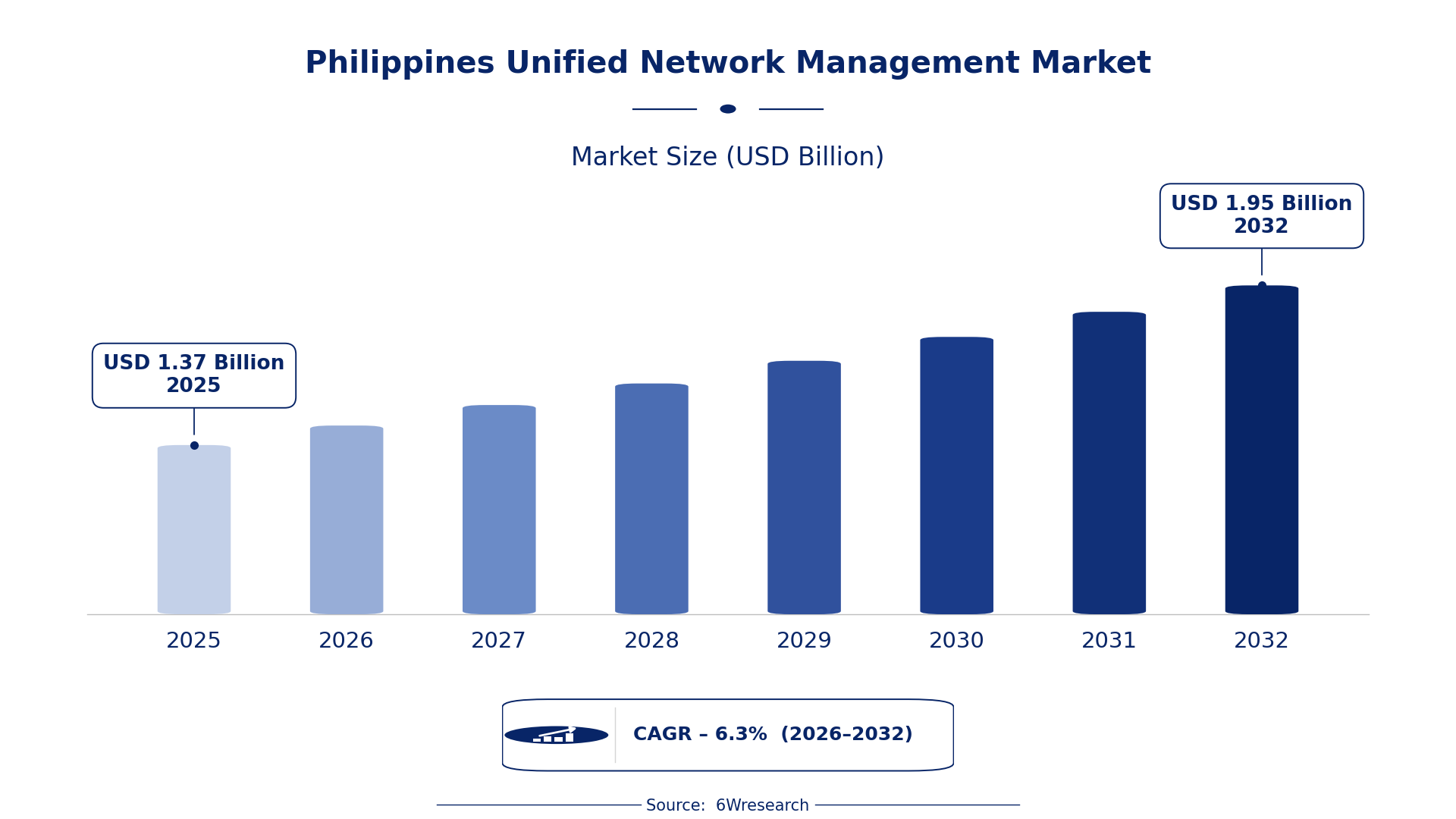
The Philippines Unified Network Management Market was estimated at USD 1371 Million in 2025 and is projected to reach USD 1953 Million by 2032, growing at a CAGR of 6.3% from 2026 to 2032.
Philippines Unified Network Management Market Synopsis
In the Philippines, the Unified Network Management Market is gaining traction as organizations strive for streamlined operations. With increasing dependence on both on-premises and cloud-based solutions, businesses are seeking effective management tools to optimize their network performance.
The market is characterized by a growing demand for centralized monitoring solutions. As complexity in IT environments escalates, companies recognize the necessity of comprehensive network management frameworks to maintain security and efficiency across diverse infrastructures.
Philippines Unified Network Management Market Year-wise Growth Rate and Key Drivers
This graph illustrates the annual growth rates of the Philippines Unified Network Management Market from 2021 to 2032, highlighting a steady upward trajectory and projected expansion over the forecast period.
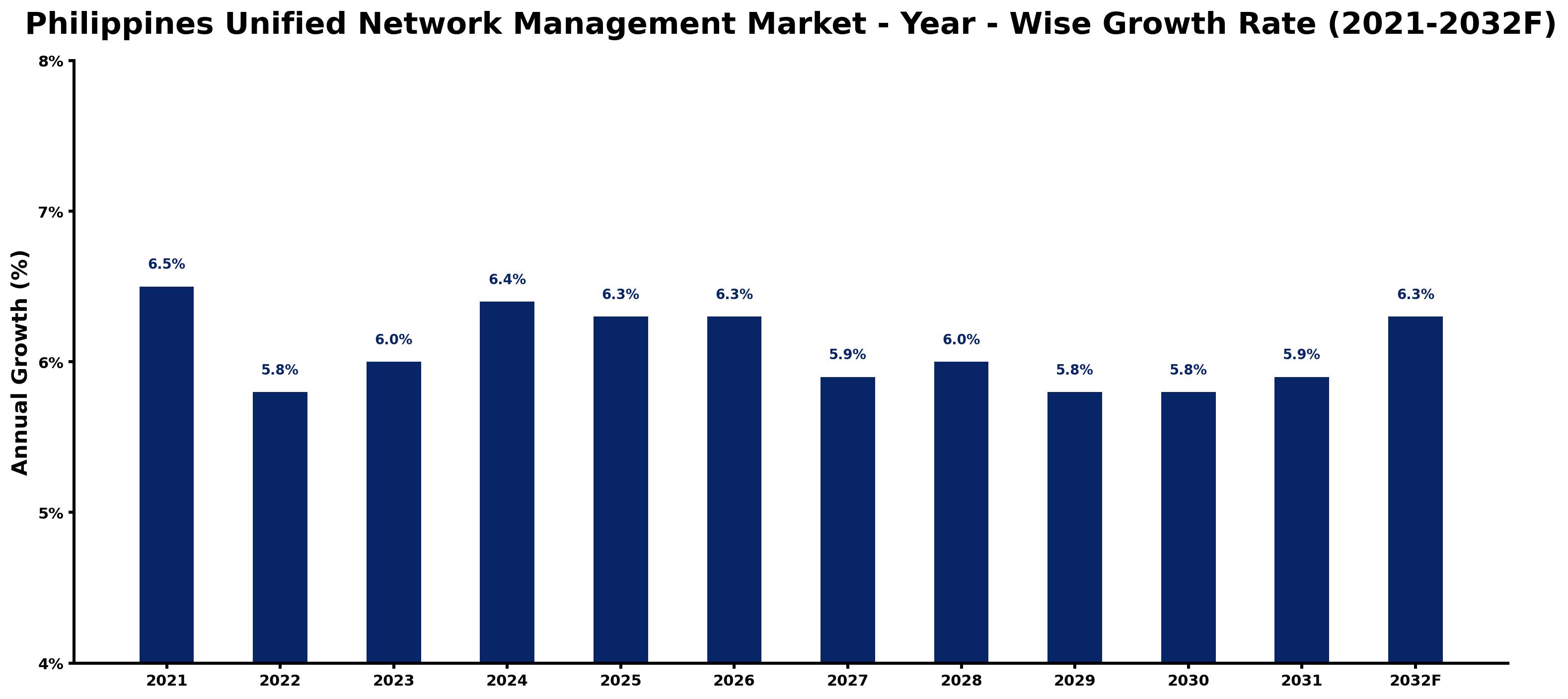
The table below presents the year‑wise growth rates along with the key drivers influencing the market
| Year | Growth Rate | Major Drivers |
| 2021 | 6.5% | Telecommunications Commission's new standards for network efficiency. |
| 2022 | 5.8% | Increase in remote work driving cloud-based network solutions. |
| 2023 | 6.0% | 5G rollout accelerating unified network management adoption. |
| 2024 | 6.4% | Philippine economic recovery boosting IT infrastructure investments. |
| 2025 | 6.3% | Regulatory push for enhanced digital connectivity across regions. |
| 2026 | 6.3% | Local startups utilizing advanced network technologies for scalability. |
| 2027 | 5.9% | Emerging fintech sectors demanding robust network management services. |
| 2028 | 6.0% | Smart city projects necessitating integrated network solutions. |
| 2029 | 5.8% | Education sector digitalization driving demand for network management. |
| 2030 | 5.8% | Government funding for digital infrastructure enhancing market opportunities. |
| 2031 | 5.9% | Sustainable practices in tech boosting network management adoption. |
| 2032 | 6.3% | Corporate collaborations for unified network solutions increasing. |
Note: Market size estimations and growth projections presented in this report are based on 6Wresearch's proprietary forecasting methodology, utilizing the latest available industry data, government publications, and primary research inputs.
Philippines Unified Network Management Market Key Takeaways
Below are some of the specific key takeaways from the market, including:
- Rising demand for centralized network management solutions due to increased IT complexities.
- Remote work trends have significantly boosted the need for effective network oversight.
- The market is experiencing a steady influx of innovative technologies and solutions.
- Key players are focusing on enhancing security features within their management offerings.
- Government initiatives are actively supporting digital infrastructure improvements.
Evaluation of Restraints in Philippines Unified Network Management Market
While the Philippines Unified Network Management Market is growing, several restraints hamper its full potential. The diversity of devices and operating systems presents significant hurdles. Organizations often struggle to implement a cohesive management strategy that addresses these complexities. Additionally, the initial investment costs for comprehensive solutions can deter smaller businesses from adopting these technologies, leading to a fragmented market.
Philippines Unified Network Management Market Trends
A noticeable trend in the market is the increasing integration of artificial intelligence and machine learning into network management solutions. These technologies enhance predictive analytics, enabling proactive responses to potential network issues. on top of that, the shift towards hybrid cloud environments is prompting a demand for solutions that can seamlessly manage both on-premises and cloud resources.
Another key trend is the emphasis on security, particularly as cyber threats become more sophisticated. Organizations are increasingly prioritizing solutions that offer robust security features alongside management capabilities, reflecting a broader recognition of the importance of safeguarding network integrity.
Philippines Unified Network Management Market Opportunities
Significant growth opportunities exist for vendors in the Philippines Unified Network Management Market, particularly in sectors such as telecommunications, finance, and e-commerce. As digital transformation accelerates, companies within these industries are likely to invest heavily in management solutions that enhance operational efficiency and security. on top of that, partnerships with government initiatives aimed at upgrading national digital infrastructure present additional avenues for growth.
Government Initiatives in the Philippines Unified Network Management Market
The Philippine government is actively shaping the Unified Network Management Market through various initiatives that focus on enhancing the digital infrastructure. Policymakers recognize the importance of efficient network management in fostering economic growth and improving overall connectivity. As a result, they are prioritizing investments in technology and regulatory frameworks that support this sector.
- A national digital infrastructure upgrade programme is currently in its rollout phase, aimed at enhancing connectivity across urban and rural areas.
- A regulatory framework introduced in 2025 mandates transparency in network billing practices, ensuring consumers are well-informed.
- Current efforts include a public-private initiative expected to expand telecommunications access by 2028, which will significantly impact network management needs.
- Recently completed initiatives focus on increasing cybersecurity measures within public sector networks.
- Upcoming policies will likely incentivize investment in advanced network technologies to bolster national security.
Future Insights of the Philippines Unified Network Management Market
Looking ahead to 2026-2032, the Philippines Unified Network Management Market is set for robust growth. As businesses increasingly adopt digital solutions, the demand for comprehensive management tools will continue to rise. The integration of innovative technologies will enhance the capabilities of network management systems, enabling organizations to better address the complexities of modern IT environments. Companies that stay ahead of these trends and invest in cutting-edge solutions will likely capture a significant share of the market.
Philippines Unified Network Management Market Latest Developments
In the past year, the Philippines Unified Network Management Market has seen a flurry of activity driven by technological advancements and shifting business needs. Organizations are keenly focused on adopting solutions that not only optimize performance but also fortify security against emerging threats. This environment of innovation is propelling the market forward.
- A major technology vendor launched a new network monitoring tool in early 2025, designed to enhance visibility and control across hybrid environments.
- An initiative that began in mid-2025 is underway, focused on integrating AI capabilities into existing network management frameworks.
- A partnership between leading telecom providers is currently ongoing, aiming to develop shared infrastructure for better network management efficiency.
- A rollout expected to begin in Q3 2025 will introduce enhanced cybersecurity features in network management solutions.
- Plans are in motion for a new service upgrade aimed at providing real-time analytics for network performance, set to launch by early 2026.
Philippines Unified Network Management Market - Key Attractiveness of the Report
- 10 Years of Market Numbers
- Historical Data Starting from 2022 to 2025
- Base Year: 2025
- Forecast Data until 2032
- Key Performance Indicators Impacting the Market
- Major Upcoming Developments and Projects
Key Highlights of the Report:
- Philippines Unified Network Management Market Outlook
- Market Size of Philippines Unified Network Management Market, 2025
- Forecast of Philippines Unified Network Management Market, 2032
- Historical Data and Forecast of Philippines Unified Network Management Revenues & Volume for the Period 2022-2032F
- Philippines Unified Network Management Market Trend Evolution
- Philippines Unified Network Management Market Drivers and Challenges
- Philippines Unified Network Management Price Trends
- Philippines Unified Network Management Porter's Five Forces
- Philippines Unified Network Management Industry Life Cycle
- Historical Data and Forecast of Philippines Unified Network Management Market Revenues & Volume By Networking Type for the Period 2022-2032F
- Historical Data and Forecast of Philippines Unified Network Management Market Revenues & Volume By Wireline Network Management for the Period 2022-2032F
- Historical Data and Forecast of Philippines Unified Network Management Market Revenues & Volume By Wireless Network Management for the Period 2022-2032F
- Historical Data and Forecast of Philippines Unified Network Management Market Revenues & Volume By Solution for the Period 2022-2032F
- Historical Data and Forecast of Philippines Unified Network Management Market Revenues & Volume By Network Traffic Management for the Period 2022-2032F
- Historical Data and Forecast of Philippines Unified Network Management Market Revenues & Volume By Network Monitoring Management for the Period 2022-2032F
- Historical Data and Forecast of Philippines Unified Network Management Market Revenues & Volume By Network Security Management for the Period 2022-2032F
- Historical Data and Forecast of Philippines Unified Network Management Market Revenues & Volume By Network Application Management for the Period 2022-2032F
- Historical Data and Forecast of Philippines Unified Network Management Market Revenues & Volume By Configuration and Server Management for the Period 2022-2032F
- Historical Data and Forecast of Philippines Unified Network Management Market Revenues & Volume By Others (IP Address Management and Network Device Management) for the Period 2022-2032F
- Historical Data and Forecast of Philippines Unified Network Management Market Revenues & Volume By Service for the Period 2022-2032F
- Historical Data and Forecast of Philippines Unified Network Management Market Revenues & Volume By Training and Support for the Period 2022-2032F
- Historical Data and Forecast of Philippines Unified Network Management Market Revenues & Volume By Consulting for the Period 2022-2032F
- Historical Data and Forecast of Philippines Unified Network Management Market Revenues & Volume By Managed and Integration service for the Period 2022-2032F
- Historical Data and Forecast of Philippines Unified Network Management Market Revenues & Volume By Deployment Type for the Period 2022-2032F
- Historical Data and Forecast of Philippines Unified Network Management Market Revenues & Volume By On-Cloud for the Period 2022-2032F
- Historical Data and Forecast of Philippines Unified Network Management Market Revenues & Volume By On-Premises for the Period 2022-2032F
- Historical Data and Forecast of Philippines Unified Network Management Market Revenues & Volume By User Type for the Period 2022-2032F
- Historical Data and Forecast of Philippines Unified Network Management Market Revenues & Volume By Large Enterprises for the Period 2022-2032F
- Historical Data and Forecast of Philippines Unified Network Management Market Revenues & Volume By Small and Medium Enterprises for the Period 2022-2032F
- Historical Data and Forecast of Philippines Unified Network Management Market Revenues & Volume By Industry Vertical for the Period 2022-2032F
- Historical Data and Forecast of Philippines Unified Network Management Market Revenues & Volume By BFSI for the Period 2022-2032F
- Historical Data and Forecast of Philippines Unified Network Management Market Revenues & Volume By High-Tech and Telecom for the Period 2022-2032F
- Historical Data and Forecast of Philippines Unified Network Management Market Revenues & Volume By Retail and Consumer Goods for the Period 2022-2032F
- Historical Data and Forecast of Philippines Unified Network Management Market Revenues & Volume By Travel and Hospitality for the Period 2022-2032F
- Historical Data and Forecast of Philippines Unified Network Management Market Revenues & Volume By Government for the Period 2022-2032F
- Historical Data and Forecast of Philippines Unified Network Management Market Revenues & Volume By Media and Entertainment for the Period 2022-2032F
- Historical Data and Forecast of Philippines Unified Network Management Market Revenues & Volume By Healthcare for the Period 2022-2032F
- Historical Data and Forecast of Philippines Unified Network Management Market Revenues & Volume By Education for the Period 2022-2032F
- Philippines Unified Network Management Import Export Trade Statistics
- Market Opportunity Assessment By Networking Type
- Market Opportunity Assessment By Solution
- Market Opportunity Assessment By Service
- Market Opportunity Assessment By Deployment Type
- Market Opportunity Assessment By User Type
- Market Opportunity Assessment By Industry Vertical
- Philippines Unified Network Management Top Companies Market Share
- Philippines Unified Network Management Competitive Benchmarking By Technical and Operational Parameters
- Philippines Unified Network Management Company Profiles
- Philippines Unified Network Management Key Strategic Recommendations






































