Philippines Urodynamic Equipment Market Top 5 Importing Countries and Market Competition (HHI) Analysis
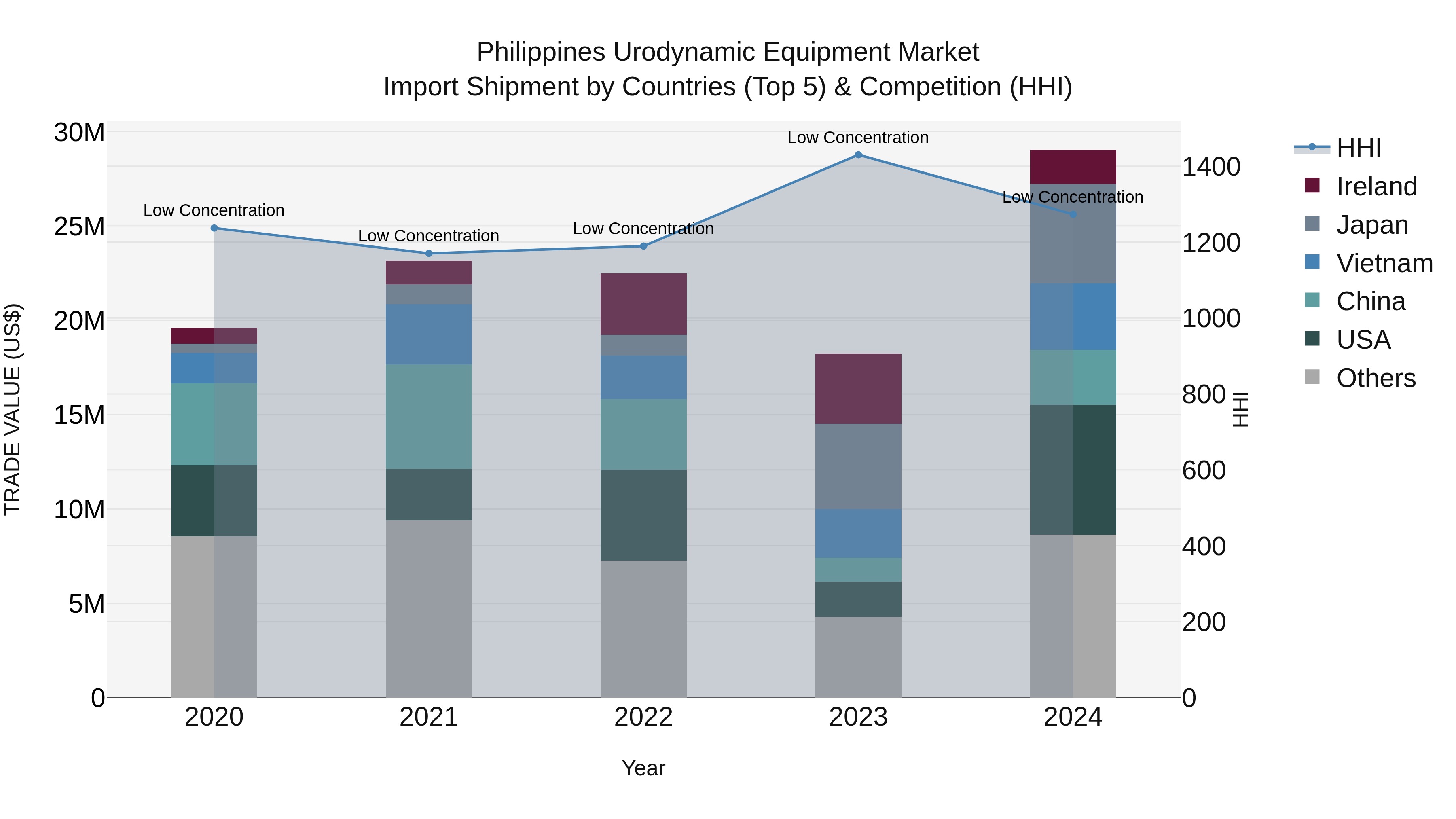
In 2024, Urodynamic equipment import shipments to the Philippines continued to see significant growth, with key exporting countries being the USA, Japan, Vietnam, China, and Singapore. The market remained diverse with low concentration levels, indicating a balanced import market. The compound annual growth rate (CAGR) from 2020 to 2024 was strong at 10.31%, demonstrating sustained expansion. Notably, the growth rate spiked in 2024, reaching an impressive 59.27%, signaling a surge in demand for urodynamic equipment in the Philippines.
philippines urodynamic equipment market Synopsis
The Philippines urodynamic equipment market was valued at approximately US$ 2 million in 2025 and is projected to grow at a CAGR of 5. 1% during the forecast period, reaching US$ 2. 6 million by the end of the forecast period. This can be attributed to rising prevalence rates of urinary incontinence issues among men and women due to aging population, increased awareness about these health conditions leading people towards opting for medical treatments using advanced devices like urodynamics systems etc., resulting into higher demand for such equipment`s used by hospitals or clinical laboratories across countries like Philippines etc.
Drivers of the Market
The urodynamic equipment market is driven by factors such as the increasing prevalence of urological disorders, a growing aging population, and rising awareness about advanced diagnostic tools. Urodynamic equipment plays a crucial role in diagnosing conditions related to the urinary system. As healthcare infrastructure improves in the Philippines, the demand for sophisticated diagnostic and treatment equipment is likely to rise, positively impacting the urodynamic equipment market.
Challenges of the Market
The urodynamic equipment market in the Philippines is influenced by the prevalence of urological disorders. Challenges encompass limited awareness about advanced diagnostic tools, training healthcare professionals to operate complex equipment, and ensuring equipment affordability for healthcare facilities.
COVID-19 Impact on the Market
The urodynamic equipment market faced challenges during the pandemic, with elective procedures being postponed, affecting market growth. However, as healthcare services gradually normalized, the market has exhibited signs of recovery due to the resumption of essential medical procedures and increasing awareness about urological conditions.
Key Players in the Market
The urodynamic equipment market in the Philippines was driven by factors such as the increasing prevalence of urological disorders and the growing awareness of advanced medical diagnostics. Key players in this market could include medical equipment companies like Medtronic, LABORIE, and CooperSurgical, offering a range of urodynamic testing devices.
Key Highlights of the Report:
- Philippines Urodynamic Equipment Market Outlook
- Market Size of Philippines Urodynamic Equipment Market, 2024
- Forecast of Philippines Urodynamic Equipment Market, 2031
- Historical Data and Forecast of Philippines Urodynamic Equipment Revenues & Volume for the Period 2021-2031
- Philippines Urodynamic Equipment Market Trend Evolution
- Philippines Urodynamic Equipment Market Drivers and Challenges
- Philippines Urodynamic Equipment Price Trends
- Philippines Urodynamic Equipment Porter's Five Forces
- Philippines Urodynamic Equipment Industry Life Cycle
- Historical Data and Forecast of Philippines Urodynamic Equipment Market Revenues & Volume By Product Type for the Period 2021-2031
- Historical Data and Forecast of Philippines Urodynamic Equipment Market Revenues & Volume By Urodynamic Equipment for the Period 2021-2031
- Historical Data and Forecast of Philippines Urodynamic Equipment Market Revenues & Volume By Urodynamic Consumables for the Period 2021-2031
- Historical Data and Forecast of Philippines Urodynamic Equipment Market Revenues & Volume By End User for the Period 2021-2031
- Historical Data and Forecast of Philippines Urodynamic Equipment Market Revenues & Volume By Hospitals for the Period 2021-2031
- Historical Data and Forecast of Philippines Urodynamic Equipment Market Revenues & Volume By Ambulatory Centers for the Period 2021-2031
- Historical Data and Forecast of Philippines Urodynamic Equipment Market Revenues & Volume By Diagnostic Centers for the Period 2021-2031
- Historical Data and Forecast of Philippines Urodynamic Equipment Market Revenues & Volume By Others for the Period 2021-2031
- Philippines Urodynamic Equipment Import Export Trade Statistics
- Market Opportunity Assessment By Product Type
- Market Opportunity Assessment By End User
- Philippines Urodynamic Equipment Top Companies Market Share
- Philippines Urodynamic Equipment Competitive Benchmarking By Technical and Operational Parameters
- Philippines Urodynamic Equipment Company Profiles
- Philippines Urodynamic Equipment Key Strategic Recommendations






































