Philippines Waterproof Clothing Market Summary
The philippines waterproof clothing market was estimated at USD 232 Million in 2025 and is projected to reach USD 305 Million by 2032, growing at a CAGR of 4.7% from 2026 to 2032.
Philippines Waterproof Clothing Market Year-wise Growth Rate and Key Drivers
This graph highlights how the Philippines Waterproof Clothing Market has steadily grown over the past five years, supported by major growth factors.
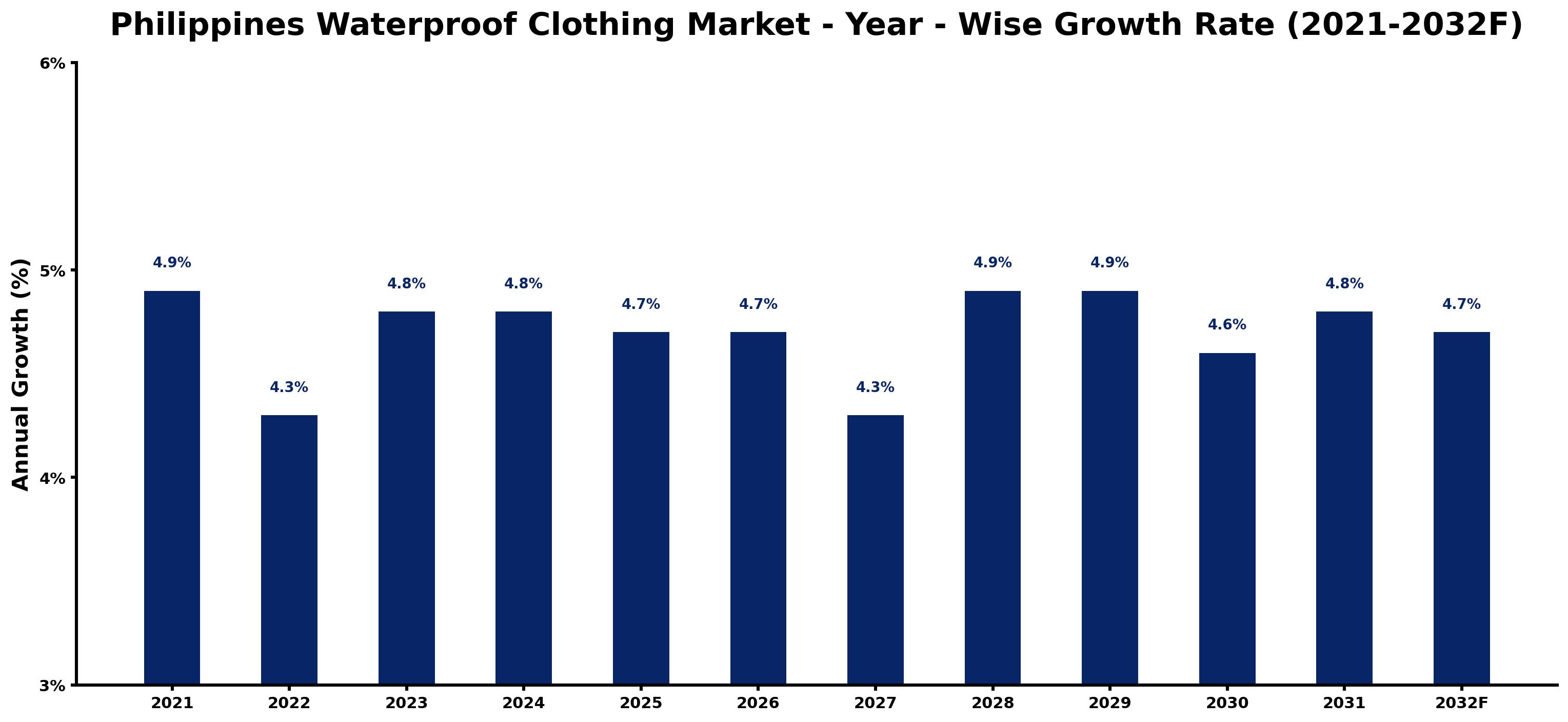
The table below presents the year wise growth rates along with the key drivers influencing the market
| Year | Growth Rate | Major Drivers |
| 2021 | 4.9% | Consumer interest in outdoor activities surged, influencing waterproof clothing purchases. |
| 2022 | 4.3% | Increasing urban flooding incidents prompted demand for reliable waterproof apparel. |
| 2023 | 4.8% | Younger demographics began prioritizing functionality and style in their clothing choices. |
| 2024 | 4.8% | Sustainable fabric innovations contributed to a shift in purchasing preferences. |
| 2025 | 4.7% | Local tourism growth underscored the need for durable outdoor gear in local markets. |
| 2026 | 4.7% | E-commerce platforms expanded, making waterproof products more accessible nationwide. |
| 2027 | 4.3% | Collaborations with local influencers enhanced brand visibility and consumer trust. |
| 2028 | 4.9% | Corporate social responsibility initiatives encouraged brands to adopt eco-friendly practices. |
| 2029 | 4.9% | Emerging technologies improved waterproof fabric production efficiency and performance. |
| 2030 | 4.6% | Health awareness campaigns highlighted the importance of protective clothing for outdoor activities. |
| 2031 | 4.8% | Rising disposable incomes enabled consumers to invest in premium waterproof products. |
| 2032 | 4.7% | The integration of smart textiles expanded functionality, attracting tech-savvy consumers. |
Note - Market size estimations and growth projections presented in this report are based on 6Wresearch's advanced forecasting approach, validated with industry datasets as of June 2026.
Philippines Waterproof Clothing Market Synopsis
The Philippines Waterproof Clothing Market is projected to reach 4.7% and witness significant growth during the forecast period (2026-2032). This anticipated growth is primarily attributed to the increasing participation in sports and fitness activities across the country. The rising awareness about the health benefits associated with active lifestyles is pushing consumers toward activities that require specialized apparel, thereby driving the demand for waterproof clothing. With a rise in disposable income and changing lifestyle preferences, more consumers are investing in outdoor activities, further propelling the market for water-resistant garments.
Philippines Waterproof Clothing Market Growth Drivers
Several key factors are fostering the growth of the Philippines Waterproof Clothing Market. Firstly, the increase in outdoor recreational activities, including hiking, biking, and water sports, has created substantial demand for waterproof clothing designed for both performance and comfort. Secondly, the expanding middle class in the Philippines is leading to higher disposable incomes, enabling consumers to spend more on quality outdoor gear. Thirdly, awareness campaigns and health initiatives promoting physical fitness are encouraging participation in sports, which increases the market's reach. Additionally, the shift towards sustainable materials in clothing production is attracting environmentally conscious consumers, enhancing market appeal. Finally, the impact of climate change, leading to erratic weather conditions, has heightened the need for reliable waterproof clothing in daily life.
Philippines Waterproof Clothing Market Challenges and Restraints
While the Philippines Waterproof Clothing Market is set for growth, several challenges could hinder its progress. One significant barrier is the high cost of quality waterproof materials which could deter price-sensitive consumers. Furthermore, the market must contend with a complicated supply chain that may face disruptions due to natural disasters or political instability, affecting product availability. There is also considerable competition from low-cost alternatives which may compromise quality, making it difficult for premium brands to maintain market share. Additionally, the lingering effects of the COVID-19 pandemic have created cautious consumer behavior regarding spending, which could impact sales. Lastly, the market could face challenges related to product innovation and differentiation in a rapidly evolving apparel landscape.
Philippines Waterproof Clothing Market Regional Analysis
The growth of the Philippines Waterproof Clothing Market is not uniform across the country; specific regions show distinct dynamics. Urban areas, particularly Metro Manila, are witnessing a surge in demand due to higher concentrations of active lifestyles and consumer purchasing power. Conversely, rural areas may experience slower growth due to economic constraints and lesser exposure to outdoor recreational activities. The tourism sector, especially in coastal and mountainous regions, presents lucrative opportunities for waterproof clothing, as outdoor activities among tourists are on the rise. Additionally, regions prone to seasonal floods or typhoons emphasize the necessity of waterproof attire for daily commuting and outdoor engagement. Government initiatives to boost domestic tourism may further enhance the growth potential in these areas.
Philippines Waterproof Clothing Market Government Investment and Initiatives
The Philippine government has recognized the importance of the outdoor and sports apparel market, facilitating frameworks to promote the industry. Investments in infrastructure development aimed at enhancing outdoor recreational spaces indirectly benefit the waterproof clothing market by increasing public engagement in these activities. Various government initiatives are also focused on environmental sustainability, encouraging manufacturers to adopt eco-friendly materials and processes, which aligns with global trends towards sustainability. Public spending in sports development programs encourages increased participation, which in turn drives demand for specialized clothing, including waterproof garments. Furthermore, the government's active promotion of tourism related to natural parks and coastal regions serves to increase the audience for waterproof clothing.
Philippines Waterproof Clothing Market Latest Developments (May 2025 - June 2026)
Recent developments in the Philippines Waterproof Clothing Market signify a trend towards innovation and sustainability. Manufacturers are increasingly focused on integrating advanced technologies into their products, such as moisture-wicking fabrics and improved breathability. Initiatives to recycle materials into new clothing lines are gaining traction, appealing to the environmentally conscious consumer base. Collaborations between brands and local organizations to promote outdoor activities have also emerged, helping to raise awareness of waterproof clothing benefits. Moreover, the post-pandemic recovery phase has seen a gradual rebound in retail activity as consumer confidence returns, allowing brands to launch new products while adjusting marketing strategies to align with evolving consumer behavior.
Philippines Waterproof Clothing Market - Key Attractiveness of the Report
- 10 Years of Market Numbers
- Historical Data Starting from 2022 to 2025
- Base Year: 2025
- Forecast Data until 2032
- Key Performance Indicators Impacting the Market
- Major Upcoming Developments and Projects
Key Highlights of the Report:
- Philippines Waterproof Clothing Market Outlook
- Market Size of Philippines Waterproof Clothing Market, 2025
- Forecast of Philippines Waterproof Clothing Market, 2032F
- Historical Data and Forecast of Philippines Waterproof Clothing Revenues & Volume for the Period 2022-2032F
- Philippines Waterproof Clothing Market Trend Evolution
- Philippines Waterproof Clothing Market Drivers and Challenges
- Philippines Waterproof Clothing Price Trends
- Philippines Waterproof Clothing Porter's Five Forces
- Philippines Waterproof Clothing Industry Life Cycle
- Historical Data and Forecast of Philippines Waterproof Clothing Market Revenues & Volume By Raw Material for the Period 2022-2032F
- Historical Data and Forecast of Philippines Waterproof Clothing Market Revenues & Volume By ePTFE for the Period 2022-2032F
- Historical Data and Forecast of Philippines Waterproof Clothing Market Revenues & Volume By Polyurethane for the Period 2022-2032F
- Historical Data and Forecast of Philippines Waterproof Clothing Market Revenues & Volume By Polyester for the Period 2022-2032F
- Historical Data and Forecast of Philippines Waterproof Clothing Market Revenues & Volume By Others for the Period 2022-2032F
- Historical Data and Forecast of Philippines Waterproof Clothing Market Revenues & Volume By Fabric for the Period 2022-2032F
- Historical Data and Forecast of Philippines Waterproof Clothing Market Revenues & Volume By Densely Woven for the Period 2022-2032F
- Historical Data and Forecast of Philippines Waterproof Clothing Market Revenues & Volume By Membrane for the Period 2022-2032F
- Historical Data and Forecast of Philippines Waterproof Clothing Market Revenues & Volume By Coated for the Period 2022-2032F
- Historical Data and Forecast of Philippines Waterproof Clothing Market Revenues & Volume By Application for the Period 2022-2032F
- Historical Data and Forecast of Philippines Waterproof Clothing Market Revenues & Volume By General Clothing & Accessories for the Period 2022-2032F
- Historical Data and Forecast of Philippines Waterproof Clothing Market Revenues & Volume By Sports Goods for the Period 2022-2032F
- Historical Data and Forecast of Philippines Waterproof Clothing Market Revenues & Volume By Protective Clothing for the Period 2022-2032F
- Historical Data and Forecast of Philippines Waterproof Clothing Market Revenues & Volume By Others for the Period 2022-2032F
- Philippines Waterproof Clothing Import Export Trade Statistics
- Market Opportunity Assessment By Raw Material
- Market Opportunity Assessment By Fabric
- Market Opportunity Assessment By Application
- Philippines Waterproof Clothing Top Companies Market Share
- Philippines Waterproof Clothing Competitive Benchmarking By Technical and Operational Parameters
- Philippines Waterproof Clothing Company Profiles
- Philippines Waterproof Clothing Key Strategic Recommendations






































