Philippines Wood Wool Insulation Market Size, Share & Growth Rate
The Philippines Wood Wool Insulation Market was estimated at USD 347 Million in 2025 and is projected to reach USD 479 Million by 2032, growing at a CAGR of 4.7% from 2026 to 2032. This growth trajectory is primarily driven by an escalating demand for sustainable building materials, coupled with an increasing focus on energy efficiency in construction. As residential and commercial construction projects ramp up, the adoption of eco-friendly insulation solutions like wood wool is expected to significantly rise.
Philippines Wood Wool Insulation Market Year-wise Growth Rate and Key Drivers
This graph highlights how the Philippines Wood Wool Insulation Market has steadily grown over the years, supported by major growth factors.
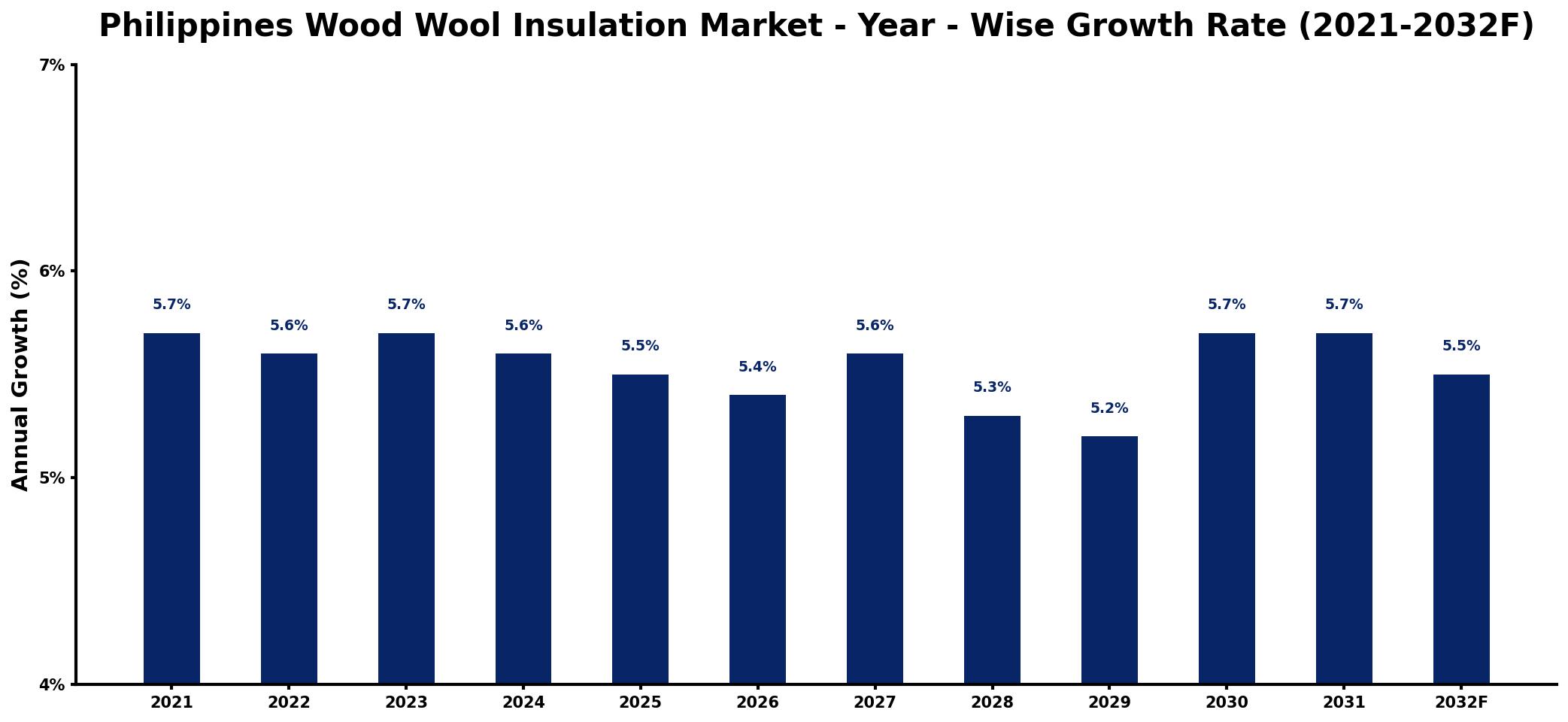
The table below presents the year‑wise growth rates along with the key drivers influencing the market
| Year | Growth Rate | Major Drivers |
| 2021 | 5.7% | Rising construction sector demand |
| 2022 | 5.6% | Growing awareness of sustainability |
| 2023 | 5.7% | Increased energy efficiency regulations |
| 2024 | 5.6% | Expansion of green building projects |
| 2025 | 5.5% | Boost in renewable energy initiatives |
| 2026 | 5.4% | Higher consumer preference for eco-friendly |
| 2027 | 5.6% | Government incentives for sustainable materials |
| 2028 | 5.3% | Emerging trends in energy conservation |
| 2029 | 5.2% | Growth in residential remodeling projects |
| 2030 | 5.7% | Surge in commercial construction activities |
| 2031 | 5.7% | Increased investment in sustainable technologies |
| 2032 | 5.5% | Rising popularity of energy-efficient solutions |
Note: Market size estimations and growth projections presented in this report are based on 6Wresearch's proprietary forecasting methodology, utilizing the latest available industry data, government publications, and primary research inputs.
Philippines Wood Wool Insulation Market Synopsis
In recent years, the Philippines wood wool insulation market has gained substantial momentum, particularly as the construction sector turns towards more sustainable practices. Current trends indicate a notable shift, with growing awareness of energy-efficient solutions and the eco-friendly nature of wood wool insulation, which resonates with both builders and consumers.
Looking ahead, the market is poised for steady growth, buoyed by increasing investments in residential housing projects and renovations of existing structures. As compliance with environmental regulations becomes more stringent, the demand for wood wool insulation is anticipated to escalate, particularly in the face of rising energy costs and a strong push for green building initiatives.
Philippines Wood Wool Insulation Market Key Takeaways
- The market is valued at USD 29 million and is projected to expand significantly by 2032.
- Wood wool insulation is recognized for its thermal and acoustic properties, driving its popularity.
- The shift towards sustainable building materials is a critical factor fueling market growth.
- Fire safety regulations pose challenges for broader adoption in commercial projects.
- COVID-19 impacted construction activity but recovery is expected as green building gains traction.
Evaluation of Restraints in Philippines Wood Wool Insulation Market
The Philippines wood wool insulation market faces notable restraints related to fire safety and compliance with modern building regulations. The inherent combustibility of wood wool products necessitates the implementation of additional fireproofing measures, which can inflate project costs and complicate their use in certain applications, particularly in public and commercial buildings. As a result, while the material's eco-friendly benefits are appealing, manufacturers are urged to innovate in ways that enhance fire resistance while maintaining insulation effectiveness. This balancing act remains a significant challenge for market players as they navigate regulatory landscapes.
Philippines Wood Wool Insulation Market Trends
The current trends shaping the Philippines wood wool insulation market include a surge in green building practices, where builders are increasingly prioritizing eco-friendly materials. Moreover, the focus on energy conservation regulations is compelling stakeholders to seek effective insulation solutions that minimize energy consumption. Emerging technologies in production also aim to enhance the fire-resistant qualities of wood wool insulation, responding to safety concerns while remaining competitive. These trends are bolstered by a growing consumer preference for sustainable living, propelling the market forward.
Philippines Wood Wool Insulation Market Opportunities
Significant growth opportunities exist within the Philippines wood wool insulation market, particularly in the residential sector. As urbanization accelerates and the housing market expands, there is an increased demand for building materials that align with sustainability goals. Additionally, the potential for retrofitting existing buildings with wood wool insulation to enhance energy efficiency presents a lucrative opportunity. Furthermore, partnerships between manufacturers and construction firms focused on green initiatives could further drive market expansion and innovation.
Government Initiatives in the Philippines Wood Wool Insulation Market
The Philippine government has introduced several initiatives aimed at promoting sustainable building practices and energy conservation. Public spending on infrastructure and housing, along with various incentives for green construction materials, is fostering an environment conducive to the growth of the wood wool insulation market. Regulations supporting energy-efficient building codes are also propelling the adoption of eco-friendly insulation solutions, enhancing the viability of products like wood wool.
Future Insights of the Philippines Wood Wool Insulation Market
Looking ahead to 2026-2032, the Philippines wood wool insulation market is set to flourish, driven by a continued emphasis on sustainability in construction. As regulatory frameworks tighten around energy efficiency, and consumer preferences shift towards greener solutions, the market will likely see innovations in product development that enhance performance without compromising safety. Investment in residential and commercial projects will further solidify the demand, paving the way for significant growth and opportunities in this sector.
Philippines Wood Wool Insulation Market Latest Developments (2025 - 2026)
Recent developments in the Philippines wood wool insulation market indicate a shift towards increased collaboration among industry stakeholders to enhance product offerings. The focus on developing fire-resistant wood wool insulation solutions has gained traction as manufacturers respond to regulatory demands. Additionally, public awareness campaigns highlighting the benefits of eco-friendly insulation materials are anticipated to bolster market interest and consumer adoption in the coming years.
Philippines Wood Wool Insulation Market - Key Attractiveness of the Report
- 10 Years of Market Numbers
- Historical Data Starting from 2022 to 2025
- Base Year: 2025
- Forecast Data until 2032
- Key Performance Indicators Impacting the Market
- Major Upcoming Developments and Projects
Key Highlights of the Report:
- Philippines Wood Wool Insulation Market Outlook
- Market Size of Philippines Wood Wool Insulation Market, 2025
- Forecast of Philippines Wood Wool Insulation Market, 2032
- Historical Data and Forecast of Philippines Wood Wool Insulation Revenues & Volume for the Period 2022-2032F
- Philippines Wood Wool Insulation Market Trend Evolution
- Philippines Wood Wool Insulation Market Drivers and Challenges
- Philippines Wood Wool Insulation Price Trends
- Philippines Wood Wool Insulation Porter's Five Forces
- Philippines Wood Wool Insulation Industry Life Cycle
- Historical Data and Forecast of Philippines Wood Wool Insulation Market Revenues & Volume By Product Type for the Period 2022-2032F
- Historical Data and Forecast of Philippines Wood Wool Insulation Market Revenues & Volume By Stable for the Period 2022-2032F
- Historical Data and Forecast of Philippines Wood Wool Insulation Market Revenues & Volume By Flexible for the Period 2022-2032F
- Historical Data and Forecast of Philippines Wood Wool Insulation Market Revenues & Volume By Application for the Period 2022-2032F
- Historical Data and Forecast of Philippines Wood Wool Insulation Market Revenues & Volume By Thermal Insulation for the Period 2022-2032F
- Historical Data and Forecast of Philippines Wood Wool Insulation Market Revenues & Volume By Acoustic Insulation for the Period 2022-2032F
- Historical Data and Forecast of Philippines Wood Wool Insulation Market Revenues & Volume By Electrical Insulation for the Period 2022-2032F
- Philippines Wood Wool Insulation Import Export Trade Statistics
- Market Opportunity Assessment By Product Type
- Market Opportunity Assessment By Application
- Philippines Wood Wool Insulation Top Companies Market Share
- Philippines Wood Wool Insulation Competitive Benchmarking By Technical and Operational Parameters
- Philippines Wood Wool Insulation Company Profiles
- Philippines Wood Wool Insulation Key Strategic Recommendations






































