Poland Bisphenol a Market: Import Trend Analysis
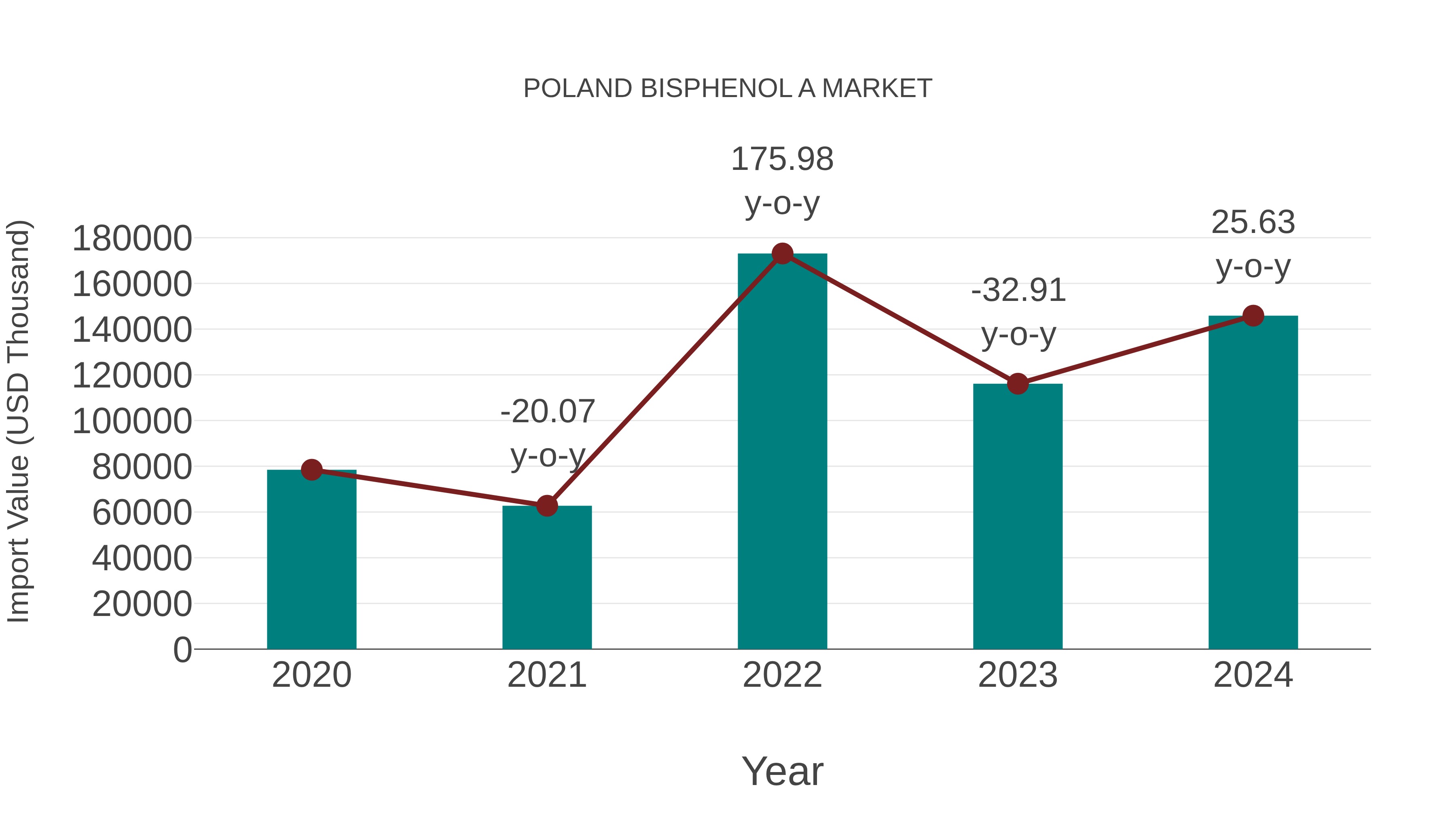
In the Poland bisphenol A market, the import trend exhibited significant growth from 2023 to 2024, with a growth rate of 25.63%. The compound annual growth rate (CAGR) for imports during the period 2020-2024 stood at 16.77%. This robust import momentum can be attributed to increasing industrial demand and favorable trade policies that supported market stability during this period.
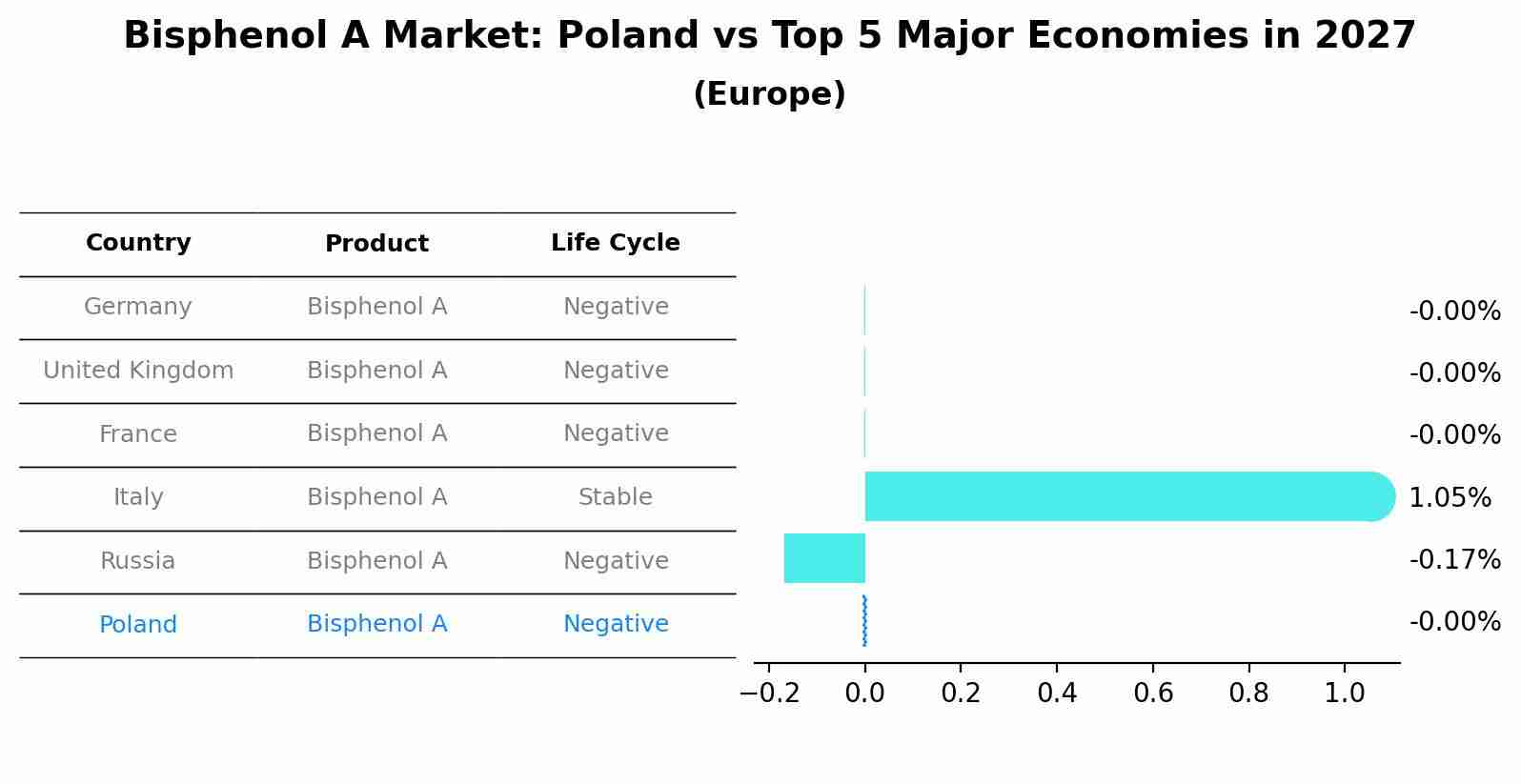
Bisphenol A Market: Poland vs Top 5 Major Economies in 2027 (Europe)
By 2027, Poland's Bisphenol A market is forecasted to achieve a negative growth rate of -0.00%, with Germany leading the Europe region, followed by United Kingdom, France, Italy and Russia.
Poland Bisphenol A Market Overview
The Poland Bisphenol A market is expected to witness steady growth due to increasing demand from various industries such as automotive, electronics, and packaging. Bisphenol A is widely used in the production of polycarbonate plastics and epoxy resins, which are essential materials in these industries. The market is also driven by stringent regulations promoting the use of Bisphenol A-free products in food and beverage packaging. However, concerns regarding the potential health risks associated with Bisphenol A exposure may hamper market growth. Key players in the Poland Bisphenol A market include major chemical manufacturers and suppliers who are focusing on research and development activities to provide safer alternatives to Bisphenol A. Overall, the market is poised for moderate growth in the coming years, influenced by regulatory changes and shifting consumer preferences.
Poland Bisphenol A Market Trends
The Bisphenol A market in Poland is experiencing a shift towards BPA-free products due to increasing consumer awareness about the potential health risks associated with BPA exposure. Manufacturers are responding to this trend by developing alternative solutions such as BPA-free plastics and coatings for food and beverage packaging. Additionally, regulatory bodies in Poland are imposing stricter guidelines on the use of BPA in certain products, further driving the market towards BPA-free options. The demand for sustainable and environmentally friendly materials is also influencing the market, with a growing preference for biodegradable and recyclable alternatives to traditional BPA-containing products. Overall, the Poland Bisphenol A market is witnessing a transition towards safer and more eco-friendly solutions in response to changing consumer preferences and regulatory requirements.
Poland Bisphenol A Market Challenges
In the Poland Bisphenol A market, challenges include increasing regulatory pressure to restrict the use of Bisphenol A due to its potential health risks, such as hormonal disruption and environmental impact. This has led to a growing demand for BPA-free alternatives, putting pressure on manufacturers to innovate and reformulate their products. Additionally, the fluctuating prices of raw materials used in the production of Bisphenol A can impact the profitability of companies in the market. Competition from substitutes and the need to invest in sustainable practices to meet consumer preferences for eco-friendly products also present challenges for players in the Poland Bisphenol A market. Overall, navigating these regulatory, economic, and consumer-driven challenges requires strategic planning and adaptation for success in the industry.
Poland Bisphenol A Market Investment Opportunities
In the Poland Bisphenol A market, there are several investment opportunities for potential investors. With the increasing demand for Bisphenol A in various industries such as automotive, electronics, and packaging, there is a growing market potential for producers and suppliers. Investing in Bisphenol A production facilities or partnering with existing manufacturers can be a lucrative opportunity. Additionally, as the market shifts towards more sustainable and environmentally friendly alternatives, investing in research and development of bio-based or BPA-free alternatives can also be a strategic move. Keeping an eye on regulatory developments and consumer preferences will be crucial in identifying the most promising investment opportunities in the Poland Bisphenol A market.
Poland Bisphenol A Market Government Policy
The Polish government has implemented regulations regarding the use of Bisphenol A (BPA) in products, particularly in food contact materials and infant products. The regulations aim to limit the exposure of consumers, especially vulnerable populations like infants and pregnant women, to BPA. In 2011, Poland banned the use of BPA in the production of baby bottles. Additionally, the country follows the European Union regulations on BPA, which includes restrictions on its use in certain products and mandatory labeling requirements. The government continues to monitor scientific developments and assess the safety of BPA to ensure that the regulations remain up-to-date and in line with the latest research findings.
Poland Bisphenol A Market Future Outlook
The Poland Bisphenol A market is expected to witness steady growth in the coming years, driven by increasing demand from end-use industries such as packaging, automotive, and electronics. The market is likely to benefit from the country`s growing industrial activities and rising consumer awareness regarding the importance of sustainable and safe packaging materials. However, regulatory restrictions on the use of Bisphenol A in certain applications and the shift towards alternative materials may pose challenges to market growth. Overall, with technological advancements and innovation in product development, the Poland Bisphenol A market is anticipated to expand moderately in the foreseeable future.
Key Highlights of the Report:
- Poland Bisphenol A Market Outlook
- Market Size of Poland Bisphenol A Market, 2021
- Forecast of Poland Bisphenol A Market, 2027
- Historical Data and Forecast of Poland Bisphenol A Revenues & Volume for the Period 2018 - 2027
- Poland Bisphenol A Market Trend Evolution
- Poland Bisphenol A Market Drivers and Challenges
- Poland Bisphenol A Price Trends
- Poland Bisphenol A Porter's Five Forces
- Poland Bisphenol A Industry Life Cycle
- Historical Data and Forecast of Poland Bisphenol A Market Revenues & Volume By Application for the Period 2018 - 2027
- Historical Data and Forecast of Poland Bisphenol A Market Revenues & Volume By Polycarbonate Resin for the Period 2018 - 2027
- Historical Data and Forecast of Poland Bisphenol A Market Revenues & Volume By Epoxy Resin for the Period 2018 - 2027
- Historical Data and Forecast of Poland Bisphenol A Market Revenues & Volume By Unsaturated Polyester Resins for the Period 2018 - 2027
- Historical Data and Forecast of Poland Bisphenol A Market Revenues & Volume By Flame Retardants for the Period 2018 - 2027
- Historical Data and Forecast of Poland Bisphenol A Market Revenues & Volume By Others for the Period 2018 - 2027
- Historical Data and Forecast of Poland Bisphenol A Market Revenues & Volume By End-use for the Period 2018 - 2027
- Historical Data and Forecast of Poland Bisphenol A Market Revenues & Volume By Eye wear for the Period 2018 - 2027
- Historical Data and Forecast of Poland Bisphenol A Market Revenues & Volume By Automotive component for the Period 2018 - 2027
- Historical Data and Forecast of Poland Bisphenol A Market Revenues & Volume By Electronics for the Period 2018 - 2027
- Historical Data and Forecast of Poland Bisphenol A Market Revenues & Volume By Wind Energy Composites for the Period 2018 - 2027
- Historical Data and Forecast of Poland Bisphenol A Market Revenues & Volume By Paint and Coating for the Period 2018 - 2027
- Historical Data and Forecast of Poland Bisphenol A Market Revenues & Volume By Green House for the Period 2018 - 2027
- Historical Data and Forecast of Poland Bisphenol A Market Revenues & Volume By Others for the Period 2018 - 2027
- Poland Bisphenol A Import Export Trade Statistics
- Market Opportunity Assessment By Application
- Market Opportunity Assessment By End-use
- Poland Bisphenol A Top Companies Market Share
- Poland Bisphenol A Competitive Benchmarking By Technical and Operational Parameters
- Poland Bisphenol A Company Profiles
- Poland Bisphenol A Key Strategic Recommendations






































