Poland Chlorine Market: Import Trend Analysis
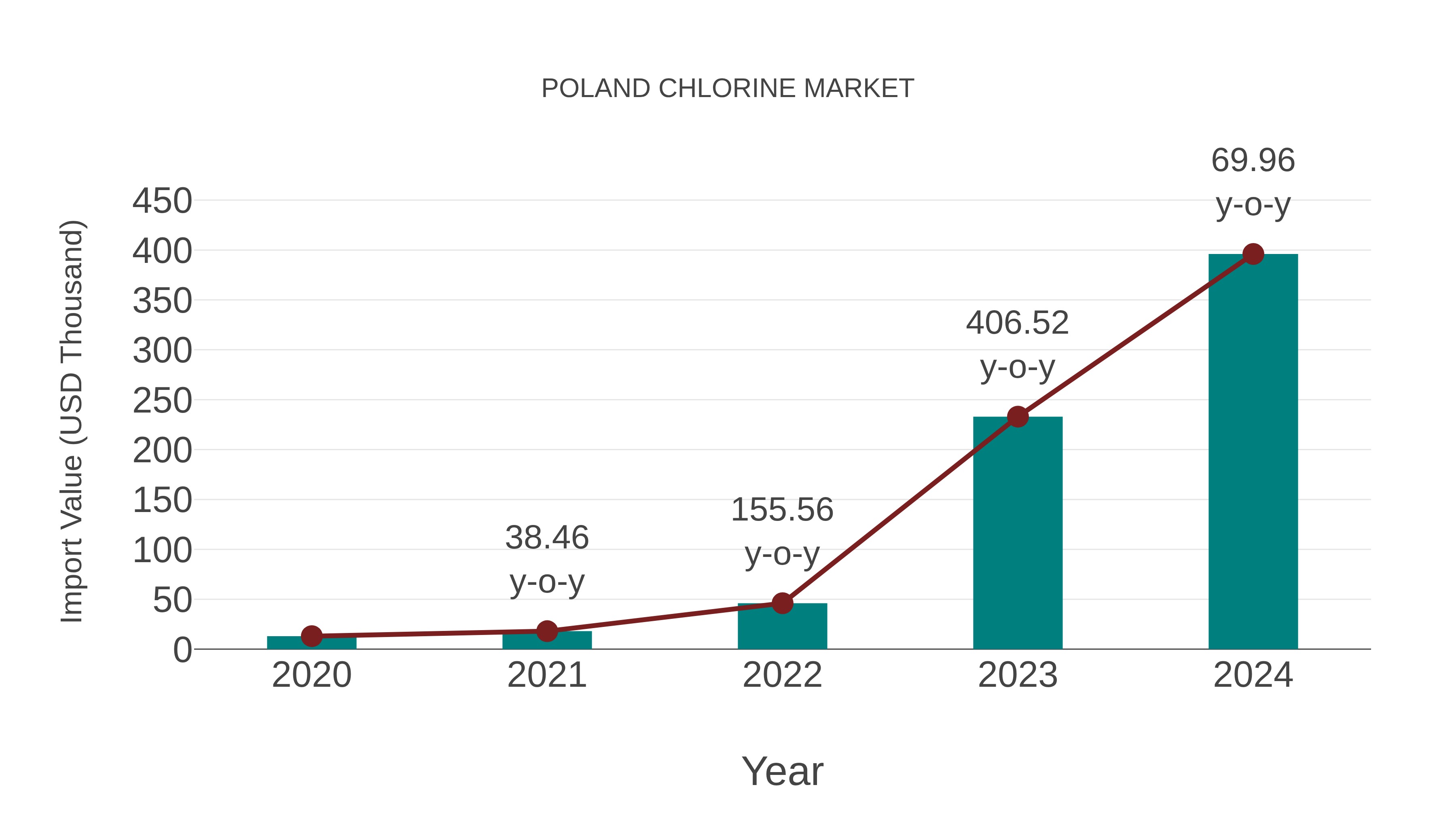
In the Poland chlorine market, the import trend saw significant growth from 2023 to 2024, with a growth rate of 69.96%. The compound annual growth rate (CAGR) for the period 2020-2024 stood at an impressive 134.93%. This surge in imports can be attributed to a notable demand shift towards chlorine-based products, indicating a strong market stability and increased reliance on imports to meet domestic needs.
Chlorine Market: Poland vs Top 5 Major Economies in 2027 (Europe)
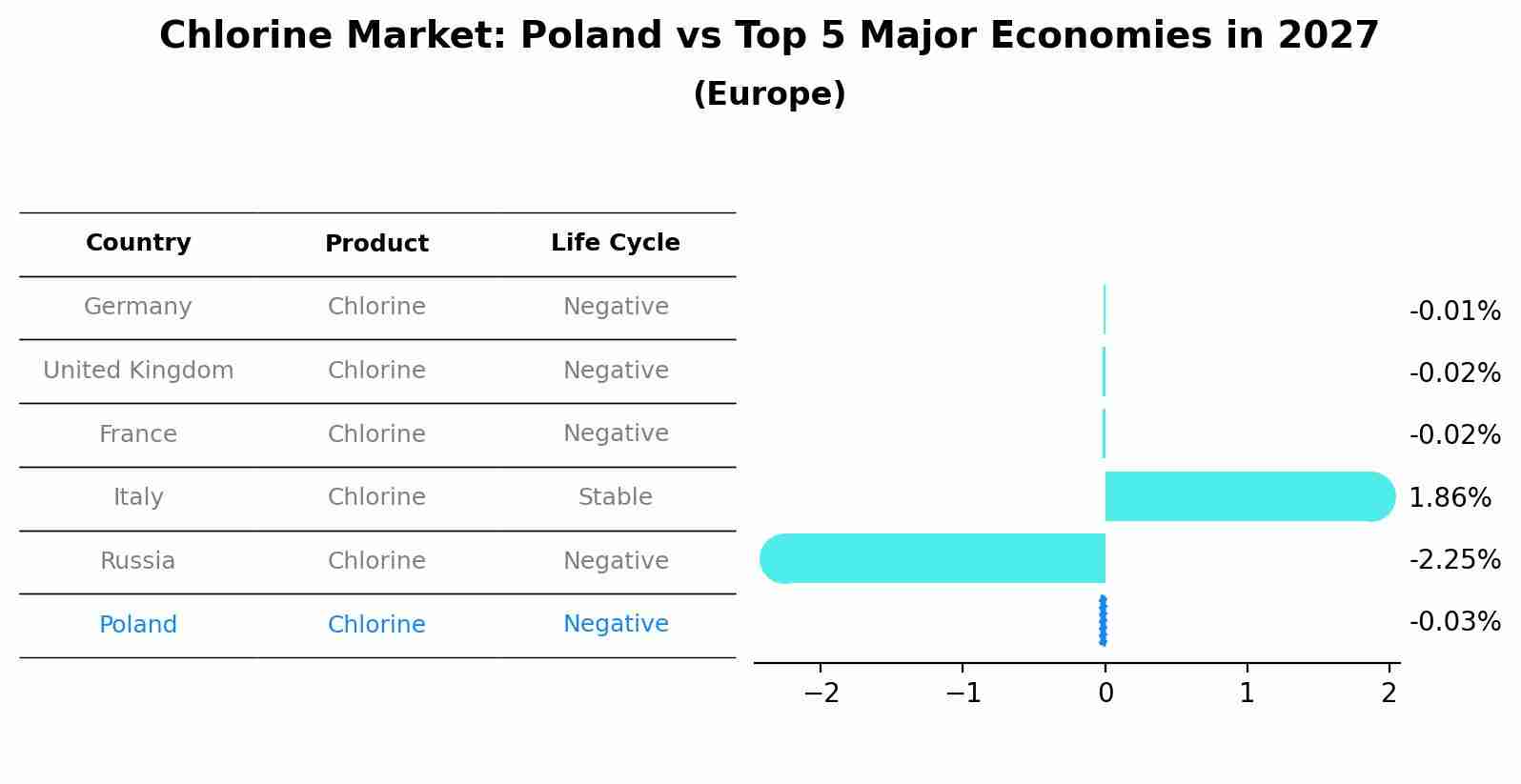
The Chlorine market in Poland is projected to grow at a negative growth rate of -0.03% by 2027, within the Europe region led by Germany, along with other countries like United Kingdom, France, Italy and Russia, collectively shaping a dynamic and evolving market environment driven by innovation and increasing adoption of emerging technologies.
Poland Chlorine Market Overview
The chlorine market in Poland is driven by its widespread use in water treatment, chemical manufacturing, and the production of plastics such as PVC. As industrial activities grow, the demand for chlorine as a key chemical in disinfectants, solvents, and bleaches is increasing. Chlorines role in maintaining clean water supplies and sanitation systems also contributes to its strong market presence.
Drivers of the market
The chlorine market in Poland is driven by the demand for chlorine in various applications, including water treatment, chemical manufacturing, and disinfectants. Chlorine is widely used for its disinfecting and bleaching properties. The growth in municipal water treatment projects, coupled with increasing demand for chlorine-based products in industries such as pharmaceuticals and textiles, supports market demand. Additionally, advancements in chlorine production technologies and the focus on improving safety and environmental sustainability contribute to market growth. The rise in industrial and residential applications further influences market dynamics.
Challenges of the market
The chlorine market in Poland is challenged by several factors, including environmental and safety regulations that impose stringent controls on the production, storage, and transportation of chlorine. Compliance with these regulations can lead to increased operational costs for manufacturers. Additionally, fluctuations in demand from various industrial applications, such as water treatment and chemical production, can impact market stability. The market also faces competition from alternative disinfectants and chemicals that offer similar benefits with potentially lower environmental or health risks.
Government Policy of the market
The chlorine market in Poland is influenced by regulations related to chemical safety, environmental standards, and industry practices. Government policies ensure that chlorine products meet EU standards for safety, handling, and environmental compliance. Compliance with directives on chemical production and emissions control shapes market practices. Government support for advancements in chlorine technologies and sustainable production methods impacts market dynamics.
Key Highlights of the Report:
- Poland Chlorine Market Outlook
- Market Size of Poland Chlorine Market, 2024
- Forecast of Poland Chlorine Market, 2031
- Historical Data and Forecast of Poland Chlorine Revenues & Volume for the Period 2018 - 2031
- Poland Chlorine Market Trend Evolution
- Poland Chlorine Market Drivers and Challenges
- Poland Chlorine Price Trends
- Poland Chlorine Porter's Five Forces
- Poland Chlorine Industry Life Cycle
- Historical Data and Forecast of Poland Chlorine Market Revenues & Volume By Application for the Period 2018 - 2031
- Historical Data and Forecast of Poland Chlorine Market Revenues & Volume By EDC/PVC for the Period 2018 - 2031
- Historical Data and Forecast of Poland Chlorine Market Revenues & Volume By Isocyanates and Oxygenates for the Period 2018 - 2031
- Historical Data and Forecast of Poland Chlorine Market Revenues & Volume By Chloromethanes for the Period 2018 - 2031
- Historical Data and Forecast of Poland Chlorine Market Revenues & Volume By Solvents and Epichlorohydrin for the Period 2018 - 2031
- Historical Data and Forecast of Poland Chlorine Market Revenues & Volume By Inorganic Chemicals for the Period 2018 - 2031
- Historical Data and Forecast of Poland Chlorine Market Revenues & Volume By Other Applications for the Period 2018 - 2031
- Historical Data and Forecast of Poland Chlorine Market Revenues & Volume By End-user Industry for the Period 2018 - 2031
- Historical Data and Forecast of Poland Chlorine Market Revenues & Volume By Water Treatment for the Period 2018 - 2031
- Historical Data and Forecast of Poland Chlorine Market Revenues & Volume By Pharmaceutical for the Period 2018 - 2031
- Historical Data and Forecast of Poland Chlorine Market Revenues & Volume By Chemicals for the Period 2018 - 2031
- Historical Data and Forecast of Poland Chlorine Market Revenues & Volume By Paper and Pulp for the Period 2018 - 2031
- Historical Data and Forecast of Poland Chlorine Market Revenues & Volume By Plastic for the Period 2018 - 2031
- Historical Data and Forecast of Poland Chlorine Market Revenues & Volume By Pesticides for the Period 2018 - 2031
- Historical Data and Forecast of Poland Chlorine Market Revenues & Volume By Other End-user Industries for the Period 2018 - 2031
- Poland Chlorine Import Export Trade Statistics
- Market Opportunity Assessment By Application
- Market Opportunity Assessment By End-user Industry
- Poland Chlorine Top Companies Market Share
- Poland Chlorine Competitive Benchmarking By Technical and Operational Parameters
- Poland Chlorine Company Profiles
- Poland Chlorine Key Strategic Recommendations






































