Poland Cleaning Products and Detergents Market: Import Trend Analysis
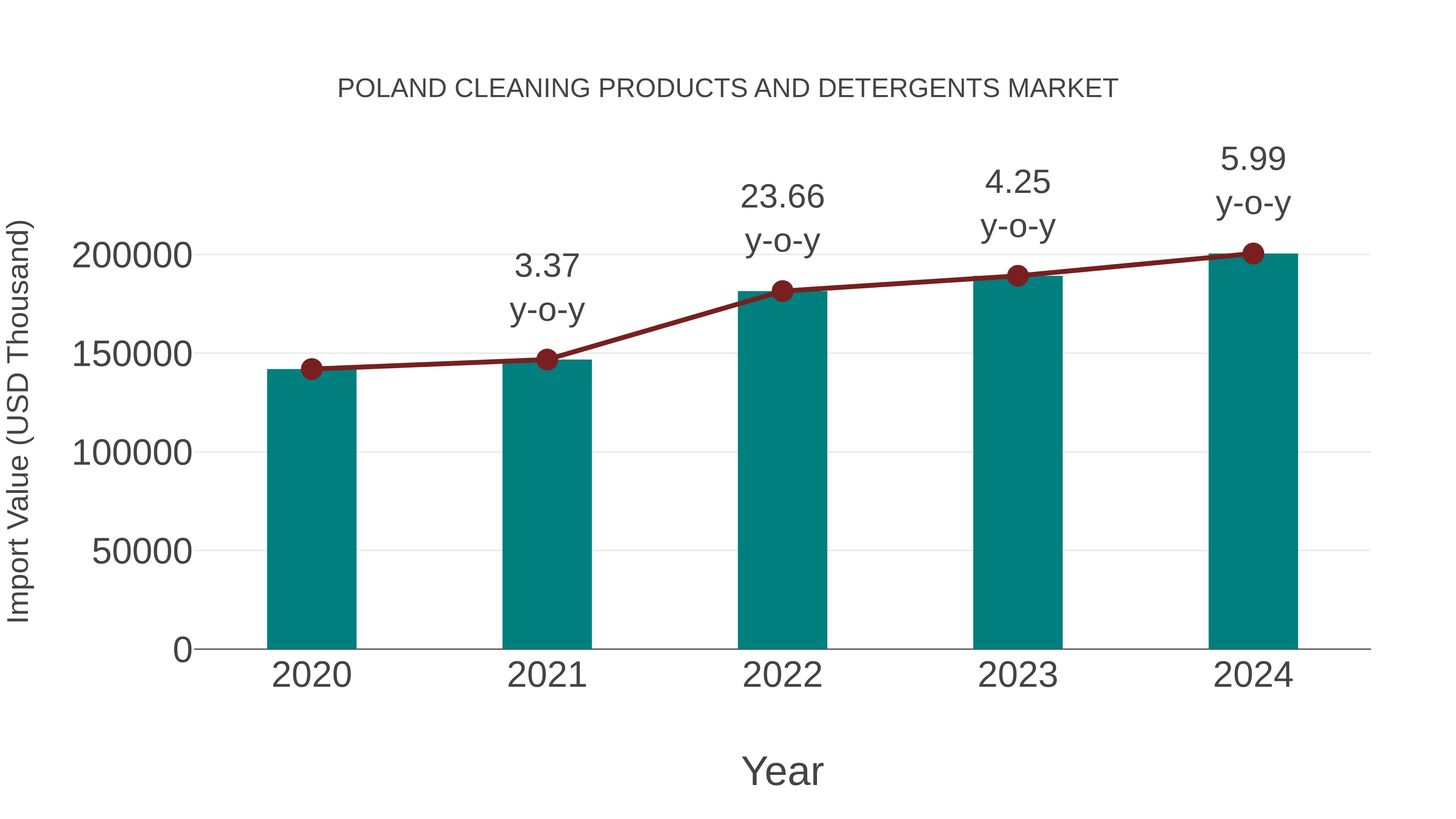
Poland import trend for cleaning products and detergents market showed a growth rate of 5.99% from 2023 to 2024, with a compound annual growth rate (CAGR) of 9.02% from 2020 to 2024. This strong import momentum can be attributed to the increasing demand for quality cleaning products, reflecting a shift towards higher standards of hygiene and cleanliness in the market.
Poland Cleaning Products and Detergents Market Overview
The cleaning products and detergents market in Poland is expanding as consumer awareness of hygiene and cleanliness increases. The market includes household cleaning products, laundry detergents, and surface disinfectants. The demand for eco-friendly and specialized cleaning solutions is also driving growth in this sector.
Drivers of the market
The cleaning products and detergents market in Poland benefits from the demand for effective and innovative cleaning solutions used in residential, commercial, and industrial applications. The growth in consumer awareness of hygiene and cleanliness, coupled with increasing demand for eco-friendly and sustainable products, drives market expansion. Additionally, advancements in cleaning technologies and the rise in the use of automated cleaning systems contribute to market growth. The focus on improving product efficacy, safety, and environmental impact further supports market dynamics. The increasing availability of cleaning products through retail and e-commerce channels also influences market trends.
Challenges of the market
The cleaning products and detergents market in Poland is influenced by a range of challenges, including the need to comply with stringent regulations related to chemical safety and environmental impact. Manufacturers must adapt to evolving standards that require the reduction of harmful chemicals and the development of more sustainable products. Additionally, the market faces pressure from increasing consumer demand for eco-friendly and natural cleaning products, which can require significant research and development investment. Supply chain disruptions and fluctuations in raw material costs further complicate market dynamics, impacting production and pricing.
Government Policy of the market
Government policies impacting the cleaning products and detergents market in Poland focus on product safety, environmental regulations, and quality standards. Regulations ensure that cleaning products and detergents meet EU standards for safety, ingredient transparency, and environmental impact. Compliance with directives on chemical composition, labeling, and waste management shapes market practices. Government support for innovations in cleaning technologies and sustainable practices drives market dynamics.
Key Highlights of the Report:
- Poland Cleaning Products and Detergents Market Outlook
- Market Size of Poland Cleaning Products and Detergents Market, 2025
- Forecast of Poland Cleaning Products and Detergents Market, 2032
- Historical Data and Forecast of Poland Cleaning Products and Detergents Revenues & Volume for the Period 2022-2032F
- Poland Cleaning Products and Detergents Market Trend Evolution
- Poland Cleaning Products and Detergents Market Drivers and Challenges
- Poland Cleaning Products and Detergents Price Trends
- Poland Cleaning Products and Detergents Porter's Five Forces
- Poland Cleaning Products and Detergents Industry Life Cycle
- Historical Data and Forecast of Poland Cleaning Products and Detergents Market Revenues & Volume By Type for the Period 2022-2032F
- Historical Data and Forecast of Poland Cleaning Products and Detergents Market Revenues & Volume By Anionic Detergents for the Period 2022-2032F
- Historical Data and Forecast of Poland Cleaning Products and Detergents Market Revenues & Volume By Cationic Detergents for the Period 2022-2032F
- Historical Data and Forecast of Poland Cleaning Products and Detergents Market Revenues & Volume By Non-ionic Detergents for the Period 2022-2032F
- Historical Data and Forecast of Poland Cleaning Products and Detergents Market Revenues & Volume By Zwitterionic (Amphoteric) Detergents for the Period 2022-2032F
- Historical Data and Forecast of Poland Cleaning Products and Detergents Market Revenues & Volume By Applications for the Period 2022-2032F
- Historical Data and Forecast of Poland Cleaning Products and Detergents Market Revenues & Volume By Laundry Cleaning Products for the Period 2022-2032F
- Historical Data and Forecast of Poland Cleaning Products and Detergents Market Revenues & Volume By Household Cleaning Products for the Period 2022-2032F
- Historical Data and Forecast of Poland Cleaning Products and Detergents Market Revenues & Volume By Dishwashing Products for the Period 2022-2032F
- Historical Data and Forecast of Poland Cleaning Products and Detergents Market Revenues & Volume By Fuel Additives for the Period 2022-2032F
- Historical Data and Forecast of Poland Cleaning Products and Detergents Market Revenues & Volume By Biological Reagent for the Period 2022-2032F
- Historical Data and Forecast of Poland Cleaning Products and Detergents Market Revenues & Volume By Others for the Period 2022-2032F
- Poland Cleaning Products and Detergents Import Export Trade Statistics
- Market Opportunity Assessment By Type
- Market Opportunity Assessment By Applications
- Poland Cleaning Products and Detergents Top Companies Market Share
- Poland Cleaning Products and Detergents Competitive Benchmarking By Technical and Operational Parameters
- Poland Cleaning Products and Detergents Company Profiles
- Poland Cleaning Products and Detergents Key Strategic Recommendations






































