Poland Data Protection Market Size & Growth Rate (2026-2032)
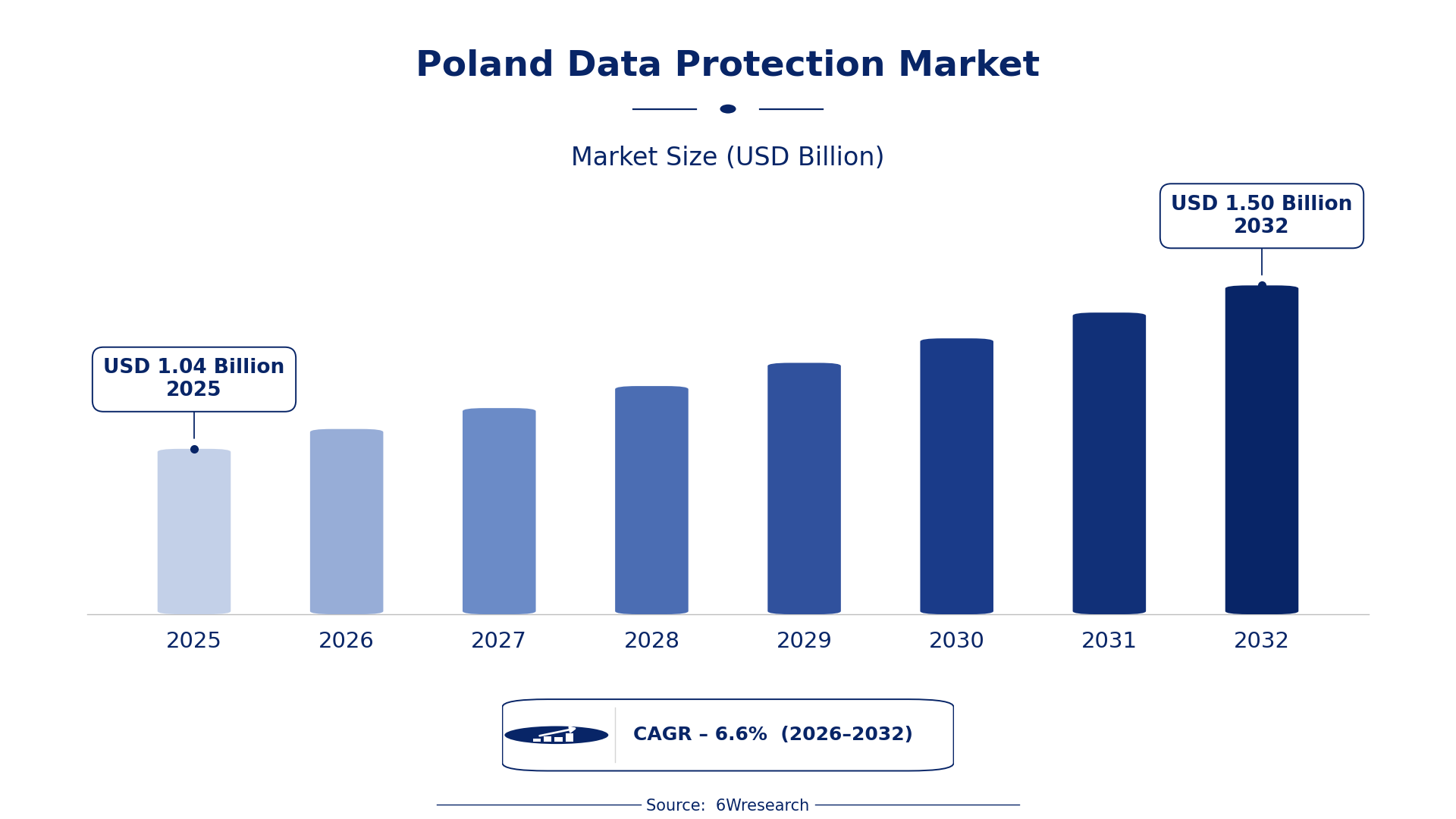
The Poland Data Protection Market was estimated at USD 1037 Million in 2025 and is projected to reach USD 1498 Million by 2032, growing at a CAGR of 6.6% from 2026 to 2032.
Poland Data Protection Market Synopsis
The most powerful force currently shaping the Poland Data Protection Market is the stringent compliance requirements posed by regulatory frameworks like the GDPR. Organizations find themselves under increasing pressure to protect sensitive data, not only to avoid hefty fines but also to maintain consumer trust in an era marked by frequent cyber incidents.
With the frequency of data breaches rising alarmingly, companies are prioritizing investment in data protection solutions. The shift towards cloud services further emphasizes the need for robust strategies, driving demand for sophisticated security measures that cover all aspects of data management.
Poland Data Protection Market Year-wise Growth Rate and Key Drivers
This graph illustrates the annual growth rates of the Poland Data Protection Market from 2021 to 2032, highlighting a steady upward trajectory and projected expansion over the forecast period.
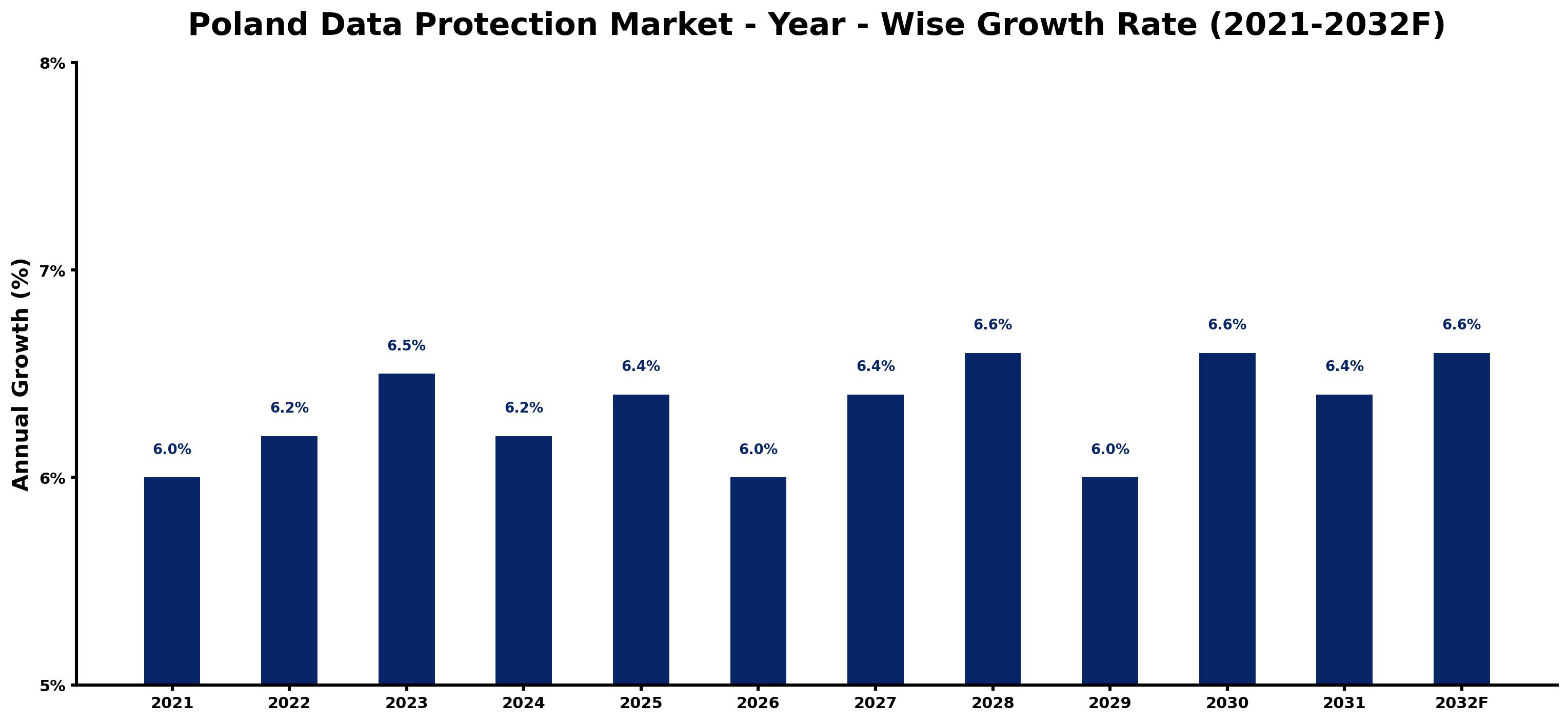
The table below presents the year‑wise growth rates along with the key drivers influencing the market
| Year | Growth Rate | Major Drivers |
| 2021 | 6.0% | GDPR enforcement boosts demand for data protection solutions. |
| 2022 | 6.2% | Increased cyberattack incidents drive stronger data regulations. |
| 2023 | 6.5% | Government initiatives promote digital literacy and data security. |
| 2024 | 6.2% | Growing e-commerce sector necessitates enhanced customer data protection. |
| 2025 | 6.4% | Rising GDPR fines encourage businesses to invest in compliance. |
| 2026 | 6.0% | Heightened awareness of data privacy issues among consumers. |
| 2027 | 6.4% | Local startups focus on innovative privacy compliance technologies. |
| 2028 | 6.6% | Increased digital transformation initiatives prioritize data governance support. |
| 2029 | 6.0% | Regulatory updates require widespread data auditing practices. |
| 2030 | 6.6% | Collaboration with EU cybersecurity frameworks enhances market stability. |
| 2031 | 6.4% | Increased interest in data ethics drives investment in solutions. |
| 2032 | 6.6% | Emergence of IoT devices necessitates stronger data protection measures. |
Note: Market size estimations and growth projections presented in this report are based on 6Wresearch's proprietary forecasting methodology, utilizing the latest available industry data, government publications, and primary research inputs.
Poland Data Protection Market Key Takeaways
Below are some of the specific key takeaways from the market, including:
- Growing awareness of data privacy is prompting businesses to adopt comprehensive data protection solutions.
- Investment in cybersecurity technologies has surged as organizations combat escalating threats.
- Cloud adoption is a double-edged sword, necessitating advanced data protection strategies.
- Regulatory compliance remains a critical driver for market growth, influencing purchasing decisions.
- Data protection initiatives are increasingly integrated into broader business strategies for risk management.
Evaluation of Restraints in Poland Data Protection Market
The Poland Data Protection Market faces notable constraints, primarily stemming from the complexities of compliance with the General Data Protection Regulation (GDPR) and local regulations. These frameworks require substantial investments in both technology and human resources, posing financial burdens especially for smaller enterprises. The rapidly changing nature of cyber threats adds another layer of complexity, compelling companies to continuously evolve their security measures. This often strains resources, making it challenging for many to maintain the necessary level of protection.
Poland Data Protection Market Trends
Several trends are currently shaping the demand for data protection solutions in Poland. Organizations increasingly prioritize integrated security systems that combine data encryption, intrusion detection, and continuous monitoring. There’s also a clear shift toward investing in advanced technologies such as artificial intelligence and machine learning to enhance predictive analytics and threat identification. on top of that, the increasing adoption of remote working has prompted businesses to reevaluate their security protocols, making cybersecurity a focal point of operational strategy.
Poland Data Protection Market Opportunities
As the demand for effective data protection solutions grows, numerous opportunities are emerging within the Poland Data Protection Market. Companies specializing in AI-driven security solutions stand to gain by addressing the need for advanced threat detection. Additionally, small to medium enterprises are becoming a focal point for vendors, as they increasingly recognize the importance of compliance and security in their operations. The intersection of cloud computing and data protection also offers significant potential for service providers, with organizations seeking to enhance their defenses in a cloud-centric environment.
Government Initiatives in the Poland Data Protection Market
Government actions play a crucial role in shaping the Poland Data Protection Market, particularly through stringent regulatory requirements and initiatives aimed at bolstering cybersecurity. The Polish government has emphasized enhancing data privacy standards across all sectors, which propels demand for data protection solutions. This proactive stance not only fosters compliance but also elevates the overall security posture of the nation's digital landscape.
- A recently completed initiative in 2023 introduced stricter guidelines under GDPR, mandating enhanced data protection measures for public sector organizations.
- Currently, a national cybersecurity strategy is underway, focused on improving data integrity and protecting critical infrastructure across industries.
- A planned public-private partnership is set to launch in late 2025, aimed at developing new frameworks for data protection education and awareness.
- An ongoing review of local data privacy laws is expected to be completed by early 2026, potentially leading to further regulatory adjustments.
- A new cybersecurity training program for businesses was rolled out in mid-2024, targeting improvements in operational resilience and compliance readiness.
Future Insights of the Poland Data Protection Market
Looking ahead to 2026-2032, the Poland Data Protection Market is on a path towards greater sophistication and resilience. Companies will increasingly integrate data protection within their core business strategies, recognizing it as essential rather than ancillary. As regulations evolve, so too will the solutions offered, with a likely emphasis on automation and intelligence. The focus will shift from reactive measures to proactive and preventive strategies, as organizations adapt to a landscape where data breaches not only pose financial risks but can also damage reputations irreparably.
Poland Data Protection Market Latest Developments
In the past year, the Poland Data Protection Market has seen significant activity, driven by an urgent need for enhanced security measures and compliance. Organizations are racing to adopt new technologies that not only meet regulatory requirements but also anticipate future threats. The environment has encouraged innovation, with firms looking to differentiate themselves through state-of-the-art solutions.
- A major technology vendor launched an AI-based data protection tool in early 2025, designed to automate compliance processes and threat detection.
- An initiative that began in mid-2024 aims to establish a national data breach reporting framework, enhancing transparency and response times.
- A prominent cybersecurity firm is currently expanding its operations in Poland, with plans to introduce a suite of integrated security services by late 2025.
- Upcoming in 2026, a new certification program for data protection professionals is expected to be introduced, fostering a skilled workforce in the sector.
- A collaborative research project focused on data encryption techniques is currently underway, involving several Polish universities and private sector players.
Poland Data Protection Market - Key Attractiveness of the Report
- 10 Years of Market Numbers
- Historical Data Starting from 2022 to 2025
- Base Year: 2025
- Forecast Data until 2032
- Key Performance Indicators Impacting the Market
- Major Upcoming Developments and Projects
Key Highlights of the Report:
- Poland Data Protection Market Outlook
- Market Size of Poland Data Protection Market, 2025
- Forecast of Poland Data Protection Market, 2032
- Historical Data and Forecast of Poland Data Protection Revenues & Volume for the Period 2022-2032F
- Poland Data Protection Market Trend Evolution
- Poland Data Protection Market Drivers and Challenges
- Poland Data Protection Price Trends
- Poland Data Protection Porter's Five Forces
- Poland Data Protection Industry Life Cycle
- Historical Data and Forecast of Poland Data Protection Market Revenues & Volume By Component for the Period 2022-2032F
- Historical Data and Forecast of Poland Data Protection Market Revenues & Volume By Solutions for the Period 2022-2032F
- Historical Data and Forecast of Poland Data Protection Market Revenues & Volume By Services (Professional Services and Managed Services) for the Period 2022-2032F
- Historical Data and Forecast of Poland Data Protection Market Revenues & Volume By Deployment Mode for the Period 2022-2032F
- Historical Data and Forecast of Poland Data Protection Market Revenues & Volume By On-premises for the Period 2022-2032F
- Historical Data and Forecast of Poland Data Protection Market Revenues & Volume By Cloud for the Period 2022-2032F
- Historical Data and Forecast of Poland Data Protection Market Revenues & Volume By Industry Vertical for the Period 2022-2032F
- Historical Data and Forecast of Poland Data Protection Market Revenues & Volume By Government and defense for the Period 2022-2032F
- Historical Data and Forecast of Poland Data Protection Market Revenues & Volume By Banking, Financial Services, and Insurance (BFSI) for the Period 2022-2032F
- Historical Data and Forecast of Poland Data Protection Market Revenues & Volume By Healthcare for the Period 2022-2032F
- Historical Data and Forecast of Poland Data Protection Market Revenues & Volume By IT and telecom for the Period 2022-2032F
- Historical Data and Forecast of Poland Data Protection Market Revenues & Volume By Consumer goods and retail for the Period 2022-2032F
- Historical Data and Forecast of Poland Data Protection Market Revenues & Volume By Education for the Period 2022-2032F
- Historical Data and Forecast of Poland Data Protection Market Revenues & Volume By Media and entertainment for the Period 2022-2032F
- Historical Data and Forecast of Poland Data Protection Market Revenues & Volume By Organization Size Large Enterprises for the Period 2022-2032F
- Historical Data and Forecast of Poland Data Protection Market Revenues & Volume By SMEs for the Period 2022-2032F
- Historical Data and Forecast of Poland Data Protection Market Revenues & Volume By Large Enterprises for the Period 2022-2032F
- Poland Data Protection Import Export Trade Statistics
- Market Opportunity Assessment By Component
- Market Opportunity Assessment By Deployment Mode
- Market Opportunity Assessment By Industry Vertical
- Market Opportunity Assessment By Organization Size Large Enterprises
- Poland Data Protection Top Companies Market Share
- Poland Data Protection Competitive Benchmarking By Technical and Operational Parameters
- Poland Data Protection Company Profiles
- Poland Data Protection Key Strategic Recommendations






































