Poland Digital Fault Recorder Market: Import Trend Analysis
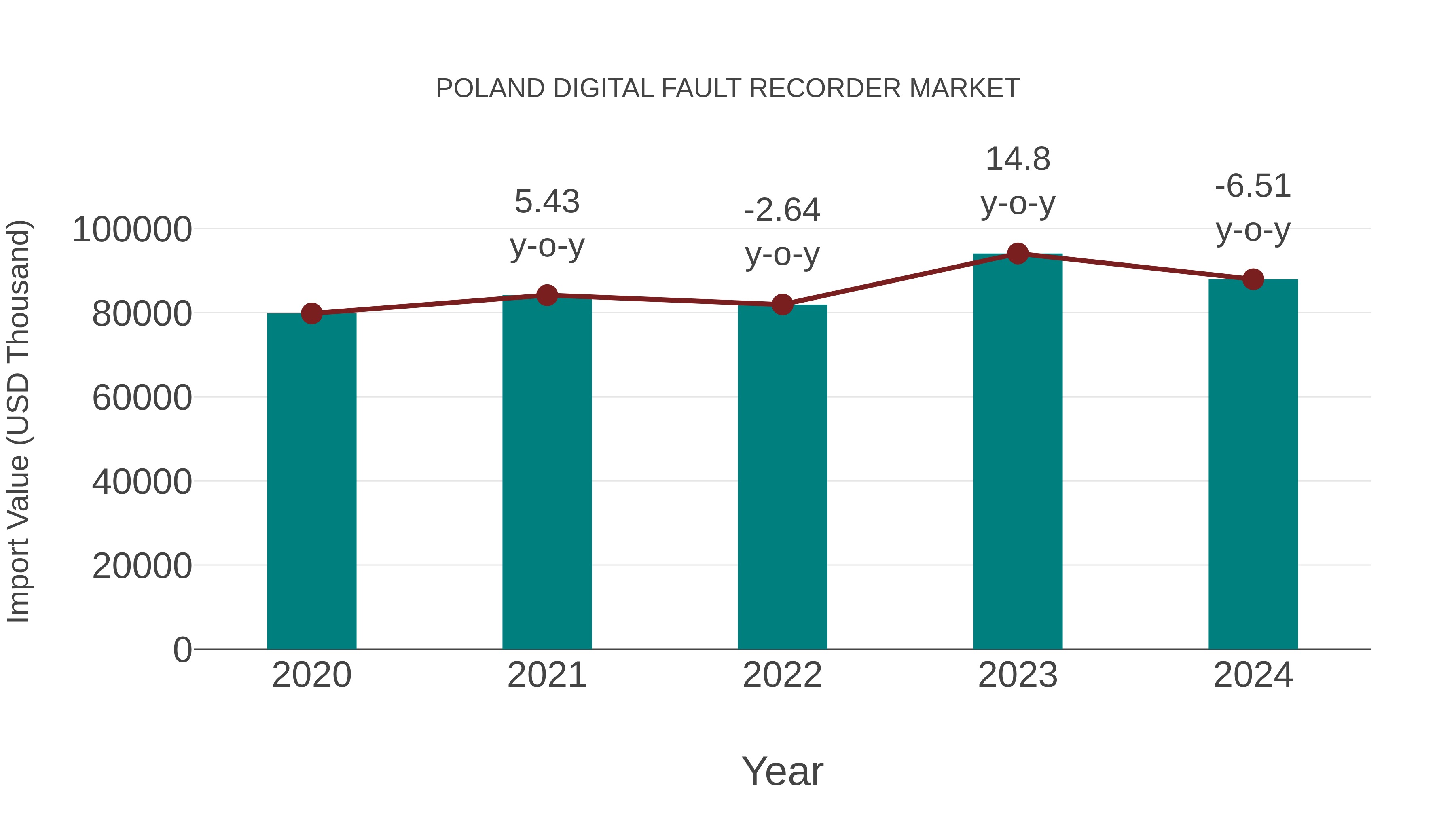
Poland import trend for the digital fault recorder market experienced a decline from 2023 to 2024, with a growth rate of -6.51%. However, the compound annual growth rate (CAGR) for the period 2020-2024 stood at 2.45%. This dip in import momentum in 2024 could be attributed to shifts in demand patterns or market dynamics impacting trade flows.
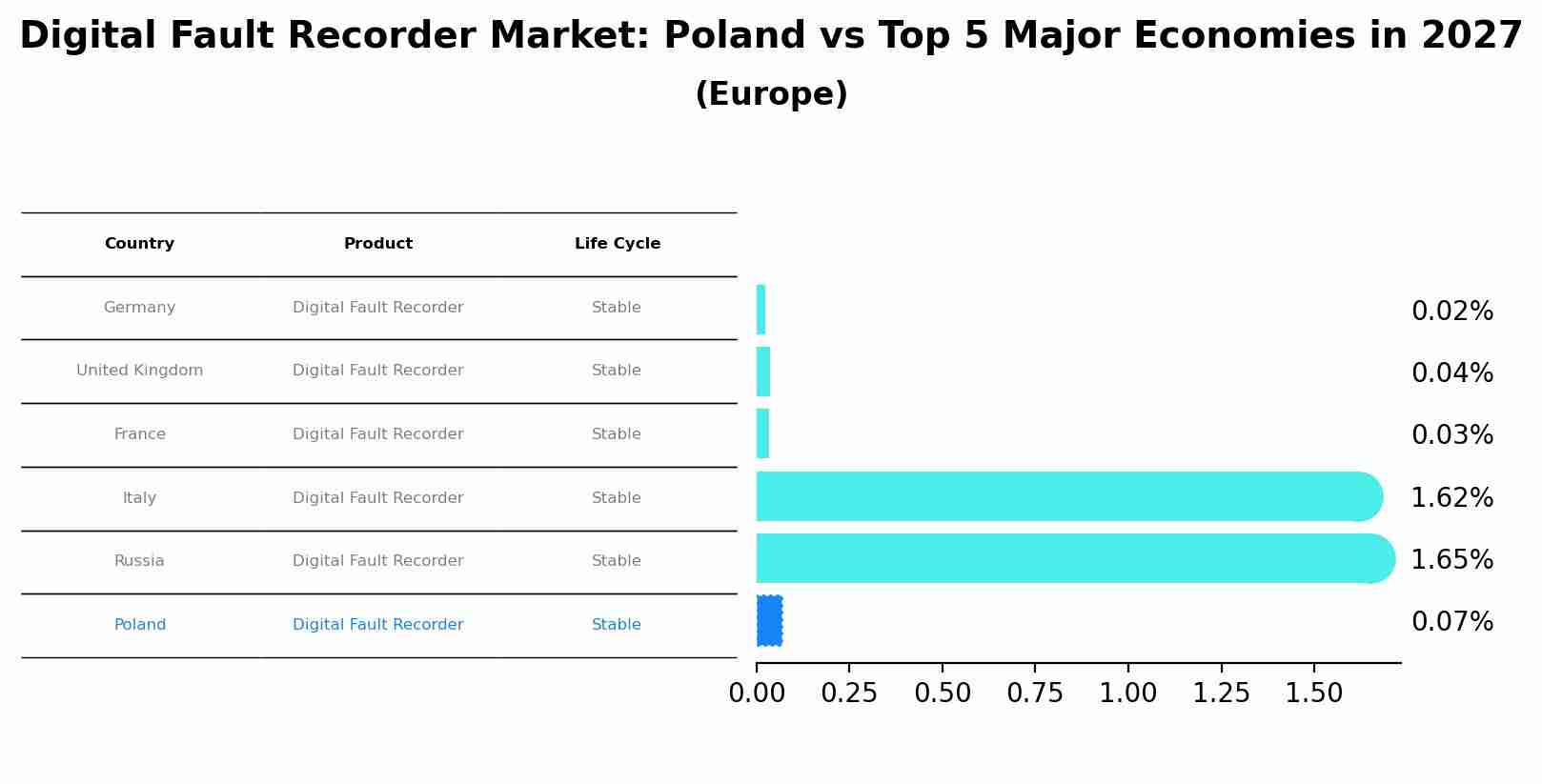
Digital Fault Recorder Market: Poland vs Top 5 Major Economies in 2027 (Europe)
By 2027, the Digital Fault Recorder market in Poland is anticipated to reach a growth rate of 0.07%, as part of an increasingly competitive Europe region, where Germany remains at the forefront, supported by United Kingdom, France, Italy and Russia, driving innovations and market adoption across sectors.
Poland Digital Fault Recorder Market Overview
The Poland Digital Fault Recorder (DFR) market is experiencing steady growth driven by the increasing demand for reliable power infrastructure and the integration of renewable energy sources. DFRs are essential devices used in power systems to monitor and record electrical disturbances for analysis and troubleshooting. The market is characterized by the presence of key players offering advanced DFR solutions with features such as high sampling rates, wide bandwidth, and precise event detection capabilities. The adoption of DFRs is expected to rise further as utilities aim to enhance grid reliability and minimize downtime. Government initiatives to modernize the power sector and improve grid resilience are also contributing to the market growth. Overall, the Poland DFR market presents opportunities for vendors to innovate and cater to the evolving needs of the power industry.
Poland Digital Fault Recorder Market Trends
The Poland Digital Fault Recorder market is experiencing significant growth driven by the increasing demand for reliable and efficient power systems. Key trends include the adoption of advanced communication technologies such as IoT and cloud computing to enhance data collection and analysis capabilities. There is also a rising focus on grid modernization and infrastructure upgrades to ensure grid stability and reliability. Additionally, the integration of artificial intelligence and machine learning algorithms in digital fault recorders is enabling predictive maintenance and real-time monitoring, further boosting market growth. The market players are emphasizing product innovation and strategic partnerships to expand their market presence and cater to the evolving needs of the power sector in Poland.
Poland Digital Fault Recorder Market Challenges
In the Poland Digital Fault Recorder Market, some key challenges faced include the need for continuous technological advancements to keep up with rapid changes in the power sector, ensuring compatibility with existing infrastructure and systems, addressing cybersecurity concerns to protect sensitive data captured by the recorders, and managing the costs associated with implementing and maintaining these advanced devices. Additionally, there may be regulatory hurdles related to data privacy and industry standards that companies need to navigate. Competition from traditional fault recording devices and other monitoring systems also poses a challenge in terms of market penetration and differentiation. Overall, navigating these challenges requires market players to invest in research and development, forge strategic partnerships, and stay updated on industry trends to remain competitive in the evolving digital fault recorder market in Poland.
Poland Digital Fault Recorder Market Investment Opportunities
The Poland Digital Fault Recorder market presents promising investment opportunities due to the increasing focus on grid reliability and the integration of renewable energy sources. Key drivers include the modernization of aging grid infrastructure, government initiatives promoting smart grid technology, and the growing need for real-time monitoring and analysis of power systems. Investors can capitalize on the demand for advanced fault recording solutions that offer high accuracy, fast data retrieval, and remote monitoring capabilities. Additionally, the market is witnessing technological advancements such as the integration of IoT and cloud-based platforms, further enhancing the appeal of investing in digital fault recorders in Poland. Overall, the market offers potential for growth and innovation, making it an attractive option for investors seeking opportunities in the energy sector.
Poland Digital Fault Recorder Market Government Policy
In Poland, the government has implemented policies to promote the adoption and use of digital fault recorders in the energy sector. This includes providing incentives and subsidies for companies investing in digital fault recorder technology to enhance grid reliability and efficiency. Additionally, there are regulations in place that mandate the installation of digital fault recorders in certain critical infrastructure facilities to ensure system monitoring and fault detection capabilities. The government also encourages partnerships between industry players and research institutions to drive innovation and development in the digital fault recorder market. Overall, these policies aim to modernize the energy sector in Poland by leveraging advanced technologies like digital fault recorders to improve operational performance and grid resilience.
Poland Digital Fault Recorder Market Future Outlook
The Poland Digital Fault Recorder market is poised for significant growth in the coming years, driven by the increasing focus on grid modernization and the integration of renewable energy sources. The growing demand for reliable and efficient power distribution systems, coupled with the rising investments in smart grid technologies, will fuel the adoption of digital fault recorders in the country. Additionally, the emphasis on improving grid reliability and minimizing downtime in the power sector will further propel market growth. With advancements in data analytics and remote monitoring capabilities, digital fault recorders are expected to play a crucial role in enhancing grid resilience and facilitating faster fault detection and troubleshooting processes. Overall, the Poland Digital Fault Recorder market is anticipated to experience robust expansion as utilities and grid operators prioritize grid optimization and operational efficiency.
Key Highlights of the Report:
- Poland Digital Fault Recorder Market Outlook
- Market Size of Poland Digital Fault Recorder Market, 2025
- Forecast of Poland Digital Fault Recorder Market, 2032
- Historical Data and Forecast of Poland Digital Fault Recorder Revenues & Volume for the Period 2022 - 2032F
- Poland Digital Fault Recorder Market Trend Evolution
- Poland Digital Fault Recorder Market Drivers and Challenges
- Poland Digital Fault Recorder Price Trends
- Poland Digital Fault Recorder Porter's Five Forces
- Poland Digital Fault Recorder Industry Life Cycle
- Historical Data and Forecast of Poland Digital Fault Recorder Market Revenues & Volume By Type for the Period 2022 - 2032F
- Historical Data and Forecast of Poland Digital Fault Recorder Market Revenues & Volume By Dedicated for the Period 2022 - 2032F
- Historical Data and Forecast of Poland Digital Fault Recorder Market Revenues & Volume By Multifunctional for the Period 2022 - 2032F
- Historical Data and Forecast of Poland Digital Fault Recorder Market Revenues & Volume By Installation for the Period 2022 - 2032F
- Historical Data and Forecast of Poland Digital Fault Recorder Market Revenues & Volume By Generation for the Period 2022 - 2032F
- Historical Data and Forecast of Poland Digital Fault Recorder Market Revenues & Volume By T & D for the Period 2022 - 2032F
- Historical Data and Forecast of Poland Digital Fault Recorder Market Revenues & Volume By Station for the Period 2022 - 2032F
- Historical Data and Forecast of Poland Digital Fault Recorder Market Revenues & Volume By Automated for the Period 2022 - 2032F
- Historical Data and Forecast of Poland Digital Fault Recorder Market Revenues & Volume By Non Automated for the Period 2022 - 2032F
- Historical Data and Forecast of Poland Digital Fault Recorder Market Revenues & Volume By Voltage for the Period 2022 - 2032F
- Historical Data and Forecast of Poland Digital Fault Recorder Market Revenues & Volume By < 66k V for the Period 2022 - 2032F
- Historical Data and Forecast of Poland Digital Fault Recorder Market Revenues & Volume By 66 220k V for the Period 2022 - 2032F
- Historical Data and Forecast of Poland Digital Fault Recorder Market Revenues & Volume By 220k V for the Period 2022 - 2032F
- Poland Digital Fault Recorder Import Export Trade Statistics
- Market Opportunity Assessment By Type
- Market Opportunity Assessment By Installation
- Market Opportunity Assessment By Station
- Market Opportunity Assessment By Voltage
- Poland Digital Fault Recorder Top Companies Market Share
- Poland Digital Fault Recorder Competitive Benchmarking By Technical and Operational Parameters
- Poland Digital Fault Recorder Company Profiles
- Poland Digital Fault Recorder Key Strategic Recommendations






































