Poland Glass Tiles Market Size, Share & Growth Rate
The Poland Glass Tiles Market was estimated at USD 1156 Million in 2025 and is projected to reach USD 1639 Million by 2032, growing at a CAGR of 5.1% from 2026 to 2032. This robust growth is primarily driven by an escalating preference for decorative materials within the interior design sector, as well as advancements in tile manufacturing technology that enhance product durability and aesthetic appeal. As modern architectural trends increasingly favor versatile and easy-to-maintain building materials, the demand for glass tiles is set to rise significantly.
Poland Glass Tiles Market Year-wise Growth Rate and Key Drivers
This graph highlights how the Poland Glass Tiles Market has steadily grown over the years, supported by major growth factors.
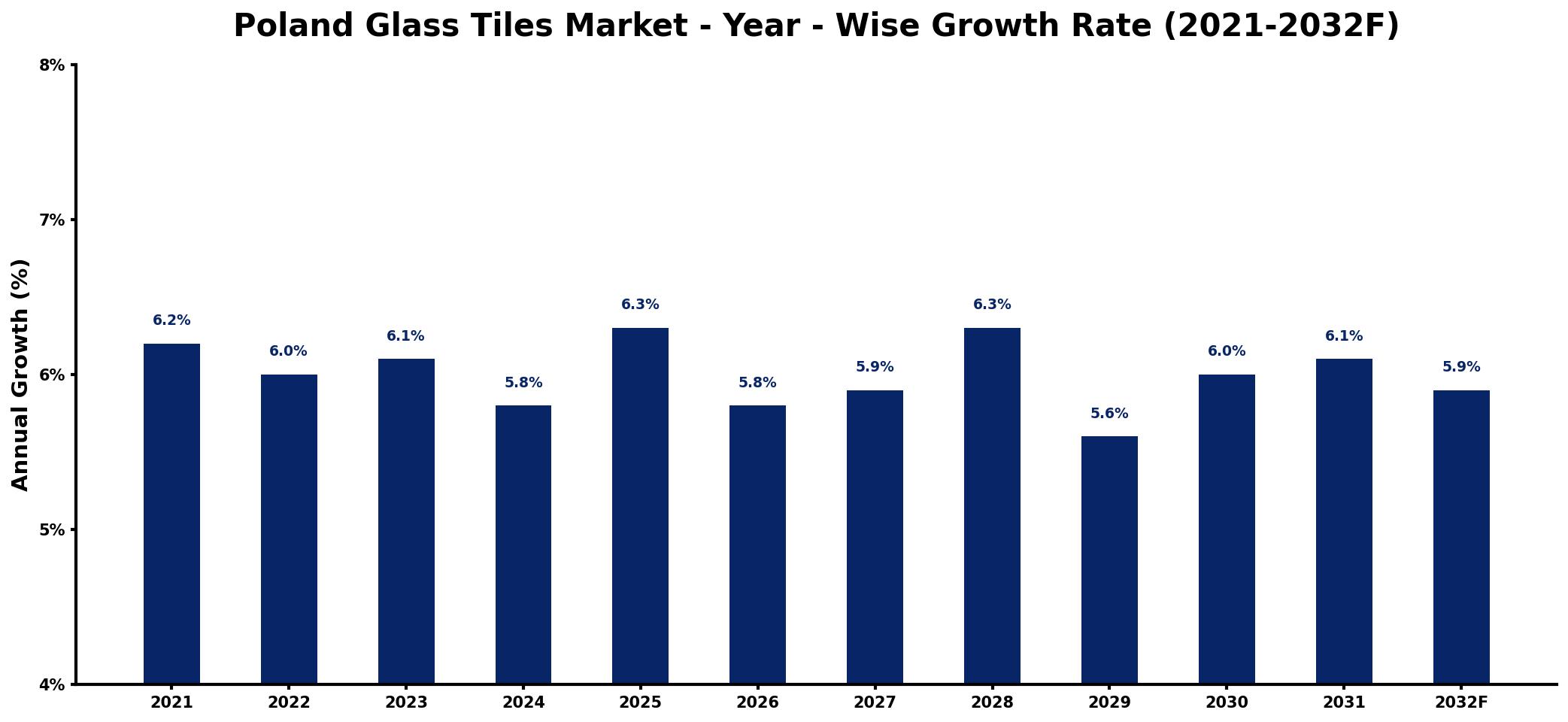
The table below presents the year‑wise growth rates along with the key drivers influencing the market
| Year | Growth Rate | Major Drivers |
| 2021 | 6.2% | Rising consumer home renovation projects |
| 2022 | 6.0% | Increase in luxury interior design |
| 2023 | 6.1% | Growing popularity of sustainable materials |
| 2024 | 5.8% | Expanding construction sector investments |
| 2025 | 6.3% | Surge in residential property developments |
| 2026 | 5.8% | Emergence of innovative design trends |
| 2027 | 5.9% | Heightened demand for eco-friendly options |
| 2028 | 6.3% | growing commercial sector adoption |
| 2029 | 5.6% | Stability in housing market growth |
| 2030 | 6.0% | Advancements in manufacturing technologies |
| 2031 | 6.1% | Increasing focus on aesthetic enhancements |
| 2032 | 5.9% | Rising interest in DIY renovations |
Note: Market size estimations and growth projections presented in this report are based on 6Wresearch's proprietary forecasting methodology, utilizing the latest available industry data, government publications, and primary research inputs.
Poland Glass Tiles Market Synopsis
In Poland, glass tiles are becoming a sought-after choice not only for their beauty but also for their functionality in various settings, including residential and commercial spaces. Their unique ability to reflect light and create spacious illusions makes them particularly appealing in urban environments.
Furthermore, the growing trend towards eco-friendly and sustainable building practices is pushing manufacturers to innovate in the glass tiles segment. With government policies encouraging the use of energy-efficient materials, glass tiles are increasingly seen as a responsible choice among architects and builders.
Poland Glass Tiles Market Key Takeaways
- The market is benefiting from advancements in manufacturing technologies that enhance product performance.
- Increased consumer interest in modern aesthetics is driving demand for glass tiles in residential and commercial projects.
- Government incentives for sustainable construction materials are promoting market growth.
- Price volatility in raw materials poses challenges but also spurs innovation among suppliers.
- The competitive landscape is intensifying as various manufacturers aim to capture market share.
Evaluation of Restraints in Poland Glass Tiles Market
While the glass tiles market in Poland is witnessing notable growth, it faces certain constraints that could impede its trajectory. Fluctuations in the cost of raw materials significantly impact pricing strategies, which can lead to reduced profit margins for manufacturers. Additionally, the competitive nature of the market means that companies must continuously innovate and differentiate their products to maintain market share. This constant pressure to evolve can strain resources and complicate strategic planning for businesses.
Poland Glass Tiles Market Trends
A prominent trend within the Poland Glass Tiles Market is the shift towards customization, as consumers increasingly demand unique designs that reflect their personal style. This has led manufacturers to explore new textures, colors, and finishes, providing greater options for both residential and commercial buyers. Moreover, digital printing technology is making it possible to create intricate designs that were previously unattainable.
Additionally, the integration of smart technology in building materials is gaining traction, with glass tiles now being produced to include features that enhance energy efficiency and sustainability. As the emphasis on green construction practices strengthens, glass tiles are positioned to play a crucial role in future architectural designs.
Poland Glass Tiles Market Opportunities
The growing demand for luxury and bespoke interiors presents a significant opportunity for the glass tiles market in Poland. With affluent consumers seeking high-quality materials that offer both durability and aesthetic value, glass tiles fit the bill perfectly. Furthermore, collaborations with interior designers and architects can lead to innovative applications, expanding market reach and consumer awareness.
Moreover, the potential for exporting glass tiles to neighboring European markets can provide additional revenue streams for Polish manufacturers. As European construction trends continue to evolve, tapping into this broader market could be a strategic move for growth.
Government Initiatives in the Poland Glass Tiles Market
The Polish government is actively promoting the use of sustainable materials in construction through various initiatives and incentives. This includes funding for research and development in eco-friendly building materials, as well as grants for projects that incorporate energy-efficient solutions. The focus on sustainability in public spending is encouraging manufacturers to innovate, aligning with national goals for reducing carbon footprints and enhancing energy efficiency in buildings.
Future Insights of the Poland Glass Tiles Market
Looking ahead, the Poland Glass Tiles Market is expected to thrive as consumer preferences evolve towards more sustainable and aesthetically pleasing design choices. With ongoing advancements in manufacturing technology and a heightened focus on customization, the market is poised for robust expansion. Between 2026 and 2032, increased demand from both residential and commercial sectors will likely propel market players to explore innovative solutions and partnerships, setting the stage for a vibrant future.
Poland Glass Tiles Market Latest Developments (2025 - 2026)
Recent industry developments indicate a notable push towards integrating smart technology within glass tiles, enhancing their functional appeal in modern architecture. Additionally, collaborations between manufacturers and design firms are on the rise, fostering innovation in product design and application. The market is also witnessing increased participation in sustainability initiatives, encouraging companies to adopt greener practices across their supply chains.
Poland Glass Tiles Market - Key Attractiveness of the Report
- 10 Years of Market Numbers
- Historical Data Starting from 2022 to 2025
- Base Year: 2025
- Forecast Data until 2032
- Key Performance Indicators Impacting the Market
- Major Upcoming Developments and Projects
Key Highlights of the Report:
- Poland Glass Tiles Market Outlook
- Market Size of Poland Glass Tiles Market, 2025
- Forecast of Poland Glass Tiles Market, 2032
- Historical Data and Forecast of Poland Glass Tiles Revenues & Volume for the Period 2022-2032F
- Poland Glass Tiles Market Trend Evolution
- Poland Glass Tiles Market Drivers and Challenges
- Poland Glass Tiles Price Trends
- Poland Glass Tiles Porter's Five Forces
- Poland Glass Tiles Industry Life Cycle
- Historical Data and Forecast of Poland Glass Tiles Market Revenues & Volume By Manufacturing Process for the Period 2022-2032F
- Historical Data and Forecast of Poland Glass Tiles Market Revenues & Volume By Smalti Tiles for the Period 2022-2032F
- Historical Data and Forecast of Poland Glass Tiles Market Revenues & Volume By Fused Tiles for the Period 2022-2032F
- Historical Data and Forecast of Poland Glass Tiles Market Revenues & Volume By Sintered Tiles for the Period 2022-2032F
- Historical Data and Forecast of Poland Glass Tiles Market Revenues & Volume By Cast Tiles for the Period 2022-2032F
- Historical Data and Forecast of Poland Glass Tiles Market Revenues & Volume By Other for the Period 2022-2032F
- Historical Data and Forecast of Poland Glass Tiles Market Revenues & Volume By Product Type for the Period 2022-2032F
- Historical Data and Forecast of Poland Glass Tiles Market Revenues & Volume By Matte-finished Glass Tile for the Period 2022-2032F
- Historical Data and Forecast of Poland Glass Tiles Market Revenues & Volume By Smooth Glass Tile for the Period 2022-2032F
- Historical Data and Forecast of Poland Glass Tiles Market Revenues & Volume By End-User Industry for the Period 2022-2032F
- Historical Data and Forecast of Poland Glass Tiles Market Revenues & Volume By Residential for the Period 2022-2032F
- Historical Data and Forecast of Poland Glass Tiles Market Revenues & Volume By Commercial for the Period 2022-2032F
- Historical Data and Forecast of Poland Glass Tiles Market Revenues & Volume By Infrastructure for the Period 2022-2032F
- Poland Glass Tiles Import Export Trade Statistics
- Market Opportunity Assessment By Manufacturing Process
- Market Opportunity Assessment By Product Type
- Market Opportunity Assessment By End-User Industry
- Poland Glass Tiles Top Companies Market Share
- Poland Glass Tiles Competitive Benchmarking By Technical and Operational Parameters
- Poland Glass Tiles Company Profiles
- Poland Glass Tiles Key Strategic Recommendations






































