Poland Lumber Market: Import Trend Analysis
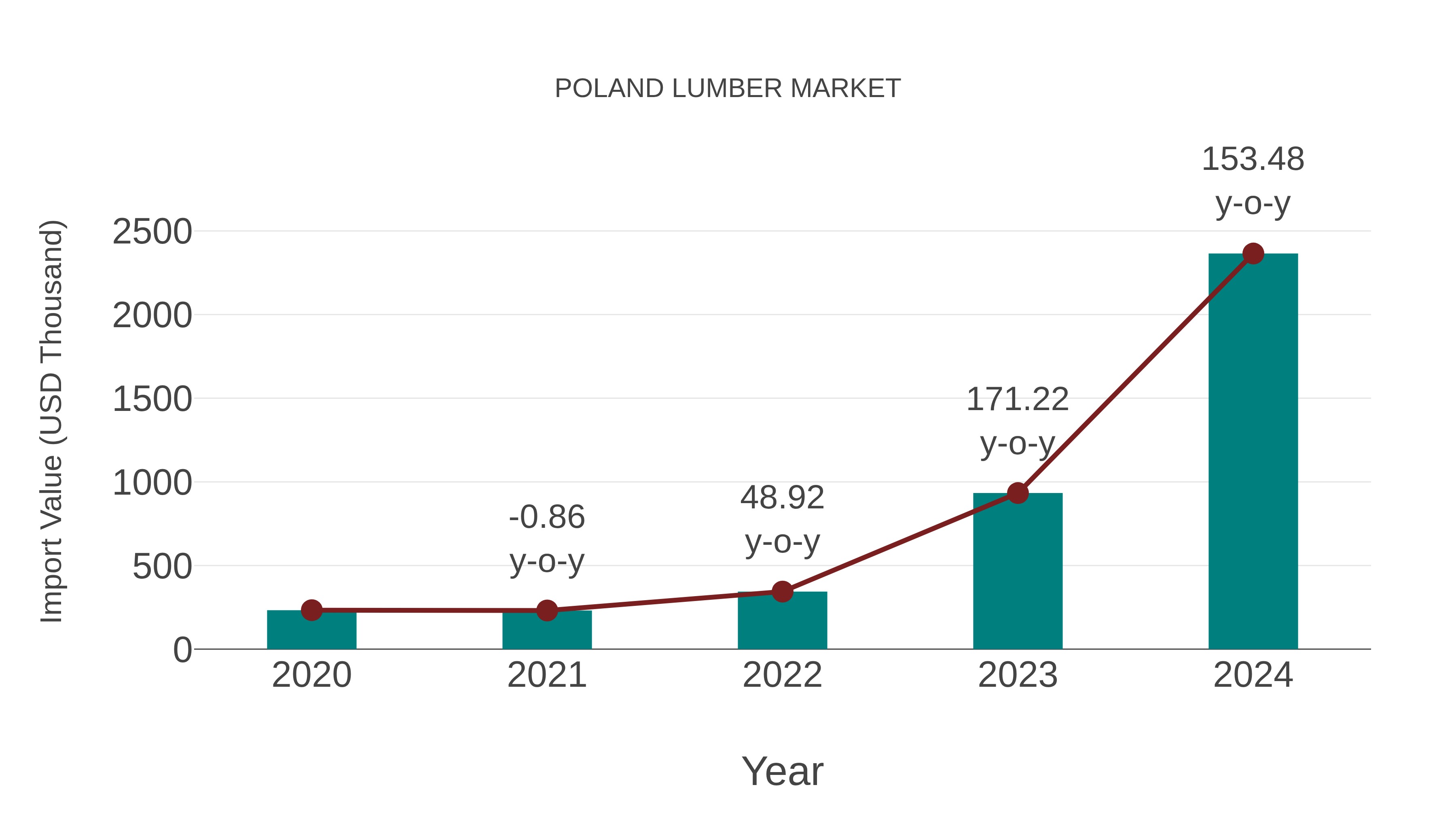
In the Poland lumber market, the import trend experienced significant growth from 2023 to 2024, with a notable increase of 153.48%. The compound annual growth rate (CAGR) for the period 2020-2024 stood at 78.49%. This surge in imports can be attributed to a combination of increased demand for lumber products and favorable trade policies that facilitated market expansion during the period.
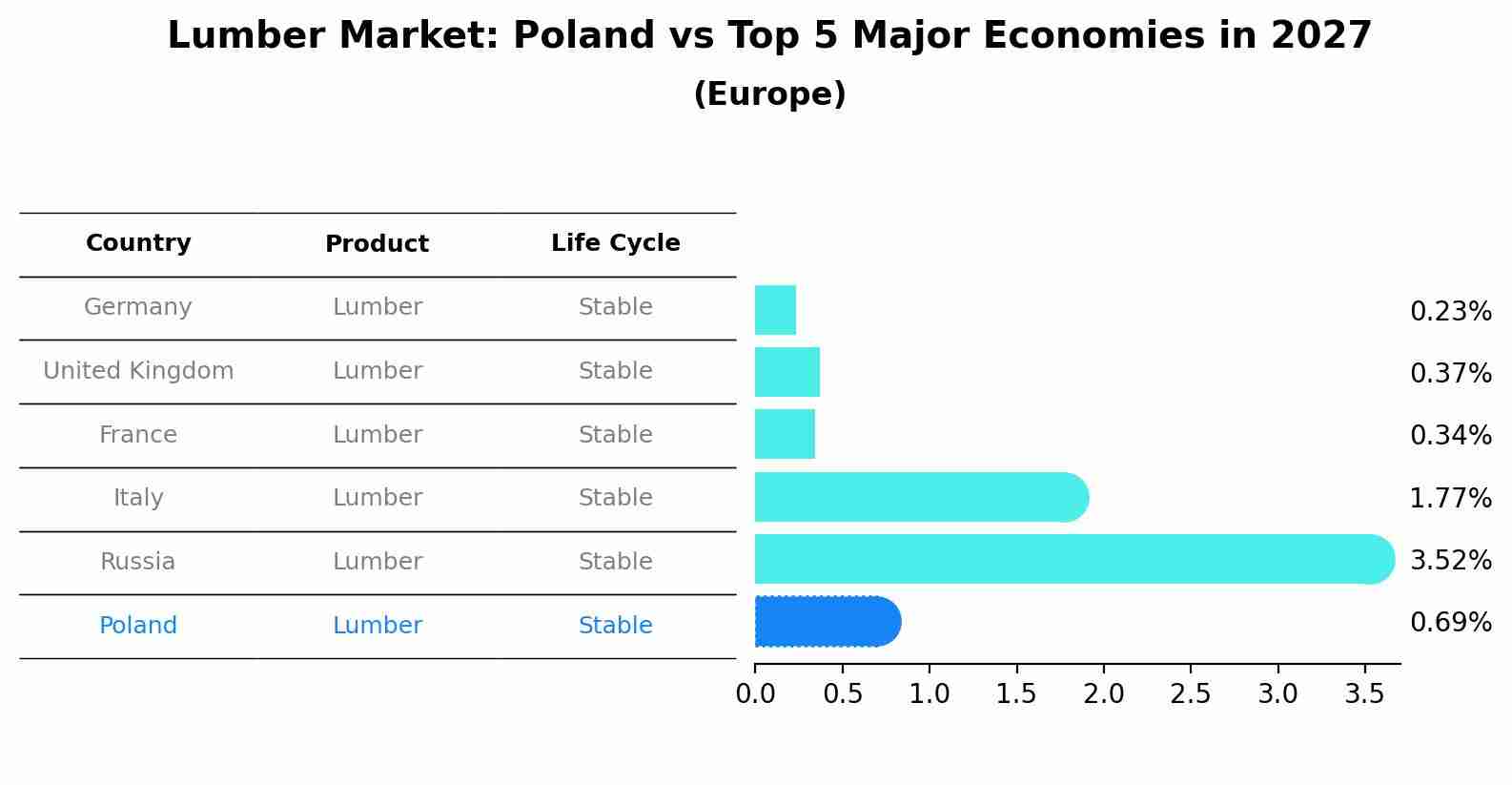
Lumber Market: Poland vs Top 5 Major Economies in 2027 (Europe)
In the Europe region, the Lumber market in Poland is projected to expand at a stable growth rate of 0.69% by 2027. The largest economy is Germany, followed by United Kingdom, France, Italy and Russia.
Poland Lumber Market Overview
Polands lumber market is driven by demand in the construction and furniture industries. The countrys vast forest resources support a robust timber industry, with both softwood and hardwood varieties being in high demand. The shift toward sustainable and certified timber is influencing market dynamics, alongside rising exports to European and global markets.
Drivers of the market
The lumber market in Poland is expanding as the construction industry and housing sector continue to grow. Increased demand for wood-based products, including timber for building and furniture manufacturing, is driving the lumber market. Sustainable forest management practices and export opportunities to neighboring countries are also contributing to the positive market outlook.
Challenges of the market
The lumber market in Poland faces several challenges, including fluctuating prices and supply chain disruptions. The volatility in raw material costs can impact profitability and pricing strategies. Additionally, the market is influenced by environmental regulations and sustainability concerns, requiring companies to adopt responsible sourcing practices. The lumber industry must also navigate competition from alternative materials and adapt to changes in construction trends and building codes, which can affect demand.
Government Policy of the market
The Polish lumber market is heavily regulated by government policies promoting sustainable forestry practices. The State Forests National Forest Holding oversees forest management, ensuring compliance with sustainable logging practices. The government also encourages the use of certified timber through subsidies for eco-friendly construction projects, supporting market growth.
Key Highlights of the Report:
- Poland Lumber Market Outlook
- Market Size of Poland Lumber Market, 2025
- Forecast of Poland Lumber Market, 2032
- Historical Data and Forecast of Poland Lumber Revenues & Volume for the Period 2022-2032F
- Poland Lumber Market Trend Evolution
- Poland Lumber Market Drivers and Challenges
- Poland Lumber Price Trends
- Poland Lumber Porter's Five Forces
- Poland Lumber Industry Life Cycle
- Historical Data and Forecast of Poland Lumber Market Revenues & Volume By Types for the Period 2022-2032F
- Historical Data and Forecast of Poland Lumber Market Revenues & Volume By Hardwood Lumber for the Period 2022-2032F
- Historical Data and Forecast of Poland Lumber Market Revenues & Volume By Softwood Lumber for the Period 2022-2032F
- Historical Data and Forecast of Poland Lumber Market Revenues & Volume By Application for the Period 2022-2032F
- Historical Data and Forecast of Poland Lumber Market Revenues & Volume By Construction for the Period 2022-2032F
- Historical Data and Forecast of Poland Lumber Market Revenues & Volume By Furniture for the Period 2022-2032F
- Historical Data and Forecast of Poland Lumber Market Revenues & Volume By Flooring for the Period 2022-2032F
- Historical Data and Forecast of Poland Lumber Market Revenues & Volume By Moldings for the Period 2022-2032F
- Historical Data and Forecast of Poland Lumber Market Revenues & Volume By Others for the Period 2022-2032F
- Poland Lumber Import Export Trade Statistics
- Market Opportunity Assessment By Types
- Market Opportunity Assessment By Application
- Poland Lumber Top Companies Market Share
- Poland Lumber Competitive Benchmarking By Technical and Operational Parameters
- Poland Lumber Company Profiles
- Poland Lumber Key Strategic Recommendations






































