Poland Nylon Market: Import Trend Analysis
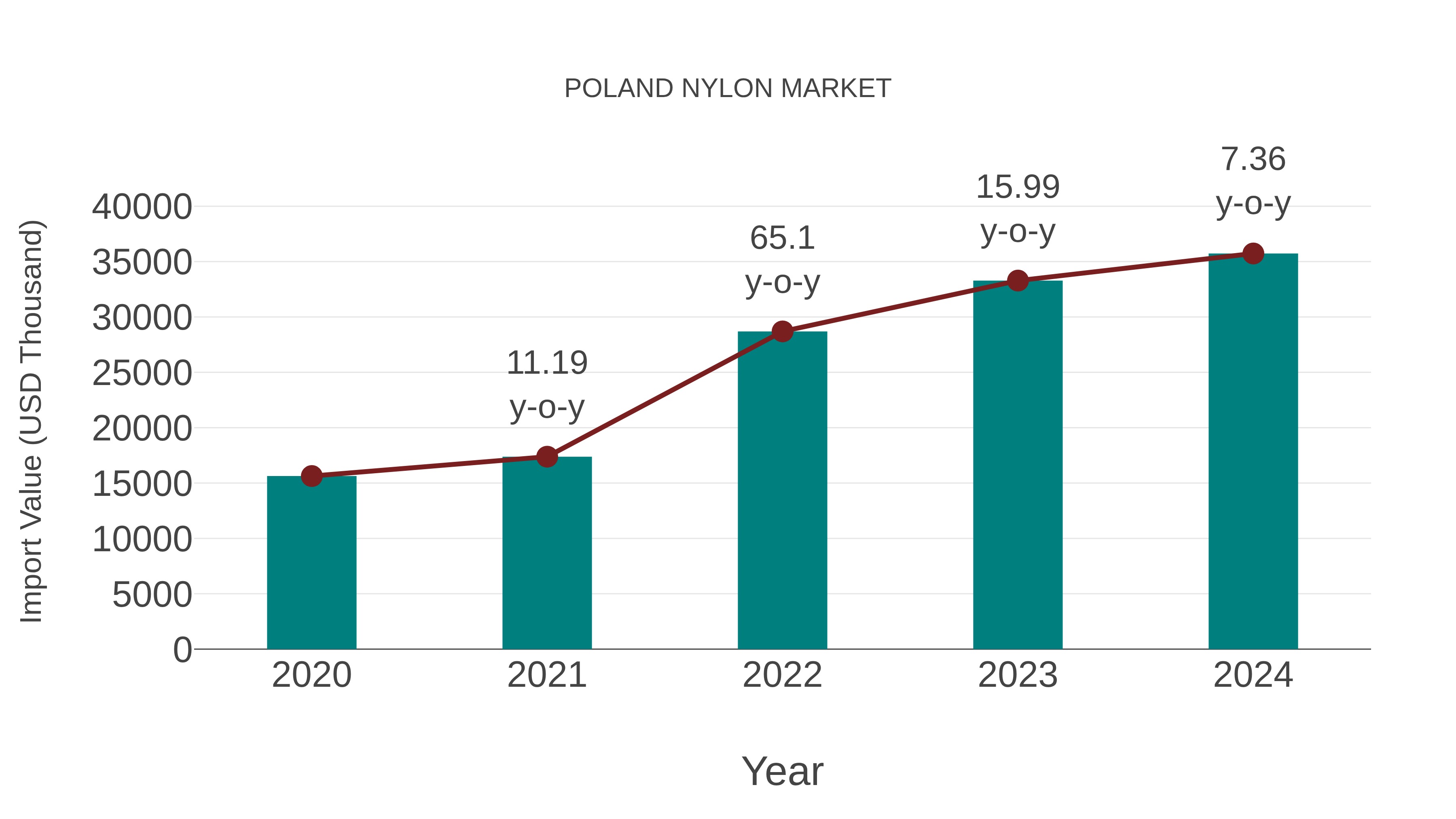
In the Poland nylon market, the import trend exhibited a notable growth rate from 2023 to 2024, increasing by 7.36%. The compound annual growth rate (CAGR) for imports between 2020 and 2024 stood at 22.96%. This growth can be attributed to a shift in demand dynamics, possibly influenced by evolving consumer preferences or changing trade policies impacting the market`s import momentum.
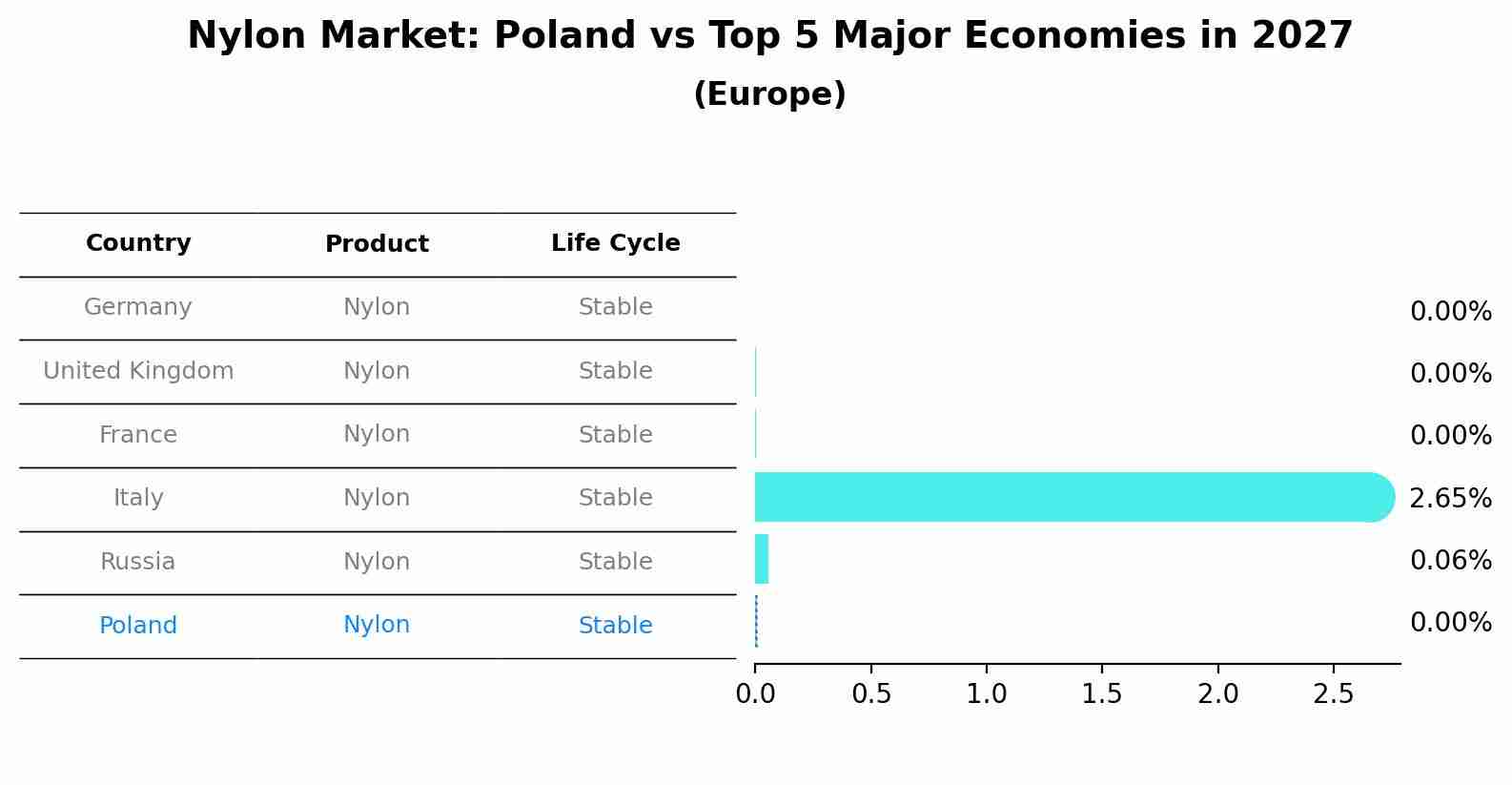
Nylon Market: Poland vs Top 5 Major Economies in 2027 (Europe)
Poland's Nylon market is anticipated to experience a stable growth rate of 0.00% by 2027, reflecting trends observed in the largest economy Germany, followed by United Kingdom, France, Italy and Russia.
Poland Nylon Market Overview
The Poland Nylon Market is experiencing steady growth driven by the increasing demand from industries such as automotive, textile, and packaging. The automotive sector is a key driver for nylon consumption in Poland, with the growing trend towards lightweight and fuel-efficient vehicles. Additionally, the textile industry is boosting the demand for nylon fibers due to their durability and versatility. The packaging industry is also a significant contributor to the nylon market in Poland, with the rise in e-commerce driving the need for durable and sustainable packaging materials. The market is characterized by intense competition among key players like DuPont, BASF, and Invista, leading to innovation and product development to cater to the diverse needs of end-users. Overall, the Poland Nylon Market is poised for further growth with opportunities for expansion in various sectors.
Poland Nylon Market Trends
The Poland Nylon market is witnessing several key trends, including a growing demand for sustainable and eco-friendly nylon materials. Manufacturers are increasingly focusing on developing bio-based and recycled nylon products to address environmental concerns and meet consumer preferences for sustainability. Another trend is the rising adoption of nylon in various industries such as automotive, textiles, and packaging due to its superior strength, durability, and versatility. Additionally, technological advancements in nylon production processes, such as the development of high-performance and specialty nylon grades, are contributing to market growth. The market is also seeing a shift towards digitalization and automation in manufacturing processes to improve efficiency and reduce production costs. Overall, these trends indicate a positive outlook for the Poland Nylon market with a strong emphasis on sustainability and innovation.
Poland Nylon Market Challenges
In the Poland Nylon Market, some of the key challenges faced include increasing competition from low-cost producers in other regions, such as Asia, which puts pressure on pricing and profit margins for Polish manufacturers. Additionally, fluctuations in raw material prices and availability can impact production costs and supply chain stability. Regulatory changes and compliance requirements also create hurdles for companies operating in the market, as they need to stay updated and adapt quickly to meet new standards. Furthermore, the market is influenced by global economic conditions and trade policies, leading to uncertainties in demand and market dynamics. Overall, companies in the Poland Nylon Market need to navigate these challenges effectively to maintain a competitive edge and sustainable growth.
Poland Nylon Market Investment Opportunities
The Poland Nylon Market offers promising investment opportunities due to the increasing demand for nylon products in various industries such as automotive, textiles, and consumer goods. With the growing emphasis on sustainability and innovation, there is a push towards the development of bio-based and recycled nylon materials in the market. Investing in companies that are focusing on research and development to create eco-friendly nylon solutions can be a strategic move. Additionally, the expanding applications of nylon in emerging sectors like 3D printing and electronics further enhance the investment potential in the Poland Nylon Market. Overall, investing in companies that are at the forefront of technological advancements and sustainability initiatives within the nylon industry in Poland can yield attractive returns for investors.
Poland Nylon Market Government Policy
Government policies related to the Poland Nylon Market focus on promoting sustainability and environmental protection. The Polish government has implemented regulations to reduce the environmental impact of nylon production, such as setting limits on emissions and encouraging the use of eco-friendly production processes. Additionally, there are policies in place to support domestic nylon manufacturers through incentives and subsidies to enhance competitiveness and boost innovation. The government also aims to ensure fair competition in the market by enforcing antitrust laws and monitoring pricing practices. Overall, the government`s policies in the Poland Nylon Market prioritize sustainability, innovation, and fair market practices to drive growth while minimizing negative environmental impacts.
Poland Nylon Market Future Outlook
The future outlook for the Poland Nylon Market appears promising, fueled by the growing demand for nylon in various industries such as automotive, textile, and packaging. With the increasing focus on sustainable and lightweight materials, nylon is expected to witness significant growth as it offers durability, strength, and versatility. Moreover, the government initiatives to promote industrial development and investments in research and development activities are likely to further boost the market. However, challenges such as fluctuating raw material prices and competition from alternative materials may impact market growth. Overall, advancements in technology, shifting consumer preferences, and the emphasis on eco-friendly solutions are expected to drive the Poland Nylon Market towards expansion in the coming years.
Key Highlights of the Report:
- Poland Nylon Market Outlook
- Market Size of Poland Nylon Market, 2021
- Forecast of Poland Nylon Market, 2031
- Historical Data and Forecast of Poland Nylon Revenues & Volume for the Period 2018 - 2031
- Poland Nylon Market Trend Evolution
- Poland Nylon Market Drivers and Challenges
- Poland Nylon Price Trends
- Poland Nylon Porter's Five Forces
- Poland Nylon Industry Life Cycle
- Historical Data and Forecast of Poland Nylon Market Revenues & Volume By Product for the Period 2018 - 2031
- Historical Data and Forecast of Poland Nylon Market Revenues & Volume By Nylon 6 for the Period 2018 - 2031
- Historical Data and Forecast of Poland Nylon Market Revenues & Volume By Nylon 66 for the Period 2018 - 2031
- Historical Data and Forecast of Poland Nylon Market Revenues & Volume By Application for the Period 2018 - 2031
- Historical Data and Forecast of Poland Nylon Market Revenues & Volume By Automobile for the Period 2018 - 2031
- Historical Data and Forecast of Poland Nylon Market Revenues & Volume By Electrical & Electronics for the Period 2018 - 2031
- Historical Data and Forecast of Poland Nylon Market Revenues & Volume By Engineering Plastics for the Period 2018 - 2031
- Historical Data and Forecast of Poland Nylon Market Revenues & Volume By Textiles for the Period 2018 - 2031
- Historical Data and Forecast of Poland Nylon Market Revenues & Volume By Others for the Period 2018 - 2031
- Poland Nylon Import Export Trade Statistics
- Market Opportunity Assessment By Product
- Market Opportunity Assessment By Application
- Poland Nylon Top Companies Market Share
- Poland Nylon Competitive Benchmarking By Technical and Operational Parameters
- Poland Nylon Company Profiles
- Poland Nylon Key Strategic Recommendations






































