Poland Plastic Furniture Market: Import Trend Analysis
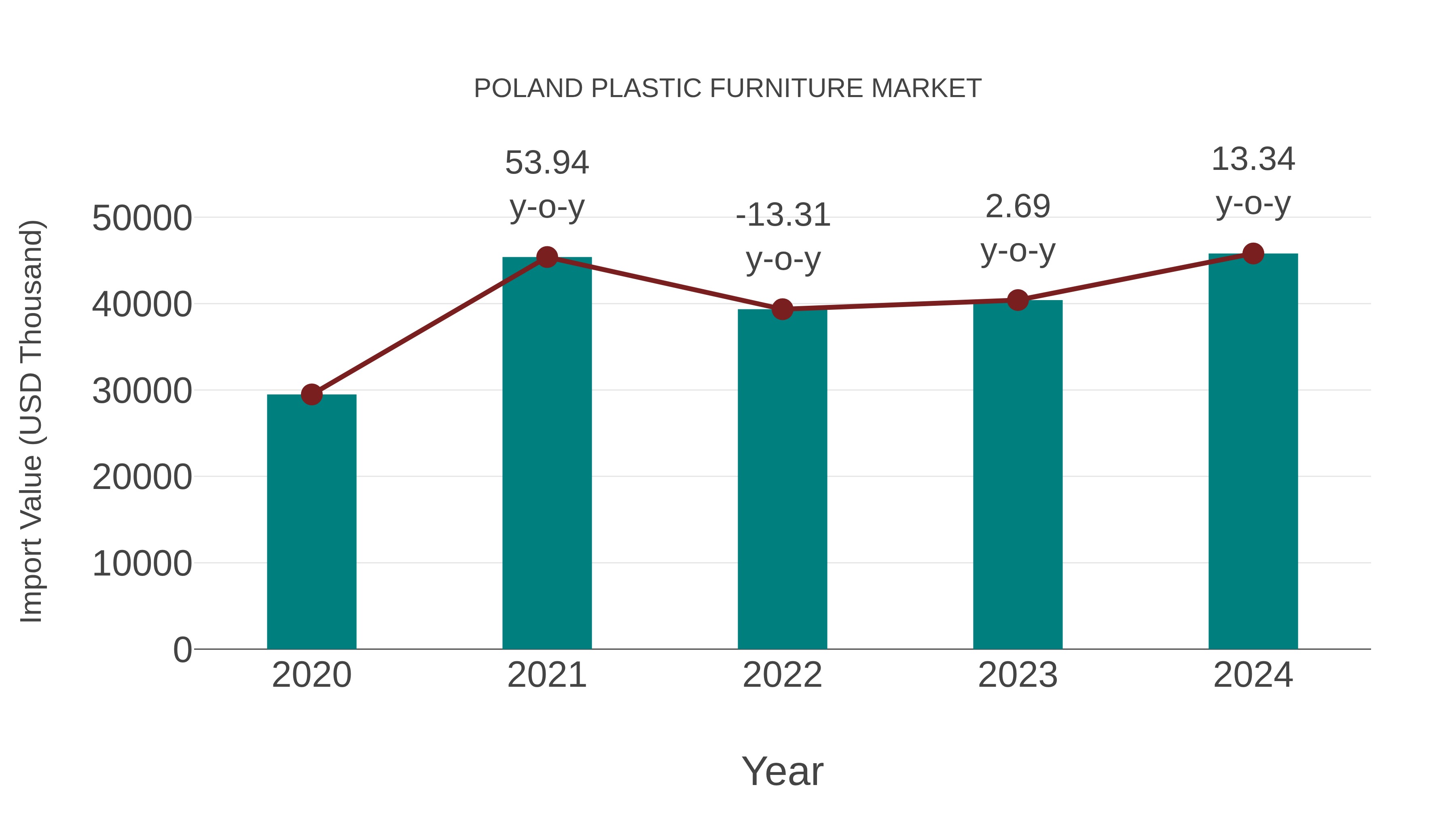
Poland import trend for plastic furniture in 2024 showed a growth rate of 13.34% compared to the previous year, with a compound annual growth rate (CAGR) of 11.64% from 2020 to 2024. This significant increase in imports can be attributed to the rising demand for affordable and durable furniture options in the market, indicating a positive shift in consumer preferences towards plastic furniture over traditional materials.
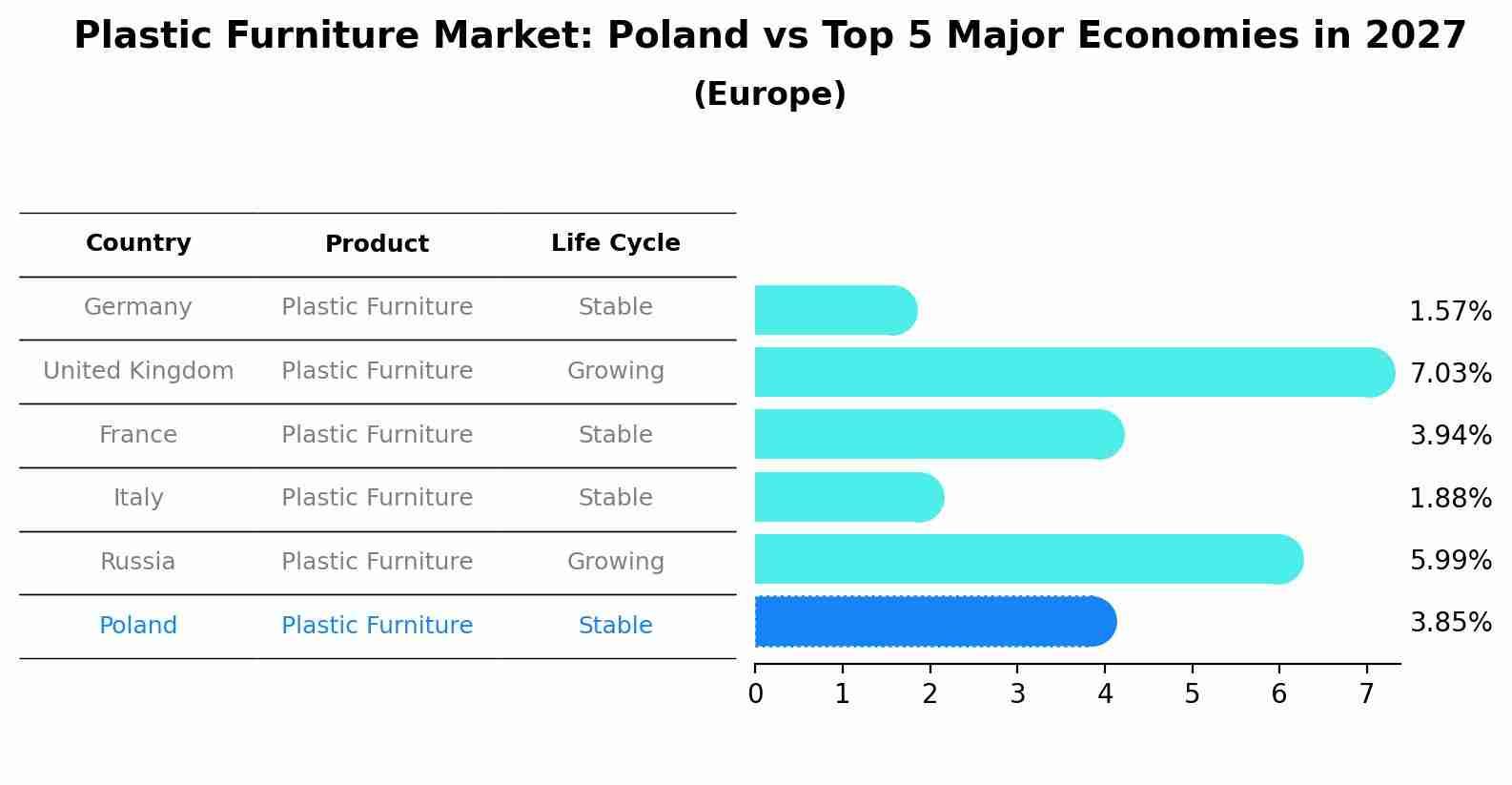
Plastic Furniture Market: Poland vs Top 5 Major Economies in 2027 (Europe)
By 2027, Poland's Plastic Furniture market is forecasted to achieve a stable growth rate of 3.85%, with Germany leading the Europe region, followed by United Kingdom, France, Italy and Russia.
Poland Plastic Furniture Market Overview
The plastic furniture market in Poland is expanding due to the demand for affordable, durable, and low-maintenance furniture solutions. Plastic furniture offers benefits such as weather resistance and ease of cleaning, making it suitable for both indoor and outdoor applications. This market growth is supported by trends in home and office furnishing, as well as increasing use in hospitality and public spaces.
Drivers of the market
The plastic furniture market in Poland is growing due to the increasing demand for lightweight, durable, and affordable furniture options. Plastic furniture offers versatility in design and ease of maintenance, making it popular for residential and commercial applications. The market`s expansion is supported by advancements in plastic molding technologies, rising consumer preference for modern and functional furniture, and the need for cost-effective solutions in furniture design.
Challenges of the market
The plastic furniture market in Poland faces challenges primarily from increasing environmental concerns about the sustainability of plastic products. Consumers are becoming more conscious of the environmental impact of plastic waste, leading to a growing preference for furniture made from natural, biodegradable, or recyclable materials. This trend pressures manufacturers to invest in eco-friendly alternatives, driving up production costs. Furthermore, fluctuating raw material prices and competition from lower-cost international producers make it difficult for local companies to maintain profit margins.
Government Policy of the market
The plastic furniture market in Poland is influenced by government environmental regulations promoting sustainable materials and practices. National initiatives aimed at reducing plastic waste drive demand for eco-friendly plastic furniture options, aligning with consumer trends toward sustainability.
Key Highlights of the Report:
- Poland Plastic Furniture Market Outlook
- Market Size of Poland Plastic Furniture Market, 2025
- Forecast of Poland Plastic Furniture Market, 2032
- Historical Data and Forecast of Poland Plastic Furniture Revenues & Volume for the Period 2022-2032F
- Poland Plastic Furniture Market Trend Evolution
- Poland Plastic Furniture Market Drivers and Challenges
- Poland Plastic Furniture Price Trends
- Poland Plastic Furniture Porter's Five Forces
- Poland Plastic Furniture Industry Life Cycle
- Historical Data and Forecast of Poland Plastic Furniture Market Revenues & Volume By Distribution Channel for the Period 2022-2032F
- Historical Data and Forecast of Poland Plastic Furniture Market Revenues & Volume By Online for the Period 2022-2032F
- Historical Data and Forecast of Poland Plastic Furniture Market Revenues & Volume By Offline for the Period 2022-2032F
- Historical Data and Forecast of Poland Plastic Furniture Market Revenues & Volume By Application for the Period 2022-2032F
- Historical Data and Forecast of Poland Plastic Furniture Market Revenues & Volume By Residential for the Period 2022-2032F
- Historical Data and Forecast of Poland Plastic Furniture Market Revenues & Volume By Commercial for the Period 2022-2032F
- Poland Plastic Furniture Import Export Trade Statistics
- Market Opportunity Assessment By Distribution Channel
- Market Opportunity Assessment By Application
- Poland Plastic Furniture Top Companies Market Share
- Poland Plastic Furniture Competitive Benchmarking By Technical and Operational Parameters
- Poland Plastic Furniture Company Profiles
- Poland Plastic Furniture Key Strategic Recommendations






































