Poland Propane Market: Import Trend Analysis
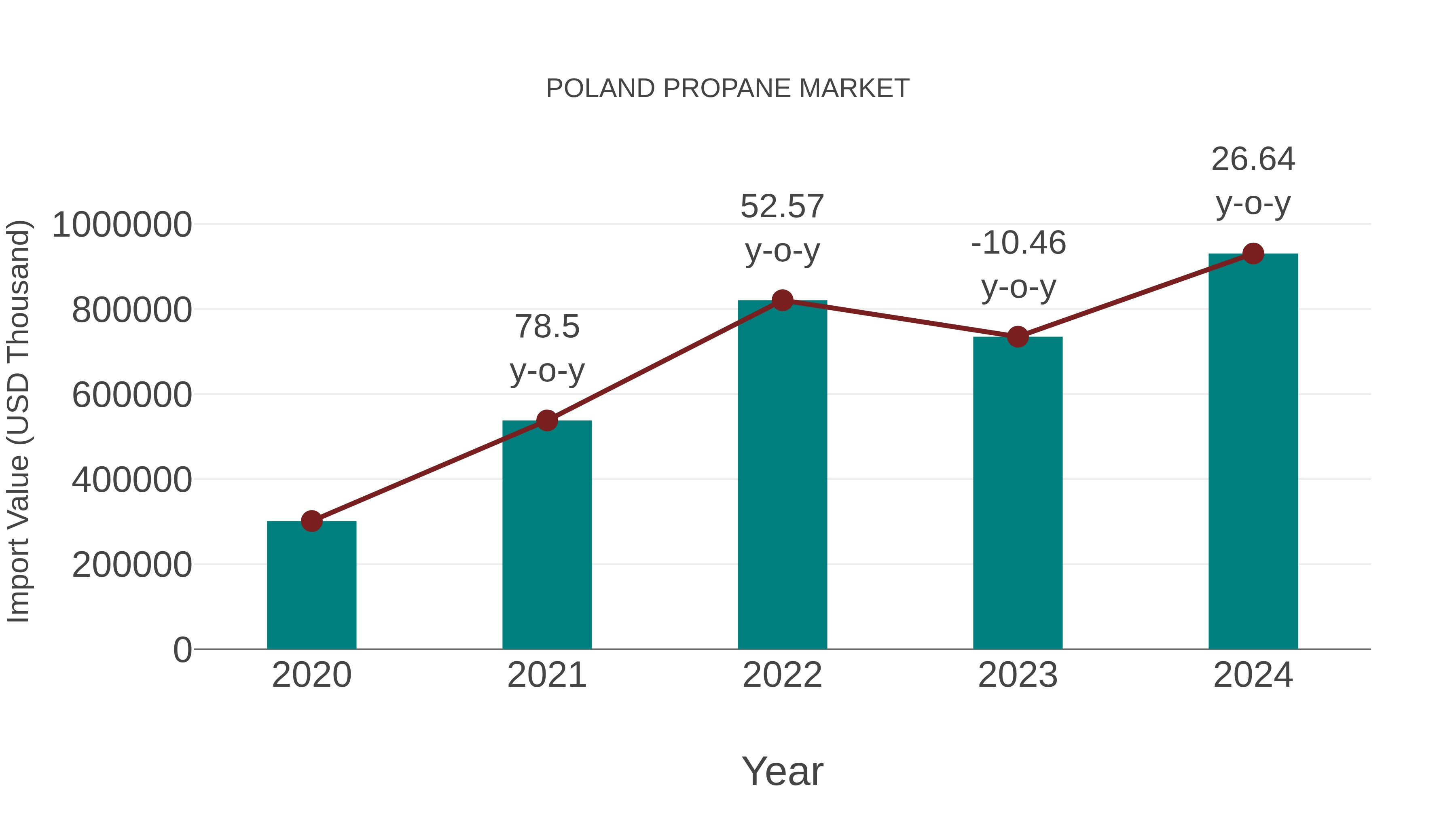
In the Poland propane market, the import trend showed significant growth from 2023 to 2024, with a growth rate of 26.64%. The compound annual growth rate (CAGR) for imports from 2020 to 2024 stood at 32.56%. This upward trajectory can be attributed to increasing industrial demand and favorable trade policies during the period.
Propane Market: Poland vs Top 5 Major Economies in 2027 (Europe)
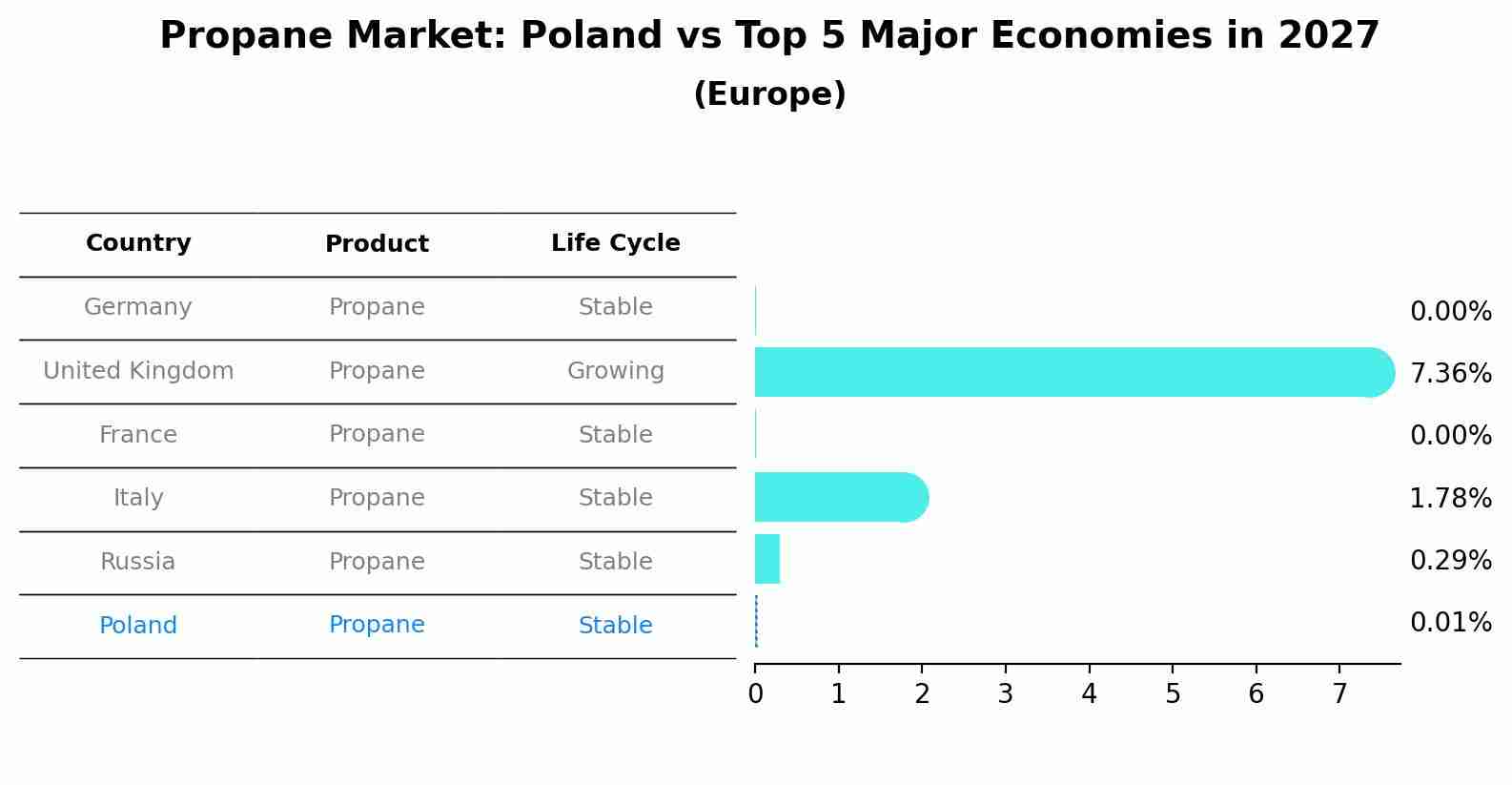
In the Europe region, the Propane market in Poland is projected to expand at a stable growth rate of 0.01% by 2027. The largest economy is Germany, followed by United Kingdom, France, Italy and Russia.
Poland Propane Market Overview
The propane market in Poland is witnessing growth due to its wide application in residential heating, industrial processes, and transportation. The market is driven by the increasing demand for clean, efficient energy sources.
Drivers of the market
The propane market in Poland is growing due to the increasing use of propane as a versatile and efficient energy source for heating, cooking, and industrial applications. Propane offers advantages such as portability, high energy density, and lower emissions compared to other fossil fuels. The market expansion is supported by rising energy demands, advancements in propane storage and distribution technologies, and the focus on cleaner energy alternatives. The need for reliable and efficient energy solutions drives the growth of the propane market.
Challenges of the market
The propane market in Poland is constrained by fluctuating global prices and supply chain disruptions. Moreover, increasing environmental concerns and a shift toward renewable energy sources pose challenges for market sustainability.
Government Policy of the market
The propane market in Poland is shaped by government energy policies that promote the use of propane as a clean and efficient fuel source. National initiatives encouraging the adoption of propane for residential and industrial applications drive demand, supporting the governments goals for energy security and environmental sustainability. Regulatory frameworks that ensure safety and compliance enhance market growth, facilitating the development of propane infrastructure and technologies.
Key Highlights of the Report:
- Poland Propane Market Outlook
- Market Size of Poland Propane Market, 2024
- Forecast of Poland Propane Market, 2031
- Historical Data and Forecast of Poland Propane Revenues & Volume for the Period 2018 - 2031
- Poland Propane Market Trend Evolution
- Poland Propane Market Drivers and Challenges
- Poland Propane Price Trends
- Poland Propane Porter's Five Forces
- Poland Propane Industry Life Cycle
- Historical Data and Forecast of Poland Propane Market Revenues & Volume By Applications for the Period 2018 - 2031
- Historical Data and Forecast of Poland Propane Market Revenues & Volume By Industrial for the Period 2018 - 2031
- Historical Data and Forecast of Poland Propane Market Revenues & Volume By Commercial for the Period 2018 - 2031
- Historical Data and Forecast of Poland Propane Market Revenues & Volume By Residential for the Period 2018 - 2031
- Historical Data and Forecast of Poland Propane Market Revenues & Volume By Transportation for the Period 2018 - 2031
- Historical Data and Forecast of Poland Propane Market Revenues & Volume By Agriculture for the Period 2018 - 2031
- Historical Data and Forecast of Poland Propane Market Revenues & Volume By Chemicals and Refineries for the Period 2018 - 2031
- Poland Propane Import Export Trade Statistics
- Market Opportunity Assessment By Applications
- Poland Propane Top Companies Market Share
- Poland Propane Competitive Benchmarking By Technical and Operational Parameters
- Poland Propane Company Profiles
- Poland Propane Key Strategic Recommendations






































