Poland Small Mammal and Reptile Food Market Size, Share & Growth Rate
The Poland Small Mammal and Reptile Food Market was estimated at USD 679 Million in 2025 and is projected to reach USD 966 Million by 2032, growing at a CAGR of 5.2% from 2026 to 2032. This growth trajectory is largely fueled by the rising trend of pet ownership, particularly among small mammals and reptiles, alongside an increasing consumer preference for high-quality, specialized dietary options. As awareness of proper pet nutrition continues to deepen, pet owners are investing more in products that align with the natural dietary requirements of their beloved companions.
Poland Small Mammal and Reptile Food Market Year-wise Growth Rate and Key Drivers
This graph highlights how the Poland Small Mammal and Reptile Food Market has steadily grown over the years, supported by major growth factors.
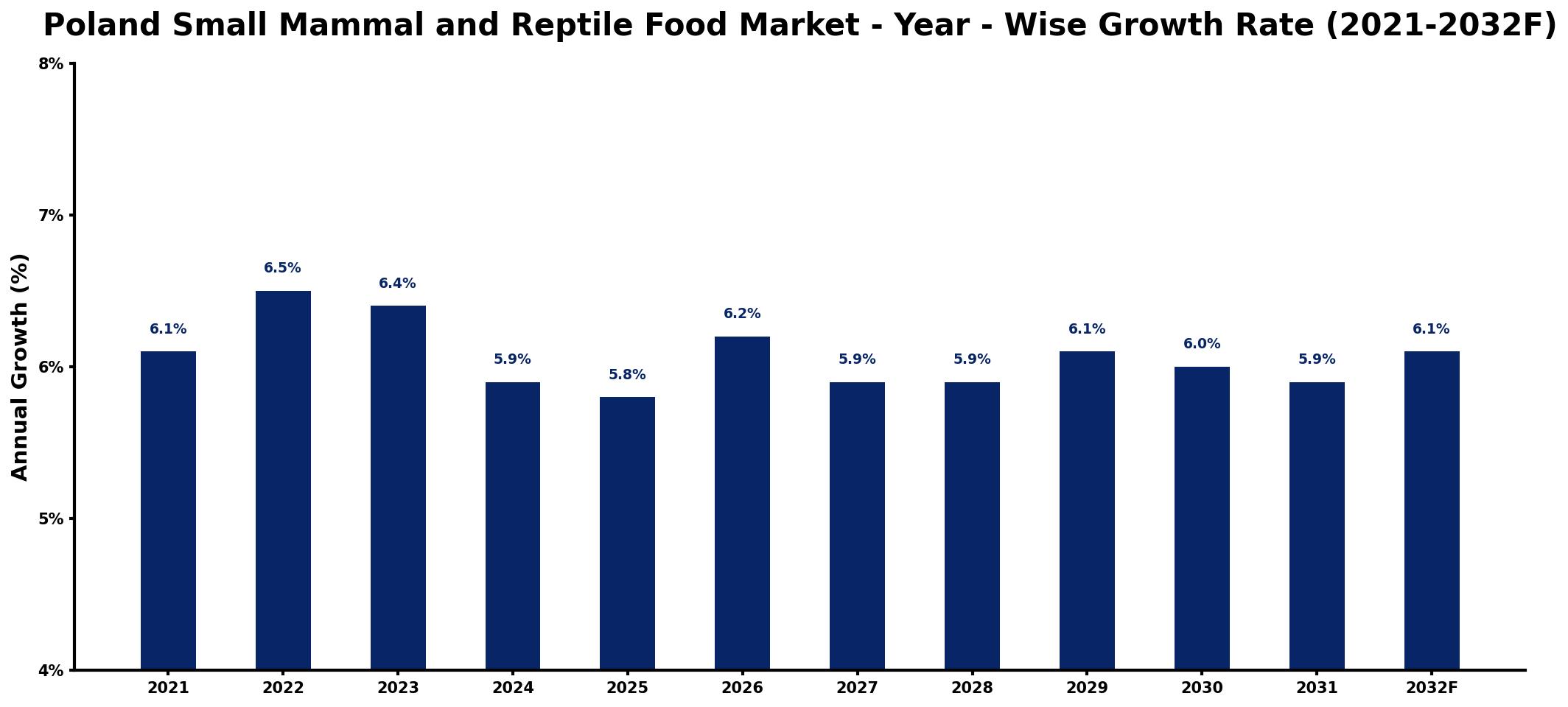
The table below presents the year‑wise growth rates along with the key drivers influencing the market
| Year | Growth Rate | Major Drivers |
| 2021 | 6.1% | Rising pet ownership trends observed |
| 2022 | 6.5% | Increased consumer spending on pets |
| 2023 | 6.4% | Growing awareness of nutrition benefits |
| 2024 | 5.9% | Emergence of specialty pet retailers |
| 2025 | 5.8% | Expansion of online shopping platforms |
| 2026 | 6.2% | Investments in sustainable sourcing practices |
| 2027 | 5.9% | Innovations in product formulations available |
| 2028 | 5.9% | Increased focus on health-conscious options |
| 2029 | 6.1% | Growth in premium product offerings |
| 2030 | 6.0% | Rising demand for eco-friendly packaging |
| 2031 | 5.9% | Strengthening of distribution networks observed |
| 2032 | 6.1% | Enhancements in marketing strategies implemented |
Note: Market size estimations and growth projections presented in this report are based on 6Wresearch's proprietary forecasting methodology, utilizing the latest available industry data, government publications, and primary research inputs.
Poland Small Mammal and Reptile Food Market Synopsis
The Poland Small Mammal and Reptile Food Market is characterized by a diverse array of products, ranging from nutritionally balanced pellets to freeze-dried insects that mimic the natural diet of these pets. An increasing number of pet owners in Poland are now considering the specific dietary needs of small mammals and reptiles, which is pushing demand for specialized food solutions.
As the market evolves, the trend of humanization of pets is becoming increasingly significant, with pet owners opting for premium food options that reflect their own values regarding health and nutrition. Local manufacturers are stepping up to compete with international brands, focusing on quality and innovation to meet the unique demands of Polish pet owners.
Poland Small Mammal and Reptile Food Market Key Takeaways
- The market is currently experiencing steady growth driven by the rising popularity of small mammals and reptiles as pets.
- Consumers are increasingly seeking high-quality, organic, and specialized food products tailored to specific species.
- Sustainable packaging solutions are gaining traction among environmentally conscious pet owners.
- There is a notable shift towards customized dietary solutions catering to individual health needs of pets.
- Education on nutritional needs remains a critical factor influencing consumer purchasing decisions.
Evaluation of Restraints in Poland Small Mammal and Reptile Food Market
One of the most significant constraints facing the Poland Small Mammal and Reptile Food Market is the lack of consumer awareness regarding the specific dietary needs of these animals. Many pet owners still rely on general pet food options, which may not meet the nutritional requirements of small mammals and reptiles. This oversight can stifle demand for specialized products that are better suited for these pets. Furthermore, the overall market size for small mammal and reptile food is relatively small compared to more traditional pet food categories, which can impede growth and hinder companies' ability to compete effectively on price. Additionally, the presence of lower-quality, inexpensive options may further complicate the positioning of premium brands aiming to educate consumers on the importance of high-quality nutrition.
Poland Small Mammal and Reptile Food Market Trends
Current trends within the Poland Small Mammal and Reptile Food Market reflect a growing demand for natural and organic food options. Pet owners are becoming more knowledgeable and are actively seeking transparency in sourcing, with a clear preference for products devoid of artificial ingredients. Customized diets tailored to individual health needs are also emerging as a significant focus area, allowing for better care of pets with specific dietary restrictions. Additionally, environmentally friendly packaging is becoming a priority, aligning with broader societal movements towards sustainability.
Poland Small Mammal and Reptile Food Market Opportunities
The Poland Small Mammal and Reptile Food Market presents numerous investment opportunities, particularly as consumer interest in high-quality products continues to rise. Companies can capitalize on this trend by developing innovative product lines that cater to specific dietary needs or health conditions. Furthermore, expanding distribution channels to include partnerships with local pet stores, online retailers, and veterinary clinics can enhance market reach. Theres also a lucrative opportunity for brands to engage in targeted marketing campaigns that educate pet owners about the nutritional benefits of specialized food options.
Government Initiatives in the Poland Small Mammal and Reptile Food Market
The regulatory framework governing the Poland Small Mammal and Reptile Food Market is primarily shaped by European Union guidelines, which Poland adheres to as a member state. These regulations ensure the safety and quality of pet food products, encompassing aspects of production, labeling, and marketing. Additionally, Poland has its own national policies that aim to protect animal health, welfare, and prevent disease spread. Compliance with these regulations is essential for businesses to maintain market access and ensure consumer confidence in their products.
Future Insights of the Poland Small Mammal and Reptile Food Market
Looking forward to 2026-2032, the Poland Small Mammal and Reptile Food Market is poised for significant growth as pet ownership continues to rise and owners place an increasing emphasis on nutrition. The trend towards the humanization of pets is likely to further drive spending on premium food options. As consumer preferences evolve towards health-oriented and sustainable products, companies will need to prioritize innovation and adapt their offerings accordingly to maintain a competitive edge. Overall, a robust future is anticipated, driven by changing consumer behaviors and an expanding market for premium and specialized pet food.
Poland Small Mammal and Reptile Food Market Latest Developments (2025 - 2026)
Recent developments in the Poland Small Mammal and Reptile Food Market have seen an increasing focus on product diversification and innovation. Companies are exploring new formulations that align with consumer demands for transparency and quality. Additionally, collaborations with pet stores and e-commerce platforms have become more prevalent, allowing brands to reach a wider audience. The market is also experiencing a surge in eco-friendly packaging initiatives, reflecting growing consumer preferences for sustainable options.
Poland Small Mammal and Reptile Food Market - Key Attractiveness of the Report
- 10 Years of Market Numbers
- Historical Data Starting from 2022 to 2025
- Base Year: 2025
- Forecast Data until 2032
- Key Performance Indicators Impacting the Market
- Major Upcoming Developments and Projects
Key Highlights of the Report:
- Poland Small Mammal and Reptile Food Market Outlook
- Market Size of Poland Small Mammal and Reptile Food Market, 2025
- Forecast of Poland Small Mammal and Reptile Food Market, 2032
- Historical Data and Forecast of Poland Small Mammal and Reptile Food Revenues & Volume for the Period 2022-2032F
- Poland Small Mammal and Reptile Food Market Trend Evolution
- Poland Small Mammal and Reptile Food Market Drivers and Challenges
- Poland Small Mammal and Reptile Food Price Trends
- Poland Small Mammal and Reptile Food Porter's Five Forces
- Poland Small Mammal and Reptile Food Industry Life Cycle
- Historical Data and Forecast of Poland Small Mammal and Reptile Food Market Revenues & Volume By Type for the Period 2022-2032F
- Historical Data and Forecast of Poland Small Mammal and Reptile Food Market Revenues & Volume By Rabbits Food for the Period 2022-2032F
- Historical Data and Forecast of Poland Small Mammal and Reptile Food Market Revenues & Volume By Rodents Food for the Period 2022-2032F
- Historical Data and Forecast of Poland Small Mammal and Reptile Food Market Revenues & Volume By Small Reptiles Food for the Period 2022-2032F
- Historical Data and Forecast of Poland Small Mammal and Reptile Food Market Revenues & Volume By Other for the Period 2022-2032F
- Historical Data and Forecast of Poland Small Mammal and Reptile Food Market Revenues & Volume By Application for the Period 2022-2032F
- Historical Data and Forecast of Poland Small Mammal and Reptile Food Market Revenues & Volume By Pet-Speciality Stores for the Period 2022-2032F
- Historical Data and Forecast of Poland Small Mammal and Reptile Food Market Revenues & Volume By Supermarkets and Hypermarkets for the Period 2022-2032F
- Historical Data and Forecast of Poland Small Mammal and Reptile Food Market Revenues & Volume By Convenience Stores for the Period 2022-2032F
- Historical Data and Forecast of Poland Small Mammal and Reptile Food Market Revenues & Volume By Other for the Period 2022-2032F
- Poland Small Mammal and Reptile Food Import Export Trade Statistics
- Market Opportunity Assessment By Type
- Market Opportunity Assessment By Application
- Poland Small Mammal and Reptile Food Top Companies Market Share
- Poland Small Mammal and Reptile Food Competitive Benchmarking By Technical and Operational Parameters
- Poland Small Mammal and Reptile Food Company Profiles
- Poland Small Mammal and Reptile Food Key Strategic Recommendations






































