Poland Washing Machine Market: Import Trend Analysis
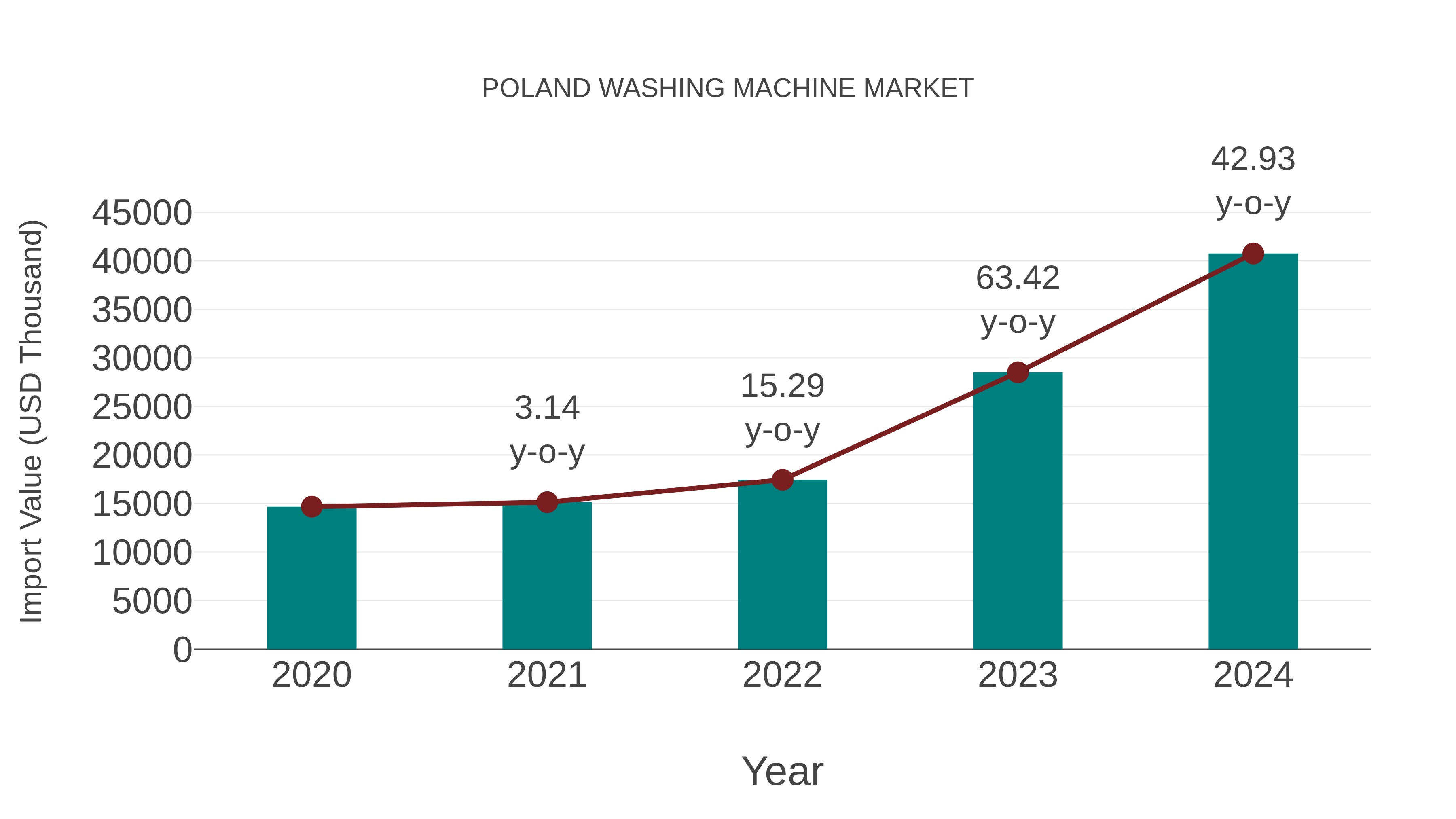
In 2024, Poland washing machine market saw a notable increase in imports. The trend reflected a growing demand for foreign washing machine brands in the country. This surge in imports impacted the market dynamics and competition among local and international players.
Poland Washing Machine Market Overview
The washing machine market in Poland is characterized by a variety of product offerings, including front-load and top-load machines, along with smart appliances featuring advanced technologies. Growth in this market is driven by increasing consumer spending, rising living standards, and technological innovations such as energy-efficient and connected appliances. Competition is strong, with manufacturers continuously introducing new features and improvements. The market also faces challenges related to environmental regulations and the need for sustainable product solutions.
Drivers of the market
The washing machine market in Poland is driven by rising disposable incomes and increasing consumer spending on home appliances. Technological innovations, such as energy-efficient and smart washing machines, attract consumers looking for convenience and sustainability. The growing trend of urbanization and the expansion of residential construction also boost demand for washing machines. Additionally, the rise in consumer preference for advanced features and improved washing performance supports market growth.
Challenges of the market
The washing machine market in Poland faces challenges such as the need for energy-efficient and environmentally friendly models, as well as competition from low-cost imports. As consumers become more environmentally conscious, there is a growing demand for washing machines that offer reduced water and energy consumption. Additionally, the influx of affordable washing machines from international markets can create pricing pressure for local manufacturers.
Government Policy of the market
The washing machine market in Poland is governed by regulations focused on energy efficiency, environmental impact, and product safety. The government has implemented standards for energy consumption and water usage, in line with EU directives, to encourage the development and adoption of more efficient and environmentally friendly washing machines. Additionally, consumer protection laws ensure that products meet safety and quality standards.
Key Highlights of the Report:
- Poland Washing Machine Market Outlook
- Market Size of Poland Washing Machine Market, 2024
- Forecast of Poland Washing Machine Market, 2031
- Historical Data and Forecast of Poland Washing Machine Revenues & Volume for the Period 2018 - 2031
- Poland Washing Machine Market Trend Evolution
- Poland Washing Machine Market Drivers and Challenges
- Poland Washing Machine Price Trends
- Poland Washing Machine Porter's Five Forces
- Poland Washing Machine Industry Life Cycle
- Historical Data and Forecast of Poland Washing Machine Market Revenues & Volume By Product for the Period 2018 - 2031
- Historical Data and Forecast of Poland Washing Machine Market Revenues & Volume By Fully automatic for the Period 2018 - 2031
- Historical Data and Forecast of Poland Washing Machine Market Revenues & Volume By Semi-automatic for the Period 2018 - 2031
- Historical Data and Forecast of Poland Washing Machine Market Revenues & Volume By Dryers for the Period 2018 - 2031
- Historical Data and Forecast of Poland Washing Machine Market Revenues & Volume By Technology for the Period 2018 - 2031
- Historical Data and Forecast of Poland Washing Machine Market Revenues & Volume By Smart connected washing machine for the Period 2018 - 2031
- Historical Data and Forecast of Poland Washing Machine Market Revenues & Volume By Conventional washing machine for the Period 2018 - 2031
- Historical Data and Forecast of Poland Washing Machine Market Revenues & Volume By Capacity for the Period 2018 - 2031
- Historical Data and Forecast of Poland Washing Machine Market Revenues & Volume By Below 6 kg for the Period 2018 - 2031
- Historical Data and Forecast of Poland Washing Machine Market Revenues & Volume By 6.1 to 8 kg for the Period 2018 - 2031
- Historical Data and Forecast of Poland Washing Machine Market Revenues & Volume By Above 8 kg for the Period 2018 - 2031
- Historical Data and Forecast of Poland Washing Machine Market Revenues & Volume By End-use for the Period 2018 - 2031
- Historical Data and Forecast of Poland Washing Machine Market Revenues & Volume By Commercial for the Period 2018 - 2031
- Historical Data and Forecast of Poland Washing Machine Market Revenues & Volume By Residential for the Period 2018 - 2031
- Historical Data and Forecast of Poland Washing Machine Market Revenues & Volume By Application for the Period 2018 - 2031
- Historical Data and Forecast of Poland Washing Machine Market Revenues & Volume By Healthcare for the Period 2018 - 2031
- Historical Data and Forecast of Poland Washing Machine Market Revenues & Volume By Hospitality for the Period 2018 - 2031
- Historical Data and Forecast of Poland Washing Machine Market Revenues & Volume By Others for the Period 2018 - 2031
- Poland Washing Machine Import Export Trade Statistics
- Market Opportunity Assessment By Product
- Market Opportunity Assessment By Technology
- Market Opportunity Assessment By Capacity
- Market Opportunity Assessment By End-use
- Market Opportunity Assessment By Application
- Poland Washing Machine Top Companies Market Share
- Poland Washing Machine Competitive Benchmarking By Technical and Operational Parameters
- Poland Washing Machine Company Profiles
- Poland Washing Machine Key Strategic Recommendations






































