Poland Winding Wire Market: Import Trend Analysis
In 2024, Poland winding wire market saw a consistent upward trend in imports. The market experienced a substantial increase in the volume of winding wire imports, indicating a growing demand for this product within the country.
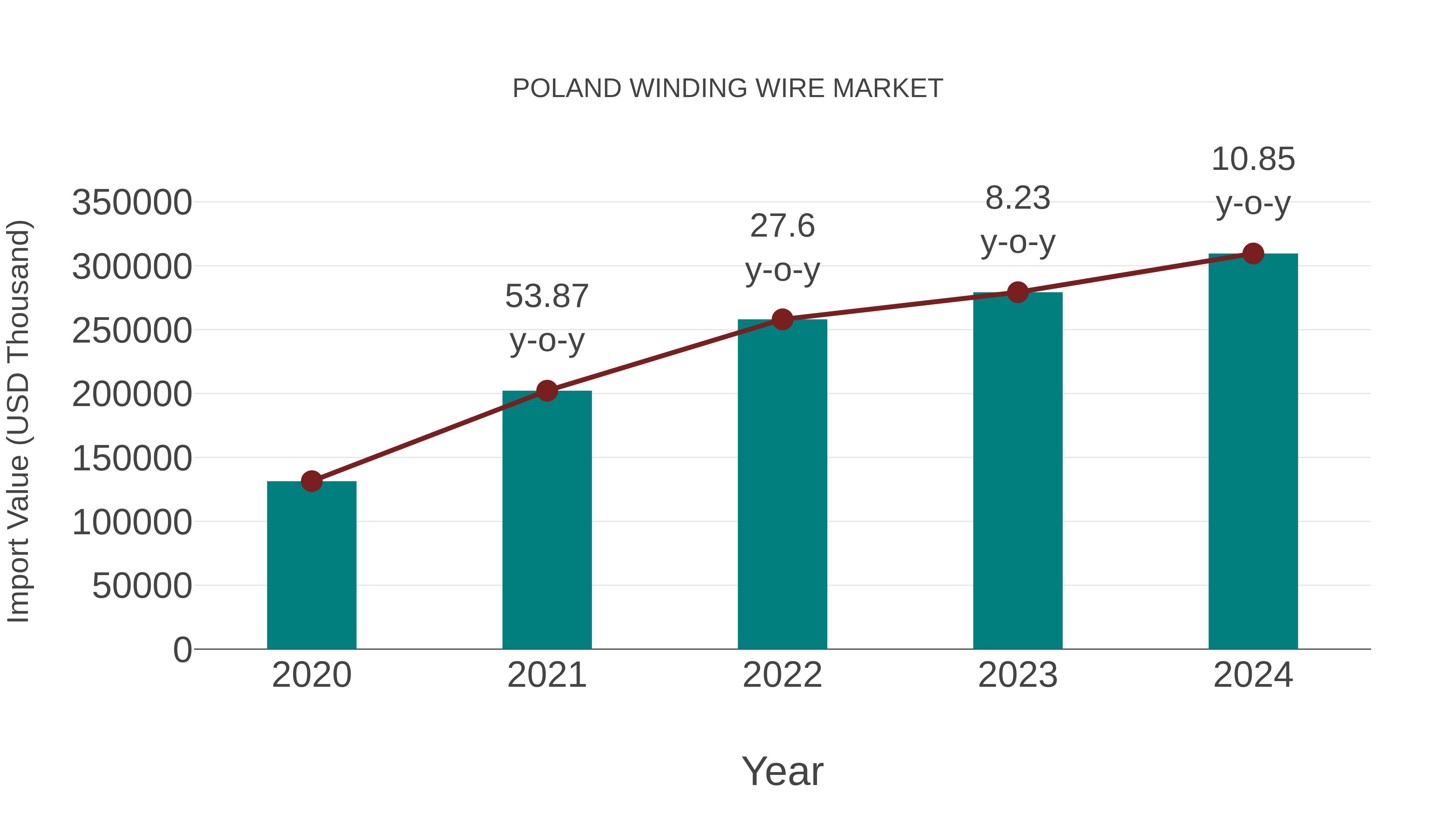
Poland Winding Wire Market Overview
The Poland Winding Wire Market is witnessing steady growth due to increasing demand from various industries such as automotive, electronics, and renewable energy sectors. The market is driven by factors like the growing manufacturing sector, rising investments in infrastructure projects, and the shift towards electric vehicles. Copper and aluminum are the primary materials used in winding wire production, with manufacturers focusing on developing high-quality, efficient, and sustainable products to meet the evolving industry requirements. Key players in the Poland Winding Wire Market include KGHM, Elektrokabel, and Huta Miedzi Legnica, among others. The market is expected to continue its growth trajectory, supported by technological advancements, government initiatives promoting clean energy solutions, and the increasing adoption of electric vehicles in the country.
Poland Winding Wire Market Trends
The Poland winding wire market is witnessing several key trends, including a growing demand for high-efficiency wires to meet the energy efficiency requirements in various industries. Additionally, the increasing adoption of electric vehicles and renewable energy sources is driving the demand for winding wires used in motors and generators. The market is also experiencing a shift towards the use of copper-clad aluminum wires as a cost-effective alternative to pure copper wires. Furthermore, advancements in technology, such as the development of superconducting wires for specialized applications, are expected to shape the future of the winding wire market in Poland. Overall, the market is poised for steady growth driven by the ongoing industrialization and modernization efforts in the country.
Poland Winding Wire Market Challenges
In the Poland winding wire market, some key challenges include increasing competition from imported products, fluctuating raw material prices, and the need for constant innovation to meet evolving customer demands. Imported winding wires often pose a threat to local manufacturers, who must ensure cost competitiveness and quality to retain market share. Fluctuations in the prices of raw materials, such as copper and aluminum, can impact production costs and profit margins. Additionally, the market requires continuous research and development efforts to introduce new technologies and products that cater to the growing demand for energy-efficient and high-performance winding wires. Overall, companies operating in the Poland winding wire market must navigate these challenges effectively to stay competitive and sustain growth.
Poland Winding Wire Market Investment Opportunities
The Poland Winding Wire Market presents several investment opportunities for both domestic and international investors. With the increasing demand for electrical equipment in various industries such as automotive, electronics, and energy, there is a growing need for high-quality winding wires. Investing in the production and distribution of winding wires in Poland can be lucrative due to the country`s strategic location, skilled labor force, and supportive government policies. Additionally, advancements in technology and the shift towards sustainable energy sources are driving the market for specialized winding wires. Investing in research and development to innovate new products and cater to evolving industry requirements can further enhance growth prospects in the Poland Winding Wire Market.
Poland Winding Wire Market Government Policy
Government policies related to the Poland Winding Wire Market primarily focus on promoting domestic production, environmental sustainability, and compliance with EU regulations. The Polish government has implemented measures to support the local winding wire industry through subsidies, tax incentives, and investment in research and development. Additionally, regulations on product quality, safety standards, and environmental protection are strictly enforced to ensure the competitiveness of Polish winding wire products in both domestic and international markets. The government also encourages the adoption of energy-efficient technologies and sustainable practices within the industry to reduce carbon emissions and promote a green economy. Overall, government policies in Poland aim to stimulate growth, innovation, and sustainability in the winding wire market while ensuring compliance with regulatory standards.
Poland Winding Wire Market Future Outlook
The Poland Winding Wire Market is poised for steady growth in the foreseeable future, driven by increasing demand from the automotive, electrical, and electronics industries. The market is expected to benefit from the country`s growing manufacturing sector and infrastructure development projects. Additionally, the emphasis on energy efficiency and renewable energy sources is likely to fuel the demand for high-quality winding wires in applications such as transformers, motors, and generators. Technological advancements in materials and manufacturing processes are anticipated to further boost market growth, offering opportunities for innovation and product development. Overall, the Poland Winding Wire Market is projected to expand, supported by key end-user industries and evolving consumer preferences towards sustainable and efficient solutions.
Key Highlights of the Report:
- Poland Winding Wire Market Outlook
- Market Size of Poland Winding Wire Market, 2025
- Forecast of Poland Winding Wire Market, 2032
- Historical Data and Forecast of Poland Winding Wire Revenues & Volume for the Period 2022 - 2032F
- Poland Winding Wire Market Trend Evolution
- Poland Winding Wire Market Drivers and Challenges
- Poland Winding Wire Price Trends
- Poland Winding Wire Porter's Five Forces
- Poland Winding Wire Industry Life Cycle
- Historical Data and Forecast of Poland Winding Wire Market Revenues & Volume By Product for the Period 2022 - 2032F
- Historical Data and Forecast of Poland Winding Wire Market Revenues & Volume By Copper Winding Wire for the Period 2022 - 2032F
- Historical Data and Forecast of Poland Winding Wire Market Revenues & Volume By Aluminum Winding Wire for the Period 2022 - 2032F
- Poland Winding Wire Import Export Trade Statistics
- Market Opportunity Assessment By Product
- Poland Winding Wire Top Companies Market Share
- Poland Winding Wire Competitive Benchmarking By Technical and Operational Parameters
- Poland Winding Wire Company Profiles
- Poland Winding Wire Key Strategic Recommendations






































