Portugal Gaming Console Market Size (2020-2030)
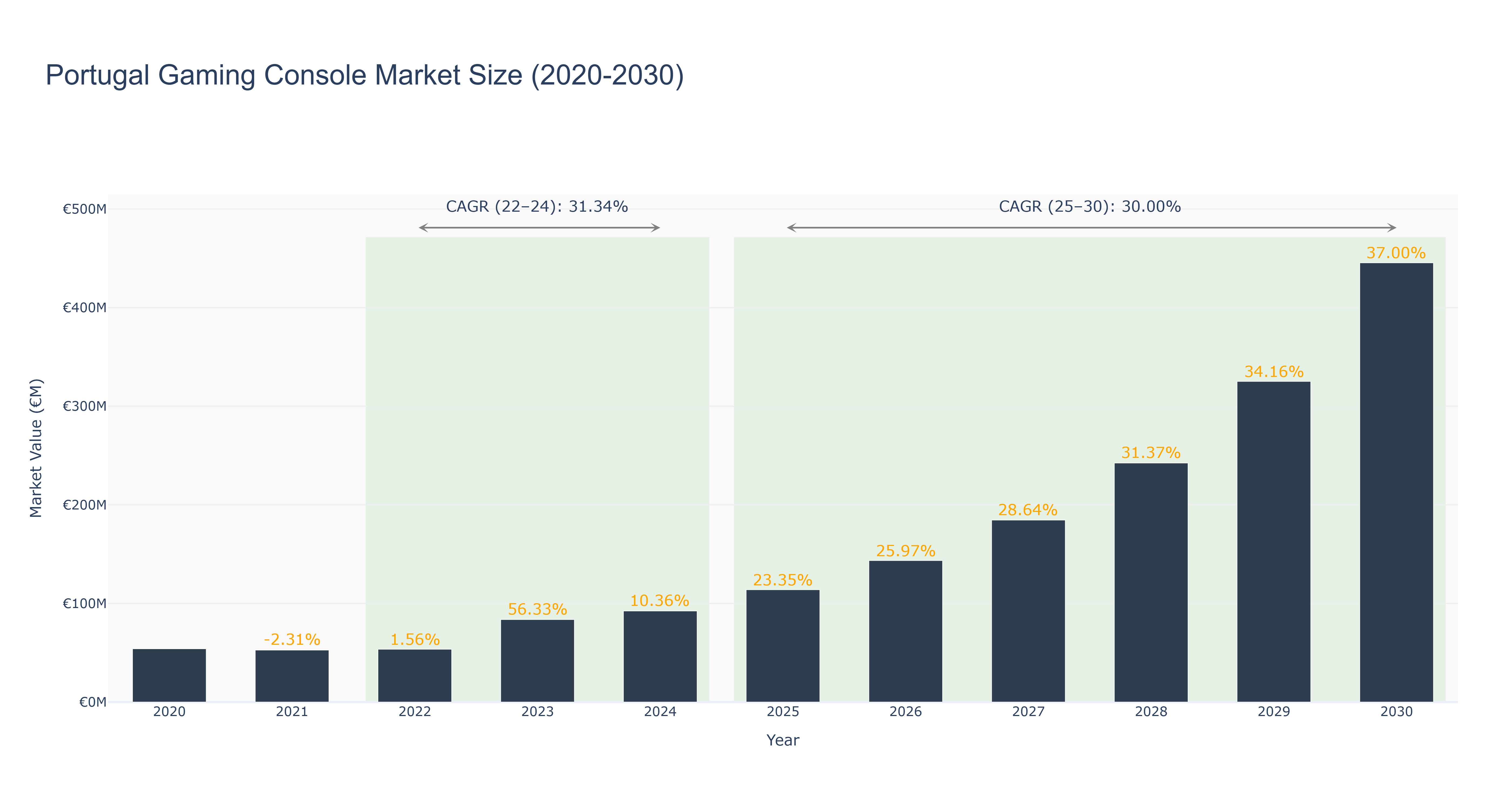
Portugal Gaming Console Market has shown a remarkable growth trajectory over the past decade. The market peaked in 2030 with a size of €445.45 million, marking a steady increase from €53.92 million in 2020. Notable growth spurts occurred between 2023 and 2030, with a significant CAGR of 30.0% forecasted for the period 2025-2030. The market's resilience can be attributed to the increasing demand for advanced gaming technologies and immersive gaming experiences. Recent developments in Portugal's gaming industry include the launch of a national gaming convention to showcase local talent and attract international investments. Looking ahead, the market is poised for further expansion driven by innovative gaming content, technological advancements, and strategic partnerships within the industry.
Portugal Gaming Console Market: Production & Trade Performance (2019-2025)
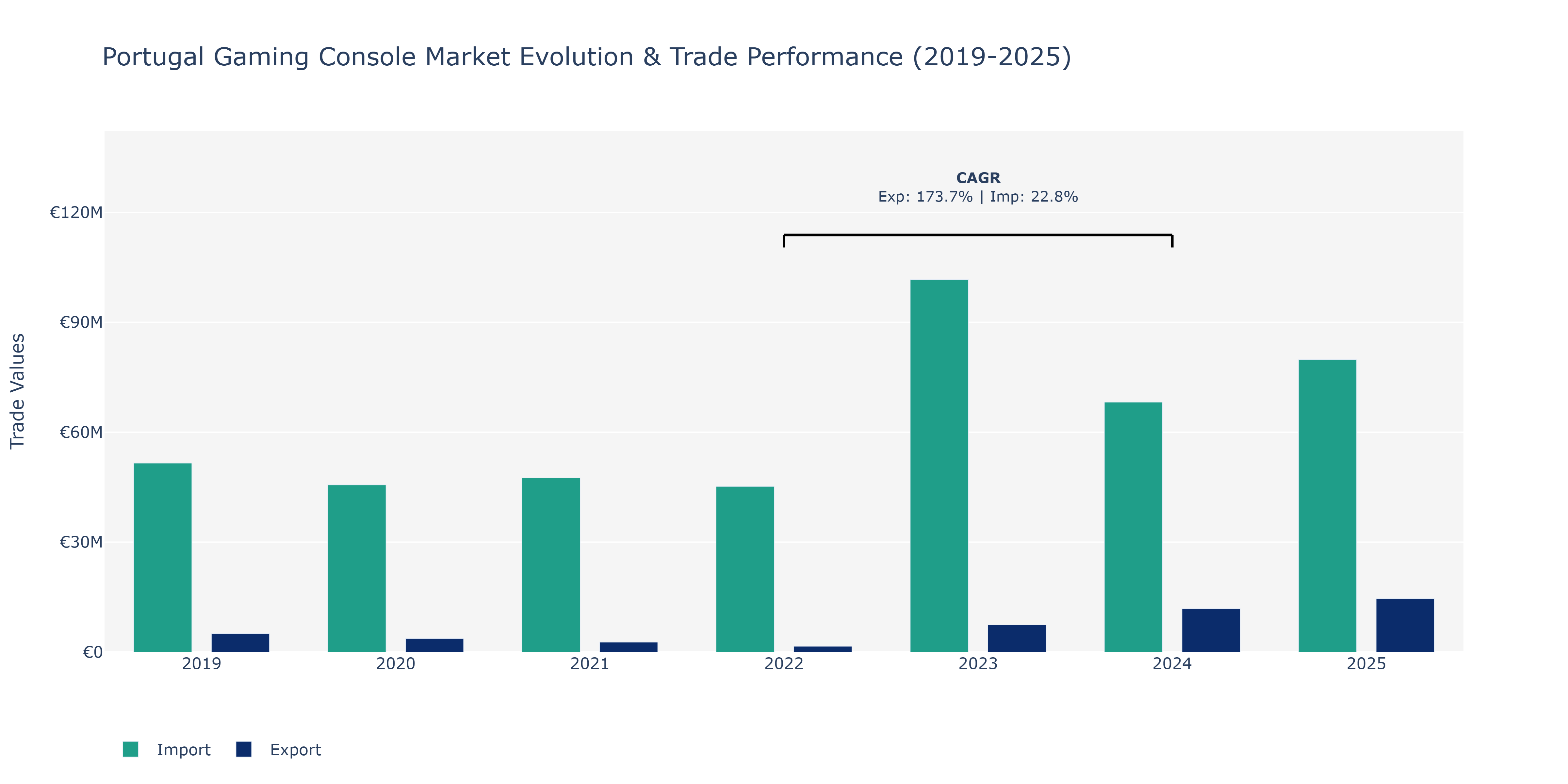
The Portugal Gaming Console Market witnessed a notable decrease in both exports and imports from 2019 to 2021. Exports decreased from €5.09 million to €2.72 million, while imports decreased from €51.57 million to €47.51 million during this period. This decline can be attributed to various factors, including global economic uncertainties, supply chain disruptions, and changes in consumer preferences towards gaming platforms. However, a sharp recovery was observed in 2023 and 2024, with exports increasing to €11.83 million and €14.59 million, and imports to €101.63 million and €68.2 million, respectively. This significant rebound can be linked to the launch of new gaming consoles, strategic pricing strategies by key players, and an increasing demand for interactive gaming experiences. The surge in imports in 2023 reflects the high demand for cutting-edge technology in the Portuguese market. The positive growth trajectory in exports showcases the market's resilience and adaptability to changing market dynamics, emphasizing the importance of innovation and product diversification in driving market competitiveness. The year 2025 marked a peak point for both exports, reaching €14.59 million, and imports, reaching €79.85 million, demonstrating a sustained growth momentum and robust market performance. The consistent growth in exports and imports indicates a thriving gaming console market in Portugal, supported by technological advancements, expanding consumer base, and evolving gaming trends.
Key Highlights of the Report:
- Portugal Gaming Console Market Outlook
- Market Size of Portugal Gaming Console Market, 2025
- Forecast of Portugal Gaming Console Market, 2032
- Historical Data and Forecast of Portugal Gaming Console Revenues & Volume for the Period 2022 - 2032F
- Portugal Gaming Console Market Trend Evolution
- Portugal Gaming Console Market Drivers and Challenges
- Portugal Gaming Console Price Trends
- Portugal Gaming Console Porter`s Five Forces
- Portugal Gaming Console Industry Life Cycle
- Historical Data and Forecast of Portugal Gaming Console Market Revenues & Volume By Component for the Period 2022 - 2032F
- Historical Data and Forecast of Portugal Gaming Console Market Revenues & Volume By Hardware for the Period 2022 - 2032F
- Historical Data and Forecast of Portugal Gaming Console Market Revenues & Volume By Software for the Period 2022 - 2032F
- Historical Data and Forecast of Portugal Gaming Console Market Revenues & Volume By Type for the Period 2022 - 2032F
- Historical Data and Forecast of Portugal Gaming Console Market Revenues & Volume By Home Consoles for the Period 2022 - 2032F
- Historical Data and Forecast of Portugal Gaming Console Market Revenues & Volume By Handheld Consoles for the Period 2022 - 2032F
- Historical Data and Forecast of Portugal Gaming Console Market Revenues & Volume By Hybrid Consoles for the Period 2022 - 2032F
- Historical Data and Forecast of Portugal Gaming Console Market Revenues & Volume By Dedicated Consoles for the Period 2022 - 2032F
- Historical Data and Forecast of Portugal Gaming Console Market Revenues & Volume By Others for the Period 2022 - 2032F
- Historical Data and Forecast of Portugal Gaming Console Market Revenues & Volume By End-use for the Period 2022 - 2032F
- Historical Data and Forecast of Portugal Gaming Console Market Revenues & Volume By Personal for the Period 2022 - 2032F
- Historical Data and Forecast of Portugal Gaming Console Market Revenues & Volume By Commercial for the Period 2022 - 2032F
- Historical Data and Forecast of Portugal Gaming Console Market Revenues & Volume By Others for the Period 2022 - 2032F
- Portugal Gaming Console Import Export Trade Statistics
- Market Opportunity Assessment By Component
- Market Opportunity Assessment By Type
- Market Opportunity Assessment By End-use
- Portugal Gaming Console Top Companies Market Share
- Portugal Gaming Console Competitive Benchmarking By Technical and Operational Parameters
- Portugal Gaming Console Company Profiles
- Portugal Gaming Console Key Strategic Recommendations






































