Qatar Coal Market Size Growth Rate
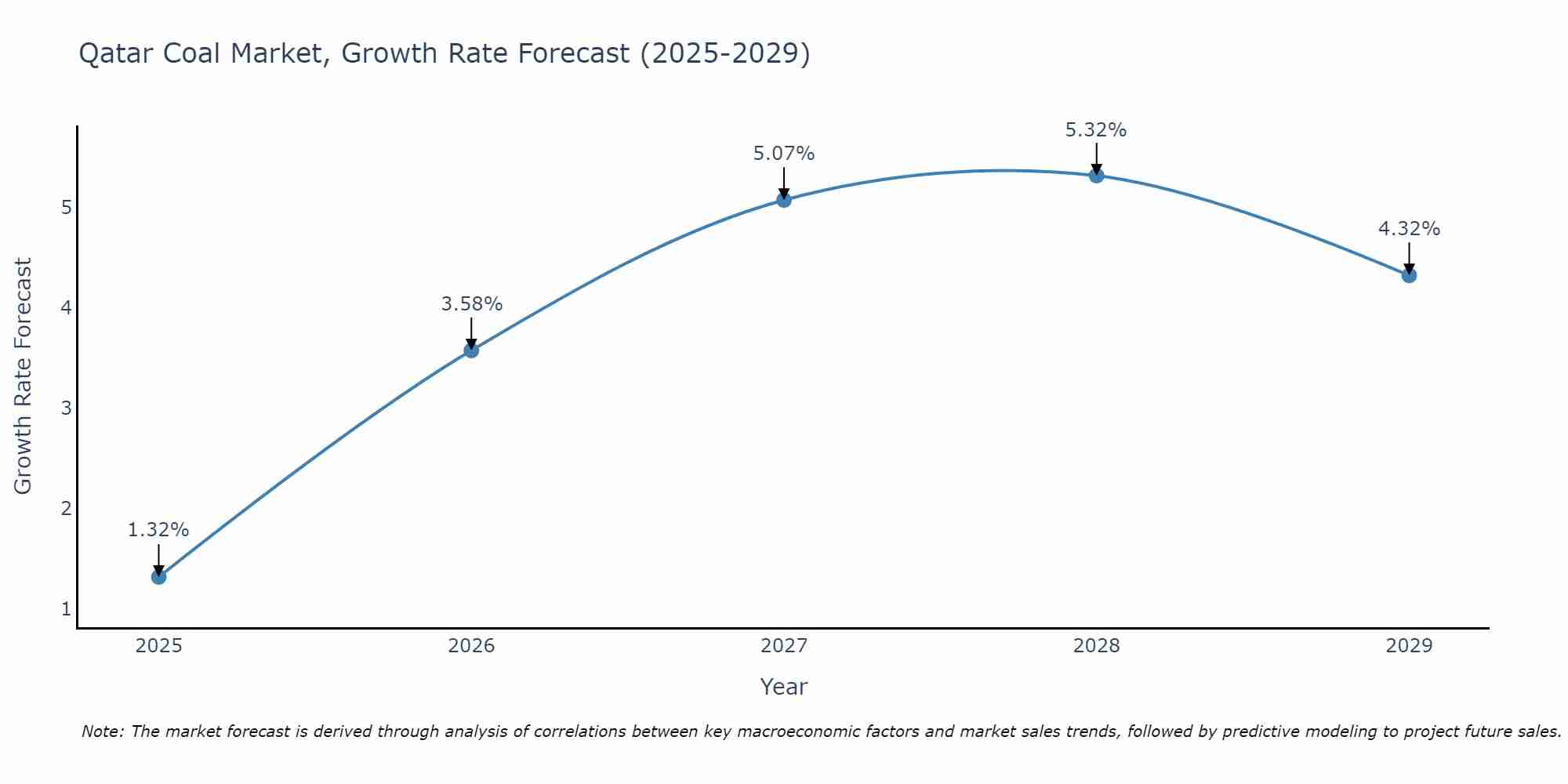
The Qatar Coal Market is projected to witness mixed growth rate patterns during 2025 to 2029. The growth rate begins at 1.32% in 2025, climbs to a high of 5.32% in 2028, and moderates to 4.32% by 2029.
Qatar Coal Market Synopsis
The coal market involves the production, consumption, and trade of coal, a fossil fuel used primarily for electricity generation and industrial processes. Coal is mined from underground or open-pit mines and is classified into different types based on its carbon content, moisture level, and energy value.
Drivers of The Market
Coal has traditionally been a significant source of energy, particularly for electricity generation, in many countries, including Qatar. The demand for coal is influenced by the overall energy consumption and power generation needs. Coal is used in various industrial processes, such as steel production, cement manufacturing, and chemical synthesis, contributing to the demand for coal. Countries with growing economies and industrial sectors may rely on coal as an affordable and easily accessible energy source to fuel their development. Domestic coal production can provide energy security by reducing reliance on imported energy sources.
Challenges of The Market
Coal combustion releases greenhouse gases and pollutants, contributing to air pollution and climate change. Increasing environmental regulations and commitments to reduce carbon emissions pose challenges for the coal industry. The growing adoption of renewable energy sources, such as solar and wind power, as alternatives to coal, may reduce the demand for coal in the long term. Coal mining and combustion can have adverse health effects on workers and nearby communities due to exposure to dust, pollutants, and occupational hazards. The coal market is subject to price volatility due to factors such as supply and demand dynamics, geopolitical events, and policy changes.
Covid-19 Impact of the Market
The Covid-19 pandemic had mixed effects on the global coal market. Reduced economic activities and industrial production during lockdowns might have led to a temporary decline in coal demand. However, as economic activities resumed, the demand for coal, especially in countries heavily reliant on coal for electricity generation and industrial processes, may have rebounded.
Key Highlights of the Report:
- Qatar Coal Market Outlook
- Market Size of Qatar Coal Market, 2024
- Forecast of Qatar Coal Market, 2031
- Historical Data and Forecast of Qatar Coal Revenues & Volume for the Period 2021-2031
- Qatar Coal Market Trend Evolution
- Qatar Coal Market Drivers and Challenges
- Qatar Coal Price Trends
- Qatar Coal Porter's Five Forces
- Qatar Coal Industry Life Cycle
- Historical Data and Forecast of Qatar Coal Market Revenues & Volume By Types for the Period 2021-2031
- Historical Data and Forecast of Qatar Coal Market Revenues & Volume By Bituminous Coal for the Period 2021-2031
- Historical Data and Forecast of Qatar Coal Market Revenues & Volume By Sub-Bituminous Coal for the Period 2021-2031
- Historical Data and Forecast of Qatar Coal Market Revenues & Volume By Anthracite for the Period 2021-2031
- Historical Data and Forecast of Qatar Coal Market Revenues & Volume By Lignite for the Period 2021-2031
- Historical Data and Forecast of Qatar Coal Market Revenues & Volume By End-Users for the Period 2021-2031
- Historical Data and Forecast of Qatar Coal Market Revenues & Volume By Electricity for the Period 2021-2031
- Historical Data and Forecast of Qatar Coal Market Revenues & Volume By Steel for the Period 2021-2031
- Historical Data and Forecast of Qatar Coal Market Revenues & Volume By Cement for the Period 2021-2031
- Historical Data and Forecast of Qatar Coal Market Revenues & Volume By Others for the Period 2021-2031
- Qatar Coal Import Export Trade Statistics
- Market Opportunity Assessment By Types
- Market Opportunity Assessment By End-Users
- Qatar Coal Top Companies Market Share
- Qatar Coal Competitive Benchmarking By Technical and Operational Parameters
- Qatar Coal Company Profiles
- Qatar Coal Key Strategic Recommendations






































