Qatar Hosiery Market Summary
The qatar hosiery market was estimated at USD 214 Million in 2025 and is projected to reach USD 294 Million by 2032, growing at a CAGR of 5.3% from 2026 to 2032.
Qatar Hosiery Market Year-wise Growth Rate and Key Drivers
This graph highlights how the Qatar Hosiery Market has steadily grown over the past five years, supported by major growth factors.
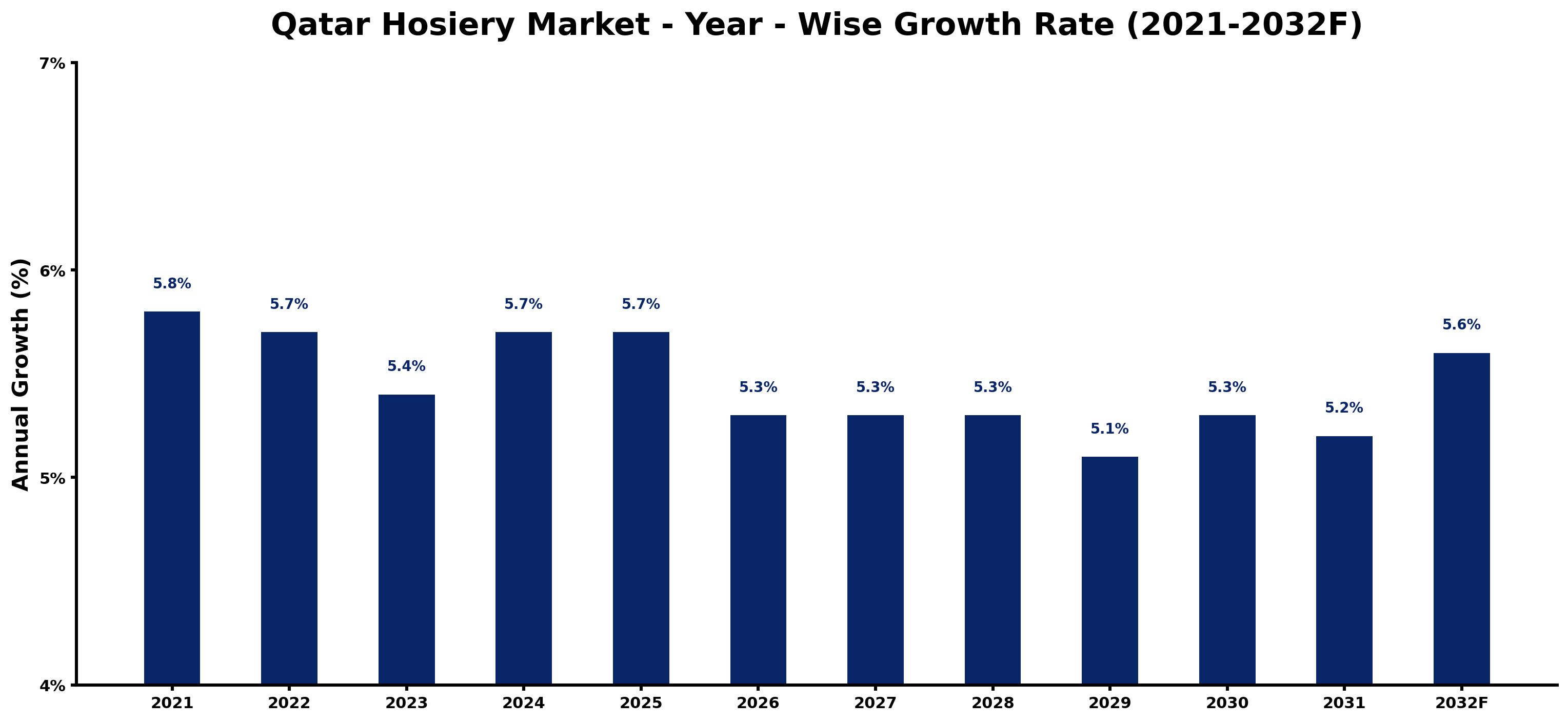
The table below presents the year wise growth rates along with the key drivers influencing the market
| Year | Growth Rate | Major Drivers |
| 2021 | 5.8% | Post-lockdown retail projects began revitalizing consumer interest in apparel categories. |
| 2022 | 5.7% | Local manufacturers increased production to cater to the growing hospitality sector demands. |
| 2023 | 5.4% | Major sporting events spurred promotional campaigns, amplifying brand visibility in Qatar. |
| 2024 | 5.7% | Innovative materials gained traction, aligning with sustainability trends in the fashion industry. |
| 2025 | 5.7% | E-commerce platforms expanded, simplifying access to diverse hosiery products for consumers. |
| 2026 | 5.3% | Collaborations between local designers and global brands enhanced product uniqueness and appeal. |
| 2027 | 5.3% | An influx of expatriates diversified consumer preferences, encouraging niche hosiery offerings. |
| 2028 | 5.3% | Luxury shopping developments emerged, spotlighting high-end hosiery alongside premium garments. |
| 2029 | 5.1% | Climate adaptation strategies influenced hosiery designs suitable for warmer, humid conditions. |
| 2030 | 5.3% | Increased awareness of health and wellness drove interest in functional hosiery options. |
| 2031 | 5.2% | Technological advancements in fabric manufacturing allowed for enhanced durability and comfort. |
| 2032 | 5.6% | Changing lifestyles and fashion norms led to a shift towards versatile and trendy hosiery. |
Note - Market size estimations and growth projections presented in this report are based on 6Wresearch's advanced forecasting approach, validated with industry datasets as of June 2026.
Qatar Hosiery Market Synopsis
The Qatar Hosiery Market is projected to reach 5.3% and witness significant growth during the forecast period (2026-2032). This growth trajectory will be shaped by a variety of factors that reflect evolving consumer preferences and economic conditions. The market is expected to harness opportunities from ongoing fashion trends, rising disposable incomes, and a notable shift towards hosiery as a critical fashion accessory.
Qatar Hosiery Market Growth Drivers
A number of factors are driving the expansion of the Qatar hosiery market. Key among them is the increasing fashion consciousness among consumers, leading to heightened demand for diverse hosiery products such as socks, tights, and stockings. This change is largely inspired by the adoption of contemporary, Western-style fashion, which incorporates hosiery into everyday and formal wear.
- Fashion trends play a crucial role; the growing popularity of hosiery as a style statement encourages consumers to invest in a variety of products, reflecting personal style and individuality.
- The rise in disposable income allows consumers to allocate more funds toward non-essential items such as fashionable hosiery, resulting in increased market demand.
- The professional work culture is evolving with a preference for modern, formal attire, thus boosting the demand for high-quality hosiery that complements business wear.
- Advancements in production technology and materials have led to the introduction of innovative, comfortable, and versatile hosiery, appealing to a broader consumer base.
- Consumer loyalty is strengthened as brands focus on enhancing product quality and comfort, fostering repeat purchases among discerning consumers.
Qatar Hosiery Market Challenges and Restraints
Despite its growth potential, the Qatar hosiery market faces several challenges that could impede its progress. Economic fluctuations that impact consumer spending patterns often lead to volatility in sales, particularly for non-essential items like hosiery. Additionally, the Covid-19 pandemic has had lingering effects on consumer behavior which could reshape long-term demand.
- Economic instability can lead to reduced consumer confidence, affecting discretionary spending and resulting in lower sales for fashion items such as hosiery.
- The presence of counterfeit products poses a significant challenge, as these lower-quality alternatives undermine trust in genuine hosiery brands, potentially losing market share.
- Pricing sensitivity among consumers can pressure brands to lower prices, potentially impacting profitability and the ability to invest in quality enhancement.
- Changes in lifestyle, particularly shifts towards more casual dressing due to remote work, could result in decreased demand for formal hosiery options.
- Adverse market conditions influenced by global supply chain disruptions can affect the availability and cost of raw materials necessary for hosiery production.
Qatar Hosiery Market Investment Opportunities
Investment opportunities in the Qatar hosiery market are emerging as manufacturers and retailers adapt to evolving consumer demands. This dynamic landscape is characterized by innovation and the continuous search for new product categories.
- Investors can look into sustainable and eco-friendly hosiery options, as increasing awareness of environmental issues drives consumer preference towards green products.
- The rise of e-commerce provides a lucrative platform for hosiery brands to reach a wider audience, facilitating direct-to-consumer sales and enhancing brand visibility.
- Customizable hosiery products, which allow consumers to design their own styles or select from various fabrics, are gaining traction and represent a unique market proposition.
- Collaboration with fashion designers and influencers can boost brand recognition and attract a younger demographic interested in trendy hosiery options.
- Expansion into underserved regions within Qatar represents a significant opportunity for market penetration and the development of localized offerings.
Qatar Hosiery Market Government Investment and Initiatives
The Qatari government has been actively promoting the textile and apparel sector, including hosiery, as part of its broader economic diversification strategy. Initiatives aimed at enhancing the manufacturing capabilities within the country reflect a commitment to supporting domestic production and promoting local brands. Furthermore, public spending on infrastructure improvements can facilitate better distribution channels for hosiery products, enhancing market accessibility.
- Government policies that encourage foreign investment in the apparel sector have the potential to introduce innovative technologies and production techniques to the local market.
- Tax incentives for manufacturers could spur growth and attract investment, boosting the overall competitiveness of the Qatari hosiery market.
- Public initiatives focusing on vocational training can equip the workforce with necessary skills, fostering a new generation of professionals in the hosiery industry.
- Support for trade shows and exhibitions can provide brands with a platform to showcase their products and connect with potential buyers and partners.
- The government's emphasis on fostering a robust retail environment could lead to enhanced consumer accessibility to a variety of hosiery products across the region.
Qatar Hosiery Market Latest Developments (May 2025 - June 2026)
During the period from May 2025 to June 2026, the Qatar hosiery market has seen noteworthy developments as brands adapt to the post-pandemic landscape. After an initial decline in demand due to Covid-19 restrictions, recovery trends indicate a shift toward more comfortable and versatile hosiery options. Retailers are focusing on expanding their online presence to cater to changing consumer shopping preferences, with many adopting digital marketing strategies to enhance brand engagement.
- The introduction of new product lines featuring breathable materials and ergonomic designs has been pivotal in attracting health-conscious consumers.
- Increased collaboration between local brands and international designers has resulted in the launch of exclusive collections, drawing consumer interest and enhancing market competitiveness.
- Brands are investing in sustainability initiatives, focusing on eco-friendly materials and practices to resonate with environmentally conscious shoppers.
- Retailers have begun to implement augmented reality (AR) technologies to enhance the online shopping experience, allowing customers to visualize products more effectively.
- The promotion of seasonal and limited-edition collections has been an effective strategy to stimulate consumer interest and drive sales during peak shopping periods.
Qatar Hosiery Market - Key Attractiveness of the Report
- 10 Years of Market Numbers
- Historical Data Starting from 2022 to 2025
- Base Year: 2025
- Forecast Data until 2032
- Key Performance Indicators Impacting the Market
- Major Upcoming Developments and Projects
Key Highlights of the Report:
- Qatar Hosiery Market Outlook
- Market Size of Qatar Hosiery Market, 2025
- Forecast of Qatar Hosiery Market, 2032
- Historical Data and Forecast of Qatar Hosiery Revenues & Volume for the Period 2022-2032F
- Qatar Hosiery Market Trend Evolution
- Qatar Hosiery Market Drivers and Challenges
- Qatar Hosiery Price Trends
- Qatar Hosiery Porter's Five Forces
- Qatar Hosiery Industry Life Cycle
- Historical Data and Forecast of Qatar Hosiery Market Revenues & Volume By Product for the Period 2022-2032F
- Historical Data and Forecast of Qatar Hosiery Market Revenues & Volume By Body Stockings for the Period 2022-2032F
- Historical Data and Forecast of Qatar Hosiery Market Revenues & Volume By Compression Stockings for the Period 2022-2032F
- Historical Data and Forecast of Qatar Hosiery Market Revenues & Volume By Knee Highs, Hold-ups for the Period 2022-2032F
- Historical Data and Forecast of Qatar Hosiery Market Revenues & Volume By Stockings for the Period 2022-2032F
- Historical Data and Forecast of Qatar Hosiery Market Revenues & Volume By Socks for the Period 2022-2032F
- Historical Data and Forecast of Qatar Hosiery Market Revenues & Volume By Tights for the Period 2022-2032F
- Historical Data and Forecast of Qatar Hosiery Market Revenues & Volume By Toe Socks for the Period 2022-2032F
- Historical Data and Forecast of Qatar Hosiery Market Revenues & Volume By Gender for the Period 2022-2032F
- Historical Data and Forecast of Qatar Hosiery Market Revenues & Volume By Men for the Period 2022-2032F
- Historical Data and Forecast of Qatar Hosiery Market Revenues & Volume By Women for the Period 2022-2032F
- Historical Data and Forecast of Qatar Hosiery Market Revenues & Volume By Size for the Period 2022-2032F
- Historical Data and Forecast of Qatar Hosiery Market Revenues & Volume By Small for the Period 2022-2032F
- Historical Data and Forecast of Qatar Hosiery Market Revenues & Volume By Medium for the Period 2022-2032F
- Historical Data and Forecast of Qatar Hosiery Market Revenues & Volume By Large for the Period 2022-2032F
- Historical Data and Forecast of Qatar Hosiery Market Revenues & Volume By Plus for the Period 2022-2032F
- Historical Data and Forecast of Qatar Hosiery Market Revenues & Volume By Price Range for the Period 2022-2032F
- Historical Data and Forecast of Qatar Hosiery Market Revenues & Volume By Premium for the Period 2022-2032F
- Historical Data and Forecast of Qatar Hosiery Market Revenues & Volume By Medium for the Period 2022-2032F
- Historical Data and Forecast of Qatar Hosiery Market Revenues & Volume By Low for the Period 2022-2032F
- Historical Data and Forecast of Qatar Hosiery Market Revenues & Volume By Distribution Channel for the Period 2022-2032F
- Historical Data and Forecast of Qatar Hosiery Market Revenues & Volume By Mass Merchant for the Period 2022-2032F
- Historical Data and Forecast of Qatar Hosiery Market Revenues & Volume By Mono Brand Outlet for the Period 2022-2032F
- Historical Data and Forecast of Qatar Hosiery Market Revenues & Volume By Online Store for the Period 2022-2032F
- Historical Data and Forecast of Qatar Hosiery Market Revenues & Volume By Departmental Store for the Period 2022-2032F
- Historical Data and Forecast of Qatar Hosiery Market Revenues & Volume By Others for the Period 2022-2032F
- Qatar Hosiery Import Export Trade Statistics
- Market Opportunity Assessment By Product
- Market Opportunity Assessment By Gender
- Market Opportunity Assessment By Size
- Market Opportunity Assessment By Price Range
- Market Opportunity Assessment By Distribution Channel
- Qatar Hosiery Top Companies Market Share
- Qatar Hosiery Competitive Benchmarking By Technical and Operational Parameters
- Qatar Hosiery Company Profiles
- Qatar Hosiery Key Strategic Recommendations






































