Qatar Hospitality Furniture Market Size Growth Rate
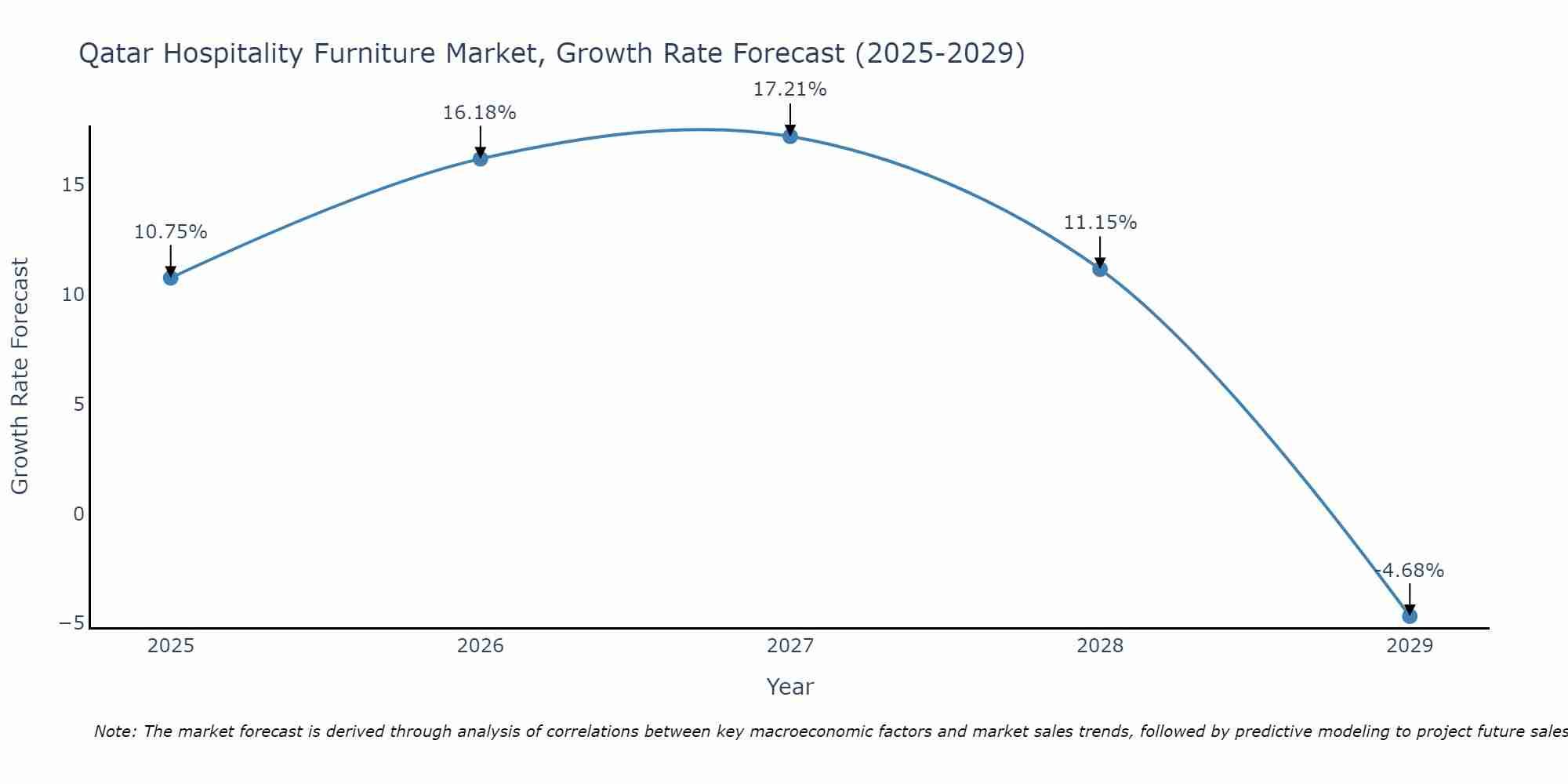
The Qatar Hospitality Furniture Market is projected to witness mixed growth rate patterns during 2025 to 2029. Growth accelerates to 17.21% in 2027, following an initial rate of 10.75%, before easing to -4.68% at the end of the period.
Qatar Hospitality Furniture Market Synopsis
The hospitality furniture market in Qatar is thriving as the country continues to position itself as a top destination for tourism and business travel in the Middle East. The growth in the hospitality sector, including hotels, resorts, and restaurants, has created a robust demand for stylish and durable furniture. With a focus on creating memorable guest experiences, Qatar`s hospitality industry will continue to invest in premium and customized furniture solutions, further boosting the market.
Drivers of the Market
The hospitality furniture market in Qatar is set for robust growth in the foreseeable future. A pivotal driver of this market is the burgeoning tourism industry in the country. Qatar`s strategic positioning as a global travel hub, coupled with its hosting of major international events, has led to a surge in tourism, driving the demand for world-class accommodation and hospitality services. Consequently, there is a substantial need for high-quality, aesthetically appealing furniture in hotels, resorts, and other hospitality establishments. Additionally, the rapid urbanization and infrastructural development in Qatar have spurred the demand for modern, functional, and visually appealing furniture in the hospitality sector.
Challenges of the Market
The hospitality furniture market in Qatar may face challenges related to the cyclical nature of the tourism industry. Economic downturns or geopolitical instability can lead to a decrease in tourist arrivals, impacting the demand for hospitality furniture. Additionally, the market may encounter sustainability challenges as there is an increasing focus on eco-friendly and sustainable furniture materials, which can require investment in new manufacturing processes and materials.
COVID-19 Impact on the Market
The hospitality furniture market in Qatar experienced a notable downturn during the COVID-19 pandemic. With the hospitality sector facing unprecedented challenges, including lockdowns, travel restrictions, and reduced occupancy rates, there was a sharp decline in the demand for new furniture installations and refurbishments. Many hotels and restaurants postponed or scaled down their renovation plans, impacting the demand for hospitality-grade furniture. Manufacturers and suppliers faced disruptions in production schedules and logistics due to the global supply chain constraints. However, as restrictions gradually eased and vaccination efforts gained momentum, the market witnessed a gradual recovery. The focus shifted towards durable, easily maintainable, and aesthetically pleasing furniture options that align with enhanced safety and hygiene standards.
Key Players in the Market
Qatar`s booming hospitality sector continues to fuel the demand for high-quality furniture. Prominent players in this market include Royal Furniture, The One Qatar, and Almuftah Furniture.
Key Highlights of the Report:
- Qatar Hospitality Furniture Market Outlook
- Market Size of Qatar Hospitality Furniture Market, 2024
- Forecast of Qatar Hospitality Furniture Market, 2031
- Historical Data and Forecast of Qatar Hospitality Furniture Revenues & Volume for the Period 2021-2031
- Qatar Hospitality Furniture Market Trend Evolution
- Qatar Hospitality Furniture Market Drivers and Challenges
- Qatar Hospitality Furniture Price Trends
- Qatar Hospitality Furniture Porter's Five Forces
- Qatar Hospitality Furniture Industry Life Cycle
- Historical Data and Forecast of Qatar Hospitality Furniture Market Revenues & Volume By Type for the Period 2021-2031
- Historical Data and Forecast of Qatar Hospitality Furniture Market Revenues & Volume By Wooden Furniture for the Period 2021-2031
- Historical Data and Forecast of Qatar Hospitality Furniture Market Revenues & Volume By Leather & Fabric Furniture for the Period 2021-2031
- Historical Data and Forecast of Qatar Hospitality Furniture Market Revenues & Volume By Metal Furniture for the Period 2021-2031
- Historical Data and Forecast of Qatar Hospitality Furniture Market Revenues & Volume By Others for the Period 2021-2031
- Historical Data and Forecast of Qatar Hospitality Furniture Market Revenues & Volume By Applications for the Period 2021-2031
- Historical Data and Forecast of Qatar Hospitality Furniture Market Revenues & Volume By Economy Hotel for the Period 2021-2031
- Historical Data and Forecast of Qatar Hospitality Furniture Market Revenues & Volume By Extended-stay Hotel for the Period 2021-2031
- Historical Data and Forecast of Qatar Hospitality Furniture Market Revenues & Volume By Full-service Hotel for the Period 2021-2031
- Historical Data and Forecast of Qatar Hospitality Furniture Market Revenues & Volume By Luxury Hotel for the Period 2021-2031
- Historical Data and Forecast of Qatar Hospitality Furniture Market Revenues & Volume By Others for the Period 2021-2031
- Historical Data and Forecast of Qatar Hospitality Furniture Market Revenues & Volume By Industry Vertical for the Period 2021-2031
- Historical Data and Forecast of Qatar Hospitality Furniture Market Revenues & Volume By Hotels & Restaurants for the Period 2021-2031
- Historical Data and Forecast of Qatar Hospitality Furniture Market Revenues & Volume By Public Places for the Period 2021-2031
- Historical Data and Forecast of Qatar Hospitality Furniture Market Revenues & Volume By Corporate Offices for the Period 2021-2031
- Historical Data and Forecast of Qatar Hospitality Furniture Market Revenues & Volume By Others for the Period 2021-2031
- Qatar Hospitality Furniture Import Export Trade Statistics
- Market Opportunity Assessment By Type
- Market Opportunity Assessment By Applications
- Market Opportunity Assessment By Industry Vertical
- Qatar Hospitality Furniture Top Companies Market Share
- Qatar Hospitality Furniture Competitive Benchmarking By Technical and Operational Parameters
- Qatar Hospitality Furniture Company Profiles
- Qatar Hospitality Furniture Key Strategic Recommendations






































