Qatar Hydrophobic and Superhydrophobic Materials Market Size, Share & Growth Rate
The Qatar Hydrophobic and Superhydrophobic Materials Market was estimated at USD 499 Million in 2025 and is projected to reach USD 709 Million by 2032, growing at a CAGR of 5.1% from 2026 to 2032. This growth trajectory is primarily driven by the burgeoning construction sector, where the demand for durable, water-resistant materials is surging. Furthermore, advancements in automotive technologies and the increasing importance of anti-corrosion solutions in aerospace and electronics are contributing significantly to market expansion.
Qatar Hydrophobic and Superhydrophobic Materials Market Year-wise Growth Rate and Key Drivers
This graph highlights how the Qatar Hydrophobic and Superhydrophobic Materials Market has steadily grown over the years, supported by major growth factors.
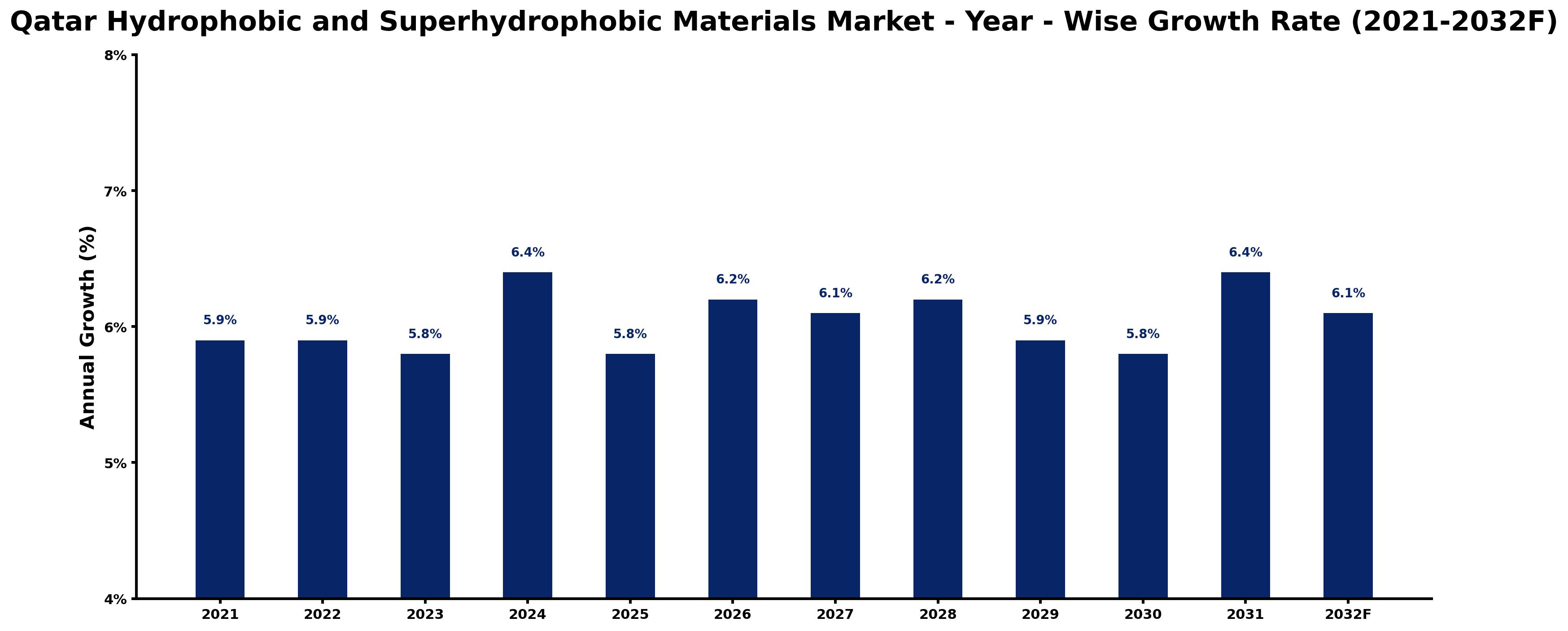
The table below presents the year‑wise growth rates along with the key drivers influencing the market
| Year | Growth Rate | Major Drivers |
| 2021 | 5.9% | Government infrastructure modernization initiatives |
| 2022 | 5.9% | Growing urbanization and commercial development |
| 2023 | 5.8% | Increasing industrial infrastructure investments |
| 2024 | 6.4% | Rising electricity demand across industries |
| 2025 | 5.8% | Increasing industrial infrastructure investments |
| 2026 | 6.2% | Increasing smart city development projects |
| 2027 | 6.1% | Growing urbanization and commercial development |
| 2028 | 6.2% | Increasing smart city development projects |
| 2029 | 5.9% | Increasing smart city development projects |
| 2030 | 5.8% | Government infrastructure modernization initiatives |
| 2031 | 6.4% | Increasing adoption of advanced technologies |
| 2032 | 6.1% | Rising electricity demand across industries |
Note - Market size estimations and growth projections presented in this report are based on 6Wresearch’s advanced forecasting approach, validated with industry datasets as of June 2026.
Qatar Hydrophobic and Superhydrophobic Materials Market Synopsis
In Qatar, hydrophobic and superhydrophobic materials have become integral to enhancing the performance and longevity of products across various industries. Their water-repellent properties are particularly advantageous in protecting structures from moisture, thus mitigating maintenance costs while extending lifespan.
Moreover, the application of these materials in automotive coatings ensures vehicles remain cleaner and retain aesthetic appeal, which is increasingly important to consumers. As the market evolves, a keen interest is seen from sectors seeking innovative solutions for water resistance, self-cleaning surfaces, and improved operational efficiencies.
Qatar Hydrophobic and Superhydrophobic Materials Market Key Takeaways
- The market is projected to grow significantly, fueled by heightened demand in construction and automotive industries.
- Applications span various sectors, showcasing versatility and adaptability of hydrophobic technologies.
- Government initiatives aimed at infrastructure development support the need for enhanced material solutions.
- Consumer preferences increasingly favor products offering maintenance ease and durability, further driving market growth.
- Innovation in manufacturing processes is expected to enhance the performance characteristics of these materials.
Evaluation of Restraints in Qatar Hydrophobic and Superhydrophobic Materials Market
Despite the promising outlook, the Qatar Hydrophobic and Superhydrophobic Materials Market faces challenges that could hinder its growth. One primary restraint is the high cost associated with producing and applying these advanced materials. Superhydrophobic coatings, noted for their exceptional water-repellent capabilities, can be prohibitively expensive, impacting widespread adoption across industries. Furthermore, ensuring the long-term durability and effectiveness of these coatings in various environmental conditions poses another significant challenge, as industries increasingly demand solutions that withstand harsh weather, UV exposure, and regular wear.
Qatar Hydrophobic and Superhydrophobic Materials Market Trends
Key trends shaping the Qatar Hydrophobic and Superhydrophobic Materials Market include a growing focus on sustainable building practices and innovations in nanotechnology. As environmental concerns rise, there is an increasing demand for eco-friendly water-resistant materials that align with sustainability initiatives. Additionally, advancements in nanomaterials are paving the way for the development of more effective hydrophobic coatings, enhancing their performance while potentially lowering costs.
Qatar Hydrophobic and Superhydrophobic Materials Market Opportunities
Investment opportunities in the Qatar Hydrophobic and Superhydrophobic Materials Market are abundant, particularly in sectors seeking enhanced protective solutions. The construction industry is poised for growth as new regulations and standards mandate improved water resistance in building materials. Additionally, the automotive sector represents a substantial opportunity for manufacturers to provide innovative coatings that ensure vehicles maintain their aesthetic appeal and performance over time.
Government Initiatives in the Qatar Hydrophobic and Superhydrophobic Materials Market
The Qatari government has been proactive in promoting infrastructure development, which inherently boosts demand for hydrophobic and superhydrophobic materials. Public spending on modernization projects emphasizes the necessity for durable, water-resistant solutions, aligning with national development goals. Programs aimed at fostering innovation in construction materials further highlight the importance of advanced technologies within the market, providing a favorable environment for growth.
Future Insights of the Qatar Hydrophobic and Superhydrophobic Materials Market
Looking ahead to 2026-2032, the Qatar Hydrophobic and Superhydrophobic Materials Market is expected to experience robust growth as industries increasingly recognize the benefits of water-repellent technologies. Integration of these materials into everyday applications, combined with technological advancements, will likely pave the way for new innovations that enhance performance and reduce costs. The market is set to evolve, with rising consumer awareness and preference for long-lasting, self-cleaning materials driving the demand further.
Qatar Hydrophobic and Superhydrophobic Materials Market Latest Developments (May 2025 - June 2026)
Recent industry developments indicate a strategic shift towards the adoption of hydrophobic technologies in various applications across Qatar. Stakeholders are increasingly exploring collaborations and partnerships to leverage cutting-edge research and development. Additionally, a trend toward utilizing these materials in protective coatings for sensitive electronic components has gained traction, highlighting the versatility and relevance of hydrophobic solutions in multiple sectors.
Qatar Hydrophobic and Superhydrophobic Materials Market - Key Attractiveness of the Report
- 10 Years of Market Numbers
- Historical Data Starting from 2022 to 2025
- Base Year: 2025
- Forecast Data until 2032
- Key Performance Indicators Impacting the Market
- Major Upcoming Developments and Projects
Key Highlights of the Report:
- Qatar Hydrophobic and Superhydrophobic Materials Market Outlook
- Market Size of Qatar Hydrophobic and Superhydrophobic Materials Market, 2025
- Forecast of Qatar Hydrophobic and Superhydrophobic Materials Market, 2032
- Historical Data and Forecast of Qatar Hydrophobic and Superhydrophobic Materials Revenues & Volume for the Period 2022-2032F
- Qatar Hydrophobic and Superhydrophobic Materials Market Trend Evolution
- Qatar Hydrophobic and Superhydrophobic Materials Market Drivers and Challenges
- Qatar Hydrophobic and Superhydrophobic Materials Price Trends
- Qatar Hydrophobic and Superhydrophobic Materials Porter's Five Forces
- Qatar Hydrophobic and Superhydrophobic Materials Industry Life Cycle
- Historical Data and Forecast of Qatar Hydrophobic and Superhydrophobic Materials Market Revenues & Volume By Product for the Period 2022-2032F
- Historical Data and Forecast of Qatar Hydrophobic and Superhydrophobic Materials Market Revenues & Volume By Anti-corrosion for the Period 2022-2032F
- Historical Data and Forecast of Qatar Hydrophobic and Superhydrophobic Materials Market Revenues & Volume By Anti-wetting for the Period 2022-2032F
- Historical Data and Forecast of Qatar Hydrophobic and Superhydrophobic Materials Market Revenues & Volume By Anti-icing for the Period 2022-2032F
- Historical Data and Forecast of Qatar Hydrophobic and Superhydrophobic Materials Market Revenues & Volume By Self-cleaning for the Period 2022-2032F
- Historical Data and Forecast of Qatar Hydrophobic and Superhydrophobic Materials Market Revenues & Volume By End user for the Period 2022-2032F
- Historical Data and Forecast of Qatar Hydrophobic and Superhydrophobic Materials Market Revenues & Volume By Steel & Metal for the Period 2022-2032F
- Historical Data and Forecast of Qatar Hydrophobic and Superhydrophobic Materials Market Revenues & Volume By Building & Construction for the Period 2022-2032F
- Historical Data and Forecast of Qatar Hydrophobic and Superhydrophobic Materials Market Revenues & Volume By Automotive for the Period 2022-2032F
- Historical Data and Forecast of Qatar Hydrophobic and Superhydrophobic Materials Market Revenues & Volume By Textile & Fabric for the Period 2022-2032F
- Historical Data and Forecast of Qatar Hydrophobic and Superhydrophobic Materials Market Revenues & Volume By Others for the Period 2022-2032F
- Qatar Hydrophobic and Superhydrophobic Materials Import Export Trade Statistics
- Market Opportunity Assessment By Product
- Market Opportunity Assessment By End user
- Qatar Hydrophobic and Superhydrophobic Materials Top Companies Market Share
- Qatar Hydrophobic and Superhydrophobic Materials Competitive Benchmarking By Technical and Operational Parameters
- Qatar Hydrophobic and Superhydrophobic Materials Company Profiles
- Qatar Hydrophobic and Superhydrophobic Materials Key Strategic Recommendations






































