Qatar Palmitic Acid Market Size Growth Rate
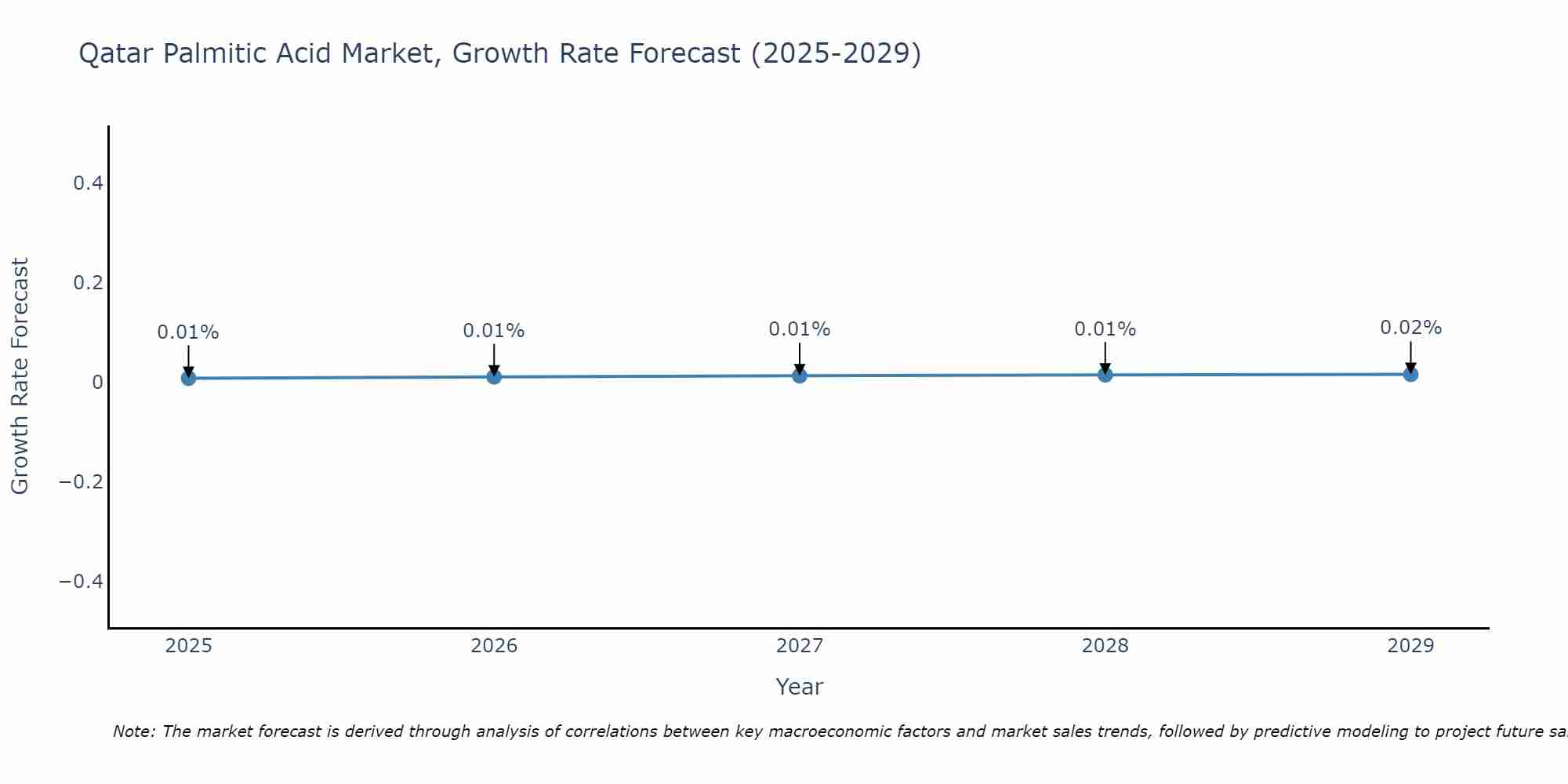
The Qatar Palmitic Acid Market is poised for steady growth rate improvements from 2025 to 2029. The growth rate starts at 0.01% in 2025 and reaches 0.02% by 2029.
Qatar Palmitic Acid Market Synopsis
The Qatar Palmitic Acid market holds promise as the country`s chemical industry expands. Palmitic acid is a key ingredient in various industrial applications, including cosmetics, food, and pharmaceuticals. Qatar`s strategic location and investment in chemical manufacturing create opportunities for palmitic acid production. Companies in this market should focus on quality control, safety measures, and compliance with international standards to tap into domestic and export markets effectively.
Drivers of the Market
The Qatar palmitic acid market is experiencing growth driven by multiple factors. Palmitic acid is widely used in the cosmetics and personal care industry for its emollient properties, and the rising demand for skincare and beauty products in Qatar is fueling its market growth. Furthermore, palmitic acid has applications in the food industry, particularly in the production of certain food additives and flavorings. The pharmaceutical sector also contributes to the demand for palmitic acid in Qatar, as it is used in various drug formulations.
Challenges of the Market
Palmitic acid is used in various industries, including cosmetics and food. In Qatar, the palmitic acid market may encounter challenges related to sustainability concerns, import dependencies, and changing consumer preferences for natural ingredients. Companies in this market must address these issues to sustain growth.
COVID-19 Impact on the Market
The palmitic acid market in Qatar faced challenges during the COVID-19 pandemic, as industrial activities temporarily decreased. However, with the recovery of manufacturing sectors and increasing use in personal care products and pharmaceuticals, the market is stabilizing. Qatar`s commitment to developing its chemical industry further enhances the prospects for the palmitic acid market.
Key Players in the Market
Palmitic acid is a type of saturated fatty acid used in various industries, including food and personal care. Key players might include chemical companies like BASF, Wilmar International, and Kuala Lumpur Kepong Berhad.
Key Highlights of the Report:
- Qatar Palmitic Acid Market Outlook
- Market Size of Qatar Palmitic Acid Market, 2024
- Forecast of Qatar Palmitic Acid Market, 2031
- Historical Data and Forecast of Qatar Palmitic Acid Revenues & Volume for the Period 2021-2031
- Qatar Palmitic Acid Market Trend Evolution
- Qatar Palmitic Acid Market Drivers and Challenges
- Qatar Palmitic Acid Price Trends
- Qatar Palmitic Acid Porter's Five Forces
- Qatar Palmitic Acid Industry Life Cycle
- Historical Data and Forecast of Qatar Palmitic Acid Market Revenues & Volume By Type for the Period 2021-2031
- Historical Data and Forecast of Qatar Palmitic Acid Market Revenues & Volume By Distilled Type for the Period 2021-2031
- Historical Data and Forecast of Qatar Palmitic Acid Market Revenues & Volume By Fractionated Type for the Period 2021-2031
- Historical Data and Forecast of Qatar Palmitic Acid Market Revenues & Volume By Application for the Period 2021-2031
- Historical Data and Forecast of Qatar Palmitic Acid Market Revenues & Volume By Soap & Detergent for the Period 2021-2031
- Historical Data and Forecast of Qatar Palmitic Acid Market Revenues & Volume By Cosmetics for the Period 2021-2031
- Historical Data and Forecast of Qatar Palmitic Acid Market Revenues & Volume By Grease & Lubricant for the Period 2021-2031
- Historical Data and Forecast of Qatar Palmitic Acid Market Revenues & Volume By Others for the Period 2021-2031
- Qatar Palmitic Acid Import Export Trade Statistics
- Market Opportunity Assessment By Type
- Market Opportunity Assessment By Application
- Qatar Palmitic Acid Top Companies Market Share
- Qatar Palmitic Acid Competitive Benchmarking By Technical and Operational Parameters
- Qatar Palmitic Acid Company Profiles
- Qatar Palmitic Acid Key Strategic Recommendations






































