Qatar Physiotherapy Equipment Market Summary
The qatar physiotherapy equipment market was estimated at USD 164 Million in 2025 and is projected to reach USD 214 Million by 2032, growing at a CAGR of 5.0% from 2026 to 2032.
Qatar Physiotherapy Equipment Market Year-wise Growth Rate and Key Drivers
This graph highlights how the Qatar Physiotherapy Equipment Market has steadily grown over the past five years, supported by major growth factors.
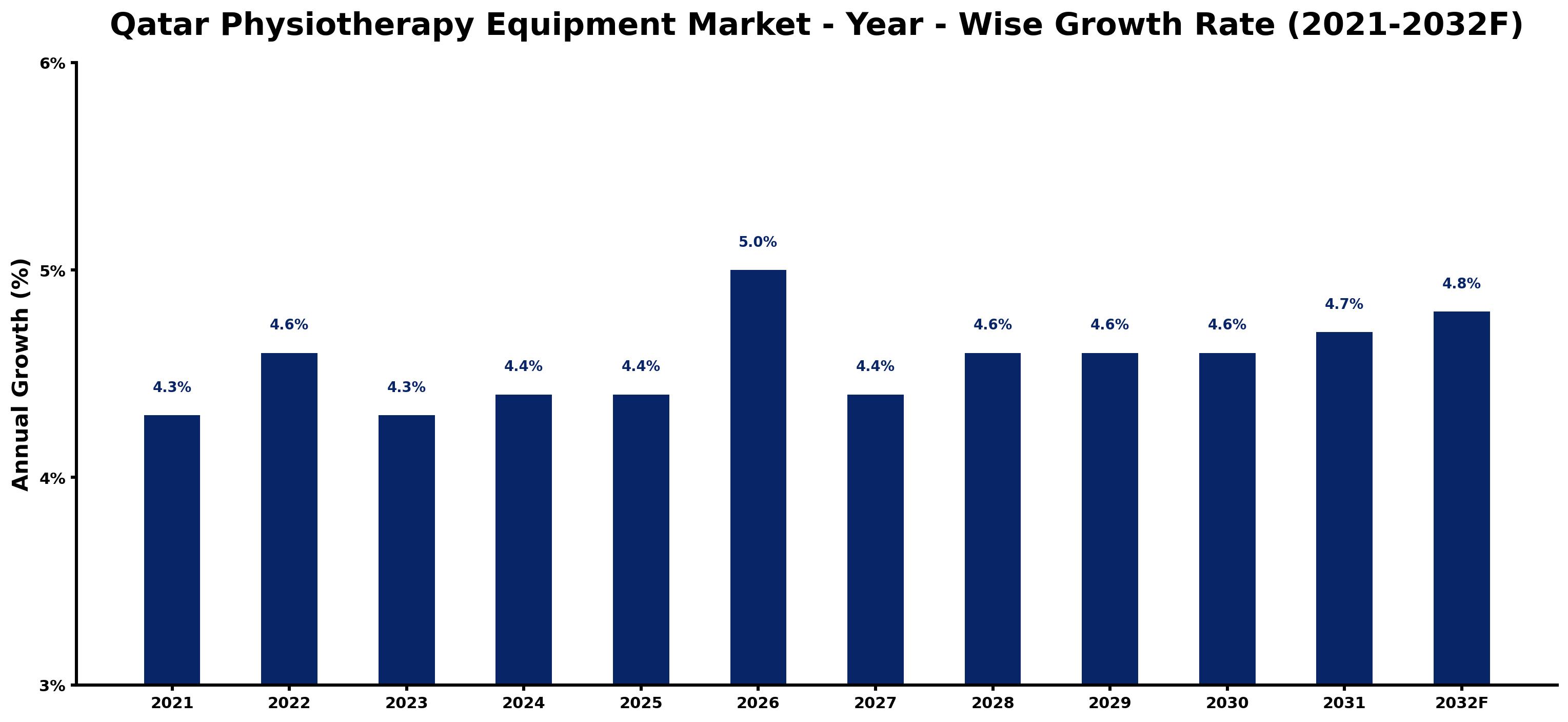
The table below presents the year wise growth rates along with the key drivers influencing the market
| Year | Growth Rate | Major Drivers |
| 2021 | 4.3% | Post-lockdown healthcare focus emphasized rehabilitation and wellness, benefiting physiotherapy technology adoption. |
| 2022 | 4.6% | Emerging health awareness shifted consumer preferences towards preventative care and physiotherapy solutions. |
| 2023 | 4.3% | Local demand for fitness facilities surged, prompting investments in advanced physiotherapy equipment. |
| 2024 | 4.4% | Increased lifestyle disorders highlighted the necessity for rehabilitation services and modern equipment. |
| 2025 | 4.4% | Corporate wellness programs expanded, driving demand for in-house physiotherapy facilities and tools. |
| 2026 | 5.0% | Technological innovations, such as tele-rehabilitation, enhanced access to physiotherapy services across Qatar. |
| 2027 | 4.4% | Construction of new healthcare facilities integrated advanced physiotherapy equipment into architectural plans. |
| 2028 | 4.6% | Growing expatriate population led to higher demand for diverse physiotherapy treatments and technologies. |
| 2029 | 4.6% | Economic diversification projects emphasized healthcare, boosting investments in physiotherapy equipment and services. |
| 2030 | 4.6% | Increased sports activities and events necessitated state-of-the-art physiotherapy support systems and products. |
| 2031 | 4.7% | Focus on geriatric care expanded, further increasing the need for specialized physiotherapy solutions. |
| 2032 | 4.8% | Emergence of niche markets, such as pediatric physiotherapy, created new opportunities for equipment suppliers. |
Note - Market size estimations and growth projections presented in this report are based on 6Wresearch's advanced forecasting approach, validated with industry datasets as of June 2026.
Qatar Physiotherapy Equipment Market Synopsis
The Qatar Physiotherapy Equipment Market is projected to reach 5.0% and witness significant growth during the forecast period (2026-2032). This growth trajectory is primarily driven by the rising prevalence of chronic diseases and the increasing aging population within the region. As awareness regarding the benefits of physical therapy services grows, coupled with substantial investments in healthcare infrastructure, the demand for physiotherapy equipment is set to experience a notable uptrend. Furthermore, advancements in technology related to physiotherapy equipment and a surge in health consciousness among the populace are contributing to the expansion of this market.
Qatar Physiotherapy Equipment Market Growth Drivers
The burgeoning incidence of chronic diseases, attributed to lifestyle changes such as sedentary behavior and poor dietary habits, is a primary driver of the Qatar physiotherapy equipment market. Key health issues, including cardiovascular ailments, diabetes, arthritis, and obesity, necessitate therapeutic interventions that rely on specialized physiotherapy equipment.
- As the population ages, the demand for physiotherapy services to manage age-related conditions is increasing. By 2025, the World Health Organization estimates that approximately 11% of Qatar's total population will consist of elderly individuals, which translates to an increased need for geriatric care and associated physiotherapy treatments.
- An upsurge in public awareness surrounding physical therapy is also driving market demand. Individuals are increasingly opting for non-pharmacological interventions to mitigate health issues, thereby favoring therapies that utilize advanced physiotherapy equipment.
- Additionally, Qatar's ongoing investment in healthcare infrastructure is fostering a conducive environment for the growth of physiotherapy services, which in turn enhances the demand for related equipment.
- The technological advancements in physiotherapy tools are making treatments more effective and accessible. Innovations in equipment design and functionality have improved therapy outcomes, encouraging healthcare providers to invest in modern physiotherapy solutions.
- A growing health-conscious population that prioritizes fitness and rehabilitation is also a significant factor driving the demand for physiotherapy interventions. Increased participation in sports and wellness activities has heightened the need for effective injury management equipment.
Qatar Physiotherapy Equipment Market Challenges and Restraints
Despite the positive growth prospects, the Qatar physiotherapy equipment market faces several challenges. One notable challenge is the affordability and accessibility of advanced equipment for healthcare providers, particularly those operating on modest budgets. Cost-sensitive patients often opt for alternative therapies, which can detrimentally impact the revenues of the healthcare sector.
- Healthcare providers may hesitate to invest in premium physiotherapy equipment due to the significant cost associated with advanced devices, which can limit market growth.
- Availability of specialized training for practitioners is essential for effective use of advanced physiotherapy equipment; however, a shortage of training programs can hinder optimal equipment utilization.
- Political and economic fluctuations in the region may impact government funding for healthcare initiatives, affecting overall market dynamics.
- The sector has also been challenged by the COVID-19 pandemic, which significantly disrupted healthcare services, leading to temporary closures of physiotherapy clinics and a decline in the demand for related equipment.
- Lastly, the rapid pace of technological change can present challenges for providers aiming to keep up with the latest advancements and maintain competitive offerings.
Qatar Physiotherapy Equipment Market Government Investment and Initiatives
The Qatari government has actively prioritized healthcare development, recognizing the importance of physiotherapy as part of a comprehensive healthcare strategy. Substantial investments are being directed towards modernizing healthcare facilities and expanding the availability of physiotherapy services across the country.
- Public spending initiatives are focused on enhancing healthcare infrastructure, which includes the establishment of well-equipped physiotherapy clinics that can provide high-quality services to the population.
- Incentives for healthcare providers to adopt advanced physiotherapy technology are being explored, aimed at improving patient outcomes and increasing accessibility to treatment.
- Collaborative efforts between the public and private sectors are being encouraged to advance healthcare technology and research, which will contribute to the growth of the physiotherapy equipment market.
- Development plans are being implemented to increase the number of trained physiotherapists and healthcare professionals, focusing on enhancing the quality of patient care.
- Government initiatives aimed at public health awareness are also crucial in promoting physical therapy as an effective treatment option, further driving demand for physiotherapy equipment.
Qatar Physiotherapy Equipment Market Latest Developments (May 2025 - June 2026)
Recent developments in the Qatar physiotherapy equipment market reflect a growing trend toward technological innovation and patient-centered care. Throughout this period, there has been an increase in the integration of digital health solutions within physiotherapy practices, enabling enhanced patient monitoring and customized treatment plans.
- Many clinics are adopting tele-rehabilitation services, facilitating access to physiotherapy consultations and treatments, particularly beneficial during periods of mobility restrictions associated with the pandemic.
- Investments in smart physiotherapy devices have gained traction, allowing physiotherapists to offer more effective, data-driven treatments.
- The emphasis on rehabilitation for sports injuries and chronic conditions has led to an expansion in specialized equipment offerings tailored to specific patient needs.
- Increased collaboration between healthcare institutions and technology providers has fostered innovation, enhancing the quality and effectiveness of physiotherapy services.
- Regulatory frameworks are being updated to accommodate new technologies, ensuring safety and efficacy in physiotherapy practices, which in turn fosters market confidence.
Qatar Physiotherapy Equipment Market - Key Attractiveness of the Report
- 10 Years of Market Numbers
- Historical Data Starting from 2022 to 2025
- Base Year: 2025
- Forecast Data until 2032
- Key Performance Indicators Impacting the Market
- Major Upcoming Developments and Projects
Key Highlights of the Report:
- Qatar Physiotherapy Equipment Market Outlook
- Market Size of Qatar Physiotherapy Equipment Market, 2025
- Forecast of Qatar Physiotherapy Equipment Market, 2032
- Historical Data and Forecast of Qatar Physiotherapy Equipment Revenues & Volume for the Period 2022-2032F
- Qatar Physiotherapy Equipment Market Trend Evolution
- Qatar Physiotherapy Equipment Market Drivers and Challenges
- Qatar Physiotherapy Equipment Price Trends
- Qatar Physiotherapy Equipment Porter's Five Forces
- Qatar Physiotherapy Equipment Industry Life Cycle
- Historical Data and Forecast of Qatar Physiotherapy Equipment Market Revenues & Volume By Product Types for the Period 2022-2032F
- Historical Data and Forecast of Qatar Physiotherapy Equipment Market Revenues & Volume By Equipment for the Period 2022-2032F
- Historical Data and Forecast of Qatar Physiotherapy Equipment Market Revenues & Volume By Accessories for the Period 2022-2032F
- Historical Data and Forecast of Qatar Physiotherapy Equipment Market Revenues & Volume By Application? for the Period 2022-2032F
- Historical Data and Forecast of Qatar Physiotherapy Equipment Market Revenues & Volume By Musculoskeletal Applications for the Period 2022-2032F
- Historical Data and Forecast of Qatar Physiotherapy Equipment Market Revenues & Volume By Neurological Applications for the Period 2022-2032F
- Historical Data and Forecast of Qatar Physiotherapy Equipment Market Revenues & Volume By Cardiovascular & Pulmonary Applications for the Period 2022-2032F
- Historical Data and Forecast of Qatar Physiotherapy Equipment Market Revenues & Volume By Pediatric Applications for the Period 2022-2032F
- Historical Data and Forecast of Qatar Physiotherapy Equipment Market Revenues & Volume By Gynecological Applications for the Period 2022-2032F
- Historical Data and Forecast of Qatar Physiotherapy Equipment Market Revenues & Volume By Other? for the Period 2022-2032F
- Historical Data and Forecast of Qatar Physiotherapy Equipment Market Revenues & Volume By End-user for the Period 2022-2032F
- Historical Data and Forecast of Qatar Physiotherapy Equipment Market Revenues & Volume By Physiotherapy & Rehabilitation Centers for the Period 2022-2032F
- Historical Data and Forecast of Qatar Physiotherapy Equipment Market Revenues & Volume By Hospitals for the Period 2022-2032F
- Historical Data and Forecast of Qatar Physiotherapy Equipment Market Revenues & Volume By Home Care Settings for the Period 2022-2032F
- Historical Data and Forecast of Qatar Physiotherapy Equipment Market Revenues & Volume By Physician Offices for the Period 2022-2032F
- Historical Data and Forecast of Qatar Physiotherapy Equipment Market Revenues & Volume By Others for the Period 2022-2032F
- Qatar Physiotherapy Equipment Import Export Trade Statistics
- Market Opportunity Assessment By Product Types
- Market Opportunity Assessment By Application?
- Market Opportunity Assessment By End-user
- Qatar Physiotherapy Equipment Top Companies Market Share
- Qatar Physiotherapy Equipment Competitive Benchmarking By Technical and Operational Parameters
- Qatar Physiotherapy Equipment Company Profiles
- Qatar Physiotherapy Equipment Key Strategic Recommendations






































