Qatar Professional Lighting Market Summary
The qatar professional lighting market was estimated at USD 422 Million in 2025 and is projected to reach USD 586 Million by 2032, growing at a CAGR of 5.7% from 2026 to 2032.
Qatar Professional Lighting Market Year-wise Growth Rate and Key Drivers
This graph highlights how the Qatar Professional Lighting Market has steadily grown over the past five years, supported by major growth factors.
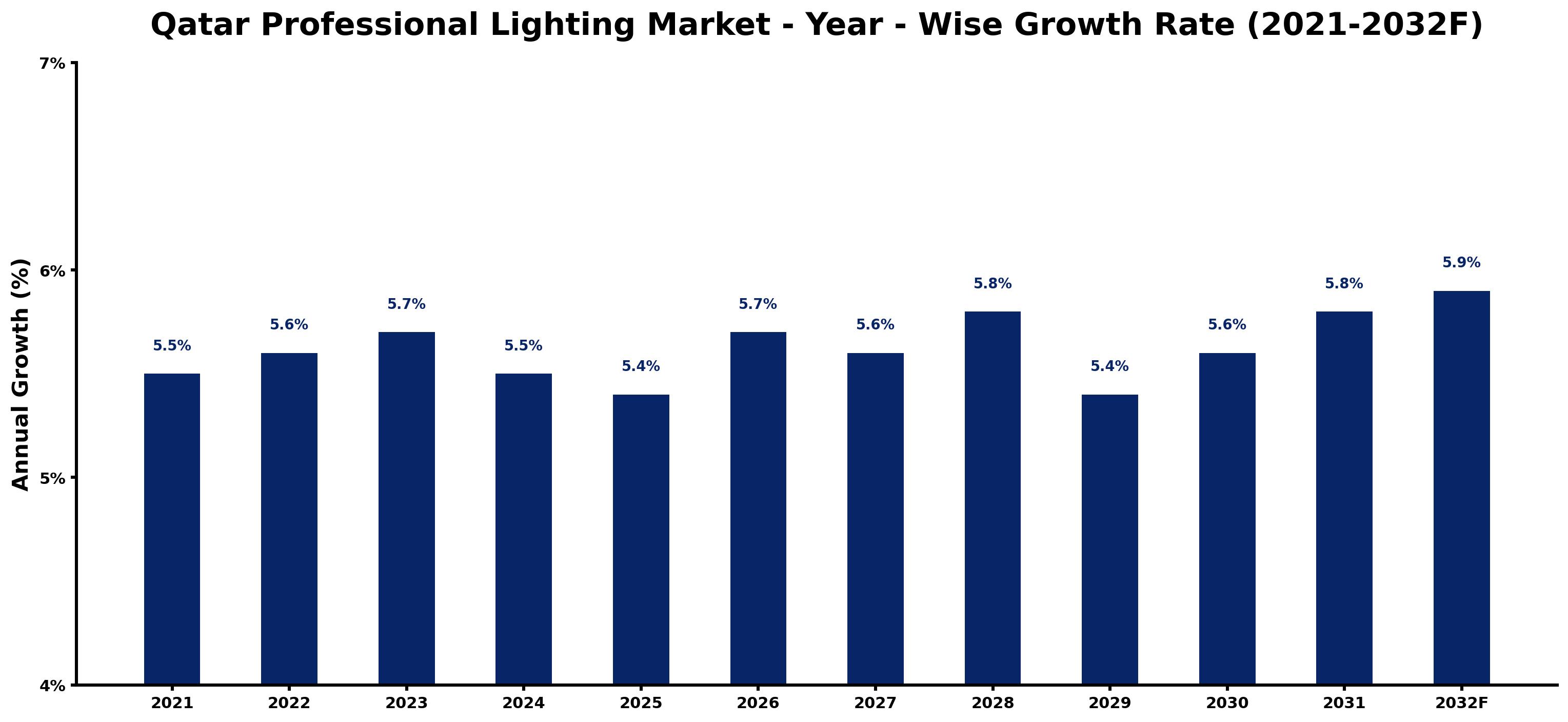
The table below presents the year wise growth rates along with the key drivers influencing the market
| Year | Growth Rate | Major Drivers |
| 2021 | 5.5% | Post-pandemic recovery initiatives accelerated investments in sustainable lighting solutions. |
| 2022 | 5.6% | Local construction projects began emphasizing energy-efficient smart lighting technologies. |
| 2023 | 5.7% | Corporate sustainability commitments shifted focus towards advanced LED lighting systems. |
| 2024 | 5.5% | The influx of international events spurred demand for high-quality outdoor lighting fixtures. |
| 2025 | 5.4% | Increased collaboration among regional stakeholders enhanced innovation in lighting design. |
| 2026 | 5.7% | Emerging smart city projects promoted integration of intelligent lighting infrastructure. |
| 2027 | 5.6% | Growing awareness of energy conservation prompted residential upgrades to LED systems. |
| 2028 | 5.8% | Technological advancements enabled the introduction of adaptive lighting for urban environments. |
| 2029 | 5.4% | Corporate budgets increasingly aligned with sustainable practices in project planning. |
| 2030 | 5.6% | Transition to smart grids opened new opportunities for integrated lighting solutions. |
| 2031 | 5.8% | Cultural shifts in urban development prioritized aesthetics alongside functionality in lighting. |
| 2032 | 5.9% | Enhanced connectivity in smart homes fueled demand for innovative residential lighting options. |
Note - Market size estimations and growth projections presented in this report are based on 6Wresearch's advanced forecasting approach, validated with industry datasets as of June 2026.
Qatar Professional Lighting Market Synopsis
The Qatar Professional Lighting Market is projected to reach 5.7% and witness significant growth during the forecast period (2026-2032). The rapid advancements in technology, coupled with the ongoing urbanization and infrastructural developments, are expected to play a pivotal role in shaping the market dynamics. As Qatar continues to invest in its infrastructure, the demand for innovative and energy-efficient lighting solutions is anticipated to escalate over the coming years.
Qatar Professional Lighting Market Growth Drivers
The growth of the Qatar Professional Lighting Market is primarily fueled by several key factors:
- Investment in Infrastructure: The momentum from various government initiatives related to infrastructure development, particularly in preparation for events like the FIFA World Cup, is stimulating demand for advanced lighting systems across a variety of sectors.
- Technological Advancements: The increasing adoption of LED technology is transforming the lighting sector. LEDs not only provide superior illumination but also offer energy savings, making them an attractive option for both consumers and businesses alike.
- Urbanization Trends: As more individuals migrate to urban areas in Qatar, the need for modern, efficient, and aesthetically appealing lighting solutions in residential, commercial, and public spaces is driving market expansion.
- Rising Demand for Smart Lighting Systems: Consumers are increasingly seeking smart lighting solutions that enhance convenience and energy efficiency, indicating a shift towards innovative and automated lighting applications.
- Focus on Sustainability: Environmental consciousness among consumers and businesses is pushing the demand for sustainable lighting solutions, as energy-efficient products help to minimize carbon footprints.
Qatar Professional Lighting Market Challenges and Restraints
Despite the promising growth prospects, the Qatar Professional Lighting Market faces several challenges that may impede its progress:
- High Initial Investment: The adoption of advanced lighting systems often requires substantial upfront investment. This can deter smaller businesses from integrating such technologies, hindering market penetration.
- Maintenance Costs: Efficient lighting solutions may entail higher maintenance and operational costs. This is particularly true for systems that incorporate advanced features like motion sensors, which may require additional funding for upkeep.
- Supply Chain Disruptions: Global supply chain issues can affect the availability of lighting components, making it challenging for manufacturers in Qatar to source necessary materials efficiently.
- Market Competition: The increasing number of players entering the professional lighting market can lead to intense competition, potentially driving down prices and impacting profit margins.
- Consumer Awareness: Limited consumer awareness about the benefits of advanced lighting technologies can slow down adoption rates, creating barriers for manufacturers trying to promote their products.
Qatar Professional Lighting Market Government Investment and Initiatives
Government investment and initiatives significantly influence the Qatar Professional Lighting Market. The Qatari government has allocated substantial funds for enhancing infrastructure, particularly in the lead-up to major global events such as the FIFA World Cup 2022. Key initiatives include:
- National Development Plans: The government has outlined development plans focusing on extensive urban planning and infrastructure improvements, which invariably include upgrading lighting systems in public spaces.
- Energy Efficiency Programs: Initiatives aimed at promoting energy efficiency across various sectors are encouraging businesses to adopt modern lighting technologies that save energy and reduce operational costs.
- Public-Private Partnerships: Collaborations between government entities and private companies are being fostered to drive innovation in the lighting sector, facilitating the introduction of advanced solutions.
- Regulatory Frameworks: The implementation of regulations that prioritize the use of energy-efficient lighting systems is creating a favorable environment for market growth.
- Incentives for Sustainable Practices: The government is providing incentives for businesses that invest in sustainable lighting solutions, thereby promoting a more eco-friendly market landscape.
Qatar Professional Lighting Market Latest Developments (May 2025 - June 2026)
The period between May 2025 and June 2026 has seen several developments in the Qatar Professional Lighting Market. The industry has been marked by a push for smart lighting solutions driven by technology advancements. Additionally, with the easing of Covid-19 restrictions, there has been a resurgence in construction activities, further boosting demand for professional lighting solutions. Manufacturers have begun focusing on integrating IoT capabilities into their products, enhancing user experience and energy management. The hospitality sector is also witnessing significant lighting upgrades as businesses aim to provide more inviting environments. Moreover, the government's ongoing commitment to infrastructure enhancement continues to contribute positively to market growth.
Qatar Professional Lighting Market - Key Attractiveness of the Report
- 10 Years of Market Numbers
- Historical Data Starting from 2022 to 2025
- Base Year: 2025
- Forecast Data until 2032
- Key Performance Indicators Impacting the Market
- Major Upcoming Developments and Projects
Key Highlights of the Report:
- Qatar Professional Lighting Market Outlook
- Market Size of Qatar Professional Lighting Market, 2025
- Forecast of Qatar Professional Lighting Market, 2032
- Historical Data and Forecast of Qatar Professional Lighting Revenues & Volume for the Period 2022-2032F
- Qatar Professional Lighting Market Trend Evolution
- Qatar Professional Lighting Market Drivers and Challenges
- Qatar Professional Lighting Price Trends
- Qatar Professional Lighting Porter's Five Forces
- Qatar Professional Lighting Industry Life Cycle
- Historical Data and Forecast of Qatar Professional Lighting Market Revenues & Volume By Light Source for the Period 2022-2032F
- Historical Data and Forecast of Qatar Professional Lighting Market Revenues & Volume By LEDs for the Period 2022-2032F
- Historical Data and Forecast of Qatar Professional Lighting Market Revenues & Volume By Others (halogen lamps, xenon bulbs, incandescent lamps) for the Period 2022-2032F
- Historical Data and Forecast of Qatar Professional Lighting Market Revenues & Volume By Applications for the Period 2022-2032F
- Historical Data and Forecast of Qatar Professional Lighting Market Revenues & Volume By Entertainment for the Period 2022-2032F
- Historical Data and Forecast of Qatar Professional Lighting Market Revenues & Volume By Stage lighting for the Period 2022-2032F
- Historical Data and Forecast of Qatar Professional Lighting Market Revenues & Volume By Medical for the Period 2022-2032F
- Historical Data and Forecast of Qatar Professional Lighting Market Revenues & Volume By UV Lamps for the Period 2022-2032F
- Historical Data and Forecast of Qatar Professional Lighting Market Revenues & Volume By Others for the Period 2022-2032F
- Qatar Professional Lighting Import Export Trade Statistics
- Market Opportunity Assessment By Light Source
- Market Opportunity Assessment By Applications
- Qatar Professional Lighting Top Companies Market Share
- Qatar Professional Lighting Competitive Benchmarking By Technical and Operational Parameters
- Qatar Professional Lighting Company Profiles
- Qatar Professional Lighting Key Strategic Recommendations






































