Qatar Scrap Metal Recycling Market Growth Rate
According to 6Wresearch internal database and industry insights, the Qatar Scrap Metal Recycling Market is growing at a compound annual growth rate (CAGR) of 7.5% during the forecast period (2026-2032).
Qatar Scrap Metal Recycling Market Year-wise Growth Rate and Key Drivers
This graph highlights how the Qatar Scrap Metal Recycling Market has steadily grown over the past five years, supported by major growth factors.
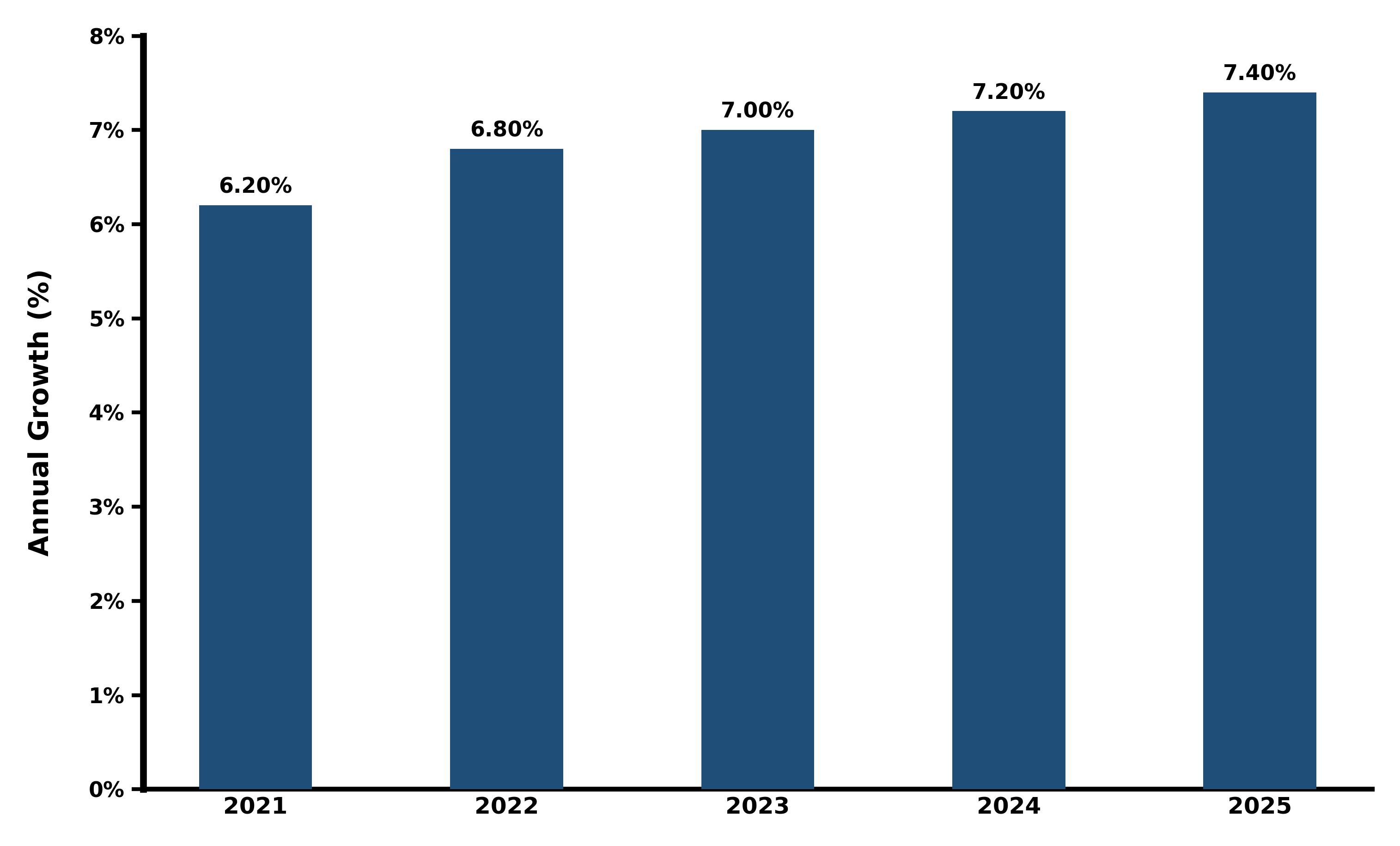
The table below presents the year‑wise growth rates along with the key drivers influencing the market
| Years | Est. Annual Growth in % | Growth Drivers |
| 2021 | 6.2% | Increasing demand for metal recycling in construction and automotive sectors. |
| 2022 | 6.8% | Expansion in the automotive industry and demand for recycled materials in manufacturing. |
| 2023 | 7% | Government regulations promoting recycling and sustainable practices. |
| 2024 | 7.2% | Rising demand for recycled aluminum in various industries. |
| 2025 | 7.4% | Growing investments in recycling infrastructure and technologies. |
Topics Covered in the Qatar Scrap Metal Recycling Market Report
The Qatar Scrap Metal Recycling Market report thoroughly covers the market by metal types, and applications. The market report provides an unbiased and detailed analysis of ongoing market trends, opportunities, high-growth areas, and market drivers, which would help stakeholders devise and align their market strategies according to the current and future market dynamics.
Qatar Scrap Metal Recycling Market Highlights
| Report Name | Qatar Scrap Metal Recycling Market |
| Forecast Period | 2026-2032 |
| CAGR | 7.50% |
| Growing Sector | Industrial |
Qatar Scrap Metal Recycling Market Synopsis
The Qatar Scrap Metal Recycling Market is experiencing significant growth. The market growth is driven by the rising demand for scrap metal from key sectors like construction, automotive, and manufacturing, which heavily rely on recycled materials. Further, the market growth is driven by government policies promoting sustainability and the circular economy. In addition to this, growing investments in recycling infrastructure and technology advancements are accelerating the industry growth. Altogether, the above factors are expected to increase market growth during the forecast period.
Evaluation of Growth Drivers in the Qatar Scrap Metal Recycling Market
Below mentioned are some growth drivers and their impact on market dynamics:
| Drivers | Primary Segments Affected | Why It Matters |
| Government Regulations & Sustainability | Recycling Methods, Applications | Supports growth by promoting recycling and sustainability practices. |
| Expansion of the Automotive Sector | Scrap Metals (Aluminum, Copper) | Drives the demand for recycled metal in automotive manufacturing. |
| Demand for Recycled Materials | Scrap Metals (Iron, Copper, Aluminum) | Increasing need for raw materials in construction, automotive, and manufacturing sectors. |
| Recycling Infrastructure Investments | Recycling Facilities, Technology | Boosts efficiency and quality of scrap metal recycling processes. |
| Technological Advancements | Recycling Methods, Applications | Enhances the quality of recycling processes and reduces waste. |
The Qatar Scrap Metal Recycling Market is projected to experience steady growth, at a CAGR of 7.5% during the forecast period of 2026-2032. The Qatar Scrap Metal Recycling Market drivers include of the increasing demand for sustainable practices across industries. Further, the Aluminum scrap leads the market attributed by its lightweight, recyclability and high demand in construction and automotive sectors. Also, the industrial application segment is also increasingly rapidly, attributed by its manufacturing and construction sectors. Furthermore, increasing focus of Qatar government for sustainability and resource efficiency is fueling the market expansion. The growing tech advancements are also fueling the industry growth by providing with high tech recycling process and reducing waste.
Evaluation of Restraints in the Qatar Scrap Metal Recycling Market
Below mentioned are some major restraints and their influence on market dynamics:
| Restraints | Primary Segments Affected | What This Means |
| Limited Recycling Facilities | Scrap Metals (All Types) | Impedes market growth due to limited processing capacity. |
| High Energy Consumption in Recycling | Recycling Methods | Builds up high operational costs and environmental impact. |
| Price Volatility of Raw Materials | All Segments | Makes instability in cost structures and pricing. |
| Technological Limitations | Recycling Processes, Applications | Lower the quality and efficiency of recycling operations. |
| Limited Consumer Awareness | Scrap Metal Usage, Recycling Practices | Limit adoption and growth in recycling activities. |
Qatar Scrap Metal Recycling Market Challenges
The Qatar Scrap Metal Recycling Market encounters several challenges. The main challenges include limited recycling infrastructure and technological limitations in the recycling process. Further, the market growth gets hampered by energy-intensive processes that create high costs for small and medium enterprises. In addition to this, variations in the costs of raw materials also impact the profit margins for small manufacturers. There is very little awareness among consumers regarding the recycling of scrap metal, which also decreases the market growth.
Qatar Scrap Metal Recycling Market Trends
Some major trends contributing to the Qatar Scrap Metal Recycling Market growth are:
- Rising Demand for Recycled Aluminum: There is a high demand for recycling aluminum, mainly in construction and packaging industries, which contributes to market growth.
- Technological Innovations in Recycling: The increase in the technological upgrades is improving efficiency and lowering costs by integrating automation and AI-based sorting systems.
- E-commerce Growth for Recycled Products: The online retail platforms are encouraging the market expansion by providing a wide range of product offerings and one-click home delivery services.
Investment Opportunities in the Qatar Scrap Metal Recycling Market
Here are some investment opportunities in the Qatar Scrap Metal Recycling Industry:
- Recycling Facility Development: The increased investing in the construction and upgrading of recycling facilities can increase processing capacity and quality.
- Technological Innovation in Sorting Systems: The adoption of automation and AI-based technologies will increase the efficiency of the recycling process.
- Sustainable Recycling Practices: Encouraging energy-efficient and environmentally friendly recycling methods will attract eco-conscious investors and consumers.
Top 5 Leading Players in the Qatar Scrap Metal Recycling Market
Here are some top companies contributing to Qatar Scrap Metal Recycling Market Share:
1. Qatar Metal Industries
| Company Name | Qatar Metal Industries |
| Established Year | 1980 |
| Headquarters | Doha, Qatar |
| Official Website | Click Here |
Qatar Metal Industries specializes in the collection, processing, and recycling of scrap metals. Known for strong export presence and adherence to international recycling standards, the company serves diverse global markets.
2. Qatar Steel Recycling
| Company Name | Qatar Steel Recycling |
| Established Year | 1995 |
| Headquarters | Doha, Qatar |
| Official Website | Click Here |
Qatar Steel Recycling focuses on recycling steel and iron scrap, primarily serving the manufacturing and construction industries. The company plays a vital role in Qatar’s scrap metal recycling sector, promoting sustainability.
3. Doha Recycling
| Company Name | Doha Recycling |
| Established Year | 2000 |
| Headquarters | Doha, Qatar |
| Official Website | - |
Doha Recycling specializes in aluminum and copper scrap processing, providing recycling solutions for domestic and international markets. The company supports sustainable practices and contributes significantly to Qatar’s scrap metal recycling efforts.
4. Qatar Aluminum Recycling Company
| Company Name | Qatar Aluminum Recycling Company |
| Established Year | 2010 |
| Headquarters | Doha, Qatar |
| Official Website | Click Here |
Qatar Aluminum Recycling Company focuses on recycling aluminum products, catering to local industries and global markets. The company supports the growing demand for recycled aluminum, promoting sustainability and reducing environmental impact.
5. Gulf Metal Recycling
| Company Name | Gulf Metal Recycling |
| Established Year | 2005 |
| Headquarters | Doha, Qatar |
| Official Website | Click Here |
Gulf Metal Recycling processes various scrap metals, focusing on efficient methods and sustainable practices. The company is a significant player in Qatar’s recycling market, contributing to both local industry needs and global sustainability goals.
Government Regulations Introduced in the Qatar Scrap Metal Recycling Market
According to Qatari government data, the market is well-regulated by various government policies. The government has set standards for scrap metal collection, processing, and export under the Qatar Environmental Protection Agency (EPA) guidelines. In addition to this, the Qatar National Vision 2030 encourages sustainability, promoting recycling across various industries, including scrap metal. The government also supports the growth of companies that adopt environmentally friendly practices and technologies by providing them with tax subsidies, incentives, and quality certifications.
Future Insights of the Qatar Scrap Metal Recycling Market
The Qatar Scrap Metal Recycling Market is expected to have robust growth. The market is mainly driven by increasing demand for recycled metal and government support for exports of these recycled metals. Further, the market growth is driven by expansion of the automotive and construction sectors. In addition to this, growing adoption of circular economy practices and sustainability initiatives will drive the market expansion further. The growth of tech advancements for the processing of these metals is also encouraging the market growth.
Market Segmentation Analysis
The report offers a comprehensive study of the subsequent market segments and their leading categories.
Aluminum to Dominate the Market – By Type
According to Guneet Kaur, Senior Research Analyst, 6Wresearch, aluminum scrap is the fastest-growing segment due to its high demand in various industries like construction and automotive. Its recyclability and light weight make it a popular choice for sustainable practices in Qatar’s market.
Industrial to Dominate the Market – By Application
The industrial application segment is the fastest-growing in the Qatar scrap metal recycling market. The demand from manufacturing and construction industries for recycled metal to support cost-effective and sustainable production practices is fueling this segment’s rapid growth.
Key attractiveness of the report
- 10 Years Market Numbers.
- Historical Data Starting from 2022 to 2025.
- Base Year: 2025
- Forecast Data until 2032.
- Key Performance Indicators Impacting the Market.
- Major Upcoming Developments and Projects.
Key Highlights of the Report:
- Qatar Scrap Metal Recycling Market Outlook
- Market Size of Qatar Scrap Metal Recycling Market, 2025
- Forecast of Qatar Scrap Metal Recycling Market, 2032
- Historical Data and Forecast of Qatar Scrap Metal Recycling Revenues & Volume for the Period 2022-2032F
- Qatar Scrap Metal Recycling Market Trend Evolution
- Qatar Scrap Metal Recycling Market Drivers and Challenges
- Qatar Scrap Metal Recycling Price Trends
- Qatar Scrap Metal Recycling Porter's Five Forces
- Qatar Scrap Metal Recycling Industry Life Cycle
- Historical Data and Forecast of Qatar Scrap Metal Recycling Market Revenues & Volume By Type for the Period 2022-2032F
- Historical Data and Forecast of Qatar Scrap Metal Recycling Market Revenues & Volume By Iron for the Period 2022-2032F
- Historical Data and Forecast of Qatar Scrap Metal Recycling Market Revenues & Volume By Copper for the Period 2022-2032F
- Historical Data and Forecast of Qatar Scrap Metal Recycling Market Revenues & Volume By Aluminum for the Period 2022-2032F
- Historical Data and Forecast of Qatar Scrap Metal Recycling Market Revenues & Volume By Lead for the Period 2022-2032F
- Historical Data and Forecast of Qatar Scrap Metal Recycling Market Revenues & Volume By Applications for the Period 2022-2032F
- Historical Data and Forecast of Qatar Scrap Metal Recycling Market Revenues & Volume By Residential & Commercial for the Period 2022-2032F
- Historical Data and Forecast of Qatar Scrap Metal Recycling Market Revenues & Volume By Industrial for the Period 2022-2032F
- Qatar Scrap Metal Recycling Import Export Trade Statistics
- Market Opportunity Assessment By Type
- Market Opportunity Assessment By Applications
- Qatar Scrap Metal Recycling Top Companies Market Share
- Qatar Scrap Metal Recycling Competitive Benchmarking By Technical and Operational Parameters
- Qatar Scrap Metal Recycling Company Profiles
- Qatar Scrap Metal Recycling Key Strategic Recommendations
Market covered
The report subsequently covers the market by following segments and subsegments:
By Type
- Iron
- Copper
- Aluminum
- Lead
By Applications
- Residential & Commercial
- Industrial






































