Republic Of Macedonia Confectionery Market
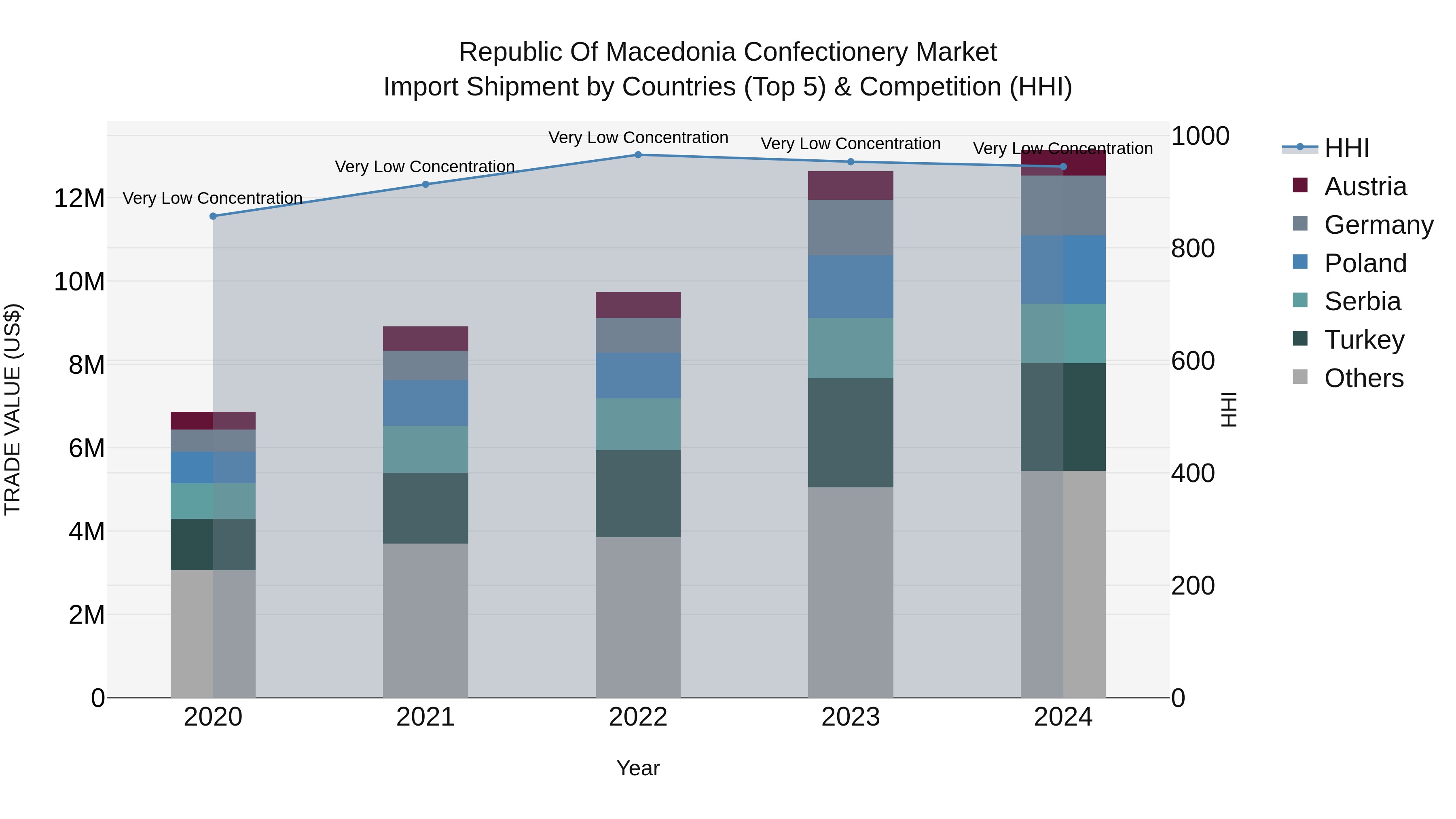
The confectionery import market in North Macedonia continues to flourish in 2024 with key suppliers being Turkey, Poland, Germany, Serbia, and Ukraine. Despite the significant growth in imports with a CAGR of 17.65 from 2020-24, market concentration, as measured by the HHI, remains low. The modest growth rate of 3.94 from 2023-24 indicates a steady upward trajectory for the confectionery market in North Macedonia, presenting opportunities for both local retailers and international suppliers to capitalize on the growing demand for sweet treats in the region.
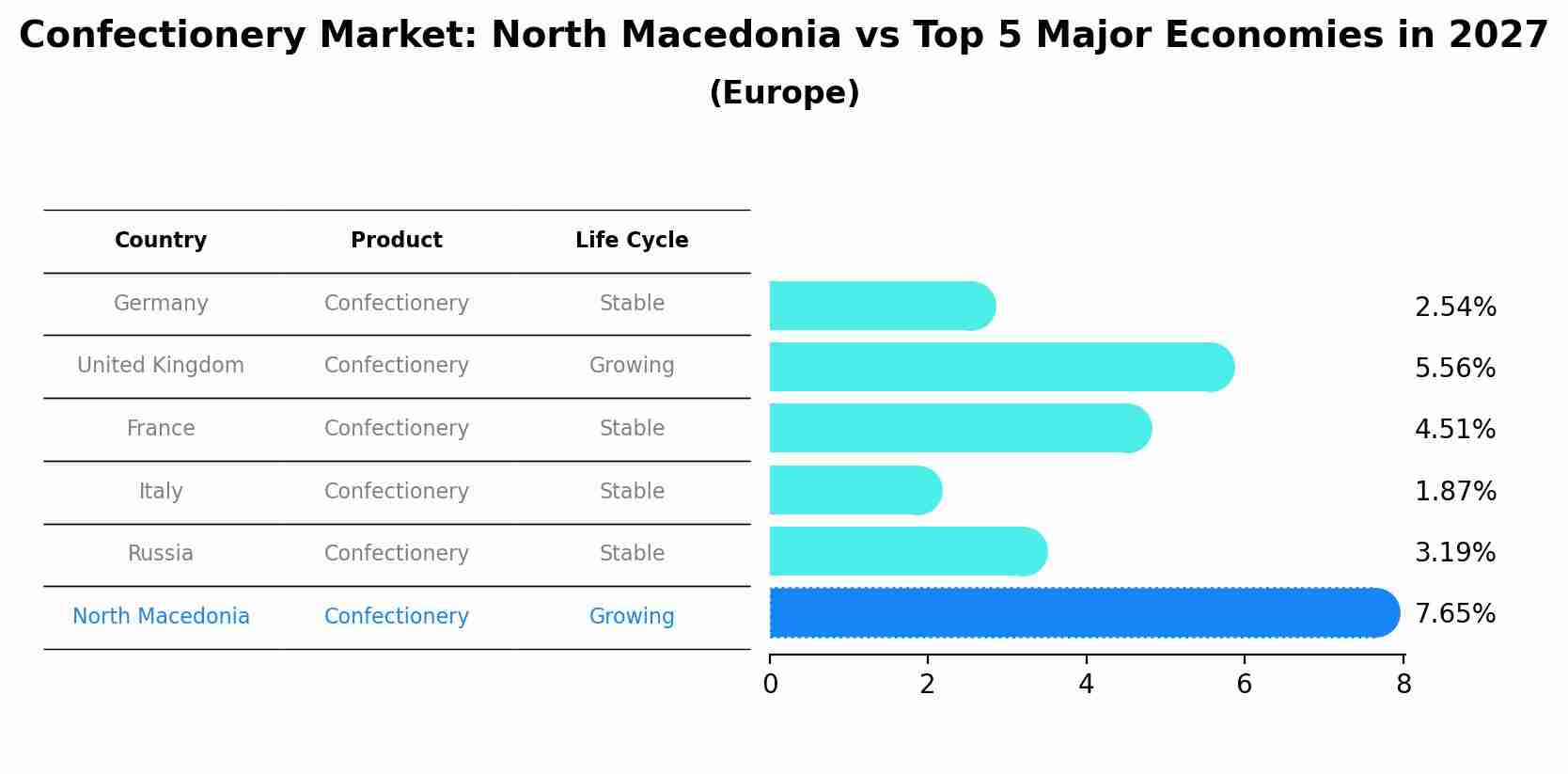
Confectionery Market: North Macedonia vs Top 5 Major Economies in 2027 (Europe)
In the Europe region, the Confectionery market in North Macedonia is projected to expand at a growing growth rate of 7.65% by 2027. The largest economy is Germany, followed by United Kingdom, France, Italy and Russia.
Key Highlights of the Report:
- Republic of Macedonia Confectionery Market Outlook
- Market Size of Republic of Macedonia Confectionery Market, 2024
- Forecast of Republic of Macedonia Confectionery Market, 2031
- Historical Data and Forecast of Republic of Macedonia Confectionery Revenues & Volume for the Period 2021-2031
- Republic of Macedonia Confectionery Market Trend Evolution
- Republic of Macedonia Confectionery Market Drivers and Challenges
- Republic of Macedonia Confectionery Price Trends
- Republic of Macedonia Confectionery Porter`s Five Forces
- Republic of Macedonia Confectionery Industry Life Cycle
- Historical Data and Forecast of Republic of Macedonia Confectionery Market Revenues & Volume By Type for the Period 2021-2031
- Historical Data and Forecast of Republic of Macedonia Confectionery Market Revenues & Volume By Sugar for the Period 2021-2031
- Historical Data and Forecast of Republic of Macedonia Confectionery Market Revenues & Volume By Chocolate for the Period 2021-2031
- Historical Data and Forecast of Republic of Macedonia Confectionery Market Revenues & Volume By Fine Bakery Wares for the Period 2021-2031
- Historical Data and Forecast of Republic of Macedonia Confectionery Market Revenues & Volume By Others for the Period 2021-2031
- Historical Data and Forecast of Republic of Macedonia Confectionery Market Revenues & Volume By Distribution Channel for the Period 2021-2031
- Historical Data and Forecast of Republic of Macedonia Confectionery Market Revenues & Volume By Supermarket/Hypermarket for the Period 2021-2031
- Historical Data and Forecast of Republic of Macedonia Confectionery Market Revenues & Volume By Specialist Retailers for the Period 2021-2031
- Historical Data and Forecast of Republic of Macedonia Confectionery Market Revenues & Volume By Online Retail Stores for the Period 2021-2031
- Historical Data and Forecast of Republic of Macedonia Confectionery Market Revenues & Volume By Convenience Stores for the Period 2021-2031
- Historical Data and Forecast of Republic of Macedonia Confectionery Market Revenues & Volume By Other Distribution Channels for the Period 2021-2031
- Republic of Macedonia Confectionery Import Export Trade Statistics
- Market Opportunity Assessment By Type
- Market Opportunity Assessment By Distribution Channel
- Republic of Macedonia Confectionery Top Companies Market Share
- Republic of Macedonia Confectionery Competitive Benchmarking By Technical and Operational Parameters
- Republic of Macedonia Confectionery Company Profiles
- Republic of Macedonia Confectionery Key Strategic Recommendations






































