Republic Of Macedonia Ethyl Alcohol Market
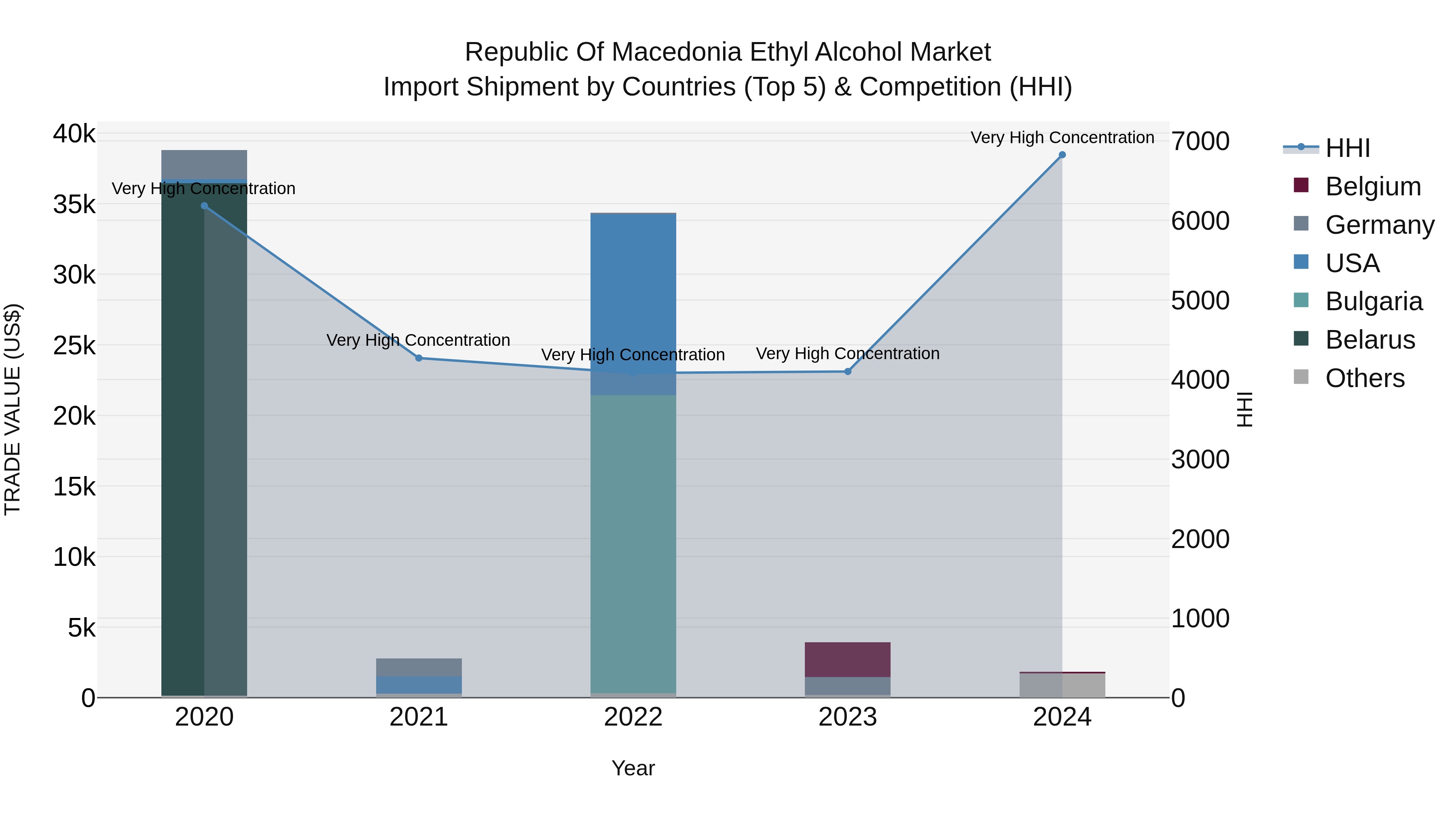
In 2024, the Republic of North Macedonia continued to see significant ethyl alcohol import shipments, with top exporters being Metropolitan France, Belgium, Serbia, Italy, and Belarus. The market remains highly concentrated, as indicated by the high HHI. However, the CAGR from 2020 to 2024 was negative at -53.41%, with a slight decrease in growth rate from 2023 to 2024 at -53.5%. This data suggests a challenging market environment for ethyl alcohol imports in North Macedonia, with potential implications for industry players and stakeholders to consider.
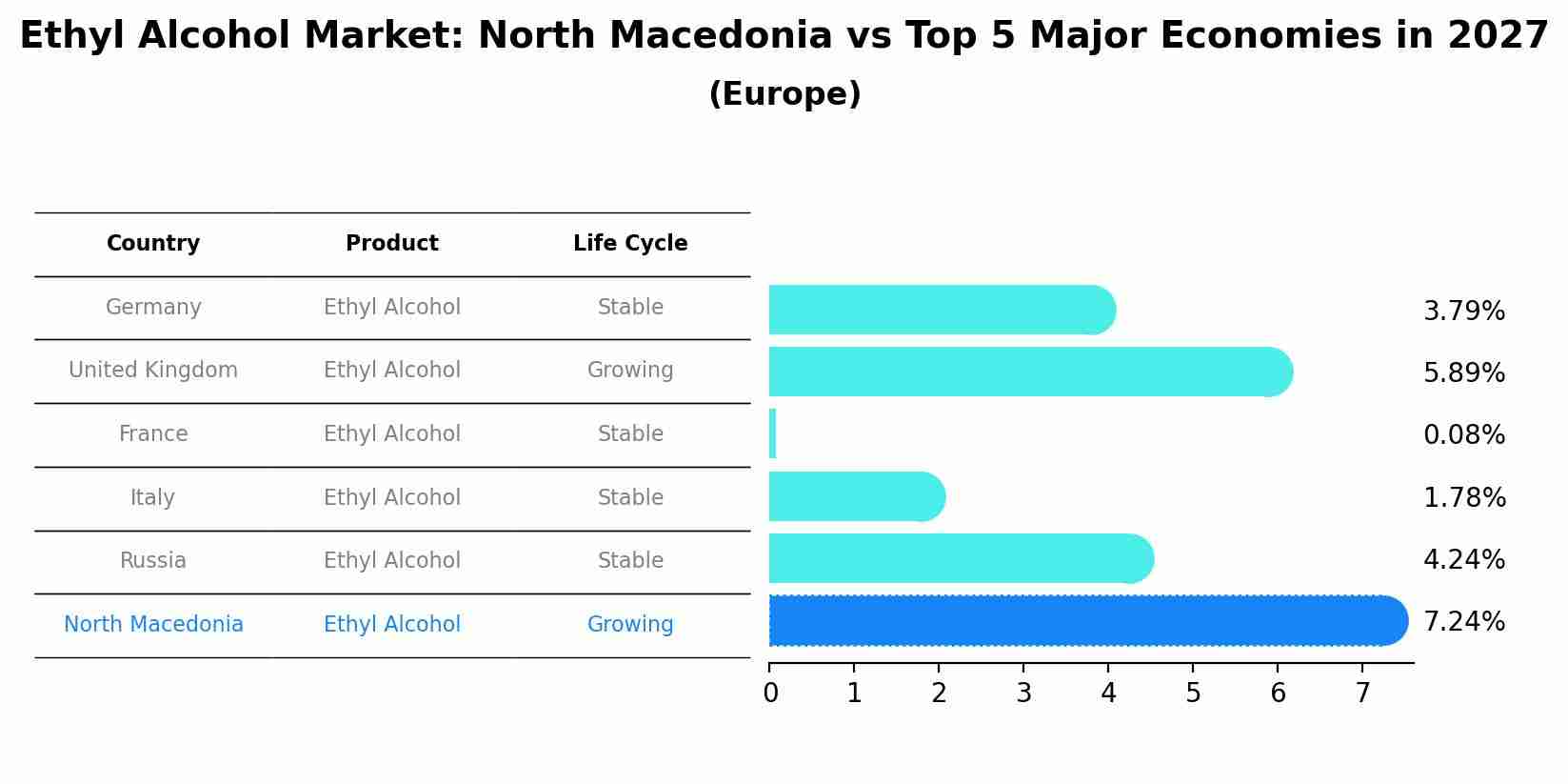
Ethyl Alcohol Market: North Macedonia vs Top 5 Major Economies in 2027 (Europe)
The Ethyl Alcohol market in North Macedonia is projected to grow at a growing growth rate of 7.24% by 2027, within the Europe region led by Germany, along with other countries like United Kingdom, France, Italy and Russia, collectively shaping a dynamic and evolving market environment driven by innovation and increasing adoption of emerging technologies.
Key Highlights of the Report:
- Republic of Macedonia Ethyl Alcohol Market Outlook
- Market Size of Republic of Macedonia Ethyl Alcohol Market, 2024
- Forecast of Republic of Macedonia Ethyl Alcohol Market, 2031
- Historical Data and Forecast of Republic of Macedonia Ethyl Alcohol Revenues & Volume for the Period 2021-2031
- Republic of Macedonia Ethyl Alcohol Market Trend Evolution
- Republic of Macedonia Ethyl Alcohol Market Drivers and Challenges
- Republic of Macedonia Ethyl Alcohol Price Trends
- Republic of Macedonia Ethyl Alcohol Porter`s Five Forces
- Republic of Macedonia Ethyl Alcohol Industry Life Cycle
- Historical Data and Forecast of Republic of Macedonia Ethyl Alcohol Market Revenues & Volume By Grade for the Period 2021-2031
- Historical Data and Forecast of Republic of Macedonia Ethyl Alcohol Market Revenues & Volume By Food Grade for the Period 2021-2031
- Historical Data and Forecast of Republic of Macedonia Ethyl Alcohol Market Revenues & Volume By Industrial Grade for the Period 2021-2031
- Historical Data and Forecast of Republic of Macedonia Ethyl Alcohol Market Revenues & Volume By Pharmaceutical Grade for the Period 2021-2031
- Historical Data and Forecast of Republic of Macedonia Ethyl Alcohol Market Revenues & Volume By Lab Grade for the Period 2021-2031
- Historical Data and Forecast of Republic of Macedonia Ethyl Alcohol Market Revenues & Volume By End-user Industry for the Period 2021-2031
- Historical Data and Forecast of Republic of Macedonia Ethyl Alcohol Market Revenues & Volume By Automotive and Transportation for the Period 2021-2031
- Historical Data and Forecast of Republic of Macedonia Ethyl Alcohol Market Revenues & Volume By Food and Beverage for the Period 2021-2031
- Historical Data and Forecast of Republic of Macedonia Ethyl Alcohol Market Revenues & Volume By Pharmaceutical for the Period 2021-2031
- Historical Data and Forecast of Republic of Macedonia Ethyl Alcohol Market Revenues & Volume By Cosmetics and Personal Care (Includes hand-Sanitizer) for the Period 2021-2031
- Historical Data and Forecast of Republic of Macedonia Ethyl Alcohol Market Revenues & Volume By Other End-user Industries for the Period 2021-2031
- Republic of Macedonia Ethyl Alcohol Import Export Trade Statistics
- Market Opportunity Assessment By Grade
- Market Opportunity Assessment By End-user Industry
- Republic of Macedonia Ethyl Alcohol Top Companies Market Share
- Republic of Macedonia Ethyl Alcohol Competitive Benchmarking By Technical and Operational Parameters
- Republic of Macedonia Ethyl Alcohol Company Profiles
- Republic of Macedonia Ethyl Alcohol Key Strategic Recommendations






































