Republic Of Macedonia Laminated Glass Market
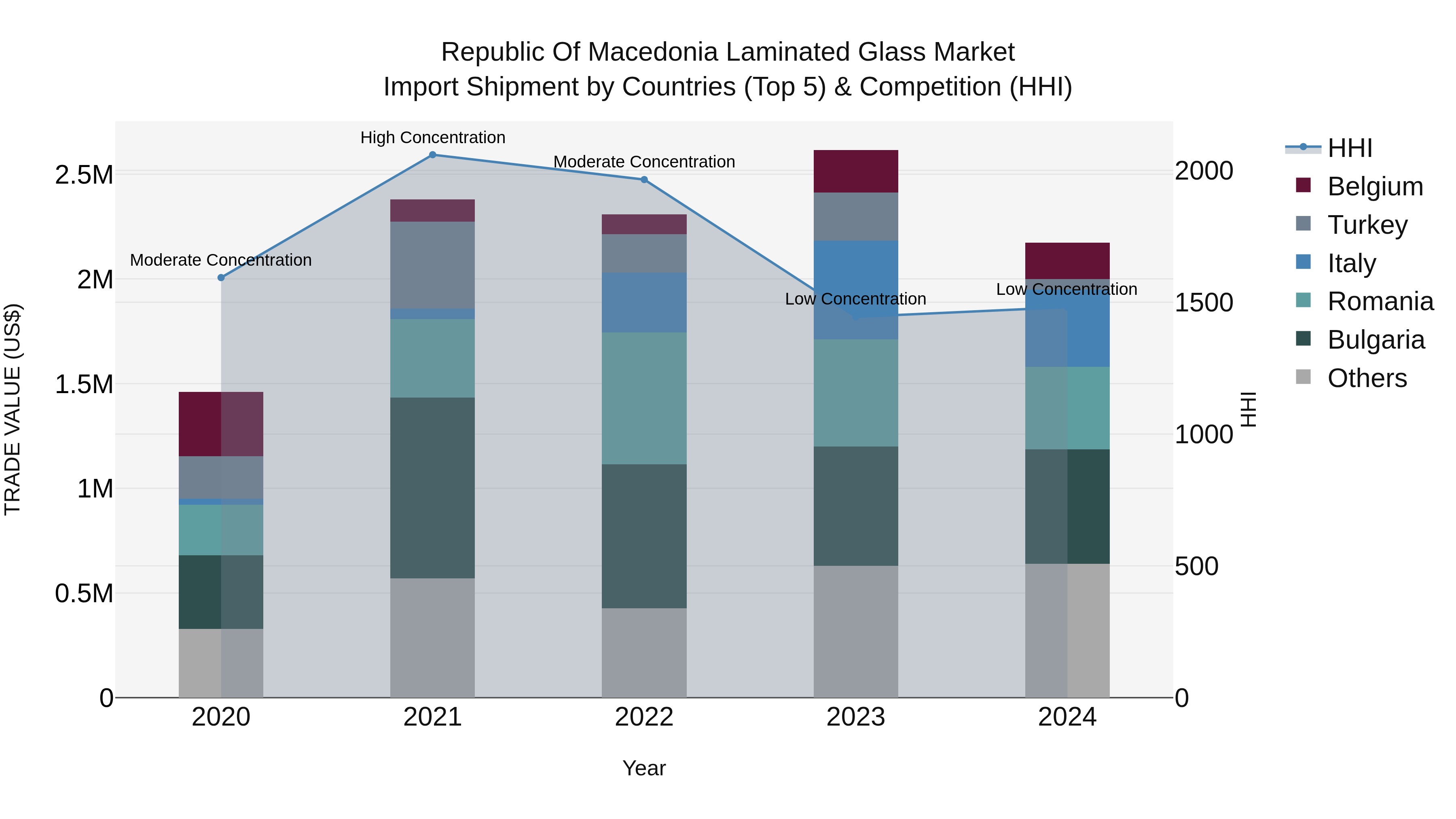
In 2024, North Macedonia saw significant imports of laminated glass from top exporting countries such as Bulgaria, Romania, Italy, Belgium, and Albania. The market displayed low concentration with a stable HHI index. Despite a slight decline in growth rate from 2023 to 2024, the sector still maintained a healthy CAGR of 10.47% over the period of 2020-2024. This indicates a steady demand for laminated glass in North Macedonia, supported by diverse import sources contributing to the market`s resilience.
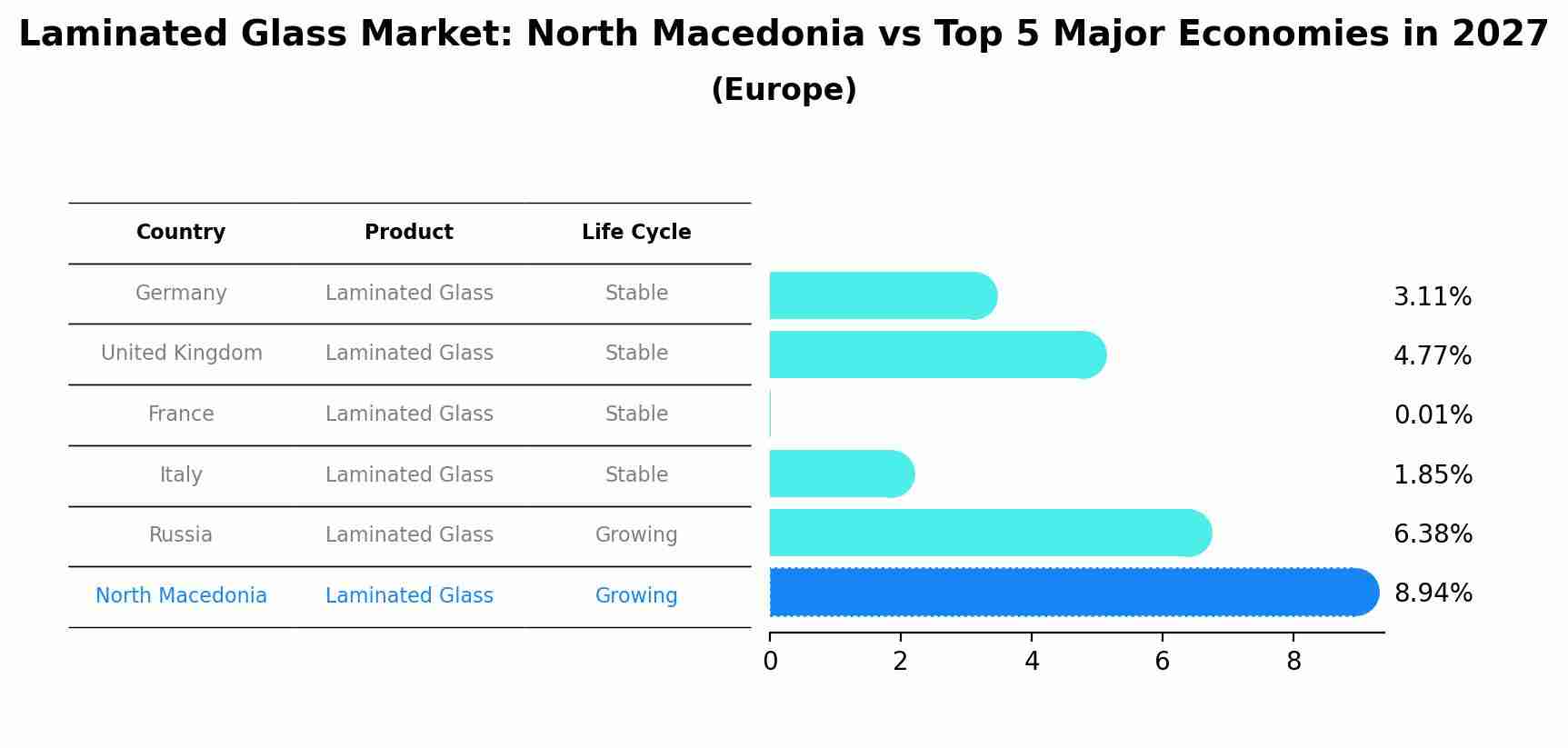
Laminated Glass Market: North Macedonia vs Top 5 Major Economies in 2027 (Europe)
By 2027, North Macedonia's Laminated Glass market is forecasted to achieve a growing growth rate of 8.94%, with Germany leading the Europe region, followed by United Kingdom, France, Italy and Russia.
Key Highlights of the Report:
- Republic of Macedonia Laminated Glass Market Outlook
- Market Size of Republic of Macedonia Laminated Glass Market, 2024
- Forecast of Republic of Macedonia Laminated Glass Market, 2031
- Historical Data and Forecast of Republic of Macedonia Laminated Glass Revenues & Volume for the Period 2021-2031
- Republic of Macedonia Laminated Glass Market Trend Evolution
- Republic of Macedonia Laminated Glass Market Drivers and Challenges
- Republic of Macedonia Laminated Glass Price Trends
- Republic of Macedonia Laminated Glass Porter`s Five Forces
- Republic of Macedonia Laminated Glass Industry Life Cycle
- Historical Data and Forecast of Republic of Macedonia Laminated Glass Market Revenues & Volume By Type for the Period 2021-2031
- Historical Data and Forecast of Republic of Macedonia Laminated Glass Market Revenues & Volume By Polyvinyl Butyral (PVB) for the Period 2021-2031
- Historical Data and Forecast of Republic of Macedonia Laminated Glass Market Revenues & Volume By Sentryglas Plus (SGP) for the Period 2021-2031
- Historical Data and Forecast of Republic of Macedonia Laminated Glass Market Revenues & Volume By Ethylene-vinyl Acetate (EVA) for the Period 2021-2031
- Historical Data and Forecast of Republic of Macedonia Laminated Glass Market Revenues & Volume By Other Types for the Period 2021-2031
- Historical Data and Forecast of Republic of Macedonia Laminated Glass Market Revenues & Volume By End-user Industry for the Period 2021-2031
- Historical Data and Forecast of Republic of Macedonia Laminated Glass Market Revenues & Volume By Automotive for the Period 2021-2031
- Historical Data and Forecast of Republic of Macedonia Laminated Glass Market Revenues & Volume By Building and Construction for the Period 2021-2031
- Historical Data and Forecast of Republic of Macedonia Laminated Glass Market Revenues & Volume By Electronics for the Period 2021-2031
- Historical Data and Forecast of Republic of Macedonia Laminated Glass Market Revenues & Volume By Other End-user Industries for the Period 2021-2031
- Republic of Macedonia Laminated Glass Import Export Trade Statistics
- Market Opportunity Assessment By Type
- Market Opportunity Assessment By End-user Industry
- Republic of Macedonia Laminated Glass Top Companies Market Share
- Republic of Macedonia Laminated Glass Competitive Benchmarking By Technical and Operational Parameters
- Republic of Macedonia Laminated Glass Company Profiles
- Republic of Macedonia Laminated Glass Key Strategic Recommendations






































