Republic Of Macedonia Scarf Market
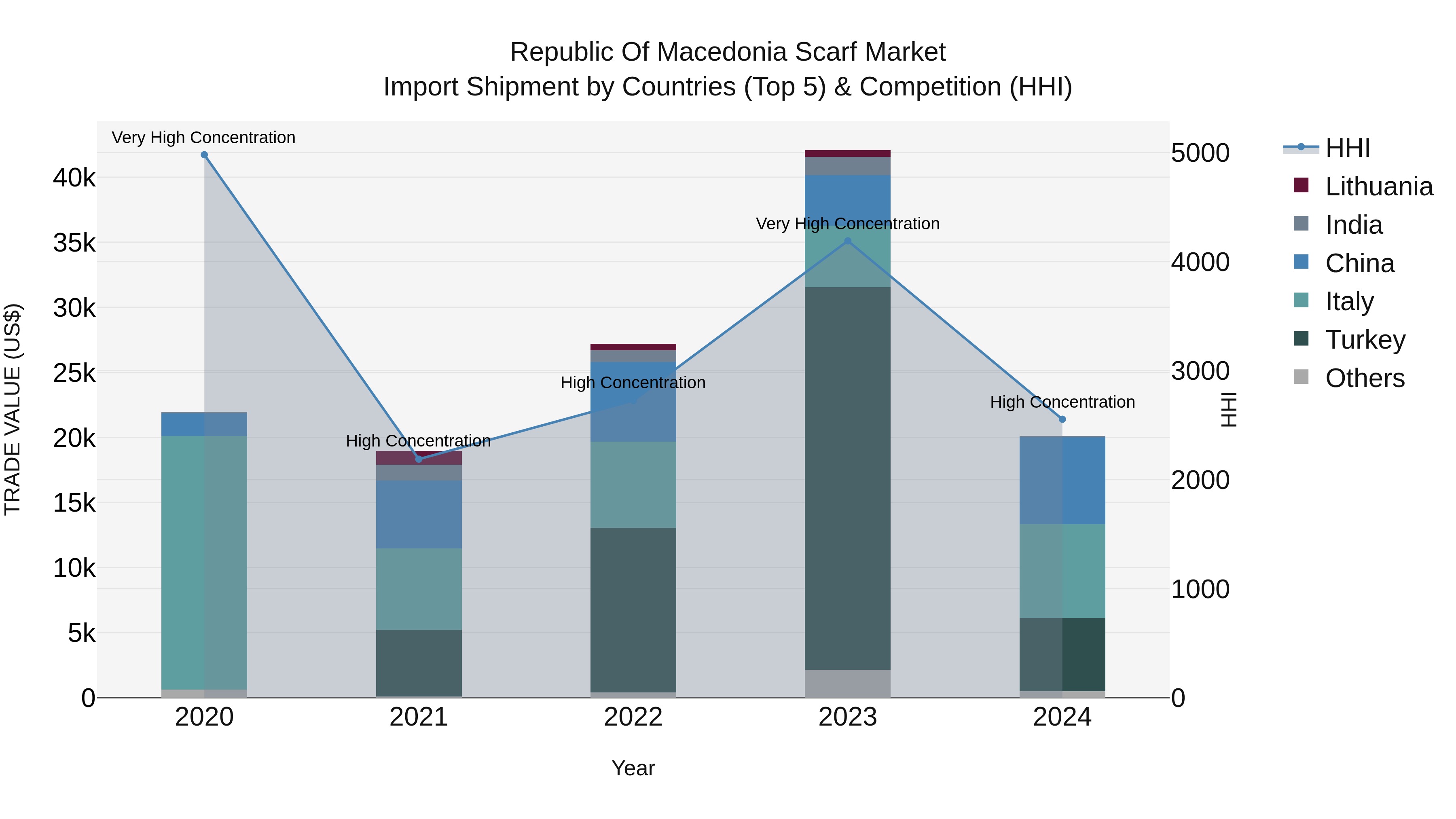
Despite a decline in the CAGR and a significant drop in the growth rate in 2024, the Republic of North Macedonia continued to see a high concentration of scarf imports from top exporting countries such as Italy, China, Turkey, Belgium, and Germany. The market remains competitive with a notable presence of these key players, indicating a strong demand for scarves in the region. The country`s reliance on these top exporting nations highlights the importance of maintaining trade relationships to sustain the scarf import market in North Macedonia.
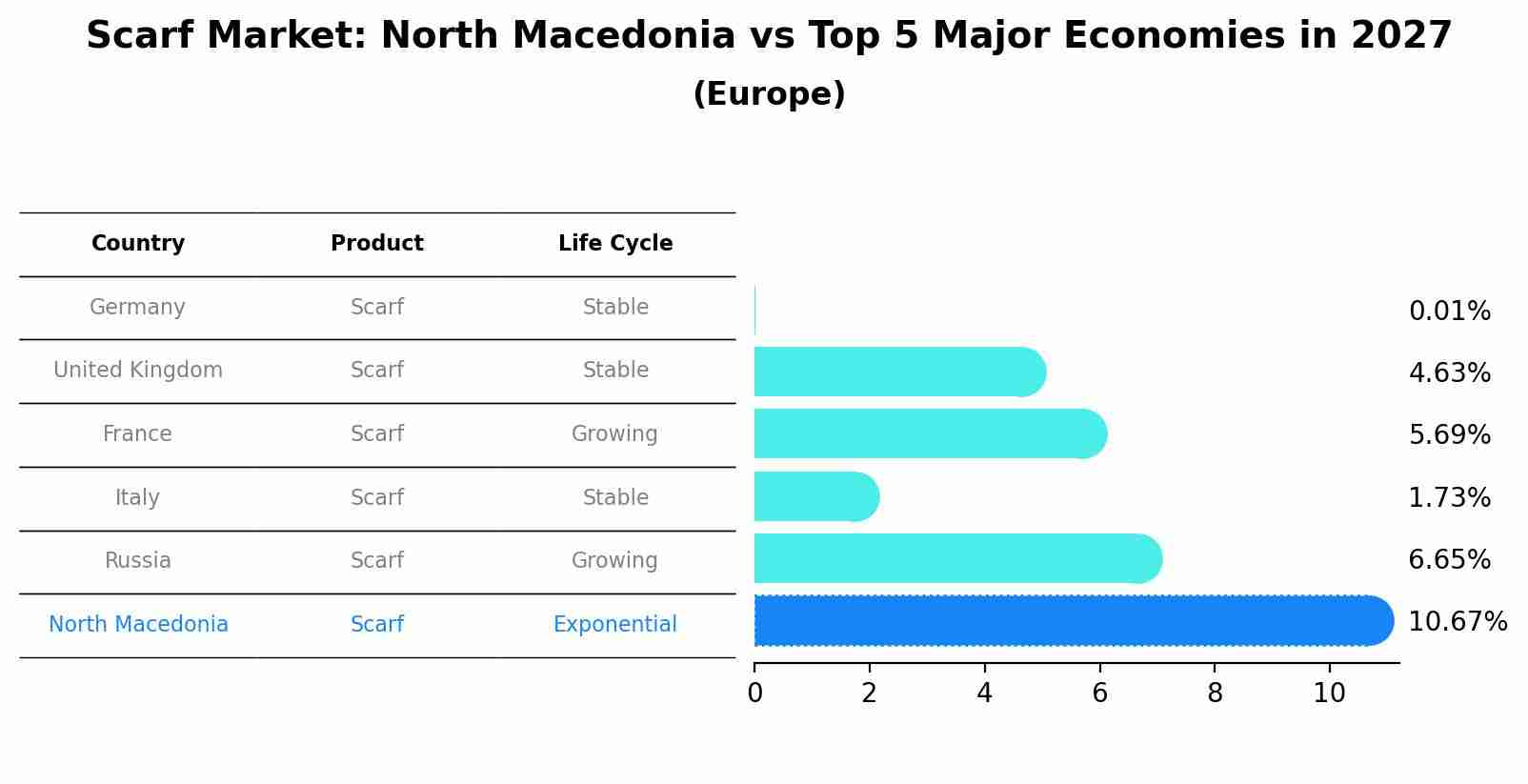
Scarf Market: North Macedonia vs Top 5 Major Economies in 2027 (Europe)
In the Europe region, the Scarf market in North Macedonia is projected to expand at a high growth rate of 10.67% by 2027. The largest economy is Germany, followed by United Kingdom, France, Italy and Russia.
Key Highlights of the Report:
- Republic of Macedonia Scarf Market Outlook
- Market Size of Republic of Macedonia Scarf Market, 2024
- Forecast of Republic of Macedonia Scarf Market, 2031
- Historical Data and Forecast of Republic of Macedonia Scarf Revenues & Volume for the Period 2021-2031
- Republic of Macedonia Scarf Market Trend Evolution
- Republic of Macedonia Scarf Market Drivers and Challenges
- Republic of Macedonia Scarf Price Trends
- Republic of Macedonia Scarf Porter`s Five Forces
- Republic of Macedonia Scarf Industry Life Cycle
- Historical Data and Forecast of Republic of Macedonia Scarf Market Revenues & Volume By Product for the Period 2021-2031
- Historical Data and Forecast of Republic of Macedonia Scarf Market Revenues & Volume By Cashmere for the Period 2021-2031
- Historical Data and Forecast of Republic of Macedonia Scarf Market Revenues & Volume By Cotton for the Period 2021-2031
- Historical Data and Forecast of Republic of Macedonia Scarf Market Revenues & Volume By Faux Fur for the Period 2021-2031
- Historical Data and Forecast of Republic of Macedonia Scarf Market Revenues & Volume By Linen for the Period 2021-2031
- Historical Data and Forecast of Republic of Macedonia Scarf Market Revenues & Volume By Silk for the Period 2021-2031
- Historical Data and Forecast of Republic of Macedonia Scarf Market Revenues & Volume By Wool & Wool Blend for the Period 2021-2031
- Historical Data and Forecast of Republic of Macedonia Scarf Market Revenues & Volume By Other for the Period 2021-2031
- Historical Data and Forecast of Republic of Macedonia Scarf Market Revenues & Volume By Downstream Fields for the Period 2021-2031
- Historical Data and Forecast of Republic of Macedonia Scarf Market Revenues & Volume By Women for the Period 2021-2031
- Historical Data and Forecast of Republic of Macedonia Scarf Market Revenues & Volume By Men for the Period 2021-2031
- Republic of Macedonia Scarf Import Export Trade Statistics
- Market Opportunity Assessment By Product
- Market Opportunity Assessment By Downstream Fields
- Republic of Macedonia Scarf Top Companies Market Share
- Republic of Macedonia Scarf Competitive Benchmarking By Technical and Operational Parameters
- Republic of Macedonia Scarf Company Profiles
- Republic of Macedonia Scarf Key Strategic Recommendations






































