Republic Of Macedonia Sweet Biscuits Market
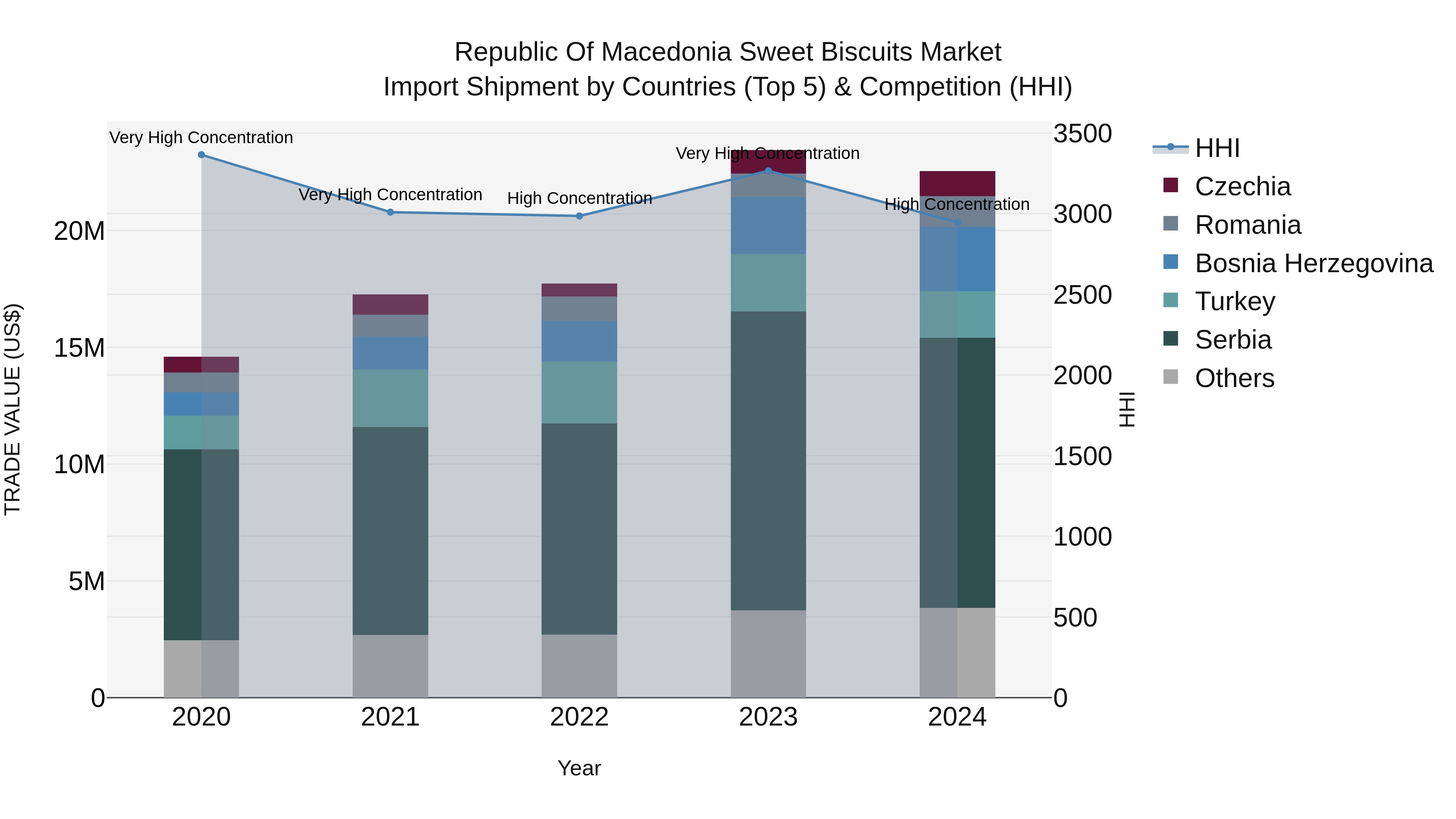
The import shipments of sweet biscuits into North Macedonia in 2024 saw a slight decrease in growth rate compared to the previous year, with a high level of market concentration persisting. Serbia, Bosnia Herzegovina, Turkey, Romania, and Czechia were the top exporting countries, indicating a diverse range of sources for these products. Despite a dip in growth rate from 2023 to 2024, the compound annual growth rate (CAGR) from 2020 to 2024 remained strong at 11.48%, highlighting the sustained demand for sweet biscuits in the Macedonian market.
Key Highlights of the Report:
- Republic of Macedonia Sweet Biscuits Market Outlook
- Market Size of Republic of Macedonia Sweet Biscuits Market, 2024
- Forecast of Republic of Macedonia Sweet Biscuits Market, 2031
- Historical Data and Forecast of Republic of Macedonia Sweet Biscuits Revenues & Volume for the Period 2021-2031
- Republic of Macedonia Sweet Biscuits Market Trend Evolution
- Republic of Macedonia Sweet Biscuits Market Drivers and Challenges
- Republic of Macedonia Sweet Biscuits Price Trends
- Republic of Macedonia Sweet Biscuits Porter`s Five Forces
- Republic of Macedonia Sweet Biscuits Industry Life Cycle
- Historical Data and Forecast of Republic of Macedonia Sweet Biscuits Market Revenues & Volume By Product Type for the Period 2021-2031
- Historical Data and Forecast of Republic of Macedonia Sweet Biscuits Market Revenues & Volume By Chocolate-coated Biscuits for the Period 2021-2031
- Historical Data and Forecast of Republic of Macedonia Sweet Biscuits Market Revenues & Volume By Cookies for the Period 2021-2031
- Historical Data and Forecast of Republic of Macedonia Sweet Biscuits Market Revenues & Volume By Filled Biscuits for the Period 2021-2031
- Historical Data and Forecast of Republic of Macedonia Sweet Biscuits Market Revenues & Volume By Plain Biscuits for the Period 2021-2031
- Historical Data and Forecast of Republic of Macedonia Sweet Biscuits Market Revenues & Volume By Sandwich Biscuits for the Period 2021-2031
- Historical Data and Forecast of Republic of Macedonia Sweet Biscuits Market Revenues & Volume By Other Sweet Biscuits for the Period 2021-2031
- Historical Data and Forecast of Republic of Macedonia Sweet Biscuits Market Revenues & Volume By Distribution Channel for the Period 2021-2031
- Historical Data and Forecast of Republic of Macedonia Sweet Biscuits Market Revenues & Volume By Supermarkets/Hypermarkets for the Period 2021-2031
- Historical Data and Forecast of Republic of Macedonia Sweet Biscuits Market Revenues & Volume By Specialist Retailers for the Period 2021-2031
- Historical Data and Forecast of Republic of Macedonia Sweet Biscuits Market Revenues & Volume By Convenience Stores for the Period 2021-2031
- Historical Data and Forecast of Republic of Macedonia Sweet Biscuits Market Revenues & Volume By Online Stores for the Period 2021-2031
- Historical Data and Forecast of Republic of Macedonia Sweet Biscuits Market Revenues & Volume By Other Distribution Channels for the Period 2021-2031
- Republic of Macedonia Sweet Biscuits Import Export Trade Statistics
- Market Opportunity Assessment By Product Type
- Market Opportunity Assessment By Distribution Channel
- Republic of Macedonia Sweet Biscuits Top Companies Market Share
- Republic of Macedonia Sweet Biscuits Competitive Benchmarking By Technical and Operational Parameters
- Republic of Macedonia Sweet Biscuits Company Profiles
- Republic of Macedonia Sweet Biscuits Key Strategic Recommendations






































