Romania Bulk Food Ingredients Market: Import Trend Analysis
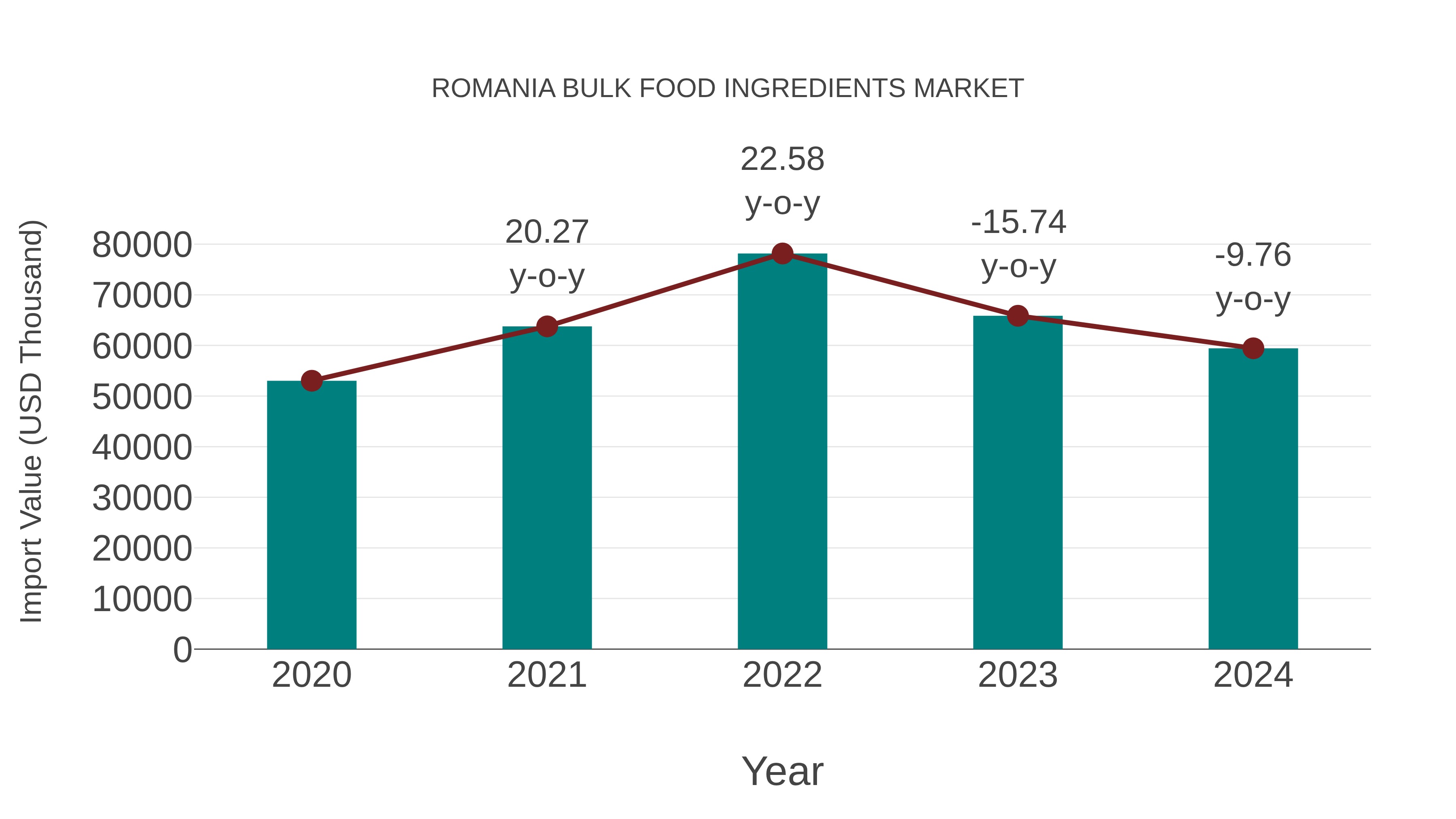
In the Romania bulk food ingredients market, the import trend experienced a decline from 2023 to 2024, with a growth rate of -9.76%. However, the compound annual growth rate (CAGR) for the period 2020-2024 stood at 2.89%. This negative momentum in import figures could be attributed to shifting demand patterns or changes in trade policies affecting market stability.
Romania Bulk Food Ingredients Market Overview
The Bulk Food Ingredients market in Romania caters to the food processing industry`s need for high-quality, cost-effective ingredients in large quantities. These ingredients include grains, spices, sweeteners, and additives, supporting the production of a wide range of food products to meet domestic and export demand.
Drivers of the market
The bulk food ingredients market in Romania benefits from the increasing demand for processed and convenience foods, as well as the growth of the foodservice industry. Bulk ingredients such as grains, spices, sweeteners, and additives are essential for food manufacturers to maintain product consistency and cost-efficiency. Changing dietary preferences towards healthier and organic ingredients also drive market dynamics. Strategic partnerships between food manufacturers and suppliers to ensure a stable supply chain and adherence to quality standards further support market expansion.
Challenges of the market
Challenges include maintaining quality standards during transportation and storage, regulatory compliance for imported ingredients, and fluctuations in raw material prices affecting product costs.
Government Policy of the market
Regulations focus on food safety and quality standards, ensuring compliance with EU regulations on food additives and ingredients. Government policies may include certification requirements and inspections to maintain high standards.
Key Highlights of the Report:
- Romania Bulk Food Ingredients Market Outlook
- Market Size of Romania Bulk Food Ingredients Market, 2025
- Forecast of Romania Bulk Food Ingredients Market, 2032
- Historical Data and Forecast of Romania Bulk Food Ingredients Revenues & Volume for the Period 2022-2032F
- Romania Bulk Food Ingredients Market Trend Evolution
- Romania Bulk Food Ingredients Market Drivers and Challenges
- Romania Bulk Food Ingredients Price Trends
- Romania Bulk Food Ingredients Porter's Five Forces
- Romania Bulk Food Ingredients Industry Life Cycle
- Historical Data and Forecast of Romania Bulk Food Ingredients Market Revenues & Volume By Application for the Period 2022-2032F
- Historical Data and Forecast of Romania Bulk Food Ingredients Market Revenues & Volume By Food for the Period 2022-2032F
- Historical Data and Forecast of Romania Bulk Food Ingredients Market Revenues & Volume By Beverages for the Period 2022-2032F
- Historical Data and Forecast of Romania Bulk Food Ingredients Market Revenues & Volume By Distribution Channel for the Period 2022-2032F
- Historical Data and Forecast of Romania Bulk Food Ingredients Market Revenues & Volume By Direct From Manufacturers for the Period 2022-2032F
- Historical Data and Forecast of Romania Bulk Food Ingredients Market Revenues & Volume By Distributors for the Period 2022-2032F
- Romania Bulk Food Ingredients Import Export Trade Statistics
- Market Opportunity Assessment By Application
- Market Opportunity Assessment By Distribution Channel
- Romania Bulk Food Ingredients Top Companies Market Share
- Romania Bulk Food Ingredients Competitive Benchmarking By Technical and Operational Parameters
- Romania Bulk Food Ingredients Company Profiles
- Romania Bulk Food Ingredients Key Strategic Recommendations






































