Romania Flip Flops Market Size (2020-2030)
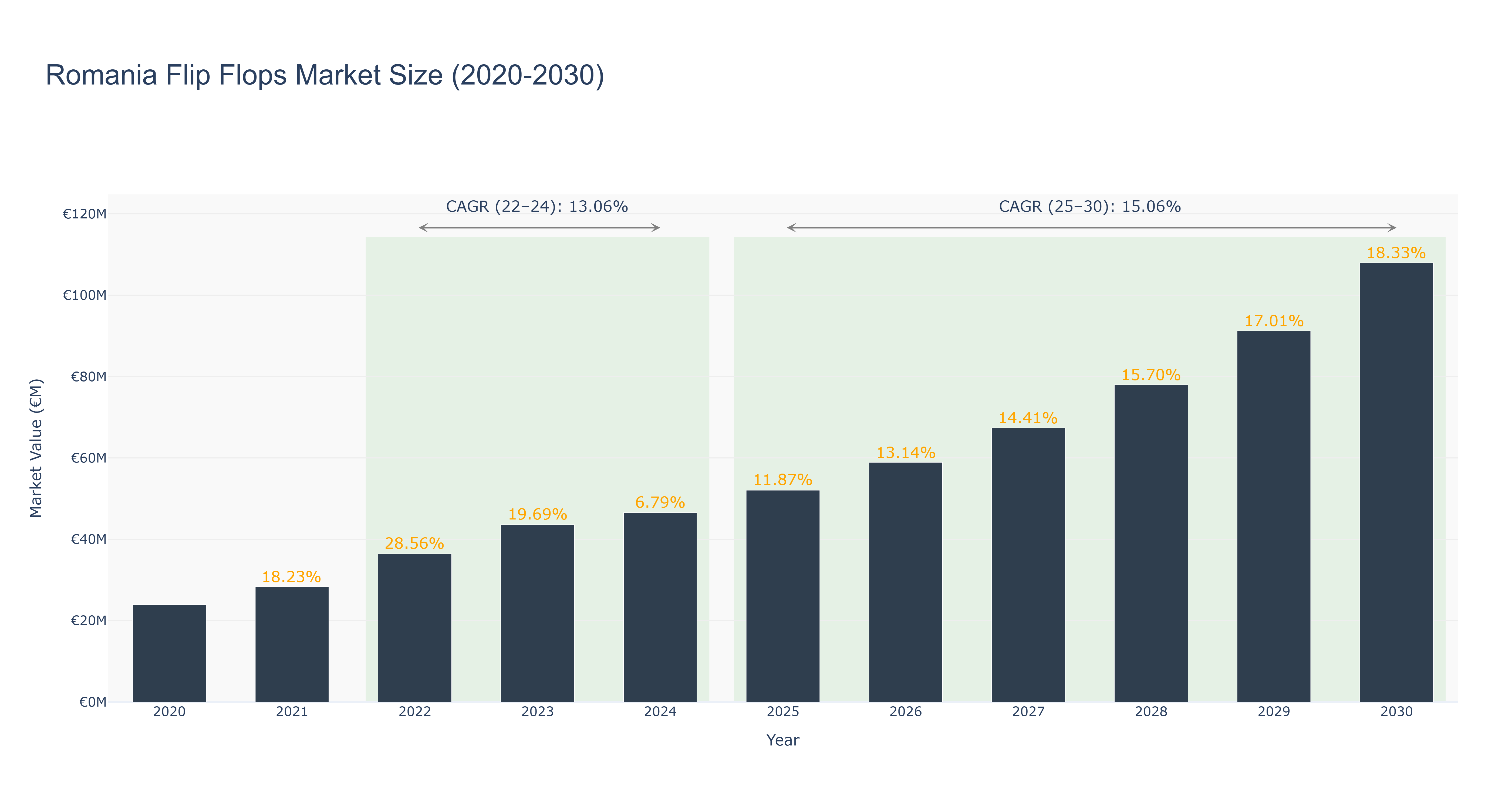
Romania Flip Flops Market has shown a steady growth trajectory over the years. The peak market size of €107.96 million is forecasted for 2030, with an impressive CAGR of 15.06% from 2025 to 2030. The actual market size increased from €23.95 million in 2020 to €46.54 million in 2024, driven by rising disposable incomes and changing fashion trends. The market experienced a significant growth spurt from 2025 onwards, attributed to increased consumer demand for comfortable and stylish footwear options. Looking ahead, Romania is set to witness the launch of sustainable flip flop collections by key market players, aligning with the growing environmental consciousness among consumers. This trend is expected to further drive market growth and solidify Romania's position in the flip flops market.
Romania Flip Flops Market: Production & Trade Performance (2019-2025)
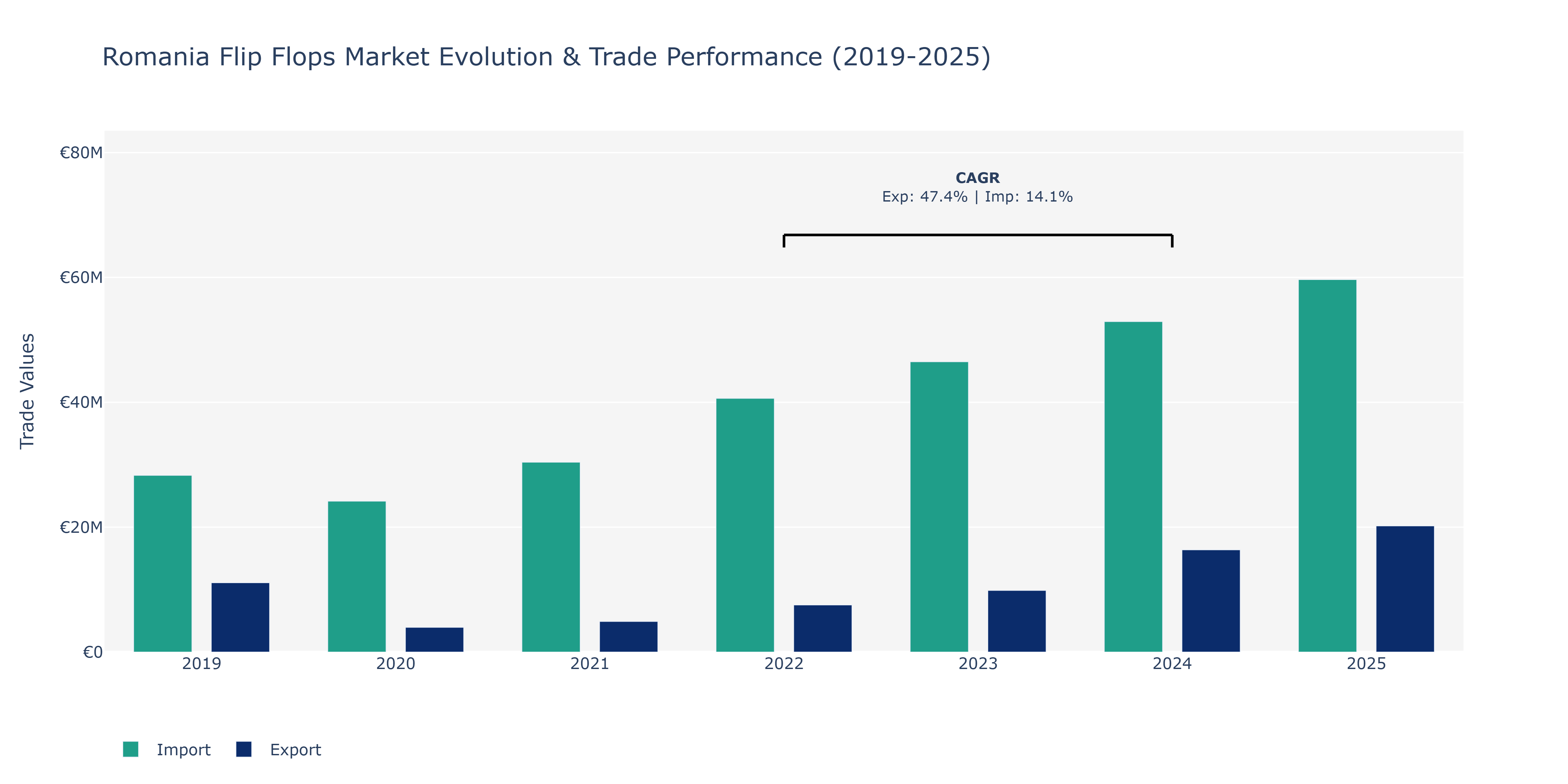
Between 2019 and 2025, Romania's Flip Flops Market witnessed notable fluctuations in both exports and imports. Starting in 2019, exports were at €11.1 million, while imports stood at €28.3 million. In 2020, exports declined to €3.95 million, with imports decreasing to €24.17 million. The trend reversed in 2021 and continued to rise through 2025, reaching €20.19 million for exports and €59.65 million for imports. Notably, exports displayed a consistent upward trajectory, peaking in 2025, while imports showcased a similar but more gradual increase. These fluctuations can be attributed to various factors such as changes in consumer preferences, evolving fashion trends, and economic conditions impacting both domestic demand and international trade relations within the footwear industry. The Compound Annual Growth Rate (CAGR) for exports between 2022 and 2024 was robust at 47.44%, indicating a significant growth spurt likely driven by enhanced market penetration strategies, product innovation, and increased global demand for Romanian flip flops. Conversely, imports exhibited a more moderate CAGR of 14.13%, reflecting a steady but slower pace of growth possibly influenced by factors like raw material costs, currency exchange rates, and competition from other footwear markets. As the market continues to evolve, stakeholders should closely monitor these trends to capitalize on growth opportunities and navigate potential challenges effectively.
Romania Flip Flops Market Overview
The Romania flip flops market is witnessing steady growth driven by factors such as increasing disposable income, changing fashion trends, and a growing preference for comfortable footwear. Consumers in Romania are increasingly opting for flip flops as a casual and versatile footwear option, suitable for various occasions ranging from beach outings to everyday wear. The market offers a wide range of designs, colors, and materials to cater to diverse consumer preferences. Key players in the Romania flip flops market are focusing on product innovation, incorporating eco-friendly materials, and leveraging online retail channels to reach a wider customer base. With a promising outlook and a focus on quality and style, the Romania flip flops market is poised for further expansion in the coming years.
Romania Flip Flops Market Trends
The Romania Flip Flops Market is experiencing a surge in demand for eco-friendly and sustainable products, with consumers prioritizing environmentally conscious choices. This trend is driving manufacturers to offer flip flops made from recycled materials, such as plastic bottles and rubber, as well as those produced using ethical and fair trade practices. Additionally, customization and personalization options are gaining popularity among consumers, who seek unique and individualized flip flops. The market is also witnessing a shift towards online sales channels, with e-commerce platforms becoming increasingly important for retailers to reach a wider customer base. Overall, the Romania Flip Flops Market is evolving to meet the growing demand for sustainable, customizable, and convenient footwear options.
Romania Flip Flops Market Challenges
In the Romania Flip Flops market, some challenges faced include intense competition from both local and international brands, leading to price wars and margins being squeezed. Additionally, the seasonality of flip flop sales poses a challenge as demand fluctuates with changing weather conditions. Consumer preferences and trends also evolve rapidly, making it crucial for companies to stay updated and offer innovative designs to attract customers. Supply chain disruptions and fluctuations in raw material prices can also impact the market. Moreover, the economic uncertainty and fluctuations in consumer spending patterns due to external factors can further complicate the market landscape for flip flop manufacturers and retailers in Romania.
Romania Flip Flops Market Investment Opportunities
The Romania Flip Flops Market offers various investment opportunities for both local and international investors. With the increasing popularity of casual footwear and the growing trend of comfortable yet stylish options, there is a demand for high-quality flip flops in Romania. Investing in innovative designs, sustainable materials, and online marketing strategies could be lucrative in this market. Additionally, targeting niche segments such as eco-friendly or customized flip flops can help differentiate a brand and attract a loyal customer base. Collaborating with local retailers or setting up online platforms for direct-to-consumer sales can also be effective strategies for tapping into the Romanian market. Overall, the Romania Flip Flops Market presents opportunities for investors to capitalize on the evolving consumer preferences and lifestyle trends in the country.
Romania Flip Flops Market Government Policy
The Romanian government does not have specific policies targeting the flip flops market. However, general regulations related to consumer protection, import/export duties, and environmental standards may impact the industry. Compliance with EU regulations is essential for businesses operating in Romania, ensuring product safety and quality standards are met. Additionally, the government may implement trade agreements or tariffs that could affect the importation of flip flops into the country. Overall, while there are no direct policies addressing the flip flops market specifically, businesses in Romania need to adhere to relevant regulations to operate successfully and maintain consumer trust.
Romania Flip Flops Market Future Outlook
The Romania Flip Flops market is expected to witness steady growth in the coming years, driven by factors such as increasing disposable income, changing consumer preferences towards comfortable and casual footwear, and a growing emphasis on leisure and outdoor activities. The market is also likely to benefit from the rising popularity of beach holidays and the overall trend towards relaxed fashion styles. Innovation in materials, designs, and sustainability practices are expected to play a significant role in shaping the market landscape. However, competition from other types of footwear and fluctuating raw material prices may pose challenges. Overall, the Romania Flip Flops market is projected to experience moderate growth, with opportunities for brands that can offer both style and functionality while also addressing environmental concerns.
Key Highlights of the Report:
- Romania Flip Flops Market Outlook
- Market Size of Romania Flip Flops Market, 2021
- Forecast of Romania Flip Flops Market, 2031
- Historical Data and Forecast of Romania Flip Flops Revenues & Volume for the Period 2018 - 2031
- Romania Flip Flops Market Trend Evolution
- Romania Flip Flops Market Drivers and Challenges
- Romania Flip Flops Price Trends
- Romania Flip Flops Porter's Five Forces
- Romania Flip Flops Industry Life Cycle
- Historical Data and Forecast of Romania Flip Flops Market Revenues & Volume By Sole Material for the Period 2018 - 2031
- Historical Data and Forecast of Romania Flip Flops Market Revenues & Volume By EVA Flip Flops for the Period 2018 - 2031
- Historical Data and Forecast of Romania Flip Flops Market Revenues & Volume By PVC Flip Flops for the Period 2018 - 2031
- Historical Data and Forecast of Romania Flip Flops Market Revenues & Volume By Rubber Flip Flops for the Period 2018 - 2031
- Historical Data and Forecast of Romania Flip Flops Market Revenues & Volume By EVA+Rubber Flip Flops for the Period 2018 - 2031
- Historical Data and Forecast of Romania Flip Flops Market Revenues & Volume By Others for the Period 2018 - 2031
- Historical Data and Forecast of Romania Flip Flops Market Revenues & Volume By End User for the Period 2018 - 2031
- Historical Data and Forecast of Romania Flip Flops Market Revenues & Volume By Women Flip Flops for the Period 2018 - 2031
- Historical Data and Forecast of Romania Flip Flops Market Revenues & Volume By Men Flip Flops for the Period 2018 - 2031
- Historical Data and Forecast of Romania Flip Flops Market Revenues & Volume By Girls Flip Flops for the Period 2018 - 2031
- Historical Data and Forecast of Romania Flip Flops Market Revenues & Volume By Boys Flip Flops for the Period 2018 - 2031
- Romania Flip Flops Import Export Trade Statistics
- Market Opportunity Assessment By Sole Material
- Market Opportunity Assessment By End User
- Romania Flip Flops Top Companies Market Share
- Romania Flip Flops Competitive Benchmarking By Technical and Operational Parameters
- Romania Flip Flops Company Profiles
- Romania Flip Flops Key Strategic Recommendations






































