Romania Hair Conditioner Market Size Growth Rate
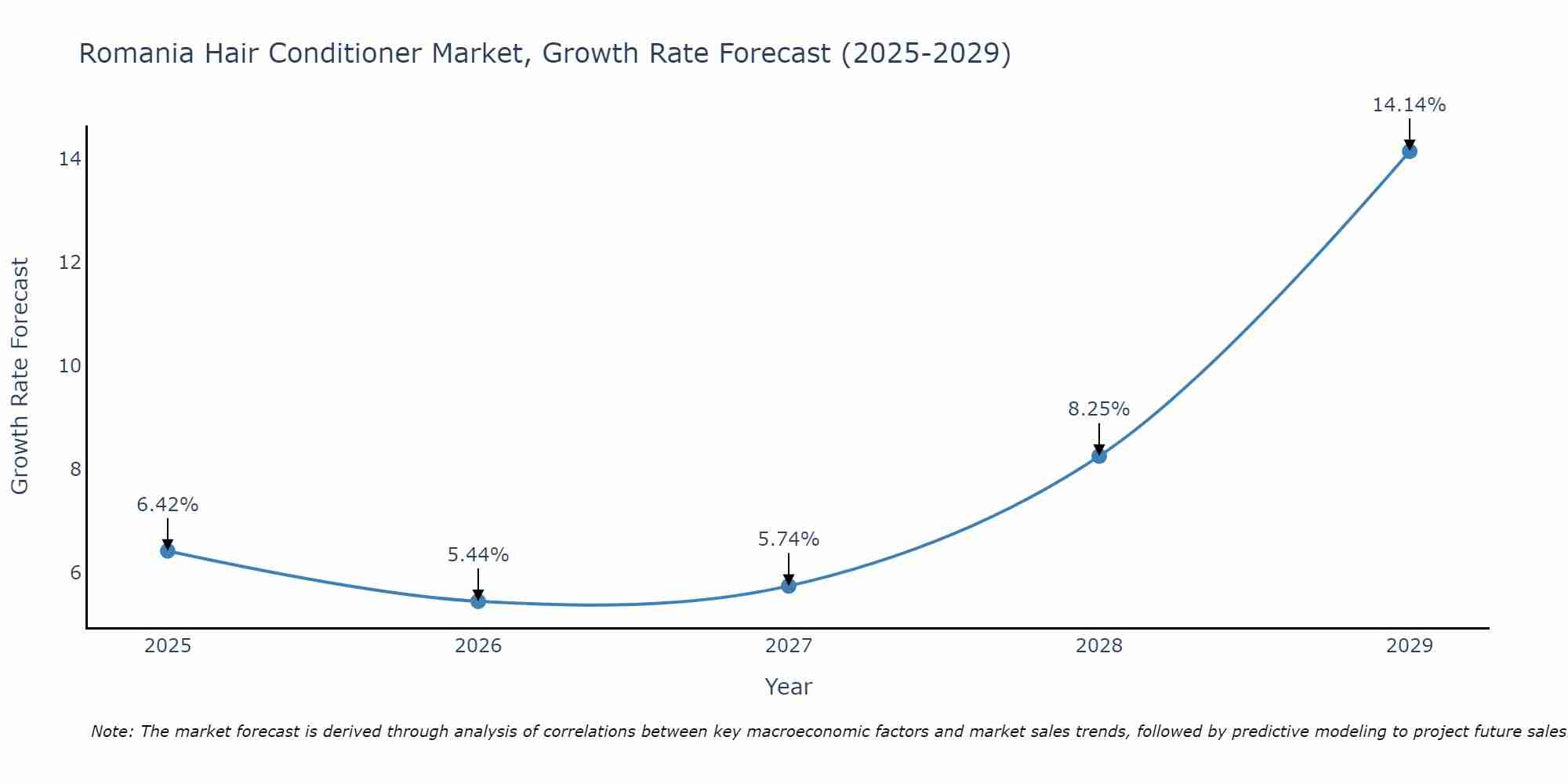
The Romania Hair Conditioner Market is projected to witness mixed growth rate patterns during 2025 to 2029. The growth rate starts at 6.42% in 2025 and reaches 14.14% by 2029.
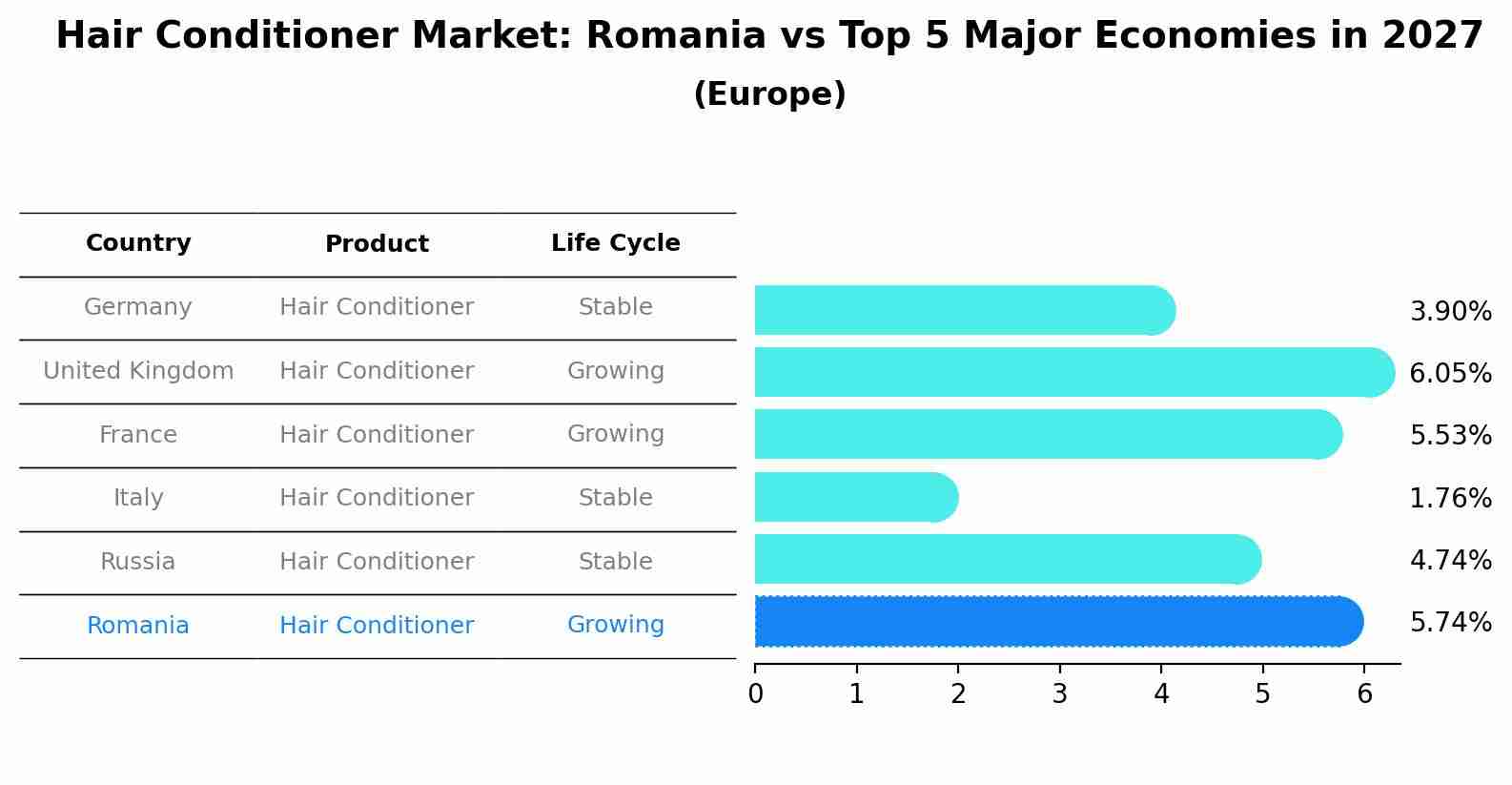
Hair Conditioner Market: Romania vs Top 5 Major Economies in 2027 (Europe)
The Hair Conditioner market in Romania is projected to grow at a growing growth rate of 5.74% by 2027, within the Europe region led by Germany, along with other countries like United Kingdom, France, Italy and Russia, collectively shaping a dynamic and evolving market environment driven by innovation and increasing adoption of emerging technologies.
Romania Hair Conditioner Market Overview
The Romania Hair Conditioner market is experiencing steady growth driven by factors such as increasing awareness about hair care and grooming, a rise in disposable income, and a growing preference for premium and natural products. Consumers in Romania are increasingly seeking products that offer nourishment, hydration, and protection for their hair, leading to a demand for high-quality conditioners that cater to various hair types. Key players in the market are focusing on product innovation, such as sulfate-free, paraben-free, and silicone-free formulations, to meet the evolving preferences of consumers. The market is also witnessing a trend towards eco-friendly and sustainable products, with a rising emphasis on natural ingredients. Overall, the Romania Hair Conditioner market is poised for further growth as consumers prioritize hair health and seek personalized solutions for their specific hair care needs.
Romania Hair Conditioner Market Trends
The Romania Hair Conditioner Market is currently witnessing a shift towards natural and organic products, driven by consumer awareness of ingredients and sustainability. Consumers are increasingly seeking hair conditioners that are free from harmful chemicals such as sulfates, parabens, and silicones, and are opting for products with plant-based or botanical ingredients. This trend is also influenced by the growing preference for cruelty-free and environmentally friendly products. Additionally, there is a rising demand for specialized hair conditioners targeting specific hair concerns such as dryness, frizz, and damage repair. Brands are responding to these trends by launching innovative formulations, eco-friendly packaging, and marketing strategies that emphasize the natural and clean attributes of their products. Overall, the Romania Hair Conditioner Market is evolving towards a more conscious and personalized approach to hair care.
Romania Hair Conditioner Market Challenges
In the Romania Hair Conditioner Market, some challenges include intense competition from both local and international brands, price sensitivity among consumers due to economic factors, and the growing trend towards natural and organic products. Additionally, consumer preferences and expectations are constantly evolving, requiring companies to innovate and adapt their product offerings to meet changing demands. Distribution channels and shelf space availability can also pose challenges for new or smaller brands looking to establish a presence in the market. Overall, navigating these challenges requires a deep understanding of consumer trends, effective marketing strategies, and investment in product development to stay competitive in the dynamic Romania Hair Conditioner Market.
Romania Hair Conditioner Market Investment Opportunities
The Romania hair conditioner market presents promising investment opportunities due to factors such as increasing disposable income, growing awareness about hair care products, and a shift towards premium and natural ingredients. With a rising focus on personal grooming and beauty, there is a growing demand for high-quality hair conditioners that offer nourishment and repair. Investing in innovative formulations, sustainable packaging, and targeted marketing strategies can help capitalize on this trend. Additionally, there is potential for growth in the online sales channel as consumers increasingly prefer the convenience of shopping for beauty products online. Overall, the Romania hair conditioner market offers opportunities for investors to tap into a growing consumer segment seeking premium, effective, and sustainable hair care solutions.
Romania Hair Conditioner Market Government Policy
In Romania, the hair conditioner market is largely unregulated by specific government policies. However, general regulations such as labeling requirements, product safety standards, and import/export regulations apply to all cosmetics including hair conditioners. The National Agency for Medicines and Medical Devices (NAMMD) oversees the registration and monitoring of cosmetics to ensure they comply with safety and quality standards. Additionally, Romania follows the European Union regulations on cosmetics, which set out guidelines on product ingredients, labeling, and advertising. Manufacturers and distributors in the hair conditioner market must adhere to these regulations to ensure consumer safety and fair competition. Overall, the government policies in Romania related to the hair conditioner market focus on ensuring product quality, safety, and compliance with EU standards.
Romania Hair Conditioner Market Future Outlook
The future outlook for the Romania Hair Conditioner Market appears promising, driven by factors such as increasing awareness about hair care, rising disposable income, and a growing emphasis on personal grooming. Consumers are increasingly seeking high-quality hair care products, including conditioners that offer specific benefits like hydration, repair, and nourishment. Furthermore, the trend towards natural and organic ingredients in beauty products is expected to drive the demand for premium hair conditioners in the market. With a growing number of international brands entering the Romanian market and the availability of a wide range of products both online and offline, the hair conditioner market in Romania is poised for steady growth in the coming years. Manufacturers are likely to focus on product innovation, marketing strategies, and expanding their distribution channels to capitalize on the growing demand for hair conditioners in the country.
Key Attractiveness of the Report
- 10 Years of Market Numbers.
- Historical Data Starting from 2022 to 2025.
- Base Year: 2025
- Forecast Data until 2032.
- Key Performance Indicators Impacting the market.
- Major Upcoming Developments and Projects.
Key Highlights of the Report:
- Romania Hair Conditioner Market Outlook
- Market Size of Romania Hair Conditioner Market, 2025
- Forecast of Romania Hair Conditioner Market, 2032
- Historical Data and Forecast of Romania Hair Conditioner Revenues & Volume for the Period 2022-2032
- Romania Hair Conditioner Market Trend Evolution
- Romania Hair Conditioner Market Drivers and Challenges
- Romania Hair Conditioner Price Trends
- Romania Hair Conditioner Porter's Five Forces
- Romania Hair Conditioner Industry Life Cycle
- Historical Data and Forecast of Romania Hair Conditioner Market Revenues & Volume By Product Type for the Period 2022-2032
- Historical Data and Forecast of Romania Hair Conditioner Market Revenues & Volume By Dry Hair for the Period 2022-2032
- Historical Data and Forecast of Romania Hair Conditioner Market Revenues & Volume By Oily Hair for the Period 2022-2032
- Historical Data and Forecast of Romania Hair Conditioner Market Revenues & Volume By Normal Hair for the Period 2022-2032
- Historical Data and Forecast of Romania Hair Conditioner Market Revenues & Volume By Professional for the Period 2022-2032
- Historical Data and Forecast of Romania Hair Conditioner Market Revenues & Volume By Non-professional for the Period 2022-2032
- Historical Data and Forecast of Romania Hair Conditioner Market Revenues & Volume By Application for the Period 2022-2032
- Historical Data and Forecast of Romania Hair Conditioner Market Revenues & Volume By Online Retail for the Period 2022-2032
- Historical Data and Forecast of Romania Hair Conditioner Market Revenues & Volume By Offline Retail for the Period 2022-2032
- Historical Data and Forecast of Romania Hair Conditioner Market Revenues & Volume By Personal Use for the Period 2022-2032
- Historical Data and Forecast of Romania Hair Conditioner Market Revenues & Volume By Personal Use for the Period 2022-2032
- Historical Data and Forecast of Romania Hair Conditioner Market Revenues & Volume By Barber shop for the Period 2022-2032
- Historical Data and Forecast of Romania Hair Conditioner Market Revenues & Volume By Hotel for the Period 2022-2032
- Romania Hair Conditioner Import Export Trade Statistics
- Market Opportunity Assessment By Product Type
- Market Opportunity Assessment By Application
- Romania Hair Conditioner Top Companies Market Share
- Romania Hair Conditioner Competitive Benchmarking By Technical and Operational Parameters
- Romania Hair Conditioner Company Profiles
- Romania Hair Conditioner Key Strategic Recommendations






































