Romania Hotel Furniture Market: Import Trend Analysis
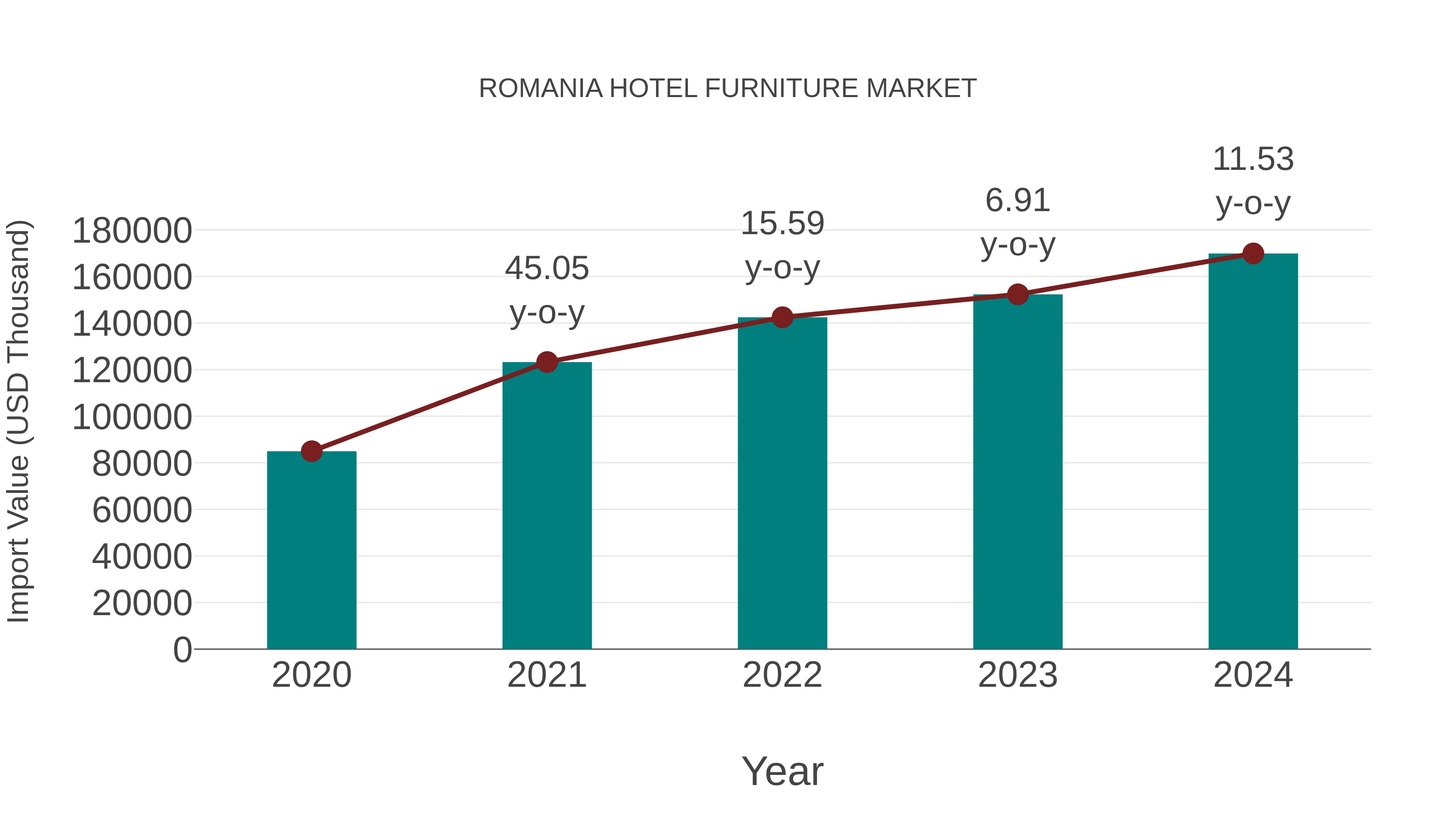
In 2024, Romania`s import trend for hotel furniture showed a growth rate of 11.53%, with a compound annual growth rate (CAGR) of 18.91% from 2020 to 2024. This substantial increase can be attributed to a surge in demand for quality and modern hotel furniture, reflecting a positive market stability and a potential shift towards higher-end products in the industry.
Romania Hotel Furniture Market Overview
The Romania Hotel Furniture Market is witnessing steady growth attributed to the expanding tourism industry in the country. With a surge in both domestic and international travelers, hotels are increasingly investing in high-quality and aesthetically pleasing furniture to enhance guest experiences. The market offers a wide range of furniture options including beds, sofas, tables, chairs, and other furnishings tailored to meet the unique requirements of different hotel segments. Key trends in the market include a growing preference for modern and eco-friendly designs, as well as an emphasis on durability and functionality. Major players in the Romania Hotel Furniture Market are focusing on innovative designs, customization options, and sustainable practices to stay competitive in the evolving hospitality sector.
Romania Hotel Furniture Market Trends
The current trends in the Romania Hotel Furniture Market include a growing demand for eco-friendly and sustainable furniture options, as hotels are increasingly focusing on environmental responsibility. Modular and multifunctional furniture designs are also gaining popularity, as they allow for flexible use of space and cater to the evolving needs of guests. Additionally, there is a rising interest in incorporating technology into furniture pieces, such as charging stations and integrated lighting. Customization options are becoming more important to hoteliers looking to create unique and memorable guest experiences. Overall, the market is moving towards a blend of style, functionality, and sustainability to meet the changing preferences of both hotel owners and guests in Romania.
Romania Hotel Furniture Market Challenges
In the Romania hotel furniture market, challenges include increasing competition from both domestic and international players, fluctuating raw material prices impacting production costs, and the need to cater to evolving consumer preferences for modern, sustainable, and ergonomic designs. Additionally, ensuring timely delivery and installation services while maintaining quality standards can be a challenge due to logistics and supply chain issues. Furthermore, economic uncertainties and changing regulations may also pose challenges for hotel furniture manufacturers in Romania, requiring them to stay updated with market trends and adapt their strategies accordingly to remain competitive in the market.
Romania Hotel Furniture Market Investment Opportunities
The Romania Hotel Furniture Market presents promising investment opportunities due to the country`s growing tourism industry. With an increasing number of tourists visiting Romania each year, the demand for high-quality and stylish hotel furniture is on the rise. Investing in this market offers the potential for significant returns as hotels seek to upgrade and modernize their furnishings to attract more guests and enhance the overall guest experience. Additionally, as the hospitality sector continues to expand in Romania, there is a growing need for custom-made and durable furniture solutions to cater to a diverse range of hotel styles and preferences. By tapping into this market, investors can capitalize on the country`s booming tourism sector and the evolving demands of hotel owners for innovative and sustainable furniture options.
Romania Hotel Furniture Market Government Policy
Government policies related to the Romania Hotel Furniture Market focus on promoting sustainable practices, quality standards, and innovation within the industry. These policies include regulations on the use of eco-friendly materials, energy-efficient designs, and adherence to safety standards. The Romanian government also encourages local production and supports small and medium-sized enterprises (SMEs) in the furniture sector through various financial incentives and training programs. Additionally, there are initiatives to promote exports and international partnerships to boost the competitiveness of Romanian hotel furniture manufacturers in the global market. Overall, the government aims to ensure that the Romania Hotel Furniture Market thrives by fostering a business-friendly environment that prioritizes quality, sustainability, and innovation.
Romania Hotel Furniture Market Future Outlook
The future outlook for the Romania Hotel Furniture Market appears positive, driven by a growing tourism industry and increasing investments in the hospitality sector. With Romania emerging as a popular tourist destination in Europe, the demand for quality hotel furniture is expected to rise. Additionally, as the economy continues to improve, there is a growing trend towards modernizing and upgrading hotel facilities, leading to a higher demand for stylish and functional furniture. The market is likely to witness a shift towards eco-friendly and sustainable furniture options, reflecting the global trend towards sustainability. Overall, the Romania Hotel Furniture Market is poised for growth in the coming years, presenting opportunities for manufacturers and suppliers to cater to the evolving needs of the hospitality industry.
Key Highlights of the Report:
- Romania Hotel Furniture Market Outlook
- Market Size of Romania Hotel Furniture Market, 2025
- Forecast of Romania Hotel Furniture Market, 2032
- Historical Data and Forecast of Romania Hotel Furniture Revenues & Volume for the Period 2022 - 2032F
- Romania Hotel Furniture Market Trend Evolution
- Romania Hotel Furniture Market Drivers and Challenges
- Romania Hotel Furniture Price Trends
- Romania Hotel Furniture Porter's Five Forces
- Romania Hotel Furniture Industry Life Cycle
- Historical Data and Forecast of Romania Hotel Furniture Market Revenues & Volume By Product Types for the Period 2022 - 2032F
- Historical Data and Forecast of Romania Hotel Furniture Market Revenues & Volume By Table and Chairs for the Period 2022 - 2032F
- Historical Data and Forecast of Romania Hotel Furniture Market Revenues & Volume By Hotel Beds for the Period 2022 - 2032F
- Historical Data and Forecast of Romania Hotel Furniture Market Revenues & Volume By Hotel Casegoods for the Period 2022 - 2032F
- Historical Data and Forecast of Romania Hotel Furniture Market Revenues & Volume By Other for the Period 2022 - 2032F
- Historical Data and Forecast of Romania Hotel Furniture Market Revenues & Volume By Applications for the Period 2022 - 2032F
- Historical Data and Forecast of Romania Hotel Furniture Market Revenues & Volume By Business Hotel for the Period 2022 - 2032F
- Historical Data and Forecast of Romania Hotel Furniture Market Revenues & Volume By Luxury Hotel for the Period 2022 - 2032F
- Historical Data and Forecast of Romania Hotel Furniture Market Revenues & Volume By Boutique Hotel for the Period 2022 - 2032F
- Historical Data and Forecast of Romania Hotel Furniture Market Revenues & Volume By Other for the Period 2022 - 2032F
- Romania Hotel Furniture Import Export Trade Statistics
- Market Opportunity Assessment By Product Types
- Market Opportunity Assessment By Applications
- Romania Hotel Furniture Top Companies Market Share
- Romania Hotel Furniture Competitive Benchmarking By Technical and Operational Parameters
- Romania Hotel Furniture Company Profiles
- Romania Hotel Furniture Key Strategic Recommendations






































