Romania Methionine Market Size (2020-2030)
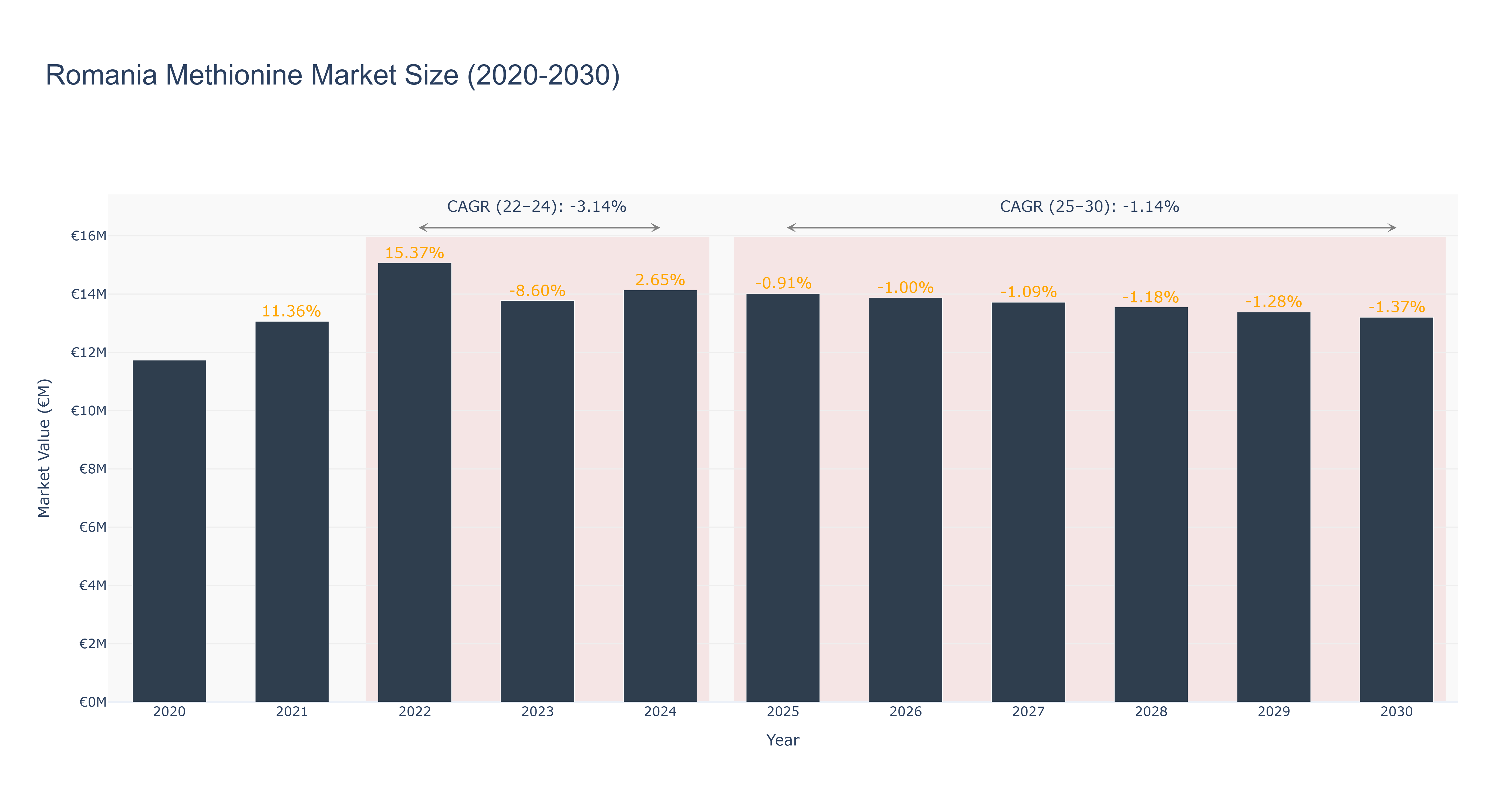
Romania Methionine Market has seen fluctuations in market size over the years. The peak market size of €15.07 million was recorded in 2022, followed by a decline to €13.78 million in 2023. From 2025 to 2030, the market is forecasted to continue its downward trend with an expected size of €13.20 million in 2030. The CAGR for the period 2022-24 stands at -3.14%, while for 2025-30, it is projected at -1.14%. The market's decline can be attributed to factors such as changing consumer preferences, regulatory challenges, and global economic conditions affecting the methionine industry. Looking ahead, Romania is set to invest in sustainable production methods and research initiatives to enhance the competitiveness of its methionine market in the coming years.
Romania Methionine Market: Production & Trade Performance (2019-2025)
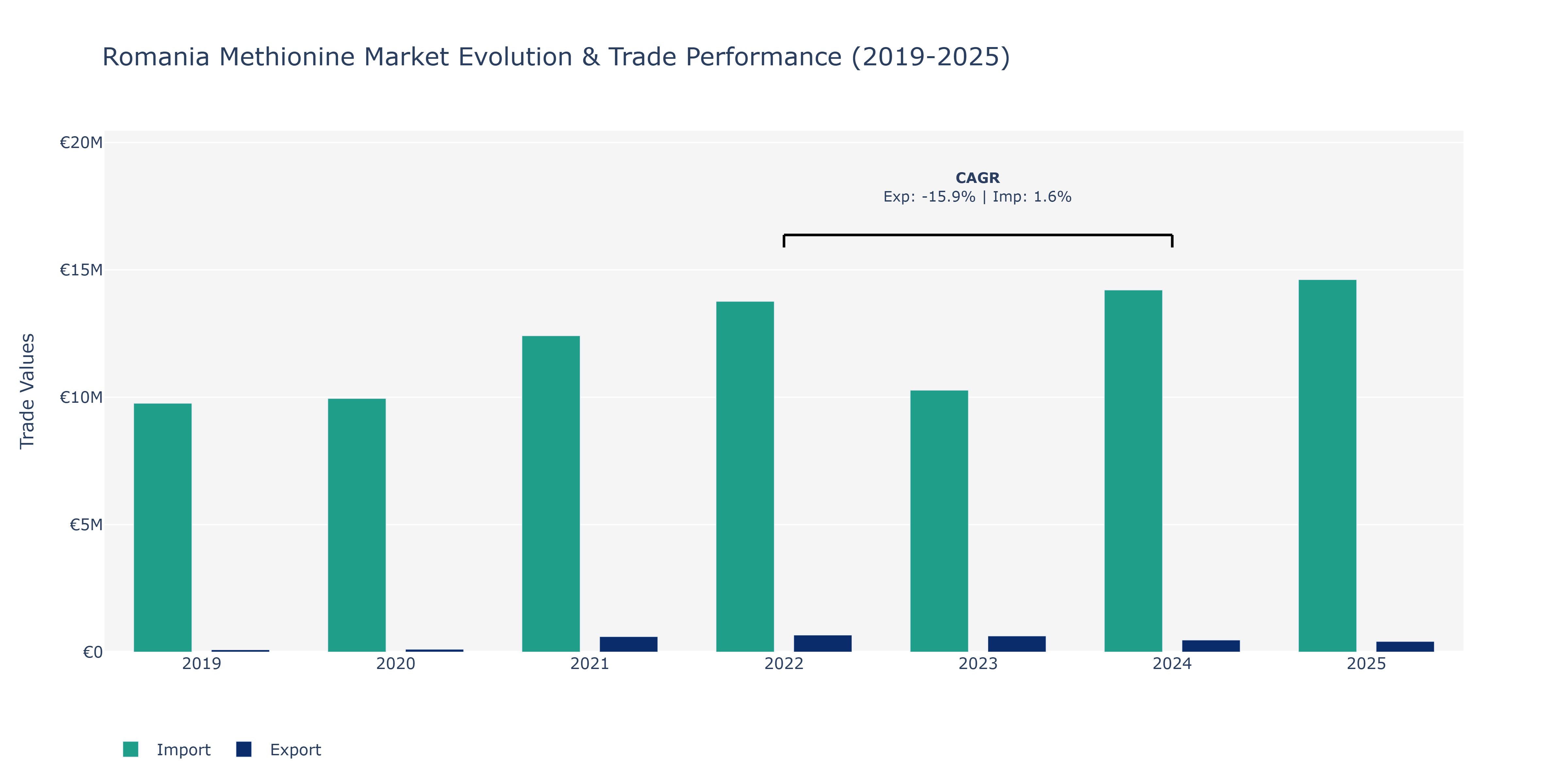
In the Romania Methionine Market, exports showed a fluctuating pattern from 2019 to 2025, with a peak in 2022 at €667.05 thousand, followed by a decline to €471.34 thousand in 2024. Conversely, imports steadily increased from €9.76 million in 2019 to €14.62 million in 2025, showcasing consistent growth. The notable surge in exports in 2021 to €606.05 thousand could be attributed to increased production capacities or enhanced market demand for methionine products. On the other hand, the substantial rise in imports over the years might indicate growing domestic consumption or a shift in supply chain dynamics favoring imports. The market might have experienced challenges in 2024, leading to the decline in exports, while imports continued to rise, possibly due to sustained demand from the Romanian livestock industry. Such trends align with the global methionine market, which is influenced by factors like feed industry dynamics and regulatory changes impacting animal nutrition practices.
Romania Methionine Market Overview
The Methionine Market in Romania focuses on the production and use of methionine, an essential amino acid used as a dietary supplement in animal feed. This market is crucial for the livestock and poultry industries, promoting animal health and growth.
Drivers of the market
The methionine market in Romania is driven by animal feed supplementation, poultry farming, and livestock nutrition requiring essential amino acids for growth, health, and reproductive performance. Methionine, an essential sulfur-containing amino acid, enhances protein synthesis and metabolic functions in animals. The market`s growth is propelled by increasing meat consumption, aquaculture industry expansions, and advancements in feed formulation technologies that improve nutrient efficiency and animal welfare. Moreover, regulatory approvals for feed additives, sustainability certifications, and quality assurance standards drive adoption of methionine supplements in Romania agriculture and food production sectors.
Challenges of the market
The methionine market in Romania faces challenges such as feed formulation complexity, price volatility in raw materials, and regulatory restrictions on antibiotic use in animal nutrition. Market participants must supply methionine additives that improve protein synthesis and animal growth performance in poultry, swine, and aquaculture feed while ensuring safety and nutritional efficacy. Moreover, investing in sustainable sourcing practices and complying with animal welfare standards are crucial for maintaining market competitiveness and meeting evolving consumer demands.
Government Policy of the market
In Romania, government policies regarding the methionine market focus on animal nutrition and agricultural productivity. Regulations promote the use of methionine supplements that comply with EU standards for feed safety and efficacy in livestock production.
Key Highlights of the Report:
- Romania Methionine Market Outlook
- Market Size of Romania Methionine Market, 2024
- Forecast of Romania Methionine Market, 2031
- Historical Data and Forecast of Romania Methionine Revenues & Volume for the Period 2018 - 2031
- Romania Methionine Market Trend Evolution
- Romania Methionine Market Drivers and Challenges
- Romania Methionine Price Trends
- Romania Methionine Porter's Five Forces
- Romania Methionine Industry Life Cycle
- Historical Data and Forecast of Romania Methionine Market Revenues & Volume By Raw Material for the Period 2018 - 2031
- Historical Data and Forecast of Romania Methionine Market Revenues & Volume By Plant-based for the Period 2018 - 2031
- Historical Data and Forecast of Romania Methionine Market Revenues & Volume By Animal-based for the Period 2018 - 2031
- Historical Data and Forecast of Romania Methionine Market Revenues & Volume By Application for the Period 2018 - 2031
- Historical Data and Forecast of Romania Methionine Market Revenues & Volume By Animal Feed for the Period 2018 - 2031
- Historical Data and Forecast of Romania Methionine Market Revenues & Volume By Food & Dietary Supplements for the Period 2018 - 2031
- Historical Data and Forecast of Romania Methionine Market Revenues & Volume By Pharmaceuticals for the Period 2018 - 2031
- Romania Methionine Import Export Trade Statistics
- Market Opportunity Assessment By Raw Material
- Market Opportunity Assessment By Application
- Romania Methionine Top Companies Market Share
- Romania Methionine Competitive Benchmarking By Technical and Operational Parameters
- Romania Methionine Company Profiles
- Romania Methionine Key Strategic Recommendations






































