Romania Perfume Market Size (2020-2030)
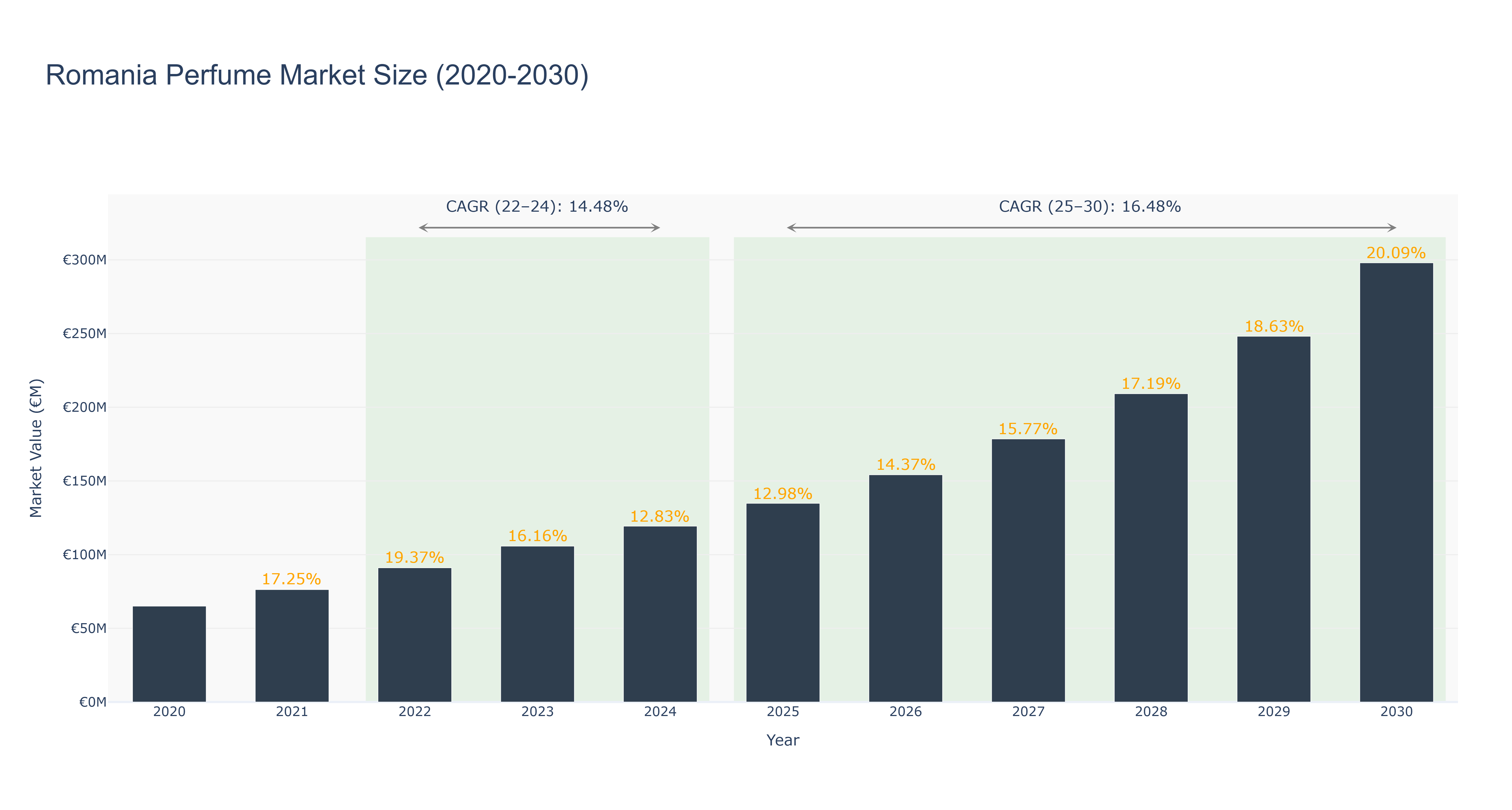
Romania Perfume Market has shown a steady growth trend over the years. The peak market size of €297.99 million is forecasted for 2030, with a CAGR of 20.09%. From 2020 to 2024, the market has grown from €65.05 million to €119.31 million, driven by increasing consumer demand and product innovation. The market experienced a notable spike in growth from 2025 to 2030, with a CAGR of 16.48%, indicating a strong market potential and favorable market conditions. The recent developments in the Romania Perfume Market include collaborations with local influencers for product promotions and expanding distribution channels. Future developments may focus on sustainability initiatives and personalized fragrance experiences to cater to evolving consumer preferences. The market is poised for further expansion, backed by industry drivers such as changing lifestyle trends and rising disposable incomes.
Romania Perfume Market: Production & Trade Performance (2019-2025)
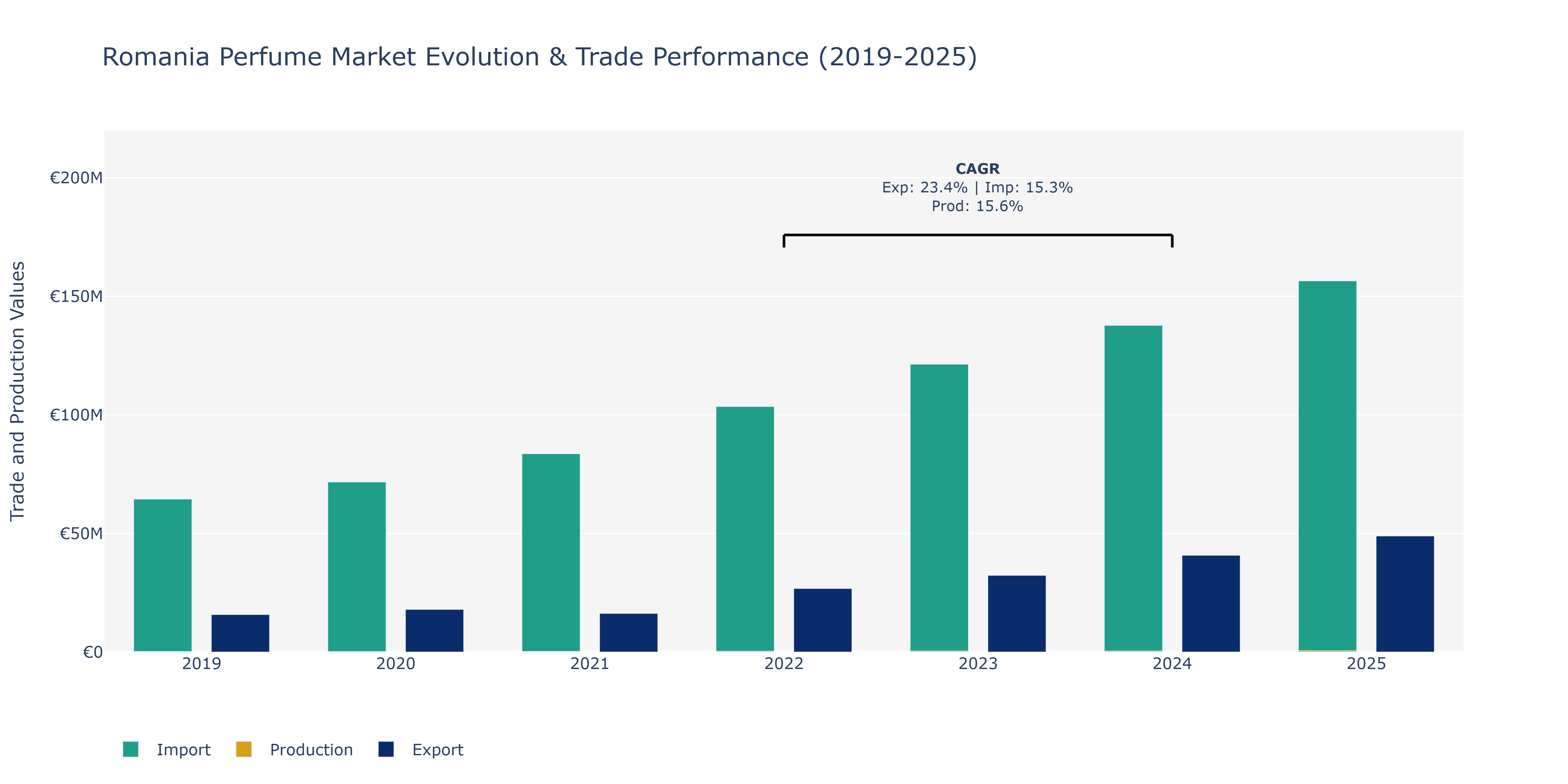
In the Romania Perfume Market, from 2019 to 2025, Exports consistently increased annually, starting at €15.79 million in 2019 and reaching €48.93 million in 2025. This growth can be attributed to increased demand for Romanian perfume products in international markets, as well as strategic marketing efforts by local manufacturers. Imports also showed a steady upward trend, growing from €64.5 million in 2019 to €156.52 million in 2025. The rise in imports could be due to the growing popularity of foreign fragrance brands among Romanian consumers. Production value fluctuated over the years, with a peak in 2025 at €505.70 million. This increase may be linked to investments in manufacturing facilities and innovations in production processes, allowing local manufacturers to expand their product lines and improve product quality to meet both domestic and international demand for Romanian perfumes.
Key Highlights of the Report:
- Romania Perfume Market Outlook
- Market Size of Romania Perfume Market, 2025
- Forecast of Romania Perfume Market, 2032
- Historical Data and Forecast of Romania Perfume Revenues & Volume for the Period 2022-2032F
- Romania Perfume Market Trend Evolution
- Romania Perfume Market Drivers and Challenges
- Romania Perfume Price Trends
- Romania Perfume Porter's Five Forces
- Romania Perfume Industry Life Cycle
- Historical Data and Forecast of Romania Perfume Market Revenues & Volume By Perfume Type for the Period 2022-2032F
- Historical Data and Forecast of Romania Perfume Market Revenues & Volume By Premium Perfume Products for the Period 2022-2032F
- Historical Data and Forecast of Romania Perfume Market Revenues & Volume By Mass Perfume Products for the Period 2022-2032F
- Historical Data and Forecast of Romania Perfume Market Revenues & Volume By Category for the Period 2022-2032F
- Historical Data and Forecast of Romania Perfume Market Revenues & Volume By Female Fragrances for the Period 2022-2032F
- Historical Data and Forecast of Romania Perfume Market Revenues & Volume By Male Fragrances for the Period 2022-2032F
- Historical Data and Forecast of Romania Perfume Market Revenues & Volume By Unisex Fragrances for the Period 2022-2032F
- Romania Perfume Import Export Trade Statistics
- Market Opportunity Assessment By Perfume Type
- Market Opportunity Assessment By Category
- Romania Perfume Top Companies Market Share
- Romania Perfume Competitive Benchmarking By Technical and Operational Parameters
- Romania Perfume Company Profiles
- Romania Perfume Key Strategic Recommendations






































