Romania Tanker Shipping Market Size, Share & Growth Rate
The Romania Tanker Shipping Market was estimated at USD 234 Million in 2025 and is projected to reach USD 307 Million by 2032, growing at a CAGR of 4.0% from 2026 to 2032. This growth trajectory is driven by Romania's strategic location along the Black Sea, enhancing its role in European and international maritime trade. Additionally, increasing demand for environmentally sustainable shipping solutions and advancements in technology are catalyzing market evolution.
Romania Tanker Shipping Market Year-wise Growth Rate and Key Drivers
This graph highlights how the Romania Tanker Shipping Market has steadily grown over the years, supported by major growth factors.
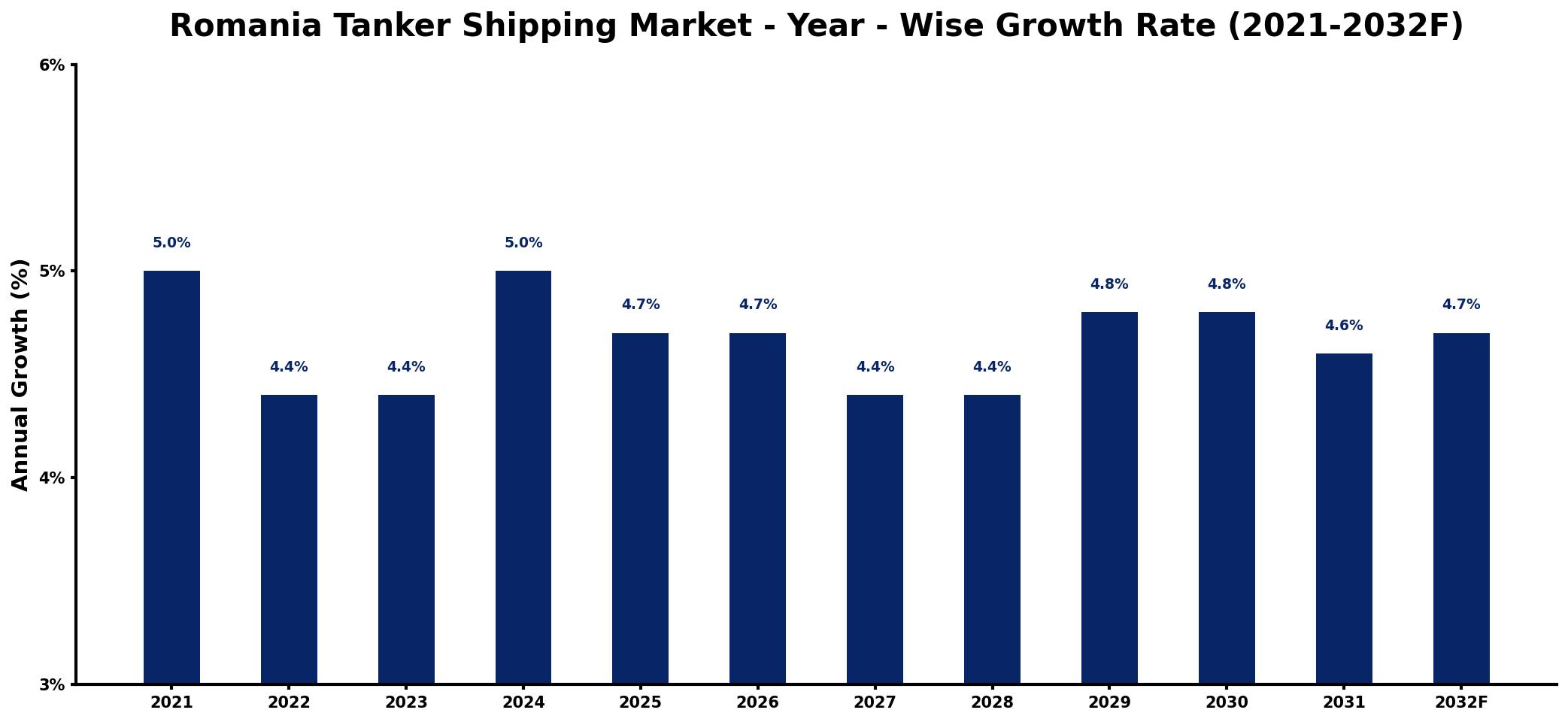
The table below presents the year‑wise growth rates along with the key drivers influencing the market
| Year | Growth Rate | Major Drivers |
| 2021 | 5.0% | Increased demand for energy resources |
| 2022 | 4.4% | Expansion of regional trade agreements |
| 2023 | 4.4% | growing commercial sector adoption |
| 2024 | 5.0% | Rising investments in infrastructure |
| 2025 | 4.7% | Boost in international trade volumes |
| 2026 | 4.7% | Enhanced logistics and transportation networks |
| 2027 | 4.4% | Development of new energy projects |
| 2028 | 4.4% | Increased exploration activities in region |
| 2029 | 4.8% | Growing importance of renewable energy |
| 2030 | 4.8% | Strengthening of global supply chains |
| 2031 | 4.6% | Rising consumer demand for imports |
| 2032 | 4.7% | improved processing technologies adoption |
Note: Market size estimations and growth projections presented in this report are based on 6Wresearch's proprietary forecasting methodology, utilizing the latest available industry data, government publications, and primary research inputs.
Romania Tanker Shipping Market Synopsis
Romania's tanker shipping sector is characterized by the transportation of vital liquid bulk cargoes, including oil, chemicals, and liquefied natural gas. This functionality is vital for supporting the nations economy and meeting the energy demands of its regional partners.
The market operates within a framework of strict regulatory and environmental standards, which shape operational practices and safety protocols. Ongoing enhancements in port infrastructure are expected to bolster shipping efficiency, thereby positioning Romania as a key player within global shipping networks.
Romania Tanker Shipping Market Key Takeaways
- The market is poised for steady growth, driven by its strategic Black Sea location.
- Investment in eco-friendly technologies is becoming essential in response to regulatory pressures.
- Digitalization is transforming operational efficiency in the tanker shipping industry.
- Infrastructure development is crucial for optimizing cargo movement and port operations.
- Increased global trade is generating higher demand for tanker services in Romania.
Evaluation of Restraints in Romania Tanker Shipping Market
Despite its potential, the Romania tanker shipping market faces several constraints. Economic fluctuations can lead to inconsistent demand for shipping services, making it challenging for companies to maintain stability. Additionally, regulatory changes often increase compliance costs and complicate operations, particularly for smaller players. Infrastructure issues such as port congestion also impede efficiency and can delay cargo movement, while rising fuel costs add financial pressure. These factors necessitate astute strategic planning among industry stakeholders.
Romania Tanker Shipping Market Trends
Currently, the industry is witnessing a marked shift toward sustainable shipping solutions, including investments in alternative fuels and innovative emissions reduction technologies. Digital transformation is rapidly gaining traction, with shipping companies leveraging IoT and data analytics to enhance decision-making processes and operational safety. Furthermore, the industry trend toward larger, more efficient tanker vessels underscores the need for cost-effectiveness and better capacity management amidst growing trade volumes.
Romania Tanker Shipping Market Opportunities
The Romania tanker shipping market presents ample investment opportunities, particularly in the expanding oil and gas sector. The countrys advantageous geographical positioning along crucial trade routes enhances its appeal for international shipping. Growing energy demands, especially within Eastern Europe, further emphasize the need for reliable and efficient tanker shipping services. Companies have the opportunity to capitalize on the modernized fleet requirements and the shift towards eco-friendly practices, thereby aligning with global industry standards.
Government Initiatives in the Romania Tanker Shipping Market
The Romanian government actively supports the tanker shipping sector through various initiatives aimed at regulatory compliance and operational efficiency. Policies have been instituted to align with international maritime standards, particularly concerning safety and environmental protection. Furthermore, the government provides incentives, such as tax breaks, to encourage investment in modern fleet technologies and port infrastructure. These initiatives create a conducive environment for growth while promoting sustainable practices in the shipping industry.
Future Insights of the Romania Tanker Shipping Market
Looking ahead, the Romania Tanker Shipping Market is set for a promising future, with anticipated growth driven by increasing energy transportation demands. Strategic investments in port modernization and fleet upgrades are expected to enhance operational efficiencies and attract more business opportunities. However, stakeholders must remain vigilant regarding fluctuating oil prices and evolving regulatory landscapes, which could impact market dynamics. Overall, adaptability and innovation will be key for companies aiming to thrive in this evolving sector.
Romania Tanker Shipping Market Latest Developments (2025 - 2026)
Recent developments in the Romania tanker shipping market reveal a focus on sustainability and innovation. Several companies are reporting advancements in green technologies, contributing to enhanced fleet efficiency and reduced emissions. Additionally, there has been a notable push towards enhancing port infrastructure to improve turnaround times and overall operational flow, accommodating the anticipated increase in shipping volumes.
Romania Tanker Shipping Market - Key Attractiveness of the Report
- 10 Years of Market Numbers
- Historical Data Starting from 2022 to 2025
- Base Year: 2025
- Forecast Data until 2032
- Key Performance Indicators Impacting the Market
- Major Upcoming Developments and Projects
Key Highlights of the Report:
- Romania Tanker Shipping Market Outlook
- Market Size of Romania Tanker Shipping Market, 2025
- Forecast of Romania Tanker Shipping Market, 2032
- Historical Data and Forecast of Romania Tanker Shipping Revenues & Volume for the Period 2022-2032F
- Romania Tanker Shipping Market Trend Evolution
- Romania Tanker Shipping Market Drivers and Challenges
- Romania Tanker Shipping Price Trends
- Romania Tanker Shipping Porter's Five Forces
- Romania Tanker Shipping Industry Life Cycle
- Historical Data and Forecast of Romania Tanker Shipping Market Revenues & Volume By Tanker Type for the Period 2022-2032F
- Historical Data and Forecast of Romania Tanker Shipping Market Revenues & Volume By Oil Tankers for the Period 2022-2032F
- Historical Data and Forecast of Romania Tanker Shipping Market Revenues & Volume By Liquid Gas Tankers for the Period 2022-2032F
- Romania Tanker Shipping Import Export Trade Statistics
- Market Opportunity Assessment By Tanker Type
- Romania Tanker Shipping Top Companies Market Share
- Romania Tanker Shipping Competitive Benchmarking By Technical and Operational Parameters
- Romania Tanker Shipping Company Profiles
- Romania Tanker Shipping Key Strategic Recommendations






































