Russia Mobile Application Security Market Size & Growth Rate (2026-2032)
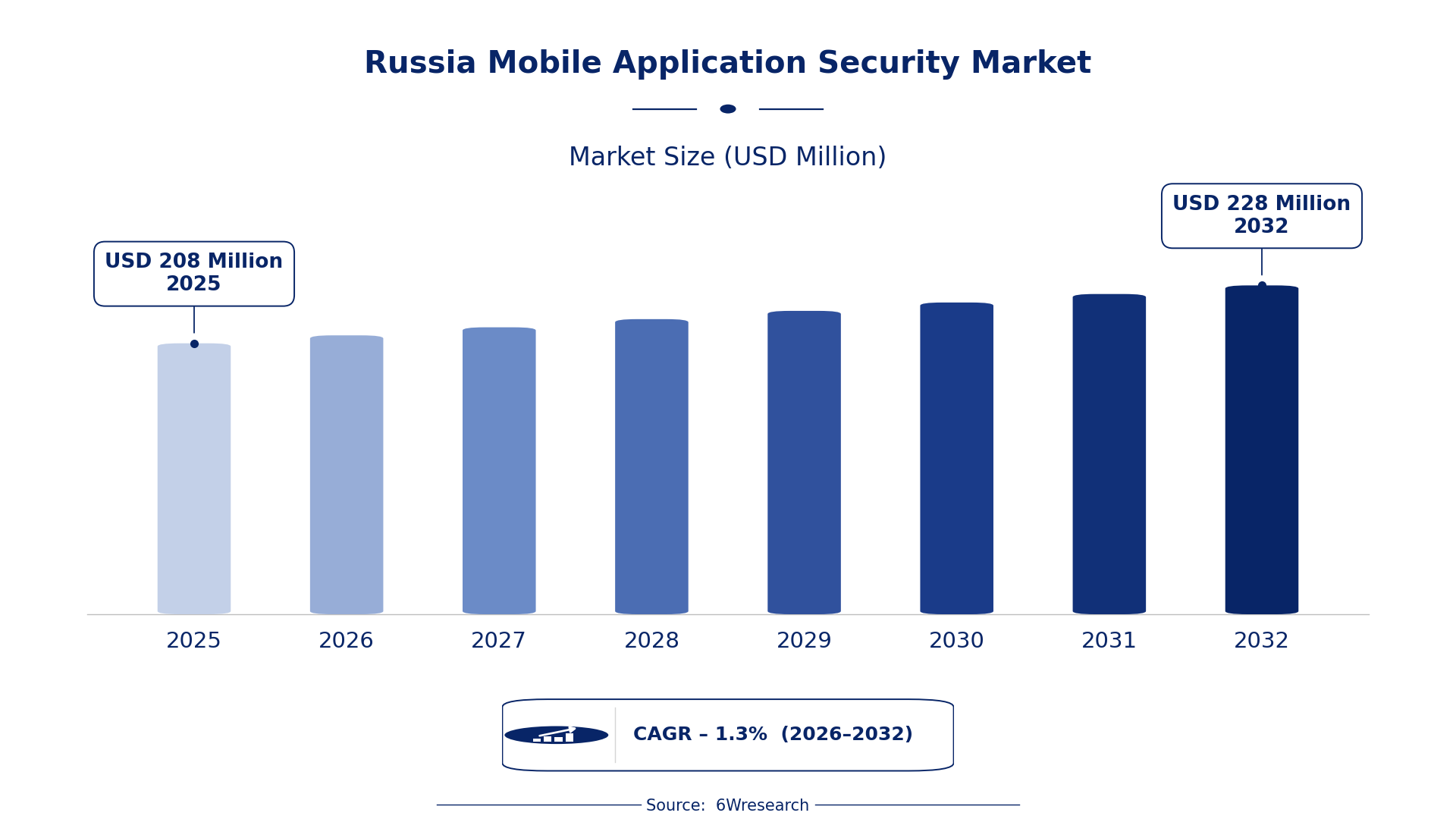
The Russia Mobile Application Security Market was estimated at USD 208 Million in 2025 and is projected to reach USD 228 Million by 2032, growing at a CAGR of 1.3% from 2026 to 2032.
Russia Mobile Application Security Market Synopsis
The rising number of cyber threats is the most influential factor shaping the Russia Mobile Application Security Market today. As businesses in Russia expand their digital footprint, the need for secure mobile applications has never been more critical.
With mobile banking and e-commerce gaining traction, there is a growing awareness among both consumers and enterprises about the necessity of safeguarding mobile applications. This has led to an upsurge in demand for security measures tailored to protect sensitive data.
Russia Mobile Application Security Market Year-wise Growth Rate and Key Drivers
This graph illustrates the annual growth rates of the Russia Mobile Application Security Market from 2021 to 2032, highlighting a steady upward trajectory and projected expansion over the forecast period.
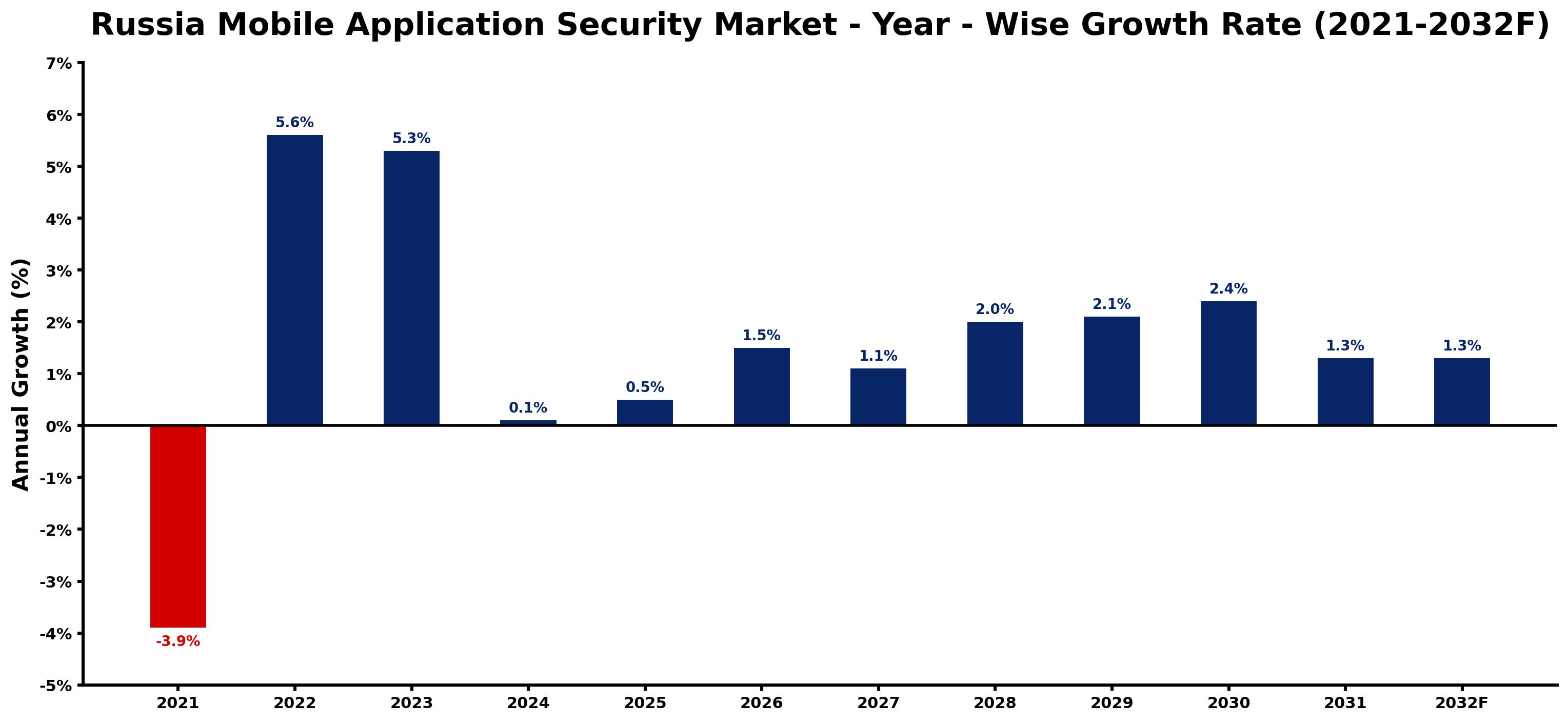
The table below presents the year‑wise growth rates along with the key drivers influencing the market
| Year | Growth Rate | Major Drivers |
| 2021 | -3.9% | Decreased investment due to Russia-Ukraine conflict sanctions. |
| 2022 | 5.6% | Increased demand for mobile apps post-COVID-19 restrictions. |
| 2023 | 5.3% | Regulatory pressure from Roskomnadzor for app security compliance. |
| 2024 | 0.1% | Emergence of local fintech apps requiring enhanced security. |
| 2025 | 0.5% | Government initiatives promoting cybersecurity in digital services. |
| 2026 | 1.5% | Growing prevalence of mobile commerce driving security needs. |
| 2027 | 1.1% | Demand for secure apps amid rising cyber threats. |
| 2028 | 2.0% | Surge in mobile gaming requiring robust security measures. |
| 2029 | 2.1% | Adoption of biometric authentication in mobile applications. |
| 2030 | 2.4% | Increasing privacy laws enhancing mobile app security focus. |
| 2031 | 1.3% | Growth of e-government services emphasizing secure access. |
| 2032 | 1.3% | Rising consumer awareness of mobile application vulnerabilities. |
Note: Market size estimations and growth projections presented in this report are based on 6Wresearch's proprietary forecasting methodology, utilizing the latest available industry data, government publications, and primary research inputs.
Russia Mobile Application Security Market Key Takeaways
Below are some of the specific key takeaways from the market, including:
- The market is witnessing increased investments in mobile application security solutions driven by rising cyber threats.
- Companies are prioritizing data encryption and secure coding practices to mitigate vulnerabilities.
- Cloud-based solutions and machine learning are becoming essential for real-time threat detection and response.
- The Russian government has implemented several regulations focused on data protection in mobile applications.
- Opportunities exist for innovative security solutions that cater to the unique needs of local businesses.
Evaluation of Restraints in Russia Mobile Application Security Market
Despite the market's growth potential, several obstacles hinder its progress. The sophistication of cyber threats is evolving rapidly, often outpacing the security measures implemented by developers. Additionally, there remains a gap in awareness among developers and users regarding best practices in mobile security, resulting in vulnerabilities. The regulatory landscape in Russia can also be inconsistent, complicating compliance for businesses seeking to enhance their application security. The prevalence of pirated apps further complicates matters, exposing users to potential data breaches and malware.
Russia Mobile Application Security Market Trends
The market is currently trending towards comprehensive security solutions that encompass app shielding, code obfuscation, and advanced threat detection capabilities. Companies are increasingly focusing on integrating secure authentication methods and real-time monitoring to mitigate risks effectively. on top of that, as mobile applications in sectors such as banking and e-commerce proliferate, the emphasis on secure coding practices and frequent security audits has intensified. The adoption of cloud-based technologies and AI-driven analytics is expected to enhance threat identification and response.
Russia Mobile Application Security Market Opportunities
The potential for growth in the Russia Mobile Application Security Market is robust, driven by the heightened concern over cybersecurity among consumers and businesses. Investment opportunities abound in creating software solutions that specifically address the unique challenges faced by Russian enterprises. Innovations in biometric authentication and encryption technologies stand out as attractive areas for development. As organizations increasingly seek to secure their mobile applications, there is a strong demand for tailored services that meet local market needs.
Government Initiatives in the Russia Mobile Application Security Market
Government policies are actively shaping the Russia Mobile Application Security Market, emphasizing a stringent approach to data protection and cybersecurity. These regulations ensure that mobile application developers prioritize the security of user data and comply with national standards, which is crucial for building trust among consumers. As the digital economy expands, government initiatives are becoming pivotal in establishing a secure environment for mobile applications.
- A recently completed regulatory framework under the Federal Law on Personal Data mandates that personal data of Russian citizens be stored within the country.
- A current initiative involves the rollout of the Information Security Doctrine aimed at strengthening the protection of critical information infrastructure.
- Plans are underway for a public-private partnership designed to enhance mobile security infrastructure by 2027.
- Regulatory bodies are actively updating policies to adapt to the latest cyber threats, enhancing the enforcement of data protection measures.
- The Federal Security Service (FSB) is currently reviewing compliance mechanisms for encryption key management in mobile applications.
Future Insights of the Russia Mobile Application Security Market
As we look toward 2026-2032, the Russia Mobile Application Security Market is poised for notable expansion. The increasing proliferation of mobile applications combined with the escalating complexity of cyber threats will drive demand for innovative security solutions. Organizations will likely invest heavily in advanced technologies to counteract these threats effectively. Additionally, the regulatory environment will continue to evolve, pushing businesses to prioritize security and compliance, ultimately fostering growth in this sector.
Russia Mobile Application Security Market Latest Developments
In the past year, the Russia Mobile Application Security Market has experienced a notable surge in activity, with various initiatives aimed at bolstering cybersecurity measures. As businesses adapt to the increasing number of cyber threats, many have begun implementing advanced security solutions and protocols to protect sensitive data.
- A major technology vendor launched a cutting-edge mobile application security suite in late 2025, providing enhanced features for threat detection.
- Ongoing partnerships between cybersecurity firms and local enterprises are focused on developing tailored security frameworks for the mobile application sector.
- A regional government initiative commenced in early 2025 to educate developers about secure coding practices, and it remains underway.
- A rollout is planned for mid-2026 that aims to integrate machine learning capabilities into existing mobile application security solutions.
- A collaboration between several local startups is currently exploring biometric authentication solutions to enhance mobile app security by the end of 2026.
Russia Mobile Application Security Market - Key Attractiveness of the Report
- 10 Years of Market Numbers
- Historical Data Starting from 2022 to 2025
- Base Year: 2025
- Forecast Data until 2032
- Key Performance Indicators Impacting the Market
- Major Upcoming Developments and Projects
Key Highlights of the Report:
- Russia Mobile Application Security Market Outlook
- Market Size of Russia Mobile Application Security Market, 2025
- Forecast of Russia Mobile Application Security Market, 2032
- Historical Data and Forecast of Russia Mobile Application Security Revenues & Volume for the Period 2022-2032F
- Russia Mobile Application Security Market Trend Evolution
- Russia Mobile Application Security Market Drivers and Challenges
- Russia Mobile Application Security Price Trends
- Russia Mobile Application Security Porter's Five Forces
- Russia Mobile Application Security Industry Life Cycle
- Historical Data and Forecast of Russia Mobile Application Security Market Revenues & Volume By Solution for the Period 2022-2032F
- Historical Data and Forecast of Russia Mobile Application Security Market Revenues & Volume By Antivirus & Antitheft for the Period 2022-2032F
- Historical Data and Forecast of Russia Mobile Application Security Market Revenues & Volume By Data Recovery for the Period 2022-2032F
- Historical Data and Forecast of Russia Mobile Application Security Market Revenues & Volume By Others for the Period 2022-2032F
- Historical Data and Forecast of Russia Mobile Application Security Market Revenues & Volume By Deployment Type for the Period 2022-2032F
- Historical Data and Forecast of Russia Mobile Application Security Market Revenues & Volume By Cloud for the Period 2022-2032F
- Historical Data and Forecast of Russia Mobile Application Security Market Revenues & Volume By On Premise for the Period 2022-2032F
- Historical Data and Forecast of Russia Mobile Application Security Market Revenues & Volume By Industry Vertical for the Period 2022-2032F
- Historical Data and Forecast of Russia Mobile Application Security Market Revenues & Volume By BFSI for the Period 2022-2032F
- Historical Data and Forecast of Russia Mobile Application Security Market Revenues & Volume By Healthcare for the Period 2022-2032F
- Historical Data and Forecast of Russia Mobile Application Security Market Revenues & Volume By IT & Telecom for the Period 2022-2032F
- Historical Data and Forecast of Russia Mobile Application Security Market Revenues & Volume By Manufacturing for the Period 2022-2032F
- Historical Data and Forecast of Russia Mobile Application Security Market Revenues & Volume By Government and Public Sector for the Period 2022-2032F
- Historical Data and Forecast of Russia Mobile Application Security Market Revenues & Volume By Retail & E-commerce for the Period 2022-2032F
- Historical Data and Forecast of Russia Mobile Application Security Market Revenues & Volume By Others for the Period 2022-2032F
- Russia Mobile Application Security Import Export Trade Statistics
- Market Opportunity Assessment By Solution
- Market Opportunity Assessment By Deployment Type
- Market Opportunity Assessment By Industry Vertical
- Russia Mobile Application Security Top Companies Market Share
- Russia Mobile Application Security Competitive Benchmarking By Technical and Operational Parameters
- Russia Mobile Application Security Company Profiles
- Russia Mobile Application Security Key Strategic Recommendations






































