Russia Version Control Systems Market Size & Growth Rate (2026-2032)
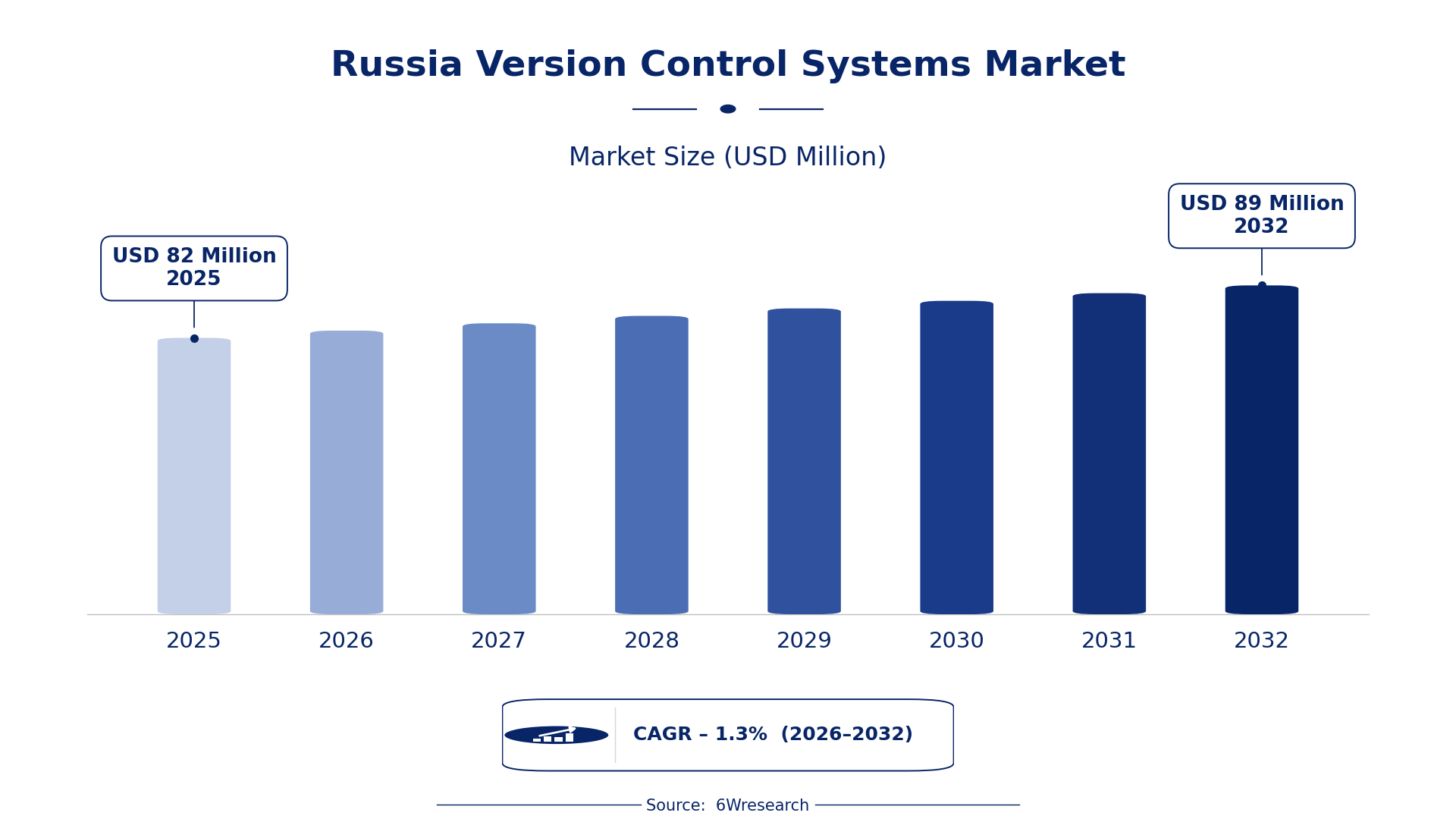
The Russia Version Control Systems Market was estimated at USD 82 Million in 2025 and is projected to reach USD 89 Million by 2032, growing at a CAGR of 1.3% from 2026 to 2032.
Russia Version Control Systems Market Synopsis
The Russia Version Control Systems Market is on a steady upward trajectory, fueled by the increasing recognition of software development practices among local businesses. Organizations are increasingly aware of the critical role that efficient code management plays in enhancing collaboration and productivity, which is driving demand for these systems.
As the software development sector in Russia matures, both cloud-based and on-premise solutions are gaining traction. This evolution is not just about basic code management; companies are looking for integrated solutions that work harmoniously with other development tools, indicating a trend towards comprehensive software ecosystems.
Russia Version Control Systems Market Year-wise Growth Rate and Key Drivers
This graph illustrates the annual growth rates of the Russia Version Control Systems Market from 2021 to 2032, highlighting a steady upward trajectory and projected expansion over the forecast period.
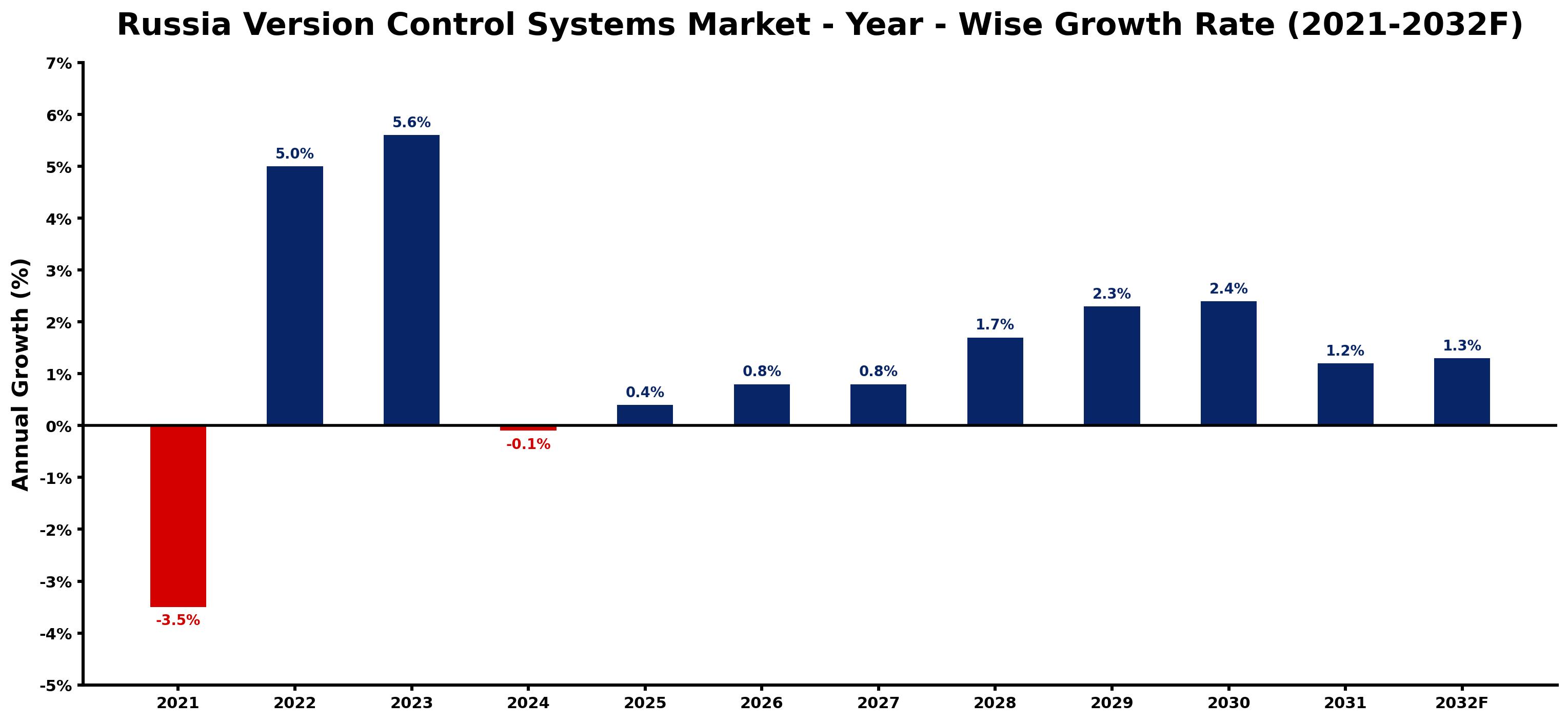
The table below presents the year‑wise growth rates along with the key drivers influencing the market
| Year | Growth Rate | Major Drivers |
| 2021 | -3.5% | Exodus of Western software firms post sanctions |
| 2022 | 5.0% | Increased demand for software localization initiatives in Russia. |
| 2023 | 5.6% | Rise of open-source projects supported by Russian government funding. |
| 2024 | -0.1% | Emerging local tools lack essential integration features |
| 2025 | 0.4% | Growing interest in domestic software solutions post-sanctions. |
| 2026 | 0.8% | Emergence of tech startups necessitating robust version control. |
| 2027 | 0.8% | Government push for IT sector self-sufficiency driving software tools. |
| 2028 | 1.7% | Enhanced cybersecurity regulations incentivizing version control adoption. |
| 2029 | 2.3% | Booming remote work culture boosting collaboration tool usage. |
| 2030 | 2.4% | Strengthening data privacy laws prompting system upgrades. |
| 2031 | 1.2% | Increased investment in IT infrastructure enhancing software development. |
| 2032 | 1.3% | Continued adaptation of Agile methodologies within local enterprises. |
Note: Market size estimations and growth projections presented in this report are based on 6Wresearch's proprietary forecasting methodology, utilizing the latest available industry data, government publications, and primary research inputs.
Russia Version Control Systems Market Key Takeaways
Below are some of the specific key takeaways from the market, including:
- The market is witnessing a marked shift towards cloud-based version control solutions, driven by remote collaboration needs.
- Integration of artificial intelligence into version control systems is becoming increasingly common, enhancing automation and efficiency.
- Open-source platforms like Git continue to dominate due to their flexibility and strong community support.
- Growing digital transformation initiatives are propelling the demand for sophisticated version control systems across various industries.
- Compliance with local data protection laws remains a critical factor influencing market operations.
Evaluation of Restraints in Russia Version Control Systems Market
Despite the optimistic outlook, several factors are restraining growth in the Russia Version Control Systems Market. Limited awareness, particularly among small to medium-sized enterprises, hampers broader adoption. Many organizations still do not fully understand the advantages that version control systems can bring to their development processes.
Additionally, concerns around data security and compliance with stringent local regulations create hesitation. Integration challenges with existing workflows can further complicate adoption efforts, especially for firms with legacy systems. The shortage of skilled professionals capable of implementing these systems effectively adds another layer of complexity, thereby slowing down market penetration.
Russia Version Control Systems Market Trends
The market is witnessing a pronounced trend toward cloud-based solutions, where organizations are increasingly opting for hosted platforms that facilitate remote work. The need for enhanced security and scalability in development environments is driving this shift.
on top of that, the integration of AI and machine learning capabilities into version control systems is on the rise, aiming to automate repetitive tasks and improve code quality. This trend reflects a broader movement within the tech industry towards smarter, more efficient development processes.
Russia Version Control Systems Market Opportunities
The Russia Version Control Systems Market presents a wealth of opportunities for investors and businesses alike. With a growing emphasis on efficient code management, there is a clear demand for tailored solutions that address the specific needs of various sectors.
Investors can capitalize on the rising interest in cloud-based repositories and automated workflows, as businesses seek to modernize their operations. Additionally, expanding marketing and distribution channels can help reach a broader audience, particularly in under-served regions of Russia.
Government Initiatives in the Russia Version Control Systems Market
Government policies are shaping the Russia Version Control Systems Market significantly, focusing on enhancing data security and promoting local technologies. Regulatory measures emphasize the necessity for companies to comply with stringent data protection laws, including mandates for local data storage. These initiatives are crucial for fostering a secure tech environment in Russia.
- A national data protection regulation launched in early 2025 mandates that user data must be stored within Russian borders.
- Currently ongoing is a public-private initiative aimed at enhancing local technology capabilities, encouraging the development of domestic version control solutions.
- A planned program set to launch in 2027 aims to provide grants for small businesses adopting version control systems to improve their software development processes.
- Regulatory frameworks introduced in 2025 are focusing on increasing transparency and security standards in software development.
Future Insights of the Russia Version Control Systems Market
Looking ahead to 2026-2032, the Russia Version Control Systems Market is positioned for steady growth. As software development practices continue to mature, the need for sophisticated version control solutions will only intensify. Companies that can offer integrated, AI-enabled systems are likely to gain a competitive edge.
The increasing prevalence of tech startups and software development firms will further fuel market demand. As organizations prioritize efficient collaboration and project management, the future looks promising for version control systems in Russia.
Russia Version Control Systems Market Latest Developments
Over the past year, the Russia Version Control Systems Market has seen a flurry of activity, reflecting the increasing importance of efficient code management. The trend towards cloud solutions is becoming more pronounced, with businesses recognizing the value of remote collaboration tools.
- A major technology vendor launched a new cloud-based version control platform in Q1 2025, aimed at enhancing collaboration among distributed teams.
- A leading regional operator is currently upgrading its version control systems to integrate AI capabilities, expected to complete by late 2025.
- An initiative that began in mid-2025 aims to educate small businesses on the benefits of version control systems and how to implement them effectively.
- A partnership between two major software firms was announced in early 2025, focusing on developing integrated tools that connect version control with project management solutions.
Russia Version Control Systems Market - Key Attractiveness of the Report
- 10 Years of Market Numbers
- Historical Data Starting from 2022 to 2025
- Base Year: 2025
- Forecast Data until 2032
- Key Performance Indicators Impacting the Market
- Major Upcoming Developments and Projects
Key Highlights of the Report:
- Russia Version Control Systems Market Outlook
- Market Size of Russia Version Control Systems Market, 2025
- Forecast of Russia Version Control Systems Market, 2032
- Historical Data and Forecast of Russia Version Control Systems Revenues & Volume for the Period 2022-2032F
- Russia Version Control Systems Market Trend Evolution
- Russia Version Control Systems Market Drivers and Challenges
- Russia Version Control Systems Price Trends
- Russia Version Control Systems Porter's Five Forces
- Russia Version Control Systems Industry Life Cycle
- Historical Data and Forecast of Russia Version Control Systems Market Revenues & Volume By Type for the Period 2022-2032F
- Historical Data and Forecast of Russia Version Control Systems Market Revenues & Volume By Centralized Version Control Systems & Distributed Version Control Systems for the Period 2022-2032F
- Historical Data and Forecast of Russia Version Control Systems Market Revenues & Volume By Vertical for the Period 2022-2032F
- Historical Data and Forecast of Russia Version Control Systems Market Revenues & Volume By IT & Telecom for the Period 2022-2032F
- Historical Data and Forecast of Russia Version Control Systems Market Revenues & Volume By BFSI for the Period 2022-2032F
- Historical Data and Forecast of Russia Version Control Systems Market Revenues & Volume By Deployment Type for the Period 2022-2032F
- Historical Data and Forecast of Russia Version Control Systems Market Revenues & Volume By Cloud & On-Premises for the Period 2022-2032F
- Historical Data and Forecast of Russia Version Control Systems Market Revenues & Volume By Organization Size for the Period 2022-2032F
- Historical Data and Forecast of Russia Version Control Systems Market Revenues & Volume By Small and Medium-sized Enterprises (SMEs) for the Period 2022-2032F
- Historical Data and Forecast of Russia Version Control Systems Market Revenues & Volume By Large enterprises for the Period 2022-2032F
- Russia Version Control Systems Import Export Trade Statistics
- Market Opportunity Assessment By Type
- Market Opportunity Assessment By Vertical
- Market Opportunity Assessment By Deployment Type
- Market Opportunity Assessment By Organization Size
- Russia Version Control Systems Top Companies Market Share
- Russia Version Control Systems Competitive Benchmarking By Technical and Operational Parameters
- Russia Version Control Systems Company Profiles
- Russia Version Control Systems Key Strategic Recommendations






































