Russia Wine Market Growth Rate
According to 6Wresearch internal database and industry insights, the Russia Wine Market is projected to grow at a compound annual growth rate (CAGR) of 5.1% during the forecast period (2026–2032).
Russia Wine Market Year-wise Growth Rate and Key Drivers
This graph highlights how the Russia Wine Market has steadily grown over the past five years, supported by major growth factors.
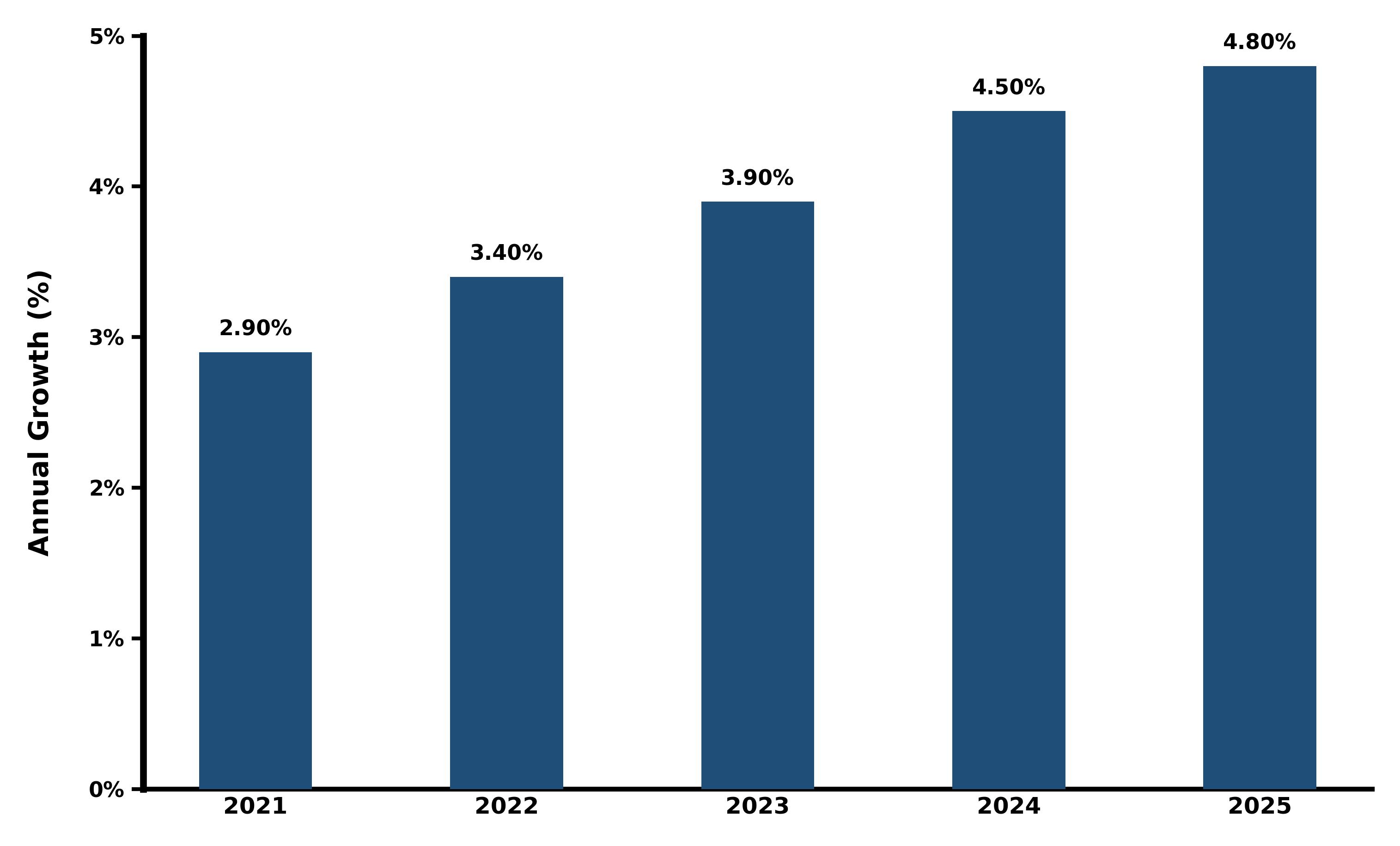
The table below presents the year‑wise growth rates along with the key drivers influencing the market
| Years | Estimated Annual Growth (%) | Growth Drivers |
| 2021 | 2.9 | Gradual recovery of alcoholic beverage consumption and reopening of hospitality outlets. |
| 2022 | 3.4 | Growing need for wine over spirits among urban consumers. |
| 2023 | 3.9 | Surge in domestic wine production and enhanced retail availability. |
| 2024 | 4.5 | Development of advanced retail formats and growth of premium wine segments. |
| 2025 | 4.8 | Government support for domestic wineries and increasing wine tourism programs. |
Topics Covered in the Russia Wine Market Report
The Russia Wine Market report thoroughly covers the market by Product Types, Colors, and Distribution Channel. The report provides a detailed analysis of ongoing market trends, opportunities/high-growth areas, and market drivers that will help stakeholders devise and align strategies according to current and future market dynamics.
Russia Wine Market Highlights
| Report Name | Russia Wine Market |
| Forecast period | 2026–2032 |
| CAGR | 5.1% |
| Growing Sector | Food & Beverage |
Russia Wine Market Synopsis
The Russia Wine Industry is experiencing steady growth driven by increasing consumer inclination toward wine, rising disposable income, and expanding urban lifestyles. Rising domestic wine production, supported by vineyard development and winery expansion, is strengthening market supply. Improved availability via organized retail and online channels, along with growing wine consumption during social and dining occasions, is supporting market growth. Additionally, government initiatives encouraging local wine production and reducing reliance on imports are further improving the Russia Wine Market.
Evaluation of Growth Drivers in the Russia Wine Market
Below are some prominent drivers and their influence on the Russia Wine Market dynamics:
| Drivers | Primary Segments Affected | Why it Matters |
| Shift in Consumer Preferences | By Product Types (All segments) | Encourages higher wine consumption compared to spirits. |
| Growth of Domestic Wineries | By Product Types (Still, Sparkling Wine) | Strengthens domestic supply and lowers import dependency. |
| Expansion of Modern Retail | By Distribution Channel (Offline, Online) | Provides better accessibility and visibility of wine products. |
| Rising Urbanization | By Colors (Red, White Wine) | Boosts the need for premium, lifestyle-driven wine offerings. |
The Russia Wine Market Size is projected to grow at a CAGR of 5.1% during the forecast period (2026–2032). Market growth is supported by growing consumption among younger demographics, increasing preference for premium and domestically produced wines, and expanding distribution through modern retail formats. Government-backed initiatives supporting vineyard development, winery modernization, and wine tourism are strengthening market conditions. Growing penetration of online alcohol retail platforms is improving consumer access and supporting Russia Wine Market Growth. In addition, better product variety, improved branding by domestic producers, and greater availability across urban centers are contributing to sustained demand and long-term market expansion. Moreover, transitioning lifestyle trends are further accelerating wine incorporation.
Evaluation of Restraints in the Russia Wine Market
Below are some prominent restraints and their influence on the Russia Wine Market dynamics:
| Restraints | Primary Segments Affected | What this Means |
| Strict Alcohol Regulations | By Distribution Channel | Hinders marketing activities while decreasing flexibility in promotional and sales efforts. |
| High Import Duties | By Product Types | Affordability of wine is influenced by surging prices of imported wine products. |
| Supply Chain Constraints | By Distribution Channel | Limits consistent access to wine products in remote locations. |
| Price Sensitivity | By Colors | Restricts demand growth for premium and higher-priced wine categories. |
Russia Wine Market Challenges
The Russia Wine Market comes across challenges such as strict regulatory controls, pricing sensitivity among consumers, and logistical limitations across regions. High import duties impact the competitiveness of imported wines, while local manufacturers are required to maintain product quality and brand consistency. Keeping pace with changing consumer needs and maintaining efficient distribution networks remain critical challenges. In addition to this, regulatory compliance and rising costs add further intensify pressure on market participants.
Russia Wine Market Trends
Several key trends are shaping the growth of the Russia Wine Market:
- Growth of Domestic Wine Consumption: Domestic wineries are growing with consumers, choosing from locally produced wines.
- Premiumization of Wine Products: Among urban consumers there is a high demand for premium and specialty wines.
- Expansion of Online Wine Sales: Wine purchase has become convenient with rising digital platforms.
- Wine Tourism Development: Rising participation in vineyard tours is helping improve visibility and consumer engagement for wine brands.
Investment Opportunities in the Russia Wine Market
Some notable investment opportunities include:
- Domestic Winery Expansion: Market is anticipated to witness strong growth with rising vineyard acreage and winery capacity.
- Premium Wine Production: Rise in the consumption of quality wine is supporting growth in the premium wine category.
- Online Distribution Platforms: Rise of digital alcohol retail is providing new sales channels.
- Wine Tourism Infrastructure: Long-term brand growth is bolstered with investments in tasting rooms and tourism facilities.
Top 5 Leading Players in the Russia Wine Market
Some leading players operating in the Russia Wine Market include:
1. Abrau-Durso
| Company Name | Abrau-Durso |
|---|---|
| Established Year | 1870 |
| Headquarters | Krasnodar Krai, Russia |
| Official Website | Click Here |
Abrau-Durso is a leading Russian sparkling wine producer known for premium domestic wine offerings.
2. Fanagoria
| Company Name | Fanagoria |
|---|---|
| Established Year | 1957 |
| Headquarters | Krasnodar Krai, Russia |
| Official Website | Click Here |
Fanagoria specializes in still and sparkling wines with a strong focus on domestic vineyards.
3. Kuban-Vino
| Company Name | Kuban-Vino |
|---|---|
| Established Year | 1956 |
| Headquarters | Krasnodar Krai, Russia |
| Official Website | Click Here |
Kuban-Vino produces a wide range of wines catering to mass and premium segments.
4. Chateau Tamagne
| Company Name | Chateau Tamagne |
|---|---|
| Established Year | 2004 |
| Headquarters | Krasnodar Krai, Russia |
| Official Website | Click Here |
Chateau Tamagne focuses on modern winemaking techniques and premium wine production.
5. Inkerman Winery
| Company Name | Inkerman Winery |
|---|---|
| Established Year | 1961 |
| Headquarters | Sevastopol, Russia |
| Official Website | Click Here |
Inkerman Winery is known for its quality still wines and extensive cellar aging practices.
Government Regulations Introduced in the Russia Wine Market
According to Russian government data, initiatives such as the State Program for Viticulture Development, Support Scheme for Domestic Wineries, and Wine Tourism Promotion Program are supporting market growth. Government policies emphasize subsidizing vineyard expansion, providing tax advantages to domestic wine producers, and implementing regulations that promote locally produced wines in retail markets. Along with this, investments in advancing wineries and supporting regional wine branding are contributing to stronger domestic output and improved competitiveness.
Future Insights of the Russia Wine Market
The Russia Wine Market Share is anticipated to grow steadily, supported by rising domestic wine production, increasing consumption of premium wine varieties, and the expansion of online sales channels. Government concentration on strengthening local wineries, promoting wine tourism, and improving distribution efficiency will remain key growth drivers. Along with this, growing consumer awareness, altering lifestyle preferences, and wider availability of quality domestic wines will further support sustained market expansion in the coming years.
Market Segmentation Analysis
The report offers a comprehensive study of the following market segments and their leading categories:
By Product Types – Still Wine Dominates the Market
According to Rashika, Senior Research Analyst at 6Wresearch, Still Wine holds a leading position in the market due to its everyday consumption and popularity during social events. Its cost-effectiveness, diverse product variety, and easy accessibility across retail outlets generate its need in the market.
By Colors – Red Wine Dominates the Market
Red Wine dominates the market due to consumer belief in its health benefits, rich flavor profile, and strong preference among traditional wine drinkers. Its strong retail presence and compatibility with local cuisine continue to propel its requirement.
By Distribution Channel – Offline Channels Dominate the Market
Due to the strong presence of supermarkets, specialty wine stores, and licensed retail outlets offering a wide range of wine products, offline channels will dominate the market. These channels also allow consumers to compare brands, receive in-store guidance, and make informed purchasing decisions, further supporting their dominance.
Key Attractiveness of the Report
- 10 Years of Market Numbers
- Historical Data Starting from 2022 to 2025
- Base Year: 2025
- Forecast Data until 2032
- Key Performance Indicators Impacting the Market
- Major Upcoming Developments and Projects
Key Highlights of the Report:
- Russia Wine Market Outlook
- Market Size of Russia Wine Market, 2025
- Forecast of Russia Wine Market, 2032
- Historical Data and Forecast of Russia Wine Revenues & Volume for the Period 2022 - 2032
- Russia Wine Market Trend Evolution
- Russia Wine Market Drivers and Challenges
- Russia Wine Price Trends
- Russia Wine Porter's Five Forces
- Russia Wine Industry Life Cycle
- Historical Data and Forecast of Russia Wine Market Revenues & Volume By Product Types for the Period 2022 - 2032
- Historical Data and Forecast of Russia Wine Market Revenues & Volume By Still Wine for the Period 2022 - 2032
- Historical Data and Forecast of Russia Wine Market Revenues & Volume By Sparkling Wine for the Period 2022 - 2032
- Historical Data and Forecast of Russia Wine Market Revenues & Volume By Dessert Wine for the Period 2022 - 2032
- Historical Data and Forecast of Russia Wine Market Revenues & Volume By Fortified Wine for the Period 2022 - 2032
- Historical Data and Forecast of Russia Wine Market Revenues & Volume By Colors for the Period 2022 - 2032
- Historical Data and Forecast of Russia Wine Market Revenues & Volume By Red Wine for the Period 2022 - 2032
- Historical Data and Forecast of Russia Wine Market Revenues & Volume By Rose Wine for the Period 2022 - 2032
- Historical Data and Forecast of Russia Wine Market Revenues & Volume By White Wine for the Period 2022 - 2032
- Historical Data and Forecast of Russia Wine Market Revenues & Volume By Other Colors for the Period 2022 - 2032
- Historical Data and Forecast of Russia Wine Market Revenues & Volume By Distribution Channel for the Period 2022 - 2032
- Historical Data and Forecast of Russia Wine Market Revenues & Volume By Offline for the Period 2022 - 2032
- Historical Data and Forecast of Russia Wine Market Revenues & Volume By Online for the Period 2022 - 2032
- Russia Wine Import Export Trade Statistics
- Market Opportunity Assessment By Product Types
- Market Opportunity Assessment By Colors
- Market Opportunity Assessment By Distribution Channel
- Russia Wine Top Companies Market Share
- Russia Wine Competitive Benchmarking By Technical and Operational Parameters
- Russia Wine Company Profiles
- Russia Wine Key Strategic Recommendations
Markets Covered
The report offers a comprehensive study of the following market segments:
By Product Types
- Still Wine
- Sparkling Wine
- Dessert Wine
- Fortified Wine
By Colors
- Red Wine
- Rose Wine
- White Wine
- Other Colors
By Distribution Channel
- Offline
- Online






































