Saudi Arabia Apiculture Market: Import Trend Analysis
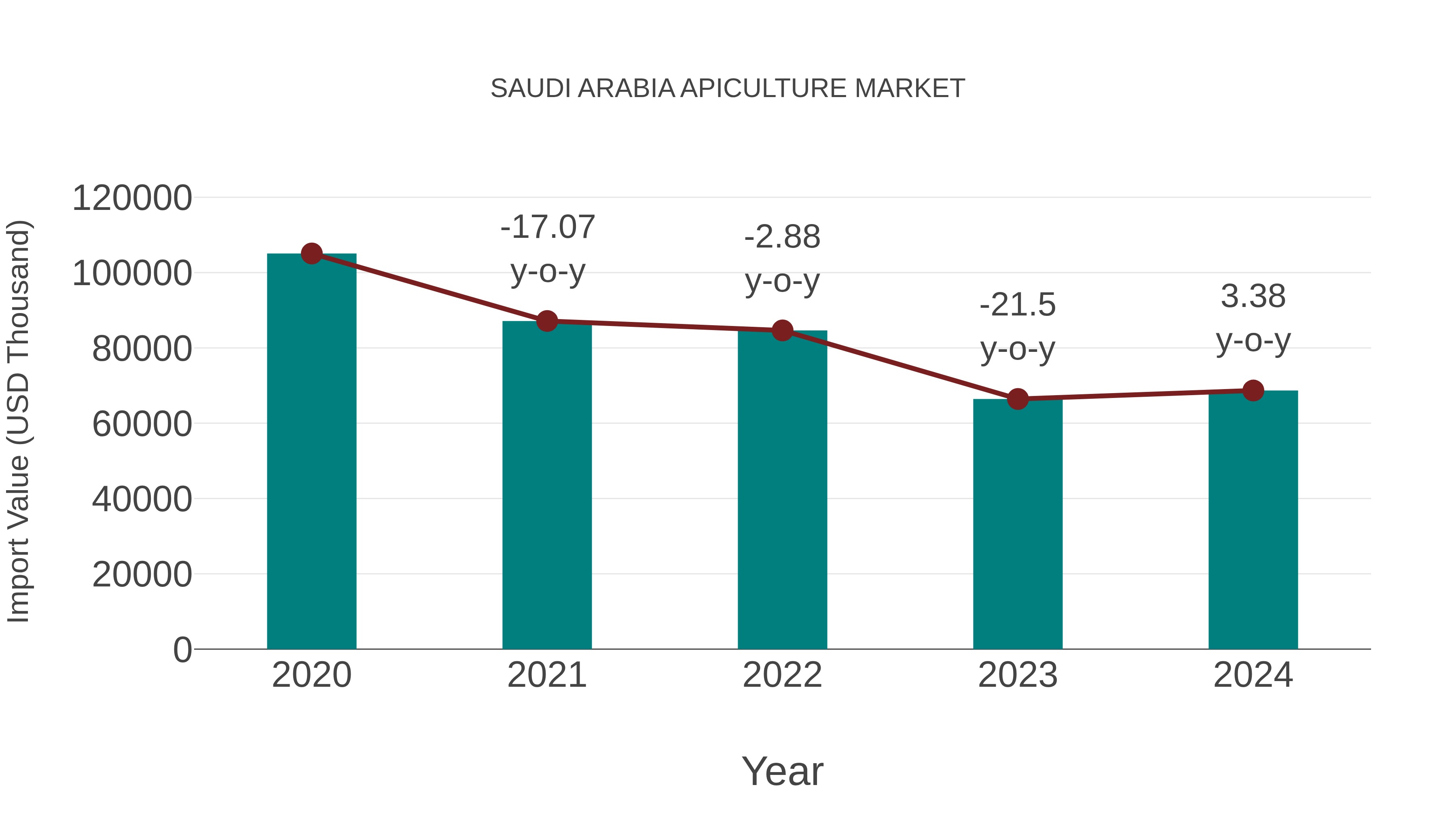
Saudi Arabia`s import trend for the apiculture market saw a growth rate of 3.38% from 2023 to 2024, contrasting with a compound annual growth rate (CAGR) of -10.08% for 2020-2024. This shift could be attributed to changes in domestic demand or shifts in trade policies impacting market stability.
Saudi Arabia Apiculture Market Synopsis
Apiculture, or beekeeping, in Saudi Arabia holds significance not only as a source of honey and beeswax but also for its role in supporting biodiversity and pollination of agricultural crops. The country`s diverse landscapes provide an environment conducive to beekeeping, leading to the production of various types of honey with distinct flavors and characteristics. Beekeeping practices are deeply rooted in Saudi Arabia culture and traditions, making it both a livelihood and a cultural pursuit for many. The apiculture market is marked by a balance between commercial honey production and the preservation of indigenous bee species, contributing to the overall ecological health of the region.
Drivers of the Market
In the Saudi Arabia apiculture market, the main driver is the increasing awareness of the health benefits of honey and other bee products. The market is further supported by the growing interest in sustainable and organic products, as well as the traditional role of beekeeping in the region`s agriculture.
Challenges of the Market
The Saudi Arabia Apiculture Market encounters challenges related to maintaining bee health and combating the decline in bee populations. Pesticide usage, habitat loss, and climate change contribute to the challenges of beekeeping. Educating beekeepers about best practices, promoting pollinator-friendly agriculture, and implementing measures to control diseases are crucial for the growth of the apiculture industry.
COVID-19 Impact on the Market
The COVID-19 pandemic had a mixed impact on the apiculture (beekeeping) market in Saudi Arabia. Initially, the market faced challenges due to restrictions on movement and disruptions in the supply chain. Beekeeping operations, which require regular maintenance and monitoring, were impacted by lockdowns. Moreover, the closure of restaurants and limited outdoor activities affected the demand for honey and related products. However, the focus on health and natural remedies during the pandemic led to increased interest in honey and bee products. As restrictions eased and consumer preferences shifted towards health-conscious choices, the apiculture market started to recover.
Key Players in the Market
The apiculture (beekeeping) market in Saudi Arabia is relatively small. Some key players include Saudi Honeybee Center, Al-Jazeera Honey, and Saudi Beekeepers Society.
Key Highlights of the Report:
- Saudi Arabia Apiculture Market Outlook
- Market Size of Saudi Arabia Apiculture Market, 2025
- Forecast of Saudi Arabia Apiculture Market, 2032
- Historical Data and Forecast of Saudi Arabia Apiculture Revenues & Volume for the Period 2022-2032F
- Saudi Arabia Apiculture Market Trend Evolution
- Saudi Arabia Apiculture Market Drivers and Challenges
- Saudi Arabia Apiculture Price Trends
- Saudi Arabia Apiculture Porter's Five Forces
- Saudi Arabia Apiculture Industry Life Cycle
- Historical Data and Forecast of Saudi Arabia Apiculture Market Revenues & Volume By Product Type for the Period 2022-2032F
- Historical Data and Forecast of Saudi Arabia Apiculture Market Revenues & Volume By Honey for the Period 2022-2032F
- Historical Data and Forecast of Saudi Arabia Apiculture Market Revenues & Volume By Beeswax for the Period 2022-2032F
- Historical Data and Forecast of Saudi Arabia Apiculture Market Revenues & Volume By Live-bees for the Period 2022-2032F
- Historical Data and Forecast of Saudi Arabia Apiculture Market Revenues & Volume By Others for the Period 2022-2032F
- Historical Data and Forecast of Saudi Arabia Apiculture Market Revenues & Volume By Application for the Period 2022-2032F
- Historical Data and Forecast of Saudi Arabia Apiculture Market Revenues & Volume By Medical for the Period 2022-2032F
- Historical Data and Forecast of Saudi Arabia Apiculture Market Revenues & Volume By Food Beverages for the Period 2022-2032F
- Historical Data and Forecast of Saudi Arabia Apiculture Market Revenues & Volume By Cosmetics for the Period 2022-2032F
- Historical Data and Forecast of Saudi Arabia Apiculture Market Revenues & Volume By Others for the Period 2022-2032F
- Saudi Arabia Apiculture Import Export Trade Statistics
- Market Opportunity Assessment By Product Type
- Market Opportunity Assessment By Application
- Saudi Arabia Apiculture Top Companies Market Share
- Saudi Arabia Apiculture Competitive Benchmarking By Technical and Operational Parameters
- Saudi Arabia Apiculture Company Profiles
- Saudi Arabia Apiculture Key Strategic Recommendations






































