Saudi Arabia Aquarium Fish Market Size, Share & Growth Rate
The Saudi Arabia Aquarium Fish Market was estimated at USD 273 Million in 2025 and is projected to reach USD 346 Million by 2032, growing at a CAGR of 3.4% from 2026 to 2032. This positive trajectory is largely fueled by the increasing disposable income of the urban population and a cultural shift toward leisure activities, including ornamental fishkeeping. As residents seek to enhance their living spaces with aesthetically pleasing aquatic environments, demand for exotic fish and quality aquarium setups continues to flourish.
Saudi Arabia Aquarium Fish Market Year-wise Growth Rate and Key Drivers
This graph highlights how the Saudi Arabia Aquarium Fish Market has steadily grown over the years, supported by major growth factors.
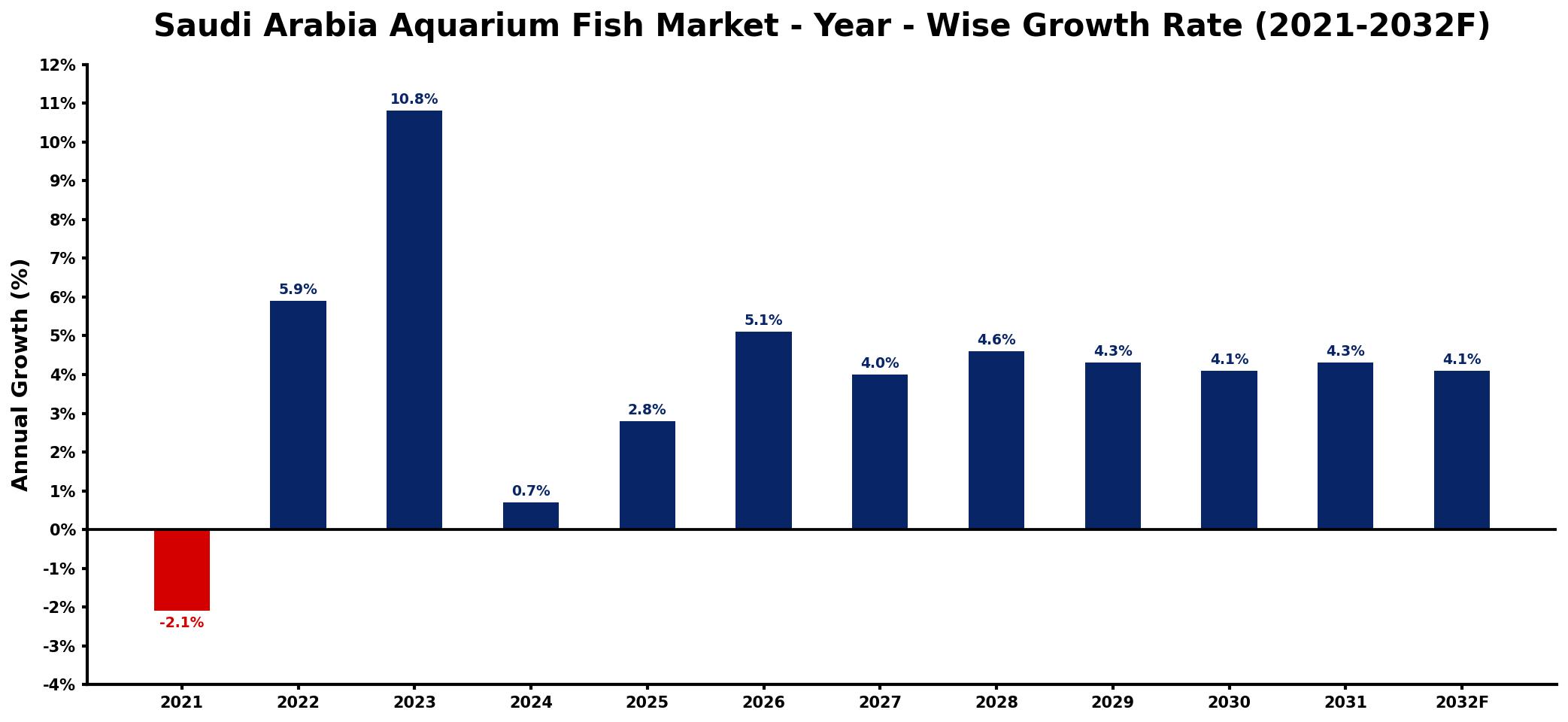
The table below presents the year‑wise growth rates along with the key drivers influencing the market
| Year | Growth Rate | Major Drivers |
| 2021 | -2.1% | reduced consumer spending on leisure |
| 2022 | 5.9% | increased interest in home hobbies |
| 2023 | 10.8% | growth in online retail platforms |
| 2024 | 0.7% | rising disposable income levels |
| 2025 | 2.8% | expansion of eco-friendly initiatives |
| 2026 | 5.1% | enhanced community engagement programs |
| 2027 | 4.0% | growing popularity of pet ownership |
| 2028 | 4.6% | investment in local breeding facilities |
| 2029 | 4.3% | development of innovative products |
| 2030 | 4.1% | increased focus on sustainability practices |
| 2031 | 4.3% | strengthening of distribution networks |
| 2032 | 4.1% | rising demand from electronics |
Note: Market size estimations and growth projections presented in this report are based on 6Wresearch's proprietary forecasting methodology, utilizing the latest available industry data, government publications, and primary research inputs.
Saudi Arabia Aquarium Fish Market Synopsis
The aquarium fish market in Saudi Arabia has witnessed a noteworthy transformation, evolving into a popular hobby among a diverse demographic. The rising trend of integrating nature into urban living spaces aligns with the growing appreciation for the beauty and tranquility that ornamental fish can offer.
With a robust infrastructure of local pet stores and specialized retailers, the market is well-equipped to meet the increasing demand for a variety of aquarium sizes and species. This thriving sector not only enhances interior aesthetics but also caters to the emotional well-being of the populace, as the act of fishkeeping provides a peaceful retreat from the fast-paced urban lifestyle.
Saudi Arabia Aquarium Fish Market Key Takeaways
- The increasing popularity of ornamental fishkeeping is significantly driving market growth.
- Rising urbanization and disposable income contribute to heightened demand for aquarium products.
- Awareness of responsible fish care is crucial for sustainability within the market.
- The influence of government initiatives in promoting tourism and recreation positively impacts market expansion.
- COVID-19 has accelerated the shift towards online retail and home-based hobbies, facilitating market recovery.
Evaluation of Restraints in Saudi Arabia Aquarium Fish Market
While the Saudi Arabia Aquarium Fish Market displays promising growth, it is not without its challenges. Ensuring the welfare of aquarium fish throughout the supply chain is paramount. Problems such as maintaining optimal water conditions and addressing transportation-related stress require attention and solutions. Furthermore, educating consumers on responsible aquarium care is critical to sustaining the market and protecting biodiversity. The ongoing threat of illegal trade in endangered species remains a significant concern that necessitates stringent regulations and enforcement to safeguard aquatic ecosystems.
Saudi Arabia Aquarium Fish Market Trends
Emerging trends in the Saudi Arabia aquarium fish market include a growing interest in aquascaping—an art form that emphasizes the aesthetic arrangement of aquatic plants and materials. Additionally, the integration of advanced aquarium technology, such as automated feeding systems and water quality monitoring devices, is reshaping consumer expectations. This technological innovation not only enhances fishkeeping experiences but also aligns with the increasing awareness of sustainable practices in aquaculture, reflecting a broader commitment to environmental stewardship.
Saudi Arabia Aquarium Fish Market Opportunities
Investment opportunities abound within the Saudi Arabia aquarium fish market, particularly in the realm of education and training for both retail staff and consumers. Establishing specialized training programs on fish care and aquarium maintenance can foster a knowledgeable customer base, promoting sustainability and responsible ownership. Moreover, the growth of online retail channels presents a lucrative platform for niche products, including rare fish species and custom aquarium setups, allowing businesses to capitalize on the evolving demands of a tech-savvy consumer base.
Government Initiatives in the Saudi Arabia Aquarium Fish Market
The Saudi government is actively promoting initiatives that align with its Vision 2030 objectives, which include fostering tourism and enhancing recreational activities. By investing in educational programs and supporting local businesses in the aquarium sector, the government aims to enrich cultural experiences and promote environmental awareness. Various public campaigns encourage responsible pet ownership and the protection of marine biodiversity, which can significantly impact the growth and sustainability of the aquarium fish market in the region.
Future Insights of the Saudi Arabia Aquarium Fish Market
Looking ahead to 2026-2032, the Saudi Arabia Aquarium Fish Market is poised for steady growth, driven by urbanization, increased leisure time, and a deepening appreciation for home aesthetics. With a continually evolving landscape, including the rise of e-commerce and advanced aquaculture technologies, the market is expected to adapt and thrive. As consumer preferences shift towards more personalized and sustainable solutions, businesses that embrace these changes will likely find themselves at the forefront of this dynamic industry.
Saudi Arabia Aquarium Fish Market Latest Developments (2025 - 2026)
Recent developments in the Saudi Arabia aquarium fish market indicate a pivot towards sustainable practices and community engagement. Various stakeholders are focusing on enhancing consumer education regarding responsible fishkeeping and environmental conservation. The trend of incorporating technology into aquarium management systems is also gaining traction, allowing for better care of aquatic life. Additionally, the rise of social media platforms has enabled enthusiasts to share experiences and expertise, further solidifying the community around this beloved hobby.
Saudi Arabia Aquarium Fish Market - Key Attractiveness of the Report
- 10 Years of Market Numbers
- Historical Data Starting from 2022 to 2025
- Base Year: 2025
- Forecast Data until 2032
- Key Performance Indicators Impacting the Market
- Major Upcoming Developments and Projects
Key Highlights of the Report:
- Saudi Arabia Aquarium Fish Market Outlook
- Market Size of Saudi Arabia Aquarium Fish Market, 2025
- Forecast of Saudi Arabia Aquarium Fish Market, 2032
- Historical Data and Forecast of Saudi Arabia Aquarium Fish Revenues & Volume for the Period 2022-2032F
- Saudi Arabia Aquarium Fish Market Trend Evolution
- Saudi Arabia Aquarium Fish Market Drivers and Challenges
- Saudi Arabia Aquarium Fish Price Trends
- Saudi Arabia Aquarium Fish Porter's Five Forces
- Saudi Arabia Aquarium Fish Industry Life Cycle
- Historical Data and Forecast of Saudi Arabia Aquarium Fish Market Revenues & Volume By Type for the Period 2022-2032F
- Historical Data and Forecast of Saudi Arabia Aquarium Fish Market Revenues & Volume By Freshwater Fish for the Period 2022-2032F
- Historical Data and Forecast of Saudi Arabia Aquarium Fish Market Revenues & Volume By Saltwater Fish for the Period 2022-2032F
- Historical Data and Forecast of Saudi Arabia Aquarium Fish Market Revenues & Volume By Application for the Period 2022-2032F
- Historical Data and Forecast of Saudi Arabia Aquarium Fish Market Revenues & Volume By Commercial Aquarium for the Period 2022-2032F
- Historical Data and Forecast of Saudi Arabia Aquarium Fish Market Revenues & Volume By Home Aquarium for the Period 2022-2032F
- Saudi Arabia Aquarium Fish Import Export Trade Statistics
- Market Opportunity Assessment By Type
- Market Opportunity Assessment By Application
- Saudi Arabia Aquarium Fish Top Companies Market Share
- Saudi Arabia Aquarium Fish Competitive Benchmarking By Technical and Operational Parameters
- Saudi Arabia Aquarium Fish Company Profiles
- Saudi Arabia Aquarium Fish Key Strategic Recommendations






































