Saudi Arabia Cottonseed Oil Market: Import Trend Analysis
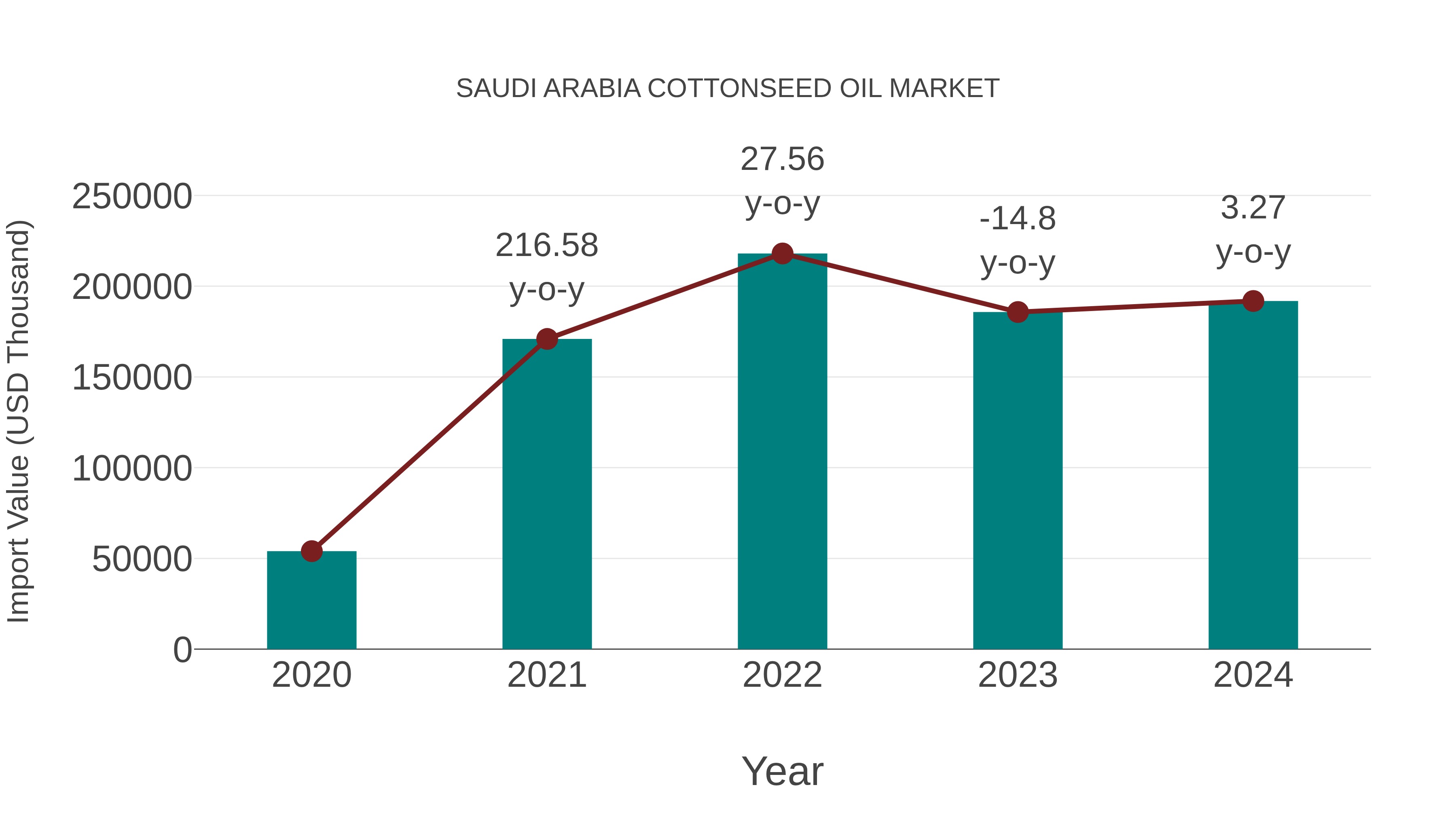
In the Saudi Arabia cottonseed oil market, the import trend showed a growth rate of 3.27% from 2023 to 2024, with a compound annual growth rate (CAGR) of 37.29% for the period 2020-2024. This upward import momentum can be attributed to shifting demand patterns or favorable trade policies influencing market stability.
Saudi Arabia Cottonseed Oil Market Synopsis
The Saudi Arabia cottonseed oil market is estimated to be valued at USD xxx million and is projected to reach USD xxx million, registering a CAGR of xx% during the forecast period.The major factors driving the growth of this market include increasing demand for edible oils, rising health awareness among consumers, growing application scope in food products, etc.Over the past years, there has been an increase in demand for vegetable-based oil products that are both healthy and affordable.This factor has also increased the demand for cottonseed oil across various regions such as Middle East & Africa.Moreover, emerging economies such as India have started utilizing advanced technologies which are expected to further fuel the growth of this market over the next five years.
Drivers of the Market
The growth of the Saudi Arabia cottonseed oil market is propelled by the increasing awareness of the health benefits associated with edible oils.Cottonseed oil, known for its balanced fatty acid profile and vitamin E content, is gaining popularity among health-conscious consumers.The growing trend of using natural and organic products in the food industry further boosts the demand for cottonseed oil.Additionally, the expansion of the food processing sector and the rising consumption of packaged and convenience foods contribute to market growth.
Challenges of the Market
The Saudi Arabia cottonseed oil market faces challenges related to food safety and quality assurance.Cottonseed oil is utilized in cooking and food processing, and ensuring that the oil meets health and safety standards is essential.Managing potential contaminants, such as pesticide residues from cotton cultivation, and implementing effective quality control measures throughout the supply chain are key challenges that market participants must address to maintain consumer trust and satisfaction.
COVID-19 Impact on the Market
The COVID-19 pandemic affected the Saudi Arabia cottonseed oil market.Disruptions in the food and hospitality sectors led to fluctuations in demand.Restaurants, hotels, and catering services experienced limitations, impacting the consumption of edible oils.As these industries recover with the easing of restrictions, the cottonseed oil market is likely to regain momentum, driven by culinary activities and consumer preferences.
Key Players in the Market
Key players in the Saudi Arabia cottonseed oil market include Salic (Saudi Agricultural and Livestock Investment Company) and United Farmers Holding Company.These companies are involved in agriculture and food production, including the processing of cottonseed oil.With a focus on edible oils and food products, these key players are likely to shape the cottonseed oil market by providing healthy cooking oil options.
Key Highlights of the Report:
- Saudi Arabia Cottonseed Oil Market Outlook
- Market Size of Saudi Arabia Cottonseed Oil Market, 2025
- Forecast of Saudi Arabia Cottonseed Oil Market, 2032
- Historical Data and Forecast of Saudi Arabia Cottonseed Oil Revenues & Volume for the Period 2022-2032F
- Saudi Arabia Cottonseed Oil Market Trend Evolution
- Saudi Arabia Cottonseed Oil Market Drivers and Challenges
- Saudi Arabia Cottonseed Oil Price Trends
- Saudi Arabia Cottonseed Oil Porter's Five Forces
- Saudi Arabia Cottonseed Oil Industry Life Cycle
- Historical Data and Forecast of Saudi Arabia Cottonseed Oil Market Revenues & Volume By Raw Material for the Period 2022-2032F
- Historical Data and Forecast of Saudi Arabia Cottonseed Oil Market Revenues & Volume By Genetically Modified Cotton for the Period 2022-2032F
- Historical Data and Forecast of Saudi Arabia Cottonseed Oil Market Revenues & Volume By Non-GM Cotton for the Period 2022-2032F
- Historical Data and Forecast of Saudi Arabia Cottonseed Oil Market Revenues & Volume By End-Users for the Period 2022-2032F
- Historical Data and Forecast of Saudi Arabia Cottonseed Oil Market Revenues & Volume By Retail for the Period 2022-2032F
- Historical Data and Forecast of Saudi Arabia Cottonseed Oil Market Revenues & Volume By Food Processing for the Period 2022-2032F
- Historical Data and Forecast of Saudi Arabia Cottonseed Oil Market Revenues & Volume By Cosmetics for the Period 2022-2032F
- Historical Data and Forecast of Saudi Arabia Cottonseed Oil Market Revenues & Volume By Other Applications for the Period 2022-2032F
- Saudi Arabia Cottonseed Oil Import Export Trade Statistics
- Market Opportunity Assessment By Raw Material
- Market Opportunity Assessment By End-Users
- Saudi Arabia Cottonseed Oil Top Companies Market Share
- Saudi Arabia Cottonseed Oil Competitive Benchmarking By Technical and Operational Parameters
- Saudi Arabia Cottonseed Oil Company Profiles
- Saudi Arabia Cottonseed Oil Key Strategic Recommendations






































