Saudi Arabia Cream Cheese Market: Import Trend Analysis
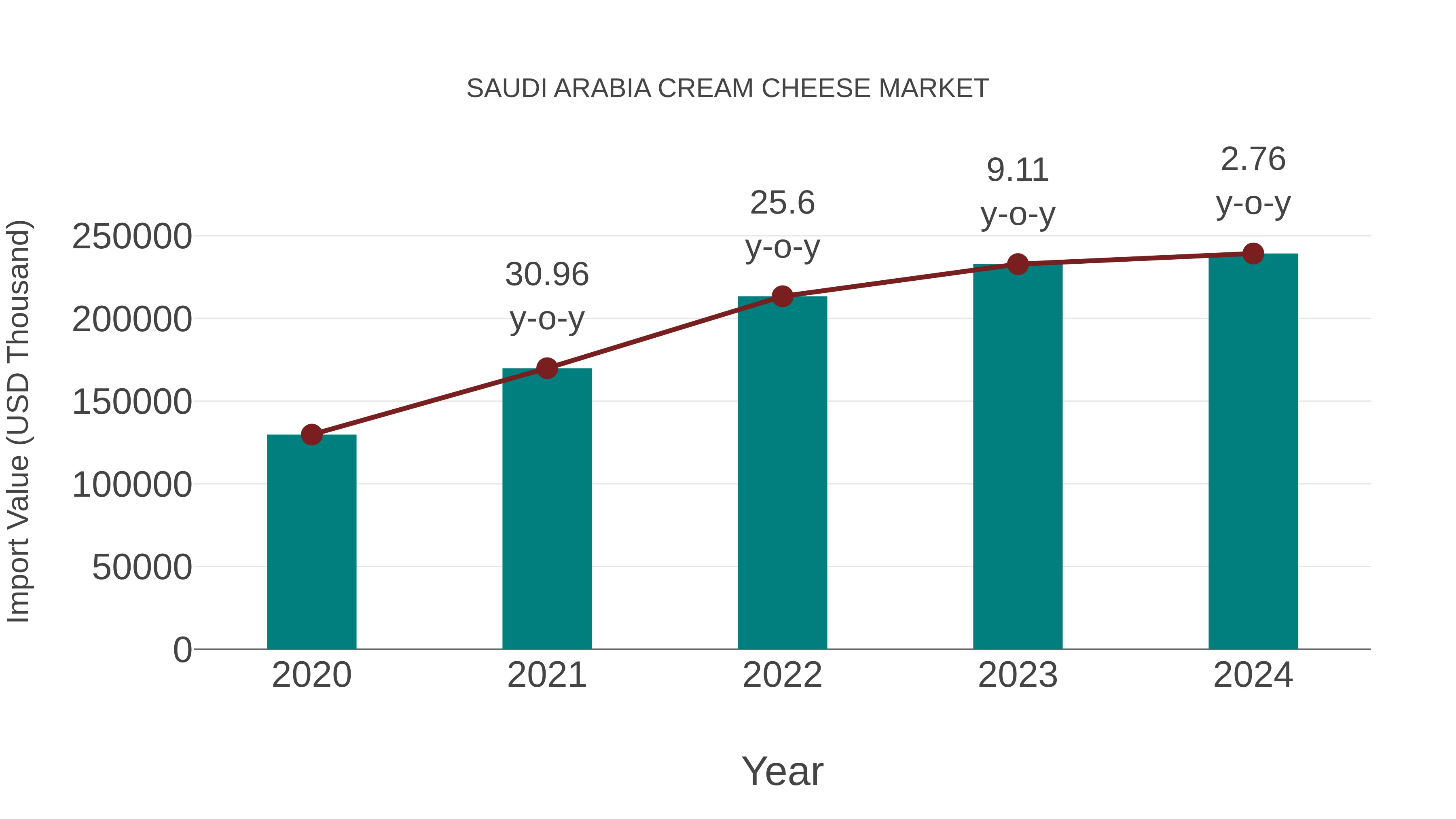
In the Saudi Arabia cream cheese market, the import trend showed a growth rate of 2.76% from 2023 to 2024, with a Compound Annual Growth Rate (CAGR) of 16.54% for the period 2020-2024. This upward import momentum could be attributed to evolving consumer preferences and increasing demand for dairy products in the region.
Saudi Arabia Cream Cheese Market Overview
The Saudi Arabia cream cheese market is experiencing steady growth due to the increasing adoption of Western dietary habits, growth in the foodservice industry, and rising disposable incomes among the population. The market is primarily driven by the growing demand for convenience food products and the rising trend of snacking among consumers. Local and international players are expanding their product offerings to cater to the diverse preferences of consumers, leading to a competitive landscape in the market. Key market trends include the introduction of innovative flavors, packaging formats, and healthier options to meet the evolving consumer demands. The market is expected to continue its growth trajectory, supported by factors such as urbanization, changing consumer lifestyles, and the influence of social media on food trends.
Saudi Arabia Cream Cheese Market Trends
In Saudi Arabia, the cream cheese market is experiencing a shift towards healthier and more diverse options to cater to the growing health-conscious consumer base. Demand for low-fat and organic cream cheese varieties is on the rise, driven by increasing awareness of the importance of healthy eating habits. Consumers are also showing a preference for cream cheese products that are free from artificial additives and preservatives. Additionally, there is a growing trend towards flavored cream cheeses, such as garlic herb or jalapeno, as consumers seek more unique and gourmet options for their culinary creations. Manufacturers in the Saudi Arabian cream cheese market are responding to these trends by expanding their product offerings to meet the evolving preferences of consumers and capitalize on the demand for healthier and more diverse cream cheese options.
Saudi Arabia Cream Cheese Market Challenges
In the Saudi Arabia cream cheese market, some key challenges include limited consumer awareness and familiarity with cream cheese as a product, as it is not traditionally a staple in Middle Eastern cuisine. Additionally, cultural preferences for local and traditional dairy products may pose a barrier to the widespread adoption of cream cheese. Distribution challenges, such as maintaining the cold chain for perishable dairy products in a hot climate, could also impact the availability and quality of cream cheese in the market. Moreover, competition from other types of cheeses and dairy products, as well as potential pricing pressures, may further hinder the growth and penetration of cream cheese in Saudi Arabia. Overcoming these challenges would require targeted marketing efforts, product education, strategic partnerships with retailers, and innovative product offerings tailored to the local taste preferences and consumption habits.
Saudi Arabia Cream Cheese Market Investment Opportunities
The Saudi Arabia cream cheese market presents promising investment opportunities due to increasing consumer demand for dairy products and a growing trend towards Western-style cuisine. Investors can capitalize on this by entering the market with innovative product offerings, such as flavored or organic cream cheese variations to cater to changing consumer preferences. Additionally, leveraging strategic partnerships with local dairy producers or retailers can provide a competitive edge and facilitate market penetration. With a rising middle-class population and a growing foodservice industry in Saudi Arabia, investing in the cream cheese market has the potential for substantial growth and profitability in the coming years.
Saudi Arabia Cream Cheese Market Government Policy
In Saudi Arabia, the cream cheese market operates within the framework of the country`s general trade policies and regulations. The government has implemented various measures to promote local production and reduce dependence on imports, including imposing tariffs on imported cream cheese products. Additionally, there are stringent food safety and labeling regulations enforced by the Saudi Food and Drug Authority (SFDA) to ensure the quality and safety of cream cheese products in the market. The government also encourages investment in the dairy sector through incentives and support programs, aiming to boost domestic production and meet the growing demand for dairy products, including cream cheese, in the country. Overall, the government`s policies in Saudi Arabia aim to foster a competitive and sustainable cream cheese market while safeguarding consumer interests and promoting economic growth in the dairy industry.
Saudi Arabia Cream Cheese Market Future Outlook
The future outlook for the Saudi Arabia cream cheese market appears promising, with steady growth anticipated due to increasing consumer demand for convenience foods and Western-style products. Factors such as a growing young population, rising disposable incomes, and changing dietary preferences are driving the popularity of cream cheese in the region. Additionally, the influence of global food trends and the expanding foodservice sector are expected to further boost market growth. Manufacturers are likely to focus on product innovation, such as introducing new flavors and packaging formats, to cater to evolving consumer preferences. Overall, the Saudi Arabia cream cheese market is poised for expansion in the coming years, presenting opportunities for both domestic and international players to capitalize on this growing segment.
Key Highlights of the Report:
- Saudi Arabia Cream Cheese Market Outlook
- Market Size of Saudi Arabia Cream Cheese Market,2025
- Forecast of Saudi Arabia Cream Cheese Market, 2032
- Historical Data and Forecast of Saudi Arabia Cream Cheese Revenues & Volume for the Period 2022-2032F
- Saudi Arabia Cream Cheese Market Trend Evolution
- Saudi Arabia Cream Cheese Market Drivers and Challenges
- Saudi Arabia Cream Cheese Price Trends
- Saudi Arabia Cream Cheese Porter's Five Forces
- Saudi Arabia Cream Cheese Industry Life Cycle
- Historical Data and Forecast of Saudi Arabia Cream Cheese Market Revenues & Volume By Type for the Period 2022-2032F
- Historical Data and Forecast of Saudi Arabia Cream Cheese Market Revenues & Volume By Full-fat for the Period 2022-2032F
- Historical Data and Forecast of Saudi Arabia Cream Cheese Market Revenues & Volume By Low-fat for the Period 2022-2032F
- Historical Data and Forecast of Saudi Arabia Cream Cheese Market Revenues & Volume By Flavored for the Period 2022-2032F
- Historical Data and Forecast of Saudi Arabia Cream Cheese Market Revenues & Volume By Packaging for the Period 2022-2032F
- Historical Data and Forecast of Saudi Arabia Cream Cheese Market Revenues & Volume By Pouches for the Period 2022-2032F
- Historical Data and Forecast of Saudi Arabia Cream Cheese Market Revenues & Volume By Tubs for the Period 2022-2032F
- Historical Data and Forecast of Saudi Arabia Cream Cheese Market Revenues & Volume By Blocks for the Period 2022-2032F
- Historical Data and Forecast of Saudi Arabia Cream Cheese Market Revenues & Volume By Fat Content for the Period 2022-2032F
- Historical Data and Forecast of Saudi Arabia Cream Cheese Market Revenues & Volume By High-fat for the Period 2022-2032F
- Historical Data and Forecast of Saudi Arabia Cream Cheese Market Revenues & Volume By Low-fat for the Period 2022-2032F
- Historical Data and Forecast of Saudi Arabia Cream Cheese Market Revenues & Volume By Medium-fat for the Period 2022-2032F
- Historical Data and Forecast of Saudi Arabia Cream Cheese Market Revenues & Volume By End User for the Period 2022-2032F
- Historical Data and Forecast of Saudi Arabia Cream Cheese Market Revenues & Volume By Household for the Period 2022-2032F
- Historical Data and Forecast of Saudi Arabia Cream Cheese Market Revenues & Volume By Food Processing for the Period 2022-2032F
- Historical Data and Forecast of Saudi Arabia Cream Cheese Market Revenues & Volume By Bakery for the Period 2022-2032F
- Historical Data and Forecast of Saudi Arabia Cream Cheese Market Revenues & Volume By Distribution Channel for the Period 2022-2032F
- Historical Data and Forecast of Saudi Arabia Cream Cheese Market Revenues & Volume By Retail Stores for the Period 2022-2032F
- Historical Data and Forecast of Saudi Arabia Cream Cheese Market Revenues & Volume By Online for the Period 2022-2032F
- Historical Data and Forecast of Saudi Arabia Cream Cheese Market Revenues & Volume By Wholesale for the Period 2022-2032F
- Saudi Arabia Cream Cheese Import Export Trade Statistics
- Market Opportunity Assessment By Type
- Market Opportunity Assessment By Packaging
- Market Opportunity Assessment By Fat Content
- Market Opportunity Assessment By End User
- Market Opportunity Assessment By Distribution Channel
- Saudi Arabia Cream Cheese Top Companies Market Share
- Saudi Arabia Cream Cheese Competitive Benchmarking By Technical and Operational Parameters
- Saudi Arabia Cream Cheese Company Profiles
- Saudi Arabia Cream Cheese Key Strategic Recommendations






































