Saudi Arabia Dyes & Pigments Market: Import Trend Analysis
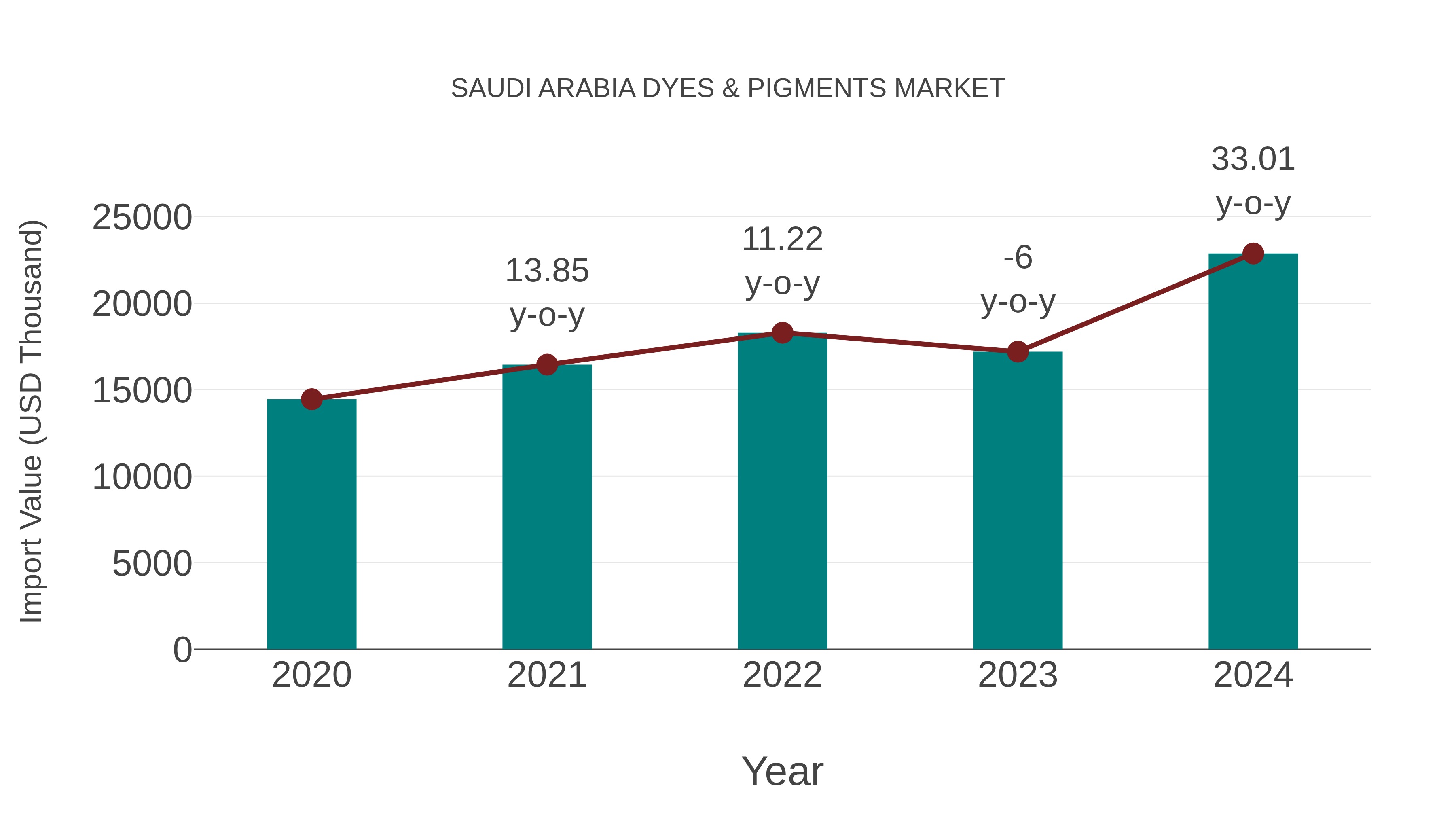
In the Saudi Arabia dyes & pigments market, the import trend showed a notable growth rate of 33.01% from 2023 to 2024, with a compound annual growth rate (CAGR) of 12.17% for the period 2020-2024. This surge in imports can be attributed to a significant demand shift towards high-quality dyes and pigments, reflecting a robust market recovery post-2020.
Saudi Arabia Dyes Pigments Market Synopsis
The dyes and pigments market in Saudi Arabia is driven by the textile, paints and coatings, and plastics industries. Dyes and pigments are crucial for achieving color and aesthetics in various products. As industries expand and consumer preferences evolve, there is a continuous demand for high-quality and eco-friendly dyes and pigments. Manufacturers are investing in research and development to create innovative, sustainable solutions.
Drivers of the Market
The dyes and pigments market in Saudi Arabia is driven by the textile and manufacturing sectors. These industries rely on dyes and pigments for coloring textiles, plastics, and other materials. As Saudi Arabia seeks to diversify its economy and promote local manufacturing, the demand for dyes and pigments continues to rise.
Opportunities of the Market
Challenges of the Market
The saudi arabia dyes and pigments market faces several challenges, with one of the prominent ones being environmental concerns. The chemical processes involved in dye and pigment production can generate hazardous waste and pollutants that must be managed responsibly. Additionally, the market grapples with the need for more sustainable and eco-friendly options as global environmental regulations become stricter. Another challenge is the dependence on imports for certain specialized pigments, which can lead to supply chain vulnerabilities.
COVID-19 Impact on the Market
The Saudi Arabia dyes and pigments market experienced shifts due to the COVID-19 pandemic. While some segments faced challenges related to supply chain disruptions and reduced consumer spending on non-essential items, others saw sustained demand in applications such as textiles for personal protective equipment (PPE) and medical supplies. The market witnessed a trend towards sustainable and eco-friendly dyeing processes, as environmental concerns gained prominence. As economies reopened, the market dynamics gradually evolved, with a focus on product innovation, quality, and compliance with safety regulations.
Key Players in the Market
In the Saudi Arabia dyes and pigments market, leading players such as National Factory for Dyes and Chemicals (NAFACO), Sadat Al Sahraa Co., and United Dyes & Chemicals Co. Ltd. are prominent contributors. These companies are recognized for their production and supply of a wide range of dyes and pigments used in various industries, including textiles, paints, and plastics.
Key Highlights of the Report:
- Saudi Arabia Dyes & Pigments Market Outlook
- Market Size of Saudi Arabia Dyes & Pigments Market, 2025
- Forecast of Saudi Arabia Dyes & Pigments Market, 2032
- Historical Data and Forecast of Saudi Arabia Dyes & Pigments Revenues & Volume for the Period 2022-2032F
- Saudi Arabia Dyes & Pigments Market Trend Evolution
- Saudi Arabia Dyes & Pigments Market Drivers and Challenges
- Saudi Arabia Dyes & Pigments Price Trends
- Saudi Arabia Dyes & Pigments Porter's Five Forces
- Saudi Arabia Dyes & Pigments Industry Life Cycle
- Historical Data and Forecast of Saudi Arabia Dyes & Pigments Market Revenues & Volume By Product for the Period 2022-2032F
- Historical Data and Forecast of Saudi Arabia Dyes & Pigments Market Revenues & Volume By Dyes for the Period 2022-2032F
- Historical Data and Forecast of Saudi Arabia Dyes & Pigments Market Revenues & Volume By Pigments for the Period 2022-2032F
- Saudi Arabia Dyes & Pigments Import Export Trade Statistics
- Market Opportunity Assessment By Product
- Saudi Arabia Dyes & Pigments Top Companies Market Share
- Saudi Arabia Dyes & Pigments Competitive Benchmarking By Technical and Operational Parameters
- Saudi Arabia Dyes & Pigments Company Profiles
- Saudi Arabia Dyes & Pigments Key Strategic Recommendations






































